What does Deuteronomy 17:13 mean?
“And all the people shall hear, and fear, and do no more presumptuously.” — Deuteronomy 17:13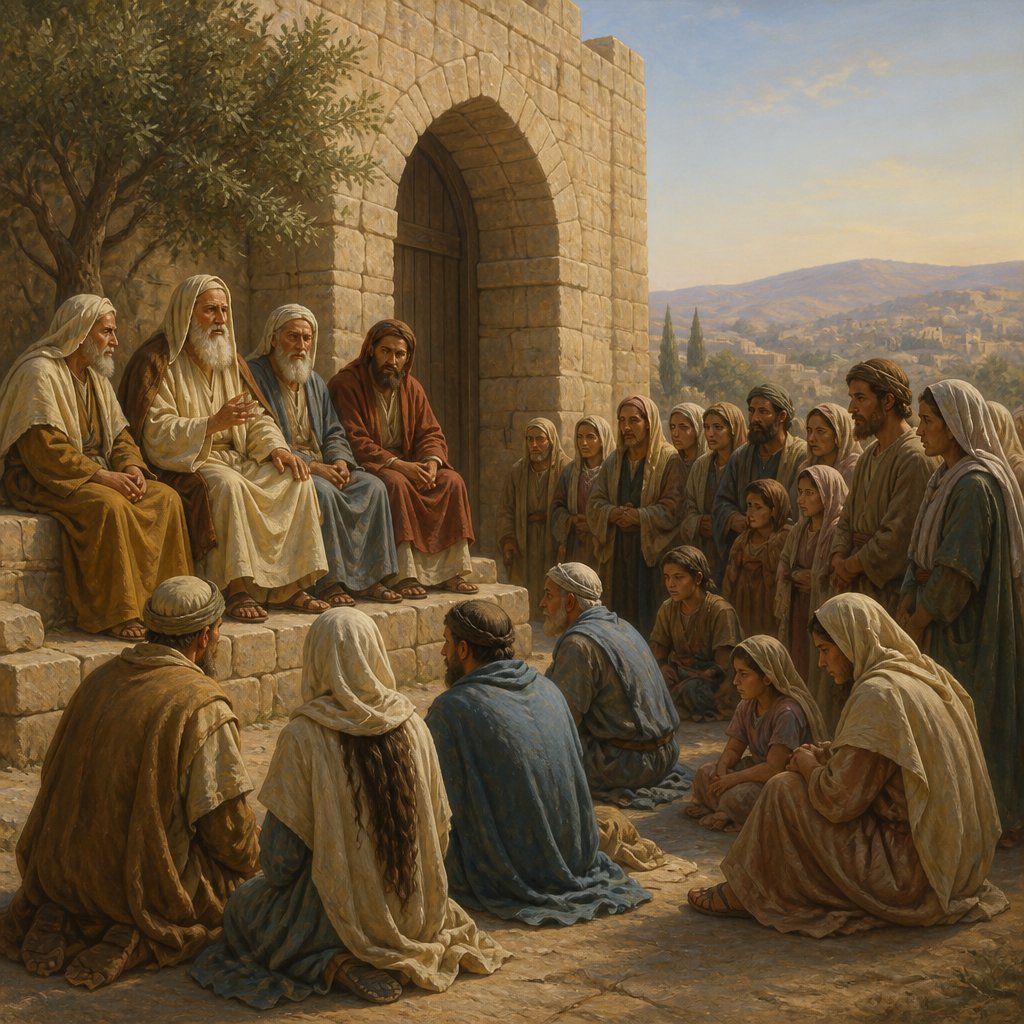
Deuteronomy 17:13 (KJV) states, "And all the people shall hear, and fear, and do no more presumptuously." This verse is part of a larger passage in the book of Deuteronomy that outlines the laws and instructions given to the Israelites by Moses before they enter the Promised Land. The verse comes in the context of establishing a system of justice and governance for the people, with rules for judges and kings to follow.
The verse begins with the phrase "And all the people shall hear," indicating that the actions taken by the judges and rulers are to be public and transparent, so that the entire community is aware of the consequences of disobedience. The subsequent phrase "and fear" is significant, as it highlights the purpose of the punishment – not only to bring about obedience, but also to instill a healthy sense of reverence and respect for the law and those appointed to enforce it. This fear is not necessarily a paralyzing terror, but rather a cautious awareness of consequences and a desire to avoid willful disobedience.
The verse concludes with the instruction to "do no more presumptuously." This emphasizes that the fear and respect instilled in the people should lead to a change in behavior, causing them to avoid the arrogant and willful disobedience that the punishment seeks to deter. The use of the word "presumptuously" suggests a sense of pride and entitlement, as well as a lack of humility and submission to authority. The verse therefore serves as a warning against not just disobedience, but also the attitude of pride and presumption that can lead to it.
In a broader sense, this verse reflects the principles of justice, accountability, and governance within the Judeo-Christian tradition. It emphasizes the importance of public accountability and transparency in the administration of justice, as well as the need for both the rulers and the ruled to fear and respect the law. It also underscores the notion that obedience to the law is not merely about avoiding punishment, but about cultivating a mindset of humility and submission to rightful authority.
The themes of fear, obedience, and accountability in this verse are rooted in the larger context of the book of Deuteronomy, which serves as a restatement and reinterpretation of the laws given to the Israelites in the previous books of the Pentateuch. The book stresses the importance of obedience to God's commands, the need for ethical and just governance, and the consequences of disobedience. The verse is a part of this larger narrative, and it contributes to the overall message of the book by reinforcing the importance of obedience and accountability in the community.
In terms of symbolism, the verse can be seen as a representation of the larger biblical theme of the tension between law and grace. While the verse emphasizes the fear and obedience required by the law, it also hints at the deeper spiritual truth that true obedience can only come from a heart transformed by reverence and respect for God. The fear mentioned in the verse can be interpreted not just as a dread of punishment, but as a healthy reverence for God's sovereignty and a desire to honor Him through obedience.
Overall, Deuteronomy 17:13 is a verse that emphasizes the importance of fear, obedience, and humility in the context of governance and justice. It serves as a reminder of the principles of accountability and transparency in leadership, and it reflects the larger themes of obedience to God's commands and the transformation of the heart. Through its detailed and in-depth meaning, this verse continues to hold relevance for believers seeking to understand and apply the principles of biblical justice and governance in their own lives.
Get our apps


Artwork for Deuteronomy 17:13

Deuteronomy 17:13 - "And all the people shall hear, and fear, and do no more presumptuously."
"And all the people shall hear, and fear, and do no more presumptuously." - Deuteronomy 17:13

Deuteronomy 13:17 - "And there shall cleave nought of the cursed thing to thine hand: that the LORD may turn from the fierceness of his anger, and shew thee mercy, and have compassion upon thee, and multiply thee, as he hath sworn unto thy fathers;"

Deuteronomy 5:17 - "Thou shalt not kill."

Deuteronomy 14:17 - "And the pelican, and the gier eagle, and the cormorant,"

Deuteronomy 2:17 - "That the LORD spake unto me, saying,"

Deuteronomy 28:17 - "Cursed shall be thy basket and thy store."

"Thou shalt not kill." - Deuteronomy 5:17

Deuteronomy 23:17 - "¶ There shall be no whore of the daughters of Israel, nor a sodomite of the sons of Israel."

Deuteronomy 17:17 - "Neither shall he multiply wives to himself, that his heart turn not away: neither shall he greatly multiply to himself silver and gold."

Deuteronomy 14:13 - "And the glede, and the kite, and the vulture after his kind,"

Deuteronomy 18:13 - "Thou shalt be perfect with the LORD thy God."

Deuteronomy 4:17 - "The likeness of any beast that is on the earth, the likeness of any winged fowl that flieth in the air,"

"And the pelican, and the gier eagle, and the cormorant," - Deuteronomy 14:17

Deuteronomy 18:17 - "And the LORD said unto me, They have well spoken that which they have spoken."

Deuteronomy 27:17 - "Cursed be he that removeth his neighbour's landmark. And all the people shall say, Amen."

Deuteronomy 25:13 - "¶ Thou shalt not have in thy bag divers weights, a great and a small."

Deuteronomy 5:13 - "Six days thou shalt labour, and do all thy work:"

Deuteronomy 22:13 - "¶ If any man take a wife, and go in unto her, and hate her,"

Genesis 17-13

"That the LORD spake unto me, saying," - Deuteronomy 2:17

Deuteronomy 24:17 - "¶ Thou shalt not pervert the judgment of the stranger, nor of the fatherless; nor take a widow's raiment to pledge:"

Deuteronomy 29:17 - "And ye have seen their abominations, and their idols, wood and stone, silver and gold, which were among them:)"

Deuteronomy 8:17 - "And thou say in thine heart, My power and the might of mine hand hath gotten me this wealth."

Deuteronomy 13:1 - "If there arise among you a prophet, or a dreamer of dreams, and giveth thee a sign or a wonder,"

Matthew 3:13-17

Revelation 13:16-17

Johan 1:13-17

Deuteronomy 25:17 - "¶ Remember what Amalek did unto thee by the way, when ye were come forth out of Egypt;"

Deuteronomy 7:17 - "If thou shalt say in thine heart, These nations are more than I; how can I dispossess them?"