What does Deuteronomy 17:16 mean?
“But he shall not multiply horses to himself, nor cause the people to return to Egypt, to the end that he should multiply horses: forasmuch as the LORD hath said unto you, Ye shall henceforth return no more that way.” — Deuteronomy 17:16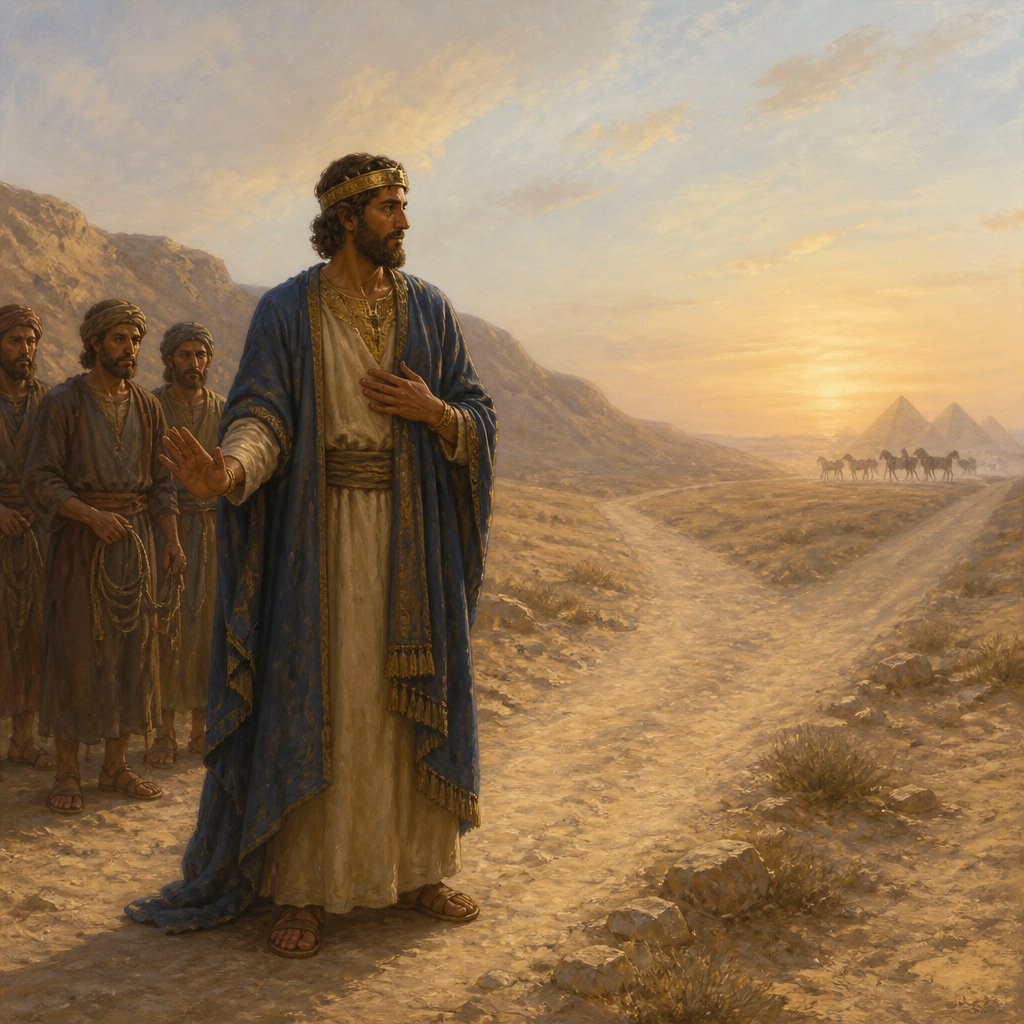
Deuteronomy 17:16 (KJV) states, "But he shall not multiply horses to himself, nor cause the people to return to Egypt, to the end that he should multiply horses: forasmuch as the Lord hath said unto you, Ye shall henceforth return no more that way."
This verse is part of the Old Testament, specifically a part of the procedural law outlined by Moses for the people of Israel as they prepared to enter the promised land. The verse addresses the issue of Israel's future kings and their acquisition of horses, as well as the potential temptation to return to Egypt.
In this verse, Moses is instructing the future kings of Israel that they should not rely on military might or worldly power, such as the acquisition of horses, to establish their rule. Furthermore, the verse also warns against turning back to Egypt, the land of bondage, from which the Israelites had been delivered by God's miraculous intervention. This command serves as a reminder to the Israelites to remain faithful to God and to rely on His power and provision rather than their own resources or the allure of the world.
The theme of trusting in God's provision over human strength is a central theme in the Bible, and this verse reinforces the idea that reliance on worldly power and resources can lead to spiritual compromise. The prohibition against an abundance of horses is not intended to be a literal ban on owning horses, but rather a caution against placing trust in military might or political alliances rather than in God. This principle is echoed in Psalm 20:7 (KJV), which states, "Some trust in chariots, and some in horses: but we will remember the name of the Lord our God."
The historical context of this verse is important for understanding its significance. During this time period, the possession of horses was a symbol of military might and prestige. Kings in the ancient Near East often relied on chariots and cavalry to assert their dominance and expand their empires. By prohibiting the multiplication of horses, God was reminding the future kings of Israel that their security and success did not depend on conventional sources of power, but on their obedience to Him.
The command to not return to Egypt is also significant, as it serves as a reminder of the Israelites' deliverance from slavery and God's faithfulness in leading them to the promised land. Egypt represented bondage, idolatry, and worldly wisdom, and the Lord's instruction to avoid returning to Egypt is a warning against compromising their faith and allegiance to God by adopting the ways of the world.
Symbolically, Egypt can also represent a state of spiritual regression or a return to old patterns of sin and unbelief. The verse serves as a cautionary reminder to the Israelites, and by extension to all believers, to avoid the temptation of returning to former sinful ways or relying on worldly solutions to their problems.
Overall, Deuteronomy 17:16 (KJV) contains timeless principles that are relevant for believers today. It reminds us to place our trust in God rather than in worldly power and resources, and to avoid the allure of Egypt, which represents a return to bondage, reliance on the world's wisdom, and a departure from God's plan for our lives. The verse underscores the importance of faithfulness and obedience to God as the foundation of true strength and security.
Get our apps


Artwork for Deuteronomy 17:16
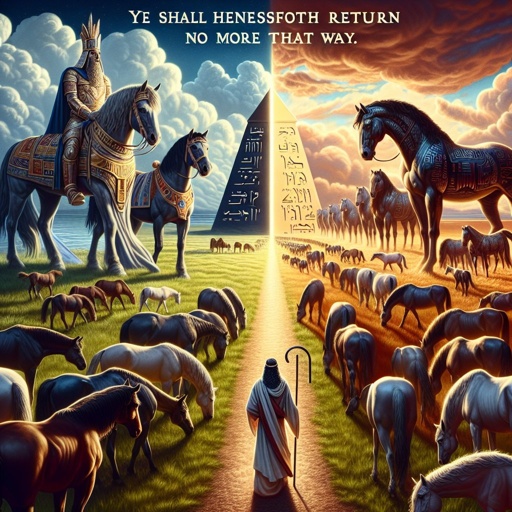
Deuteronomy 17:16 - "But he shall not multiply horses to himself, nor cause the people to return to Egypt, to the end that he should multiply horses: forasmuch as the LORD hath said unto you, Ye shall henceforth return no more that way."
"But he shall not multiply horses to himself, nor cause the people to return to Egypt, to the end that he should multiply horses: forasmuch as the LORD hath said unto you, Ye shall henceforth return no more that way." - Deuteronomy 17:16
Deuteronomy 16:17 - "Every man shall give as he is able, according to the blessing of the LORD thy God which he hath given thee."

Deuteronomy 20:16

Deuteronomy 5:17 - "Thou shalt not kill."

Deuteronomy 20:16

Deuteronomy 20:16

Deuteronomy 14:17 - "And the pelican, and the gier eagle, and the cormorant,"
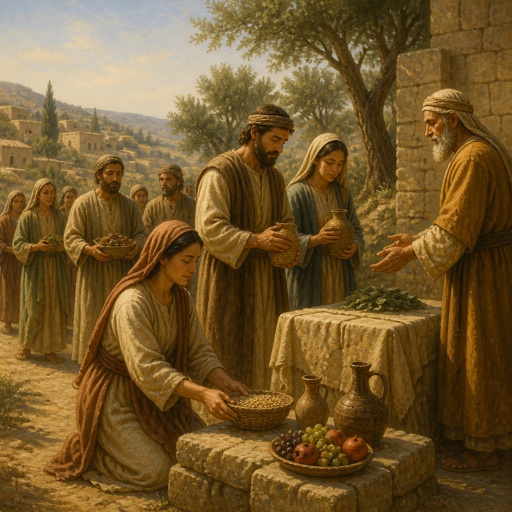
"Every man shall give as he is able, according to the blessing of the LORD thy God which he hath given thee." - Deuteronomy 16:17

Deuteronomy 2:17 - "That the LORD spake unto me, saying,"

Deuteronomy 14:16 - "The little owl, and the great owl, and the swan,"

Deuteronomy 28:17 - "Cursed shall be thy basket and thy store."

Deuteronomy 10:16 - "Circumcise therefore the foreskin of your heart, and be no more stiffnecked."

"Thou shalt not kill." - Deuteronomy 5:17

Deuteronomy 23:17 - "¶ There shall be no whore of the daughters of Israel, nor a sodomite of the sons of Israel."

Deuteronomy 17:13 - "And all the people shall hear, and fear, and do no more presumptuously."

Galatians 5:16-17

Galatians 5:16-17

Deuteronomy 17:17 - "Neither shall he multiply wives to himself, that his heart turn not away: neither shall he greatly multiply to himself silver and gold."

Deuteronomy 28:16 - "Cursed shalt thou be in the city, and cursed shalt thou be in the field."

1 corinthians 3:16-17

1 corinthians 3:16-17

1 corinthians 3:16-17

Genesis 17-16

Romans 16:17

Acts 16:17

Romans 16:17

Romans 16:17

Deuteronomy 4:17 - "The likeness of any beast that is on the earth, the likeness of any winged fowl that flieth in the air,"

"And the pelican, and the gier eagle, and the cormorant," - Deuteronomy 14:17