What does Deuteronomy 1:11 mean?
"(The LORD God of your fathers make you a thousand times so many more as ye are, and bless you, as he hath promised you!)" - Deuteronomy 1:11
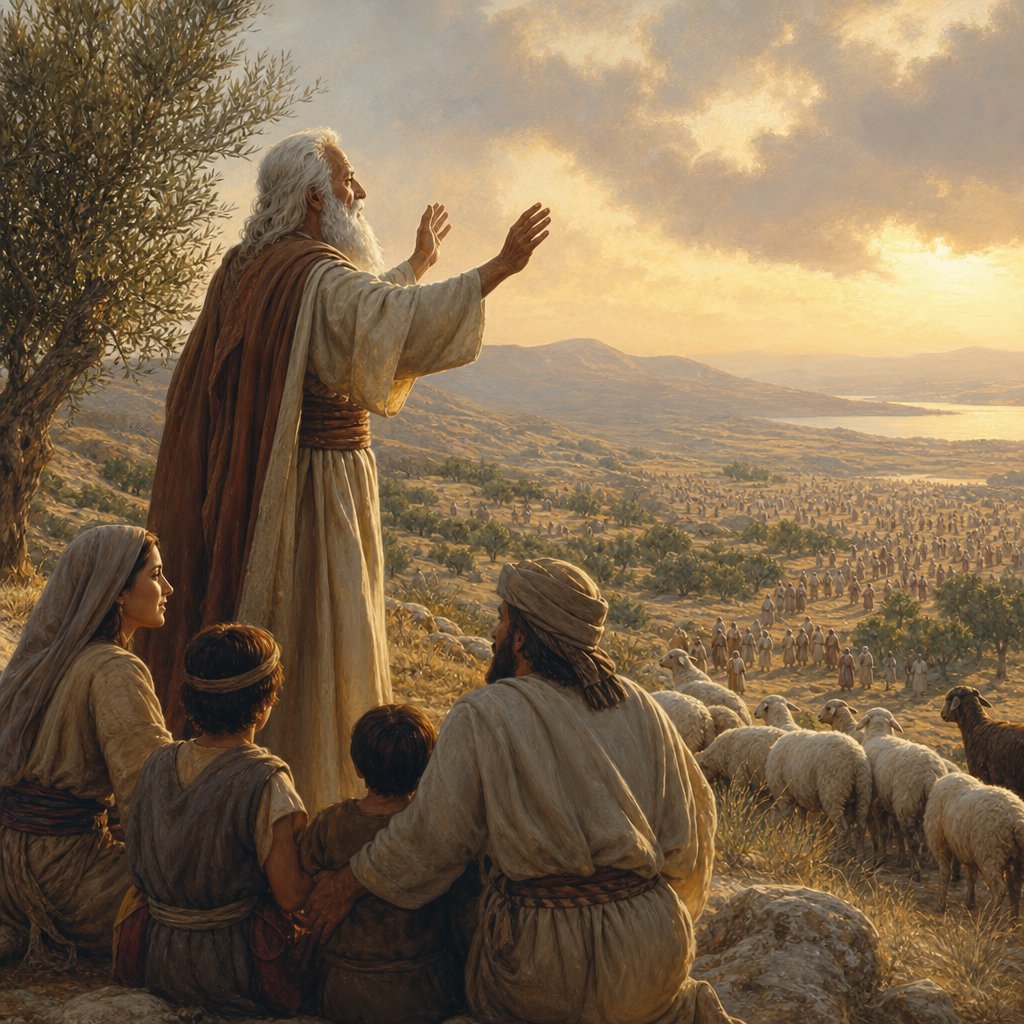
Deuteronomy 1:11 in the KJV reads, “(The LORD God of your fathers make you a thousand times so many more as ye are, and bless you, as he hath promised you!)” It stands like a brief, fervent benediction placed within Moses’ larger address to Israel, and its meaning becomes clearer when it is heard in its immediate setting and in the long memory of God’s dealings with “your fathers.”
In context, Moses is recounting to the new generation what happened after the LORD brought Israel out of Egypt. Just before this verse, Moses has spoken of the people’s increase and of the burden that their multitude placed upon him in judgment and governance. The nation has grown so large that Moses must appoint rulers and judges to share the work. Deuteronomy 1:11 is inserted right there, as if Moses cannot mention their growth and the weight of leadership without pausing to invoke God’s continued favor. The verse is therefore not a detached proverb about prosperity; it is a pastoral interjection in the middle of a historical rehearsal. Moses remembers that Israel’s size is not an accident of history but a gift of covenant mercy, and he expresses the desire that what God has begun in them would be carried forward in even greater measure.
The themes of covenant continuity and inherited promise are explicit in the phrase “The LORD God of your fathers.” Moses is not speaking of a new deity or a new religious project, but of the same LORD who bound himself to the patriarchs and carried their seed through affliction into deliverance. By naming God this way, the verse binds the present congregation to their ancestral story and insists that their identity is rooted in God’s earlier word. Israel’s future is not imagined as self-made; it is received as the unfolding of what God has already promised. The phrase “as he hath promised you” anchors blessing not in Israel’s merit but in God’s faithfulness. The meaning of the blessing Moses pronounces is therefore covenantal: it is God acting in consistency with his own word.
The language “make you a thousand times so many more as ye are” carries the symbolism of immeasurable increase. In biblical idiom, “a thousand” often functions as a number of fullness and vastness, not as a statistical forecast meant to be calculated. Moses is not inviting Israel to do the arithmetic; he is magnifying the generosity of God. The image is of a people so multiplied that what already seems abundant would, by the LORD’s hand, become superabundant. This is especially significant because Israel is on the edge of the land, facing the responsibilities and conflicts of settlement. Increase in number can mean strength, continuity, and the endurance of the covenant line from generation to generation. Yet in the chapter’s flow it also recalls the administrative challenge Moses has just described: blessing is not only comfortable; it brings weight, structure, accountability, and the need for righteous judgment. The verse thus quietly teaches that divine favor is not merely a private benefit but a communal calling that requires order and integrity.
The parenthetical form of the verse in the KJV—set off with parentheses—also matters. It reads like an aside from Moses’ heart, a moment of affectionate prayer embedded in instruction and warning. Deuteronomy as a whole is a book of remembrance and exhortation: Moses urges Israel to recall what the LORD has done, to obey, and to avoid repeating the unbelief of the past. Against that sober backdrop, Deuteronomy 1:11 shines as a note of hope. Even while Moses is preparing to speak of failure and consequence later in the chapter, he refuses to speak as though God’s intentions have become stingy or exhausted. The blessing is forward-looking: despite Israel’s history of murmuring and fear, the LORD remains the one who multiplies and blesses according to promise.
The verse also carries a subtle theological balance between divine sovereignty and human dependence. Moses does not say, “May your strength make you greater,” but “The LORD God of your fathers make you…” Increase is presented as God’s work. Likewise, “bless you” is not defined as mere material enlargement; in Deuteronomy, blessing is tied to God’s presence, favor, protection, and the ordered life that flows from obedience. The verse therefore implies that Israel’s flourishing is inseparable from remaining under the LORD’s gracious hand and within his promised word. The blessing Moses voices is not a blank check for autonomous ambition; it is the covenant God continuing to do what he said he would do for a people who are meant to live as his.
Taken together, the significance of Deuteronomy 1:11 is that it compresses Israel’s identity into a single sentence: they are a people made and sustained by the LORD of their fathers, intended for growth, and destined for blessing because God has spoken. It is both doxological and practical—praising God’s faithfulness while hinting at the responsibilities that come with being increased. In the mouth of Moses, this blessing is a bridge between past and future: the same LORD who began with promise will continue with fulfillment, and the proper response of the covenant community is to receive that future as gift, guided by remembrance, humility, and trust in what “he hath promised you.”
Have questions about Deuteronomy 1:11?
Dive deeper into this scripture with Bible Chat — an AI-powered tool for exploring God's Word through conversation. Ask questions, get context, and grow in your understanding of the Bible.
Get Our Apps


Deuteronomy 1:11 Artwork

Deuteronomy 1:11 - "(The LORD God of your fathers make you a thousand times so many more as ye are, and bless you, as he hath promised you!)"
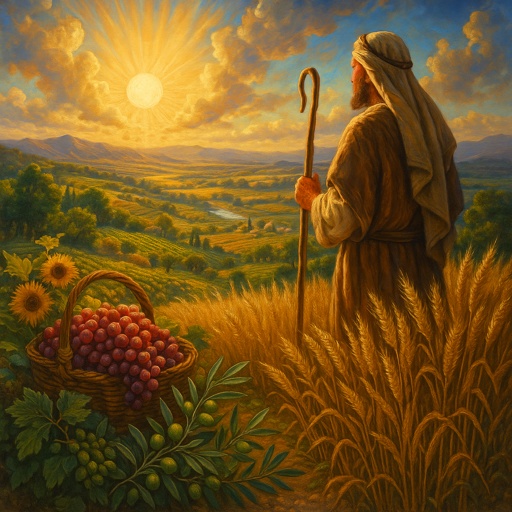
"(The LORD God of your fathers make you a thousand times so many more as ye are, and bless you, as he hath promised you!)" - Deuteronomy 1:11

"(The LORD God of your fathers make you a thousand times so many more as ye are, and bless you, as he hath promised you!)" - Deuteronomy 1:11
"(The LORD God of your fathers make you a thousand times so many more as ye are, and bless you, as he hath promised you!)" - Deuteronomy 1:11
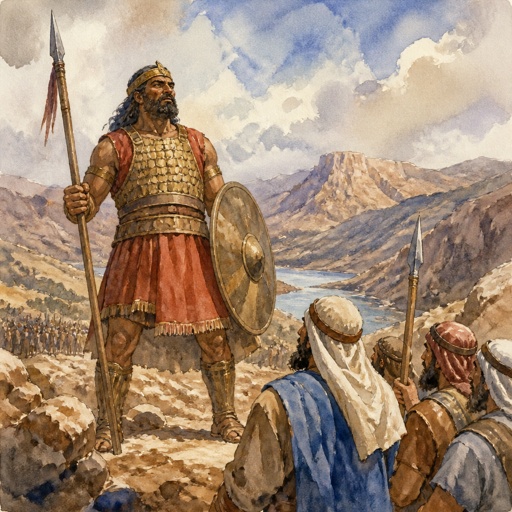
King Og Deuteronomy 3:1-11

Acts 1:1-11

Acts 1:1-11
Deuteronomy 11:1 - "Therefore thou shalt love the LORD thy God, and keep his charge, and his statutes, and his judgments, and his commandments, alway."

Deuteronomy 11:23

Revelation 1:11

Isaiah 11:1

Revelation 1:11

Nehemiah 11:1-19

Deuteronomy 11:11 - "But the land, whither ye go to possess it, is a land of hills and valleys, and drinketh water of the rain of heaven:"

Create a picture of Deuteronomy 11:20

Deuteronomy 14:11 - "¶ Of all clean birds ye shall eat."

Deuteronomy 18:11 - "Or a charmer, or a consulter with familiar spirits, or a wizard, or a necromancer."

Deuteronomy 27:11 - "¶ And Moses charged the people the same day, saying,"

Deuteronomy 11:26 - "¶ Behold, I set before you this day a blessing and a curse;"

Deuteronomy 22:11 - "¶ Thou shalt not wear a garment of divers sorts, as of woollen and linen together."

Deuteronomy 2:11 - "Which also were accounted giants, as the Anakims; but the Moabites call them Emims."

Deuteronomy 11:5 - "And what he did unto you in the wilderness, until ye came into this place;"

Deuteronomy 11:15 - "And I will send grass in thy fields for thy cattle, that thou mayest eat and be full."

Deuteronomy 11:7 - "But your eyes have seen all the great acts of the LORD which he did."

Deuteronomy 30:11 - "¶ For this commandment which I command thee this day, it is not hidden from thee, neither is it far off."

Deuteronomy 1:1 - "These be the words which Moses spake unto all Israel on this side Jordan in the wilderness, in the plain over against the Red sea, between Paran, and Tophel, and Laban, and Hazeroth, and Dizahab."

Deuteronomy 11:27 - "A blessing, if ye obey the commandments of the LORD your God, which I command you this day:"

Deuteronomy 13:11 - "And all Israel shall hear, and fear, and shall do no more any such wickedness as this is among you."

Deuteronomy 11:20 - "And thou shalt write them upon the door posts of thine house, and upon thy gates:"

Deuteronomy 11:32 - "And ye shall observe to do all the statutes and judgments which I set before you this day."