What does Deuteronomy 22:12 mean?
“Thou shalt make thee fringes upon the four quarters of thy vesture, wherewith thou coverest thyself.” — Deuteronomy 22:12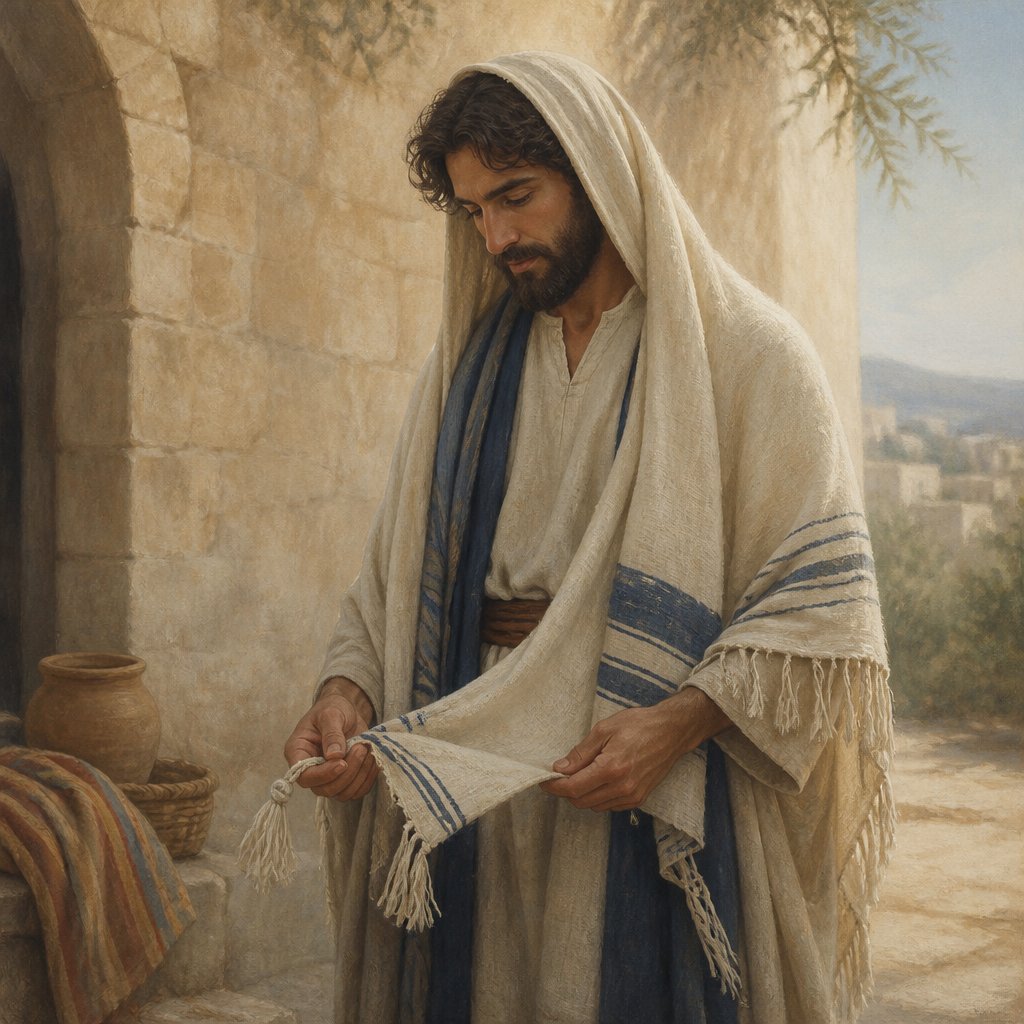
Deuteronomy 22:12 in the King James Version (KJV) of the Bible states: "Thou shalt make thee fringes upon the four quarters of thy vesture, wherewith thou coverest thyself."
This verse comes from the Book of Deuteronomy, which is the fifth book of the Hebrew Bible and the Jewish Torah. Deuteronomy is considered to be the last of the five books of Moses and is a compilation of three sermons delivered by Moses and a summary of the Israelites' experiences during their journey from Egypt to the Promised Land.
The verse in question is part of a larger passage in Deuteronomy that outlines various laws and regulations that were to be followed by the Israelites. In this specific verse, God commands the Israelites to put fringes, or tassels, on the four corners of their garments. This practice is known as wearing tzitzit, and it has significant religious and symbolic meaning in Jewish tradition.
The command to wear fringes on one's garments is found in the context of a larger set of laws given to the Israelites. It is a part of the laws that emphasize separation and distinction between the Israelites and the surrounding nations. The wearing of fringes was a visible sign of the wearer's commitment to God and adherence to His commandments.
The wearing of fringes on garments is deeply rooted in the religious and cultural traditions of Judaism. The practice is derived from the commandment in the Torah and is considered a way for Jews to fulfill God's commandment. The tradition of wearing tzitzit is also a way for Jewish people to outwardly demonstrate their faith and commitment to God, as well as to remind themselves of their religious obligations.
The fringes themselves hold symbolic significance within Jewish tradition. They serve as a reminder of the 613 commandments found in the Torah, as the tzitzit consist of eight strings and five knots, which correspond to the numerical value of the Hebrew word for "commandment." Additionally, the blue thread included in the tzitzit is meant to remind the wearer of the sky, which in turn is meant to remind them of God's presence and His commandments.
Furthermore, the wearing of fringes teaches the importance of mindfulness and intentionality in one's actions. It serves as a constant reminder to act in accordance with God's will and to live a life that is aligned with His teachings.
In addition to the religious and symbolic significance, the commandment to wear fringes also carries ethical and moral implications. It reinforces the importance of living a life of holiness and righteousness, and of honoring and obeying God's commandments. It is a reminder to the wearer to conduct themselves with integrity and to uphold ethical standards in their daily lives.
Overall, Deuteronomy 22:12 and the commandment to wear fringes on garments serve as a powerful reminder of the importance of faith, obedience, and mindfulness in the lives of believers. The practice of wearing tzitzit is a tangible way for Jewish people to connect with their religious heritage and to demonstrate their commitment to God and His commandments. It also carries deep symbolic meaning, serving as a reminder of the ethical and moral principles that are fundamental to the Jewish faith.
Get our apps


Artwork for Deuteronomy 22:12

Deuteronomy 22:12 - "¶ Thou shalt make thee fringes upon the four quarters of thy vesture, wherewith thou coverest thyself."
"¶ Thou shalt make thee fringes upon the four quarters of thy vesture, wherewith thou coverest thyself." - Deuteronomy 22:12

Deuteronomy 12:22 - "Even as the roebuck and the hart is eaten, so thou shalt eat them: the unclean and the clean shall eat of them alike."
"Even as the roebuck and the hart is eaten, so thou shalt eat them: the unclean and the clean shall eat of them alike." - Deuteronomy 12:22

Deuteronomy 22:20 - "But if this thing be true, and the tokens of virginity be not found for the damsel:"

Deuteronomy 22:10 - "¶ Thou shalt not plow with an ox and an ass together."

Deuteronomy 22:18 - "And the elders of that city shall take that man and chastise him;"

Deuteronomy 23:22 - "But if thou shalt forbear to vow, it shall be no sin in thee."

Deuteronomy 9:22 - "And at Taberah, and at Massah, and at Kibroth-hattaavah, ye provoked the LORD to wrath."

Deuteronomy 22:11 - "¶ Thou shalt not wear a garment of divers sorts, as of woollen and linen together."

Deuteronomy 22:13 - "¶ If any man take a wife, and go in unto her, and hate her,"

1 Corinthians 12:12-22

Deuteronomy 31:22 - "¶ Moses therefore wrote this song the same day, and taught it the children of Israel."

Deuteronomy 22:27 - "For he found her in the field, and the betrothed damsel cried, and there was none to save her."

Deuteronomy 3:22 - "Ye shall not fear them: for the LORD your God he shall fight for you."

Deuteronomy 22:23 - "¶ If a damsel that is a virgin be betrothed unto an husband, and a man find her in the city, and lie with her;"

Deuteronomy 33:22 - "¶ And of Dan he said, Dan is a lion's whelp: he shall leap from Bashan."

Deuteronomy 22:30 - "¶ A man shall not take his father's wife, nor discover his father's skirt."

Deuteronomy 22:22 - "¶ If a man be found lying with a woman married to an husband, then they shall both of them die, both the man that lay with the woman, and the woman: so shalt thou put away evil from Israel."

Deuteronomy 14:12 - "But these are they of which ye shall not eat: the eagle, and the ossifrage, and the ospray,"

Deuteronomy 24:12 - "And if the man be poor, thou shalt not sleep with his pledge:"

Deuteronomy 22:28 - "¶ If a man find a damsel that is a virgin, which is not betrothed, and lay hold on her, and lie with her, and they be found;"

Genesis 22-12

Deuteronomy 12:4 - "Ye shall not do so unto the LORD your God."

Deuteronomy 12:24 - "Thou shalt not eat it; thou shalt pour it upon the earth as water."

Deuteronomy 32:12 - "So the LORD alone did lead him, and there was no strange god with him."

Deuteronomy 14:22 - "Thou shalt truly tithe all the increase of thy seed, that the field bringeth forth year by year."

Deuteronomy 16:22 - "Neither shalt thou set thee up any image; which the LORD thy God hateth."

Deuteronomy 21:22 - "¶ And if a man have committed a sin worthy of death, and he be to be put to death, and thou hang him on a tree:"

"But if this thing be true, and the tokens of virginity be not found for the damsel:" - Deuteronomy 22:20