What does Deuteronomy 22:14 mean?
“And give occasions of speech against her, and bring up an evil name upon her, and say, I took this woman, and when I came to her, I found her not a maid:” — Deuteronomy 22:14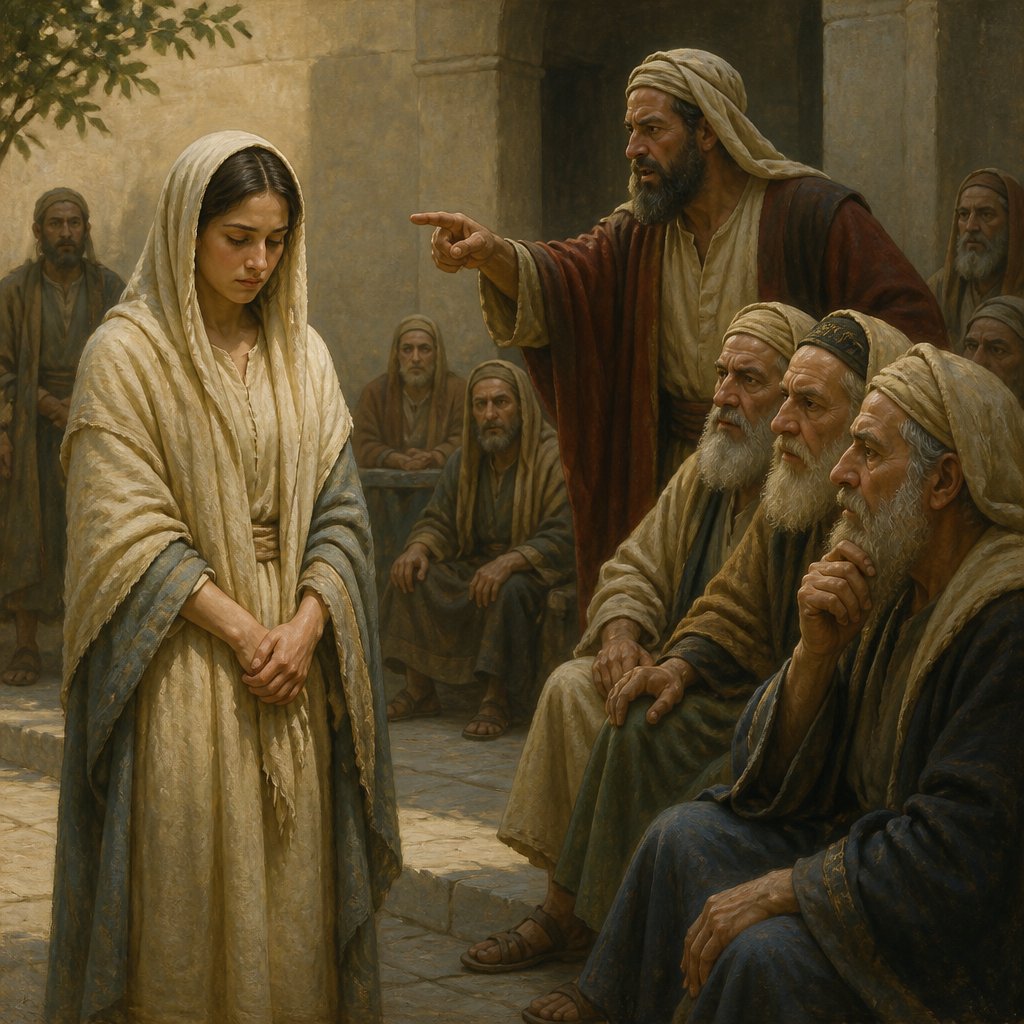
Deuteronomy 22:14 in the King James Version states, "And give occasions of speech against her, and bring up an evil name upon her, and say, I took this woman, and when I came to her, I found her not a maid:"
This verse is part of a larger passage in the book of Deuteronomy that outlines the laws and regulations set forth by God for the nation of Israel. In this specific passage, the focus is on the sanctity of marriage and the consequences for lying about a woman's virginity. It is essential to understand the historical and cultural context of this verse to fully grasp its meaning and significance.
During ancient times, virginity was highly valued, particularly in the context of marriage. A woman's purity and chastity were considered crucial for a successful marriage and the continuation of the family line. If a woman was found not to be a virgin at the time of marriage, it could bring shame and dishonor upon her family. Therefore, the accusation of a woman's lack of virginity was a serious matter with significant consequences.
The verse in Deuteronomy 22:14 addresses the situation where a man accuses his wife of not being a virgin when they got married. The mention of "give occasions of speech against her" implies that the man is trying to create a case against his wife by spreading rumors and lies about her lack of virginity. The phrase "and bring up an evil name upon her" highlights the potential damage to the woman's reputation and honor.
The severity of the accusation is evident in the following statement, "and say, I took this woman, and when I came to her, I found her not a maid." The man is claiming that he discovered his wife was not a virgin when they consummated their marriage, thereby questioning her purity and faithfulness. In ancient Israelite society, such an accusation could lead to grave consequences for the woman, including being shunned by her community or even facing death by stoning.
From a broader thematic perspective, this verse reflects the importance of truthfulness, honesty, and integrity in personal relationships, particularly in the context of marriage. The accusation of a woman's lack of virginity is not only a betrayal of trust but also a violation of the fundamental principles of justice and fairness. It emphasizes the notion that false accusations have severe repercussions, not only for the accused but also for the wider community.
Furthermore, the verse underscores the significance of upholding the sanctity of marriage and the importance of preserving the honor and dignity of individuals within the community. It serves as a safeguard against slander and gossip that could cause irreparable harm to a person's reputation.
In terms of symbolism, this verse symbolizes the broader themes of purity, fidelity, and righteousness. The concept of virginity represents a state of purity and innocence, and the accusation of its absence is a metaphor for betrayal and deceit. It also symbolizes the vulnerability of women in a patriarchal society, where their worth and identity are often tied to their sexual purity.
In conclusion, Deuteronomy 22:14 from the King James Version of the Bible addresses the serious implications of falsely accusing a woman of not being a virgin. It serves as a moral and ethical guideline for upholding the sanctity of marriage, promoting honesty and integrity in relationships, and safeguarding the honor and dignity of individuals within the community. The verse carries significant cultural and historical context, emphasizing the importance of truthfulness, fairness, and the preservation of personal reputation.
Get our apps


Artwork for Deuteronomy 22:14

Deuteronomy 22:14 - "And give occasions of speech against her, and bring up an evil name upon her, and say, I took this woman, and when I came to her, I found her not a maid:"
"And give occasions of speech against her, and bring up an evil name upon her, and say, I took this woman, and when I came to her, I found her not a maid:" - Deuteronomy 22:14

Deuteronomy 14:22 - "Thou shalt truly tithe all the increase of thy seed, that the field bringeth forth year by year."
"Thou shalt truly tithe all the increase of thy seed, that the field bringeth forth year by year." - Deuteronomy 14:22

Deuteronomy 14:14 - "And every raven after his kind,"

Deuteronomy 22:20 - "But if this thing be true, and the tokens of virginity be not found for the damsel:"

Deuteronomy 22:10 - "¶ Thou shalt not plow with an ox and an ass together."

Deuteronomy 14:17 - "And the pelican, and the gier eagle, and the cormorant,"

"And every raven after his kind," - Deuteronomy 14:14

Deuteronomy 22:18 - "And the elders of that city shall take that man and chastise him;"

Deuteronomy 23:22 - "But if thou shalt forbear to vow, it shall be no sin in thee."

Deuteronomy 14:16 - "The little owl, and the great owl, and the swan,"

Deuteronomy 9:22 - "And at Taberah, and at Massah, and at Kibroth-hattaavah, ye provoked the LORD to wrath."

Deuteronomy 22:11 - "¶ Thou shalt not wear a garment of divers sorts, as of woollen and linen together."

Deuteronomy 22:13 - "¶ If any man take a wife, and go in unto her, and hate her,"

Deuteronomy 14:3 - "¶ Thou shalt not eat any abominable thing."

Deuteronomy 31:22 - "¶ Moses therefore wrote this song the same day, and taught it the children of Israel."

Deuteronomy 14:11 - "¶ Of all clean birds ye shall eat."

Deuteronomy 14:20 - "But of all clean fowls ye may eat."

Deuteronomy 14:13 - "And the glede, and the kite, and the vulture after his kind,"

Deuteronomy 22:27 - "For he found her in the field, and the betrothed damsel cried, and there was none to save her."

Deuteronomy 14:18 - "And the stork, and the heron after her kind, and the lapwing, and the bat."

Deuteronomy 14:12 - "But these are they of which ye shall not eat: the eagle, and the ossifrage, and the ospray,"

Genesis 22 14

Genesis 22-14

Deuteronomy 3:22 - "Ye shall not fear them: for the LORD your God he shall fight for you."

Deuteronomy 22:23 - "¶ If a damsel that is a virgin be betrothed unto an husband, and a man find her in the city, and lie with her;"

Deuteronomy 33:22 - "¶ And of Dan he said, Dan is a lion's whelp: he shall leap from Bashan."

Deuteronomy 14:15 - "And the owl, and the night hawk, and the cuckow, and the hawk after his kind,"

Deuteronomy 29:14 - "Neither with you only do I make this covenant and this oath;"