What does Deuteronomy 22:29 mean?
“Then the man that lay with her shall give unto the damsel’s father fifty shekels of silver, and she shall be his wife; because he hath humbled her, he may not put her away all his days.” — Deuteronomy 22:29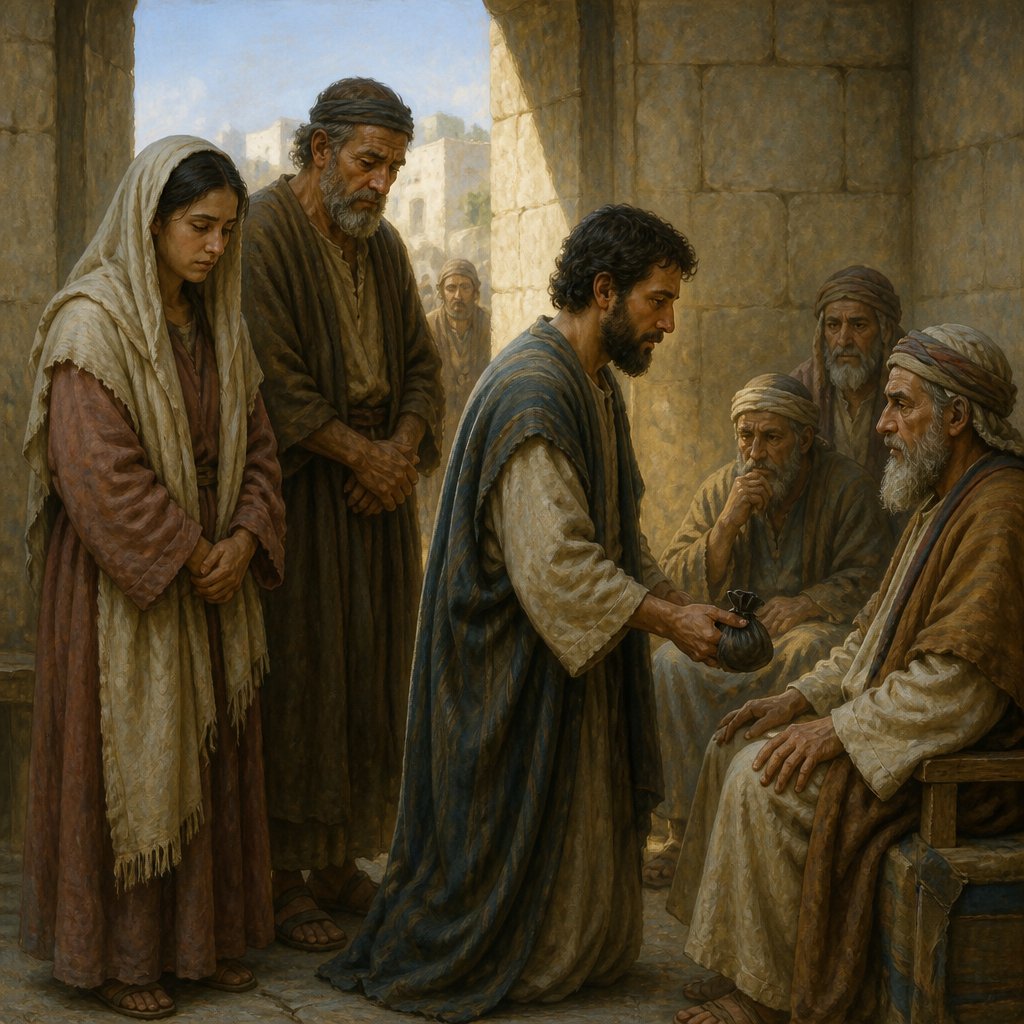
Deuteronomy 22:29 in the King James Version of the Bible reads, "Then the man that lay with her shall give unto the damsel's father fifty shekels of silver, and she shall be his wife; because he hath humbled her, he may not put her away all his days." This verse is part of the laws given to the Israelites by Moses, as they were preparing to enter the Promised Land. In this verse, Moses addresses the issue of a man who rapes a virgin and the consequences that follow.
At first glance, this verse may seem troubling to modern readers, as it appears to mandate that a rape victim must marry her rapist. However, a closer examination of the verse and the context in which it was written reveals deeper themes and principles.
First and foremost, it is important to note that the cultural and social context of ancient Israel was vastly different from our own. In ancient Israelite society, a woman's virginity was highly valued, and the loss of virginity outside of marriage was considered a grievous offense. In this patriarchal society, a woman's value often depended on her purity and sexual status, and a woman who was not a virgin might have faced a life of shame and rejection. Therefore, the law in Deuteronomy 22:29 was likely intended to provide some measure of protection and provision for a woman who had been violated.
It is also important to understand the concept of justice and restitution in ancient Israelite law. In this case, the rapist is required to pay a significant sum of money (fifty shekels of silver) to the girl's father as a form of restitution. This payment is not a "fine" but rather a form of compensation for the damage done to the girl and her family. It is a recognition of the harm and dishonor that has been brought upon the girl and her family, and it is meant to provide for her future security. Furthermore, the rapist is required to marry the girl and provide for her all his days, ensuring that she is not left destitute and abandoned.
The underlying principle in this law is the protection and care for the vulnerable and the oppressed. While the application of this principle may seem foreign and even unjust to modern sensibilities, its intent was to provide for the well-being of the victim and to hold the perpetrator accountable for his actions. It is also important to note that this law was given in a specific cultural and historical context, and its application and understanding must be interpreted in light of the broader ethical and moral principles of justice, compassion, and care for the marginalized.
Moreover, it is important to consider the redemptive and transformative nature of the law in the Old Testament. While the law in Deuteronomy 22:29 may appear to be harsh or even unjust from a modern perspective, it reflects the progression and development of moral and ethical principles within the context of ancient Israel. The laws given in the Old Testament were intended to guide and shape the Israelites as a people set apart for God, and they were also a reflection of God's concern for justice, righteousness, and compassion.
Symbolically, this law in Deuteronomy 22:29 points to the broader themes of justice, restoration, and the value of human life in the eyes of God. It underscores the importance of caring for those who have been victimized and holding the perpetrators accountable for their actions. It also reflects the redemptive and transformative nature of God's law, which seeks to bring healing and restoration even in the midst of brokenness and injustice.
In conclusion, while the law in Deuteronomy 22:29 may raise difficult and challenging questions for modern readers, it is important to approach it with sensitivity to its cultural, historical, and ethical context. It reflects the ancient Israelites' understanding of justice and restitution, as well as their concern for the well-being of the vulnerable. Ultimately, this law points to the broader themes of justice, compassion, and restoration that are woven throughout the Old Testament and continue to inform our understanding of God's character and purposes.
Get our apps


Artwork for Deuteronomy 22:29

Deuteronomy 22:29 - "Then the man that lay with her shall give unto the damsel's father fifty shekels of silver, and she shall be his wife; because he hath humbled her, he may not put her away all his days."
"Then the man that lay with her shall give unto the damsel's father fifty shekels of silver, and she shall be his wife; because he hath humbled her, he may not put her away all his days." - Deuteronomy 22:29
Deuteronomy 29:22 - "So that the generation to come of your children that shall rise up after you, and the stranger that shall come from a far land, shall say, when they see the plagues of that land, and the sicknesses which the LORD hath laid upon it;"

Jonah 2:2-9 Jonah praying in the belly of the fish.

Deuteronomy 1:29 - "Then I said unto you, Dread not, neither be afraid of them."

Deuteronomy 3:29 - "So we abode in the valley over against Beth-peor."

Deuteronomy 29:14 - "Neither with you only do I make this covenant and this oath;"

Deuteronomy 32:29 - "O that they were wise, that they understood this, that they would consider their latter end!"

Deuteronomy 29:29 - "The secret things belong unto the LORD our God: but those things which are revealed belong unto us and to our children for ever, that we may do all the words of this law."

Deuteronomy 29:27 - "And the anger of the LORD was kindled against this land, to bring upon it all the curses that are written in this book:"

Deuteronomy 29:3 - "The great temptations which thine eyes have seen, the signs, and those great miracles:"

Deuteronomy 29:8 - "And we took their land, and gave it for an inheritance unto the Reubenites, and to the Gadites, and to the half tribe of Manasseh."

Deuteronomy 22:20 - "But if this thing be true, and the tokens of virginity be not found for the damsel:"

Deuteronomy 22:10 - "¶ Thou shalt not plow with an ox and an ass together."

Deuteronomy 29:9 - "Keep therefore the words of this covenant, and do them, that ye may prosper in all that ye do."

Jeremiah 22:29 - "O earth, earth, earth, hear the word of the LORD."

Deuteronomy 22:18 - "And the elders of that city shall take that man and chastise him;"

Deuteronomy 23:22 - "But if thou shalt forbear to vow, it shall be no sin in thee."

Deuteronomy 29:4 - "Yet the LORD hath not given you an heart to perceive, and eyes to see, and ears to hear, unto this day."

Deuteronomy 29:17 - "And ye have seen their abominations, and their idols, wood and stone, silver and gold, which were among them:)"

Genesis 29:22 - "And Laban gathered together all the men of the place, and made a feast."

Deuteronomy 29:28 - "And the LORD rooted them out of their land in anger, and in wrath, and in great indignation, and cast them into another land, as it is this day."

Deuteronomy 29:15 - "But with him that standeth here with us this day before the LORD our God, and also with him that is not here with us this day:"

Deuteronomy 9:22 - "And at Taberah, and at Massah, and at Kibroth-hattaavah, ye provoked the LORD to wrath."

Deuteronomy 22:11 - "¶ Thou shalt not wear a garment of divers sorts, as of woollen and linen together."

Deuteronomy 22:13 - "¶ If any man take a wife, and go in unto her, and hate her,"

Proverbs 29:22 - "An angry man stirreth up strife, and a furious man aboundeth in transgression."

Deuteronomy 29:26 - "For they went and served other gods, and worshipped them, gods whom they knew not, and whom he had not given unto them:"

Deuteronomy 31:22 - "¶ Moses therefore wrote this song the same day, and taught it the children of Israel."

Deuteronomy 29:16 - "(For ye know how we have dwelt in the land of Egypt; and how we came through the nations which ye passed by;"