What does Deuteronomy 23:14 mean?
"For the LORD thy God walketh in the midst of thy camp, to deliver thee, and to give up thine enemies before thee; therefore shall thy camp be holy: that he see no unclean thing in thee, and turn away from thee." - Deuteronomy 23:14
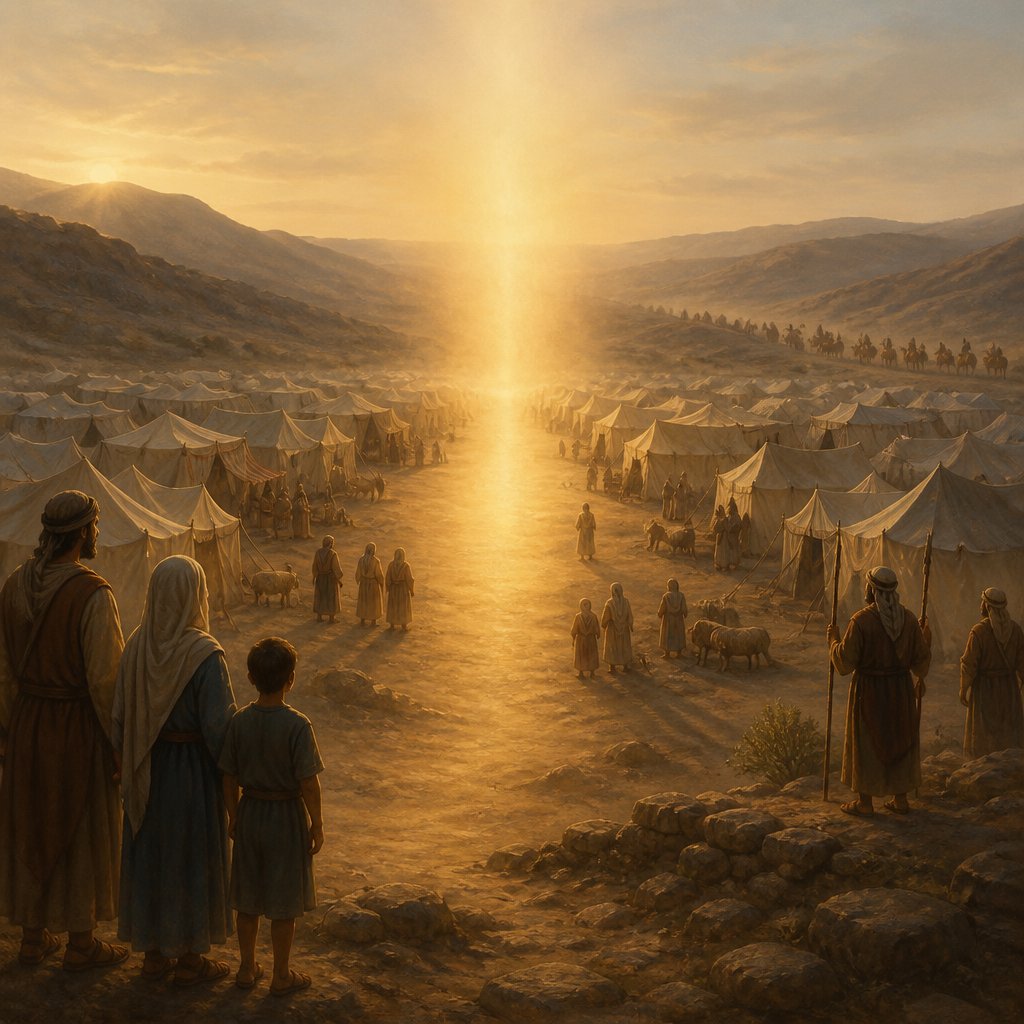
Deuteronomy 23:14 in the King James Version of the Bible reads, "For the LORD thy God walketh in the midst of thy camp, to deliver thee, and to give up thine enemies before thee; therefore shall thy camp be holy: that he see no unclean thing in thee, and turn away from thee."
This verse is found in the Old Testament book of Deuteronomy, which is a record of the speeches given by Moses to the Israelites before they entered the promised land. The context of this particular verse is important to understand its significance. In the preceding verses, there are various regulations and laws given to the Israelites regarding how they are to conduct themselves in their camp. These regulations cover issues such as cleanliness, personal hygiene, and even the treatment of slaves who have escaped from their masters.
The verse in question is a reminder to the Israelites of the holiness of God and the importance of living in a way that reflects this holiness. It begins by emphasizing the presence of the Lord in the midst of their camp. This is a powerful image that conveys both the idea of God's protection and His close relationship with His people. The phrase "to deliver thee, and to give up thine enemies before thee" serves as a reminder of God's faithfulness and His commitment to fight for His people.
The latter part of the verse explains the reason for the command to keep the camp holy. This command is not simply a matter of maintaining cleanliness for cleanliness's sake. Rather, it is a matter of maintaining holiness so that God does not turn away from His people. The implication is that the presence of God is directly tied to the holiness of the people. If there is "no unclean thing" in the camp, the Lord will not turn away from them.
This verse touches on several important themes that run throughout the Bible. One of these is the holiness of God. The concept of holiness is central to the Old Testament, and it refers to God's absolute moral perfection and separateness from sin. The idea that God is present in the midst of the camp serves to emphasize the need for the Israelites to live in a way that reflects this holiness.
Another theme that is evident in this verse is the faithfulness of God. The promise to deliver the Israelites and to give up their enemies before them is one of many instances in the Old Testament where God demonstrates His faithfulness to His people. This theme is especially important in the context of the Israelites' impending entrance into the promised land, as it serves as a reminder of God's commitment to His covenant with them.
The verse also has significant implications for the concept of purity in a spiritual sense. The idea of being "holy" and free from "unclean things" is not only about maintaining physical cleanliness but also about living in a way that is pleasing to God. This can be understood as a call to moral and spiritual purity, and it resonates with the broader biblical theme of the importance of living in a way that reflects God's character.
Symbolism is present in this verse as well. The camp can be seen as a symbol of the community of believers, and the need for holiness in the camp reflects the need for holiness in the lives of God's people. The presence of God in the camp is a symbol of His presence in the lives of believers, and the need for holiness in order to maintain this presence is a universal spiritual principle.
In conclusion, Deuteronomy 23:14 is a verse that is rich in meaning and significance. It serves as a reminder of the holiness of God, the faithfulness of God, and the importance of living in a way that reflects these truths. Its themes of holiness, faithfulness, and purity are central to the biblical narrative, and its symbolism speaks to the broader spiritual truths that can be found throughout the Bible.
Have questions about Deuteronomy 23:14?
Dive deeper into this scripture with Bible Chat — an AI-powered tool for exploring God's Word through conversation. Ask questions, get context, and grow in your understanding of the Bible.
Get Our Apps


Deuteronomy 23:14 Artwork

Deuteronomy 23:14 - "For the LORD thy God walketh in the midst of thy camp, to deliver thee, and to give up thine enemies before thee; therefore shall thy camp be holy: that he see no unclean thing in thee, and turn away from thee."
"For the LORD thy God walketh in the midst of thy camp, to deliver thee, and to give up thine enemies before thee; therefore shall thy camp be holy: that he see no unclean thing in thee, and turn away from thee." - Deuteronomy 23:14

Deuteronomy 11:23

Deuteronomy 14:14 - "And every raven after his kind,"

Deuteronomy 3:23 - "And I besought the LORD at that time, saying,"

Deuteronomy 23:22 - "But if thou shalt forbear to vow, it shall be no sin in thee."

Deuteronomy 14:17 - "And the pelican, and the gier eagle, and the cormorant,"

"And every raven after his kind," - Deuteronomy 14:14

Deuteronomy 23:8 - "The children that are begotten of them shall enter into the congregation of the LORD in their third generation."

Deuteronomy 23:17 - "¶ There shall be no whore of the daughters of Israel, nor a sodomite of the sons of Israel."

Deuteronomy 14:16 - "The little owl, and the great owl, and the swan,"

Deuteronomy 23:6 - "Thou shalt not seek their peace nor their prosperity all thy days for ever."

Deuteronomy 14:3 - "¶ Thou shalt not eat any abominable thing."

Deuteronomy 14:11 - "¶ Of all clean birds ye shall eat."

Deuteronomy 14:20 - "But of all clean fowls ye may eat."

Deuteronomy 14:13 - "And the glede, and the kite, and the vulture after his kind,"

Deuteronomy 22:23 - "¶ If a damsel that is a virgin be betrothed unto an husband, and a man find her in the city, and lie with her;"

Deuteronomy 27:23 - "Cursed be he that lieth with his mother in law. And all the people shall say, Amen."

Genesis 23-14

"And I besought the LORD at that time, saying," - Deuteronomy 3:23

Deuteronomy 28:23 - "And thy heaven that is over thy head shall be brass, and the earth that is under thee shall be iron."

Deuteronomy 15:23 - "Only thou shalt not eat the blood thereof; thou shalt pour it upon the ground as water."

Deuteronomy 14:18 - "And the stork, and the heron after her kind, and the lapwing, and the bat."

Deuteronomy 14:12 - "But these are they of which ye shall not eat: the eagle, and the ossifrage, and the ospray,"

Deuteronomy 32:23 - "I will heap mischiefs upon them; I will spend mine arrows upon them."

Deuteronomy 1:23 - "And the saying pleased me well: and I took twelve men of you, one of a tribe:"

Deuteronomy 14:15 - "And the owl, and the night hawk, and the cuckow, and the hawk after his kind,"

Deuteronomy 29:14 - "Neither with you only do I make this covenant and this oath;"

Deuteronomy 23:12 - "¶ Thou shalt have a place also without the camp, whither thou shalt go forth abroad:"

John 14:23-29