What does Deuteronomy 25:3 mean?
"Forty stripes he may give him, and not exceed: lest, if he should exceed, and beat him above these with many stripes, then thy brother should seem vile unto thee." - Deuteronomy 25:3
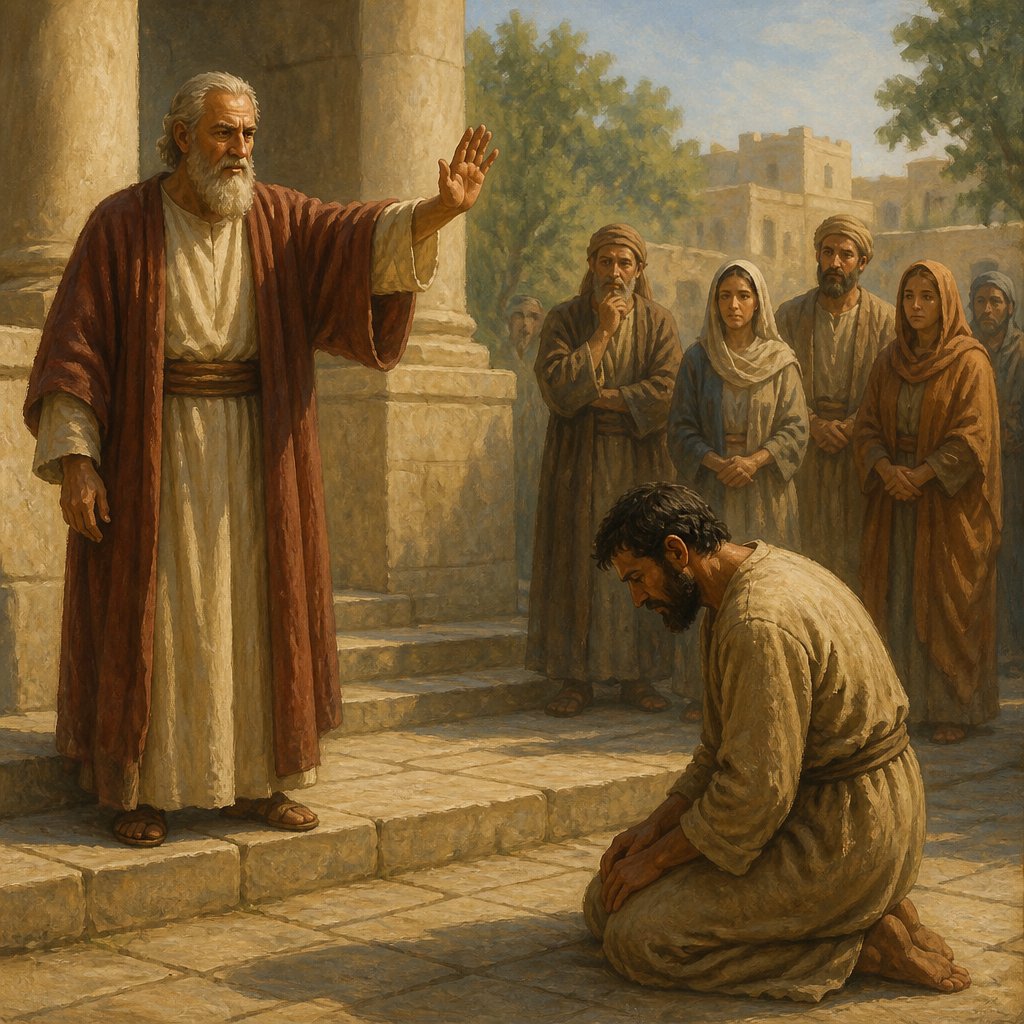
Deuteronomy 25:3 (KJV) reads: "Forty stripes he may give him, and not exceed: lest, if he should exceed, and beat him above these with many stripes, then thy brother should seem vile unto thee."
This verse is a part of the larger context of Deuteronomy, which is the fifth book in the Hebrew Bible and the Old Testament of the Christian Bible. It contains the final teachings and instructions of Moses to the Israelites before they enter the Promised Land. The book is essentially a series of speeches given by Moses, in which he reminds the people of their history, their covenant with God, and the laws and commandments that they are to follow once they enter the land.
Deuteronomy 25:3 specifically falls within a section that outlines the principles of just and fair punishment. The verse sets a limit on the number of lashes a person can receive as a form of punishment. The text essentially prohibits excessive or cruel punishment, warning against the dehumanization and degradation of the individual being punished. This is in line with the larger themes of justice, mercy, and compassion that are prevalent throughout the book of Deuteronomy.
In understanding the context and significance of this verse, it is important to recognize the cultural and historical context in which it was written. During ancient times, corporal punishment was a common form of discipline and legal penalty. However, the text from Deuteronomy serves to prevent abuse of power and to maintain the dignity and humanity of the punished individual.
The symbolism of the number forty in this verse is also something to consider. In the Bible, the number forty often symbolizes a period of testing, trial, or probation. For example, the Israelites wandered in the wilderness for forty years, and Jesus fasted for forty days in the desert. In the case of Deuteronomy 25:3, the limitation of forty stripes may serve as a symbolic measure of discipline and correction, rather than a means of inflicting severe and excessive harm.
Furthermore, the verse emphasizes the idea of treating others with respect and dignity, even in the context of punishment. The phrase "lest, if he should exceed, and beat him above these with many stripes, then thy brother should seem vile unto thee" highlights the importance of maintaining the brotherly bond and not allowing punishment to dehumanize or degrade the individual.
From a theological perspective, this verse also reflects the character of a just and compassionate God. It demonstrates God's concern for the wellbeing and dignity of every individual, regardless of their transgressions. It underscores the principle of proportionate justice and restraint, rather than vindictiveness or cruelty. This is consistent with the broader biblical theme of God's justice being tempered with mercy and love.
In conclusion, Deuteronomy 25:3 carries significant ethical, moral, and theological implications. It speaks to the value of human dignity, the principles of justice and fairness, and the compassionate nature of God. It also serves as a reminder to treat others with respect and dignity, even in the context of punishment. The verse offers timeless wisdom and guidance for how to uphold the principles of justice and mercy in the treatment of others.
Have questions about Deuteronomy 25:3?
Dive deeper into this scripture with Bible Chat — an AI-powered tool for exploring God's Word through conversation. Ask questions, get context, and grow in your understanding of the Bible.
Get Our Apps


Deuteronomy 25:3 Artwork

Deuteronomy 25:3 - "Forty stripes he may give him, and not exceed: lest, if he should exceed, and beat him above these with many stripes, then thy brother should seem vile unto thee."
"Forty stripes he may give him, and not exceed: lest, if he should exceed, and beat him above these with many stripes, then thy brother should seem vile unto thee." - Deuteronomy 25:3

Deuteronomy 3:25 - "I pray thee, let me go over, and see the good land that is beyond Jordan, that goodly mountain, and Lebanon."

"I pray thee, let me go over, and see the good land that is beyond Jordan, that goodly mountain, and Lebanon." - Deuteronomy 3:25

Deuteronomy 25:13 - "¶ Thou shalt not have in thy bag divers weights, a great and a small."

Deuteronomy 25:4 - "¶ Thou shalt not muzzle the ox when he treadeth out the corn."

Deuteronomy 31:25 - "That Moses commanded the Levites, which bare the ark of the covenant of the LORD, saying,"

Deuteronomy 25:14 - "Thou shalt not have in thine house divers measures, a great and a small."

Deuteronomy 33:25 - "Thy shoes shall be iron and brass; and as thy days, so shall thy strength be."

Deuteronomy 25:10 - "And his name shall be called in Israel, The house of him that hath his shoe loosed."

Deuteronomy 25:16 - "For all that do such things, and all that do unrighteously, are an abomination unto the LORD thy God."

Deuteronomy 27:25 - "Cursed be he that taketh reward to slay an innocent person. And all the people shall say, Amen."

Deuteronomy 25:17 - "¶ Remember what Amalek did unto thee by the way, when ye were come forth out of Egypt;"

Genesis 25-3

Daniel 3:25

Deuteronomy 25:1 - "If there be a controversy between men, and they come unto judgment, that the judges may judge them; then they shall justify the righteous, and condemn the wicked."

Deuteronomy 32:25 - "The sword without, and terror within, shall destroy both the young man and the virgin, the suckling also with the man of gray hairs."

Deuteronomy 3:15 - "And I gave Gilead unto Machir."

Deuteronomy 25:8 - "Then the elders of his city shall call him, and speak unto him: and if he stand to it, and say, I like not to take her;"

Deuteronomy 3:23 - "And I besought the LORD at that time, saying,"

Deuteronomy 22:25 - "¶ But if a man find a betrothed damsel in the field, and the man force her, and lie with her: then the man only that lay with her shall die:"

Deuteronomy 6:25 - "And it shall be our righteousness, if we observe to do all these commandments before the LORD our God, as he hath commanded us."

Deuteronomy 14:3 - "¶ Thou shalt not eat any abominable thing."

Deuteronomy 25:6 - "And it shall be, that the firstborn which she beareth shall succeed in the name of his brother which is dead, that his name be not put out of Israel."

Deuteronomy 12:25 - "Thou shalt not eat it; that it may go well with thee, and with thy children after thee, when thou shalt do that which is right in the sight of the LORD."

Deuteronomy 3:29 - "So we abode in the valley over against Beth-peor."

Deuteronomy 3:7 - "But all the cattle, and the spoil of the cities, we took for a prey to ourselves."

Deuteronomy 28:3 - "Blessed shalt thou be in the city, and blessed shalt thou be in the field."

Deuteronomy 14:25 - "Then shalt thou turn it into money, and bind up the money in thine hand, and shalt go unto the place which the LORD thy God shall choose:"

Deuteronomy 3:9 - "(Which Hermon the Sidonians call Sirion; and the Amorites call it Shenir;)"