What does Deuteronomy 25:4 mean?
“Thou shalt not muzzle the ox when he treadeth out the corn.” — Deuteronomy 25:4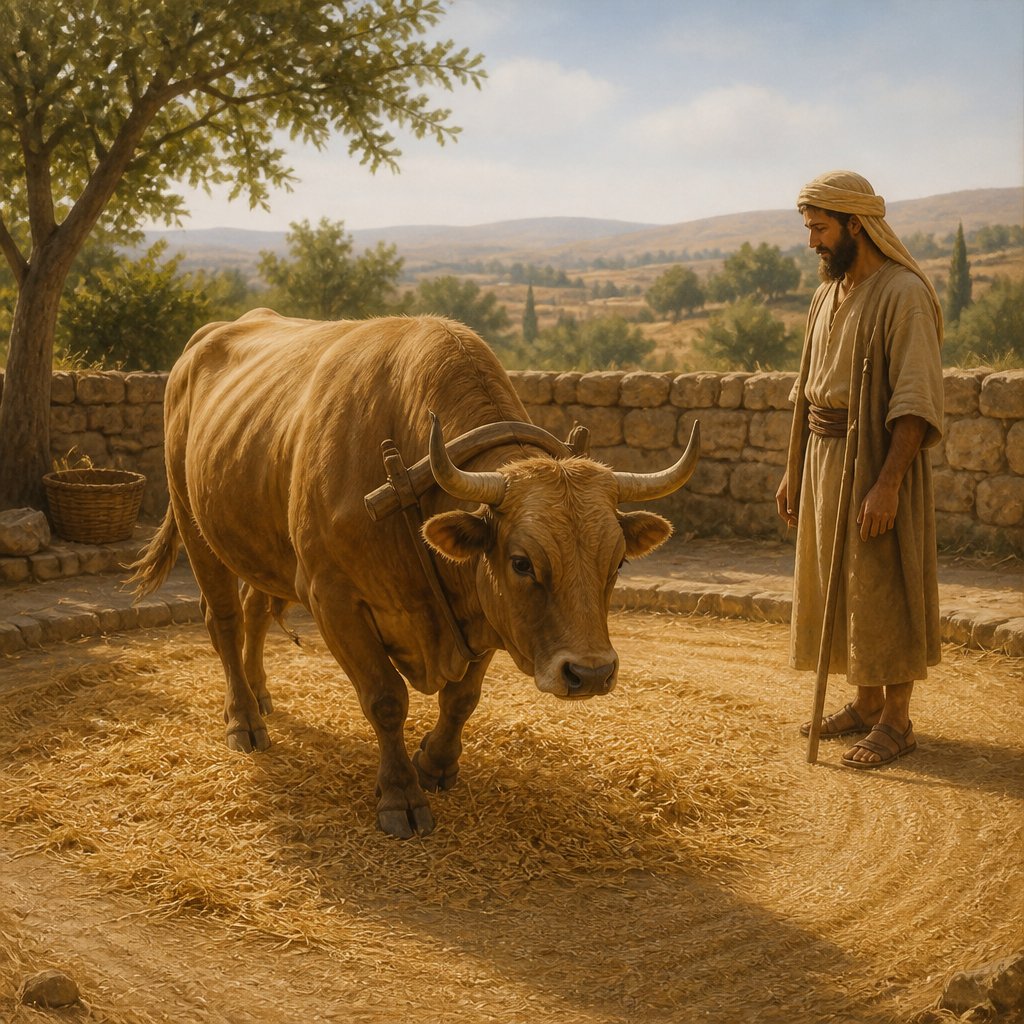
Deuteronomy 25:4 in the King James Version of the Bible says, "Thou shalt not muzzle the ox when he treadeth out the corn." At first glance, this verse may seem obscure and unrelated to modern life, but when examined closely, it reveals important principles of fairness, compassion, and justice that are relevant to both ancient agricultural practices and contemporary ethical standards.
The context of this verse, found in the Book of Deuteronomy, is the giving of laws and commands to the Israelites by Moses before they enter the Promised Land. The specific command not to muzzle an ox while it is treading grain comes in the midst of various regulations related to caring for animals, showing compassion to the vulnerable, and maintaining fairness in all aspects of life.
The imagery of an ox treading out the grain is tied to the ancient agricultural practice of threshing, where oxen would be harnessed to a threshing floor to help separate the grain from the husks. In this context, the command not to muzzle the ox serves as a reminder to the Israelites to treat their animals with kindness and consideration, even as they work for the benefit of their human masters.
On a broader level, this verse can be seen as a call to respect the dignity and well-being of all living creatures. The ox, as a symbol of the hardworking laborer, represents any creature that toils for the benefit of others. By not restricting the ox's access to the grain it is helping to produce, the Israelites are being instructed to recognize and honor the contribution of those who work to sustain and provide for them.
Furthermore, the command not to muzzle the ox can be understood as a principle of fairness and justice. By allowing the ox to partake in the fruits of its labor, the Israelites are acknowledging the right of all creatures to enjoy the benefits of their work. This principle extends beyond the treatment of animals to encompass broader issues of economic and social justice, reminding the Israelites of their responsibility to ensure that all members of their community are treated with equity and compassion.
In a spiritual sense, this verse can be interpreted as a reminder of God's care and concern for all his creation. Just as the Israelites are called to treat their animals with kindness and fairness, so too are they called to embody these virtues in their dealings with one another. The command not to muzzle the ox reflects God's desire for his people to cultivate a society marked by compassion, empathy, and justice in all their interactions.
The principle of not muzzling the ox when it treads out the grain has enduring relevance for modern life. It serves as a reminder to treat all creatures, including animals and fellow human beings, with respect and consideration. It challenges us to examine our own practices and determine whether we are upholding the values of fairness, compassion, and justice in our interactions with others.
In conclusion, Deuteronomy 25:4, through its command not to muzzle the ox, offers a profound ethical and spiritual lesson. It reminds us of the importance of treating all living creatures with compassion and fairness, and it calls us to embody these values in our relationships with one another. This verse challenges us to create a society characterized by empathy, equity, and justice, reflecting the divine virtues of care and concern for all creation.
Get our apps


Artwork for Deuteronomy 25:4

Deuteronomy 25:4 - "¶ Thou shalt not muzzle the ox when he treadeth out the corn."
"¶ Thou shalt not muzzle the ox when he treadeth out the corn." - Deuteronomy 25:4
Deuteronomy 4:25 - "¶ When thou shalt beget children, and children's children, and ye shall have remained long in the land, and shall corrupt yourselves, and make a graven image, or the likeness of any thing, and shall do evil in the sight of the LORD thy God, to provoke him to anger:"

Deuteronomy 25:13 - "¶ Thou shalt not have in thy bag divers weights, a great and a small."

Deuteronomy 31:25 - "That Moses commanded the Levites, which bare the ark of the covenant of the LORD, saying,"

Deuteronomy 25:14 - "Thou shalt not have in thine house divers measures, a great and a small."

Deuteronomy 33:25 - "Thy shoes shall be iron and brass; and as thy days, so shall thy strength be."

Deuteronomy 25:10 - "And his name shall be called in Israel, The house of him that hath his shoe loosed."

Deuteronomy 25:16 - "For all that do such things, and all that do unrighteously, are an abomination unto the LORD thy God."

Deuteronomy 27:25 - "Cursed be he that taketh reward to slay an innocent person. And all the people shall say, Amen."

Deuteronomy 26:4-10

Deuteronomy 25:17 - "¶ Remember what Amalek did unto thee by the way, when ye were come forth out of Egypt;"

Deuteronomy 26:4-10

Deuteronomy 3:25 - "I pray thee, let me go over, and see the good land that is beyond Jordan, that goodly mountain, and Lebanon."

Genesis 25-4

Deuteronomy 4:4 - "But ye that did cleave unto the LORD your God are alive every one of you this day."

Deuteronomy 25:1 - "If there be a controversy between men, and they come unto judgment, that the judges may judge them; then they shall justify the righteous, and condemn the wicked."

Deuteronomy 32:25 - "The sword without, and terror within, shall destroy both the young man and the virgin, the suckling also with the man of gray hairs."

Deuteronomy 25:8 - "Then the elders of his city shall call him, and speak unto him: and if he stand to it, and say, I like not to take her;"

Deuteronomy 22:25 - "¶ But if a man find a betrothed damsel in the field, and the man force her, and lie with her: then the man only that lay with her shall die:"

Deuteronomy 6:25 - "And it shall be our righteousness, if we observe to do all these commandments before the LORD our God, as he hath commanded us."

Deuteronomy 25:6 - "And it shall be, that the firstborn which she beareth shall succeed in the name of his brother which is dead, that his name be not put out of Israel."

Deuteronomy 34:1-4 – Moses views the Promised Land from Mount Nebo.

Deuteronomy 34:1-4 – Moses views the Promised Land from Mount Nebo.

Deuteronomy 34:1-4 – Moses views the Promised Land from Mount Nebo.

Deuteronomy 4:44 - "¶ And this is the law which Moses set before the children of Israel:"

Deuteronomy 12:25 - "Thou shalt not eat it; that it may go well with thee, and with thy children after thee, when thou shalt do that which is right in the sight of the LORD."

Deuteronomy 33:4 - "Moses commanded us a law, even the inheritance of the congregation of Jacob."

Deuteronomy 12:4 - "Ye shall not do so unto the LORD your God."

Deuteronomy 34:1-4 – Moses views the Promised Land from Mount Nebo.