What does Deuteronomy 28:67 mean?
"In the morning thou shalt say, Would God it were even! and at even thou shalt say, Would God it were morning! for the fear of thine heart wherewith thou shalt fear, and for the sight of thine eyes which thou shalt see." - Deuteronomy 28:67
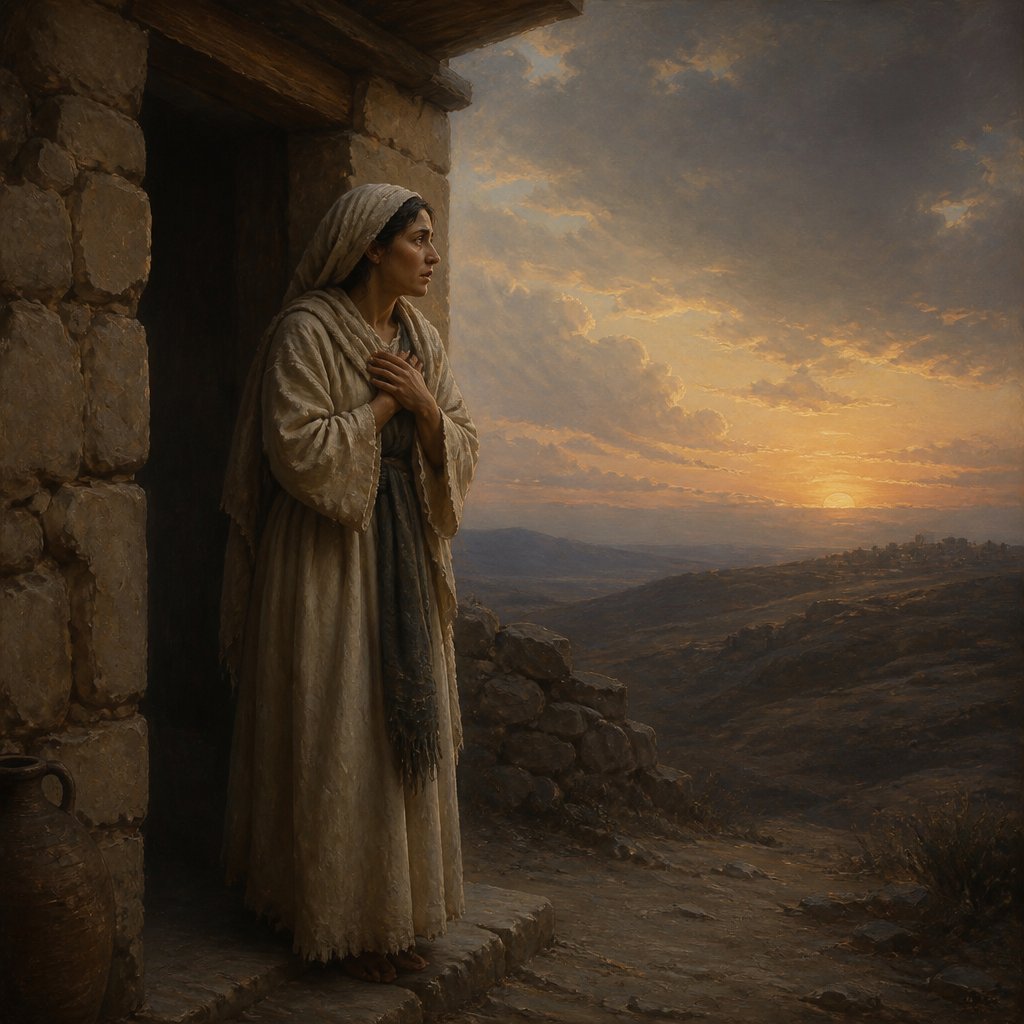
Deuteronomy 28:67 (KJV) reads, "In the morning thou shalt say, Would God it were even! and at even thou shalt say, Would God it were morning! for the fear of thine heart wherewith thou shalt fear, and for the sight of thine eyes which thou shalt see."
This verse comes from the Book of Deuteronomy in the Old Testament, which is attributed to Moses and is addressed to the Israelites as they prepare to enter the Promised Land. The book contains a series of speeches given by Moses, in which he reviews the laws and commandments that God had given to the people.
Deuteronomy 28:67 falls within a section of the book known as the blessings and curses, in which God outlines the consequences of obedience and disobedience to His commandments. This particular verse comes at the end of a long list of curses that the Israelites will face if they turn away from God and His laws. It describes a state of deep despair and longing for relief that the people will experience as a result of their disobedience.
The verse speaks to the profound suffering and anguish that will plague the Israelites if they fail to follow God's commands. It describes a sense of hopelessness and despair that will pervade their lives, as they long for the day to end and dread the arrival of the next morning. This emotional and psychological torment is a direct result of the fear and distress that will consume their hearts and minds due to their disobedience.
The overarching theme of Deuteronomy 28:67 is the consequences of disobedience and the impact of sin on the human spirit. It reflects the idea that turning away from God's commandments leads to a deep sense of dissatisfaction and despair. The verse serves as a warning to the Israelites, emphasizing the importance of obedience and the dire consequences of straying from God's will.
The context of this verse is crucial to understanding its significance. The Israelites were about to enter the Promised Land, and Moses wanted to impress upon them the importance of following God's laws in order to experience the blessings promised to them. In laying out the blessings and curses, Moses sought to emphasize the choice that lay before the people – a choice between life and death, prosperity and destruction.
Symbolically, the longing for morning and evening in Deuteronomy 28:67 represents the cyclical nature of despair and suffering that will plague the disobedient Israelites. The verse conveys a sense of unending torment and the inability to find relief from their distress. It serves as a powerful image of the relentless consequences of turning away from God.
In a broader, allegorical sense, this verse can also be seen as a reflection of the human condition. It speaks to the universal experience of longing and despair that comes from a life devoid of God's guiding presence. It serves as a warning to all people about the spiritual and emotional toll of straying from the path of righteousness.
In conclusion, Deuteronomy 28:67 is a poignant and powerful verse that conveys the consequences of disobedience and the deep despair that comes from turning away from God's commandments. It serves as a warning to the Israelites and to all people about the devastating impact of sin on the human spirit. The verse emphasizes the importance of obedience and the profound consequences of straying from God's will. It is a reminder of the eternal truth that true fulfillment and contentment can only be found in following God's righteous ways.
Have questions about Deuteronomy 28:67?
Dive deeper into this scripture with Bible Chat — an AI-powered tool for exploring God's Word through conversation. Ask questions, get context, and grow in your understanding of the Bible.
Get Our Apps


Deuteronomy 28:67 Artwork
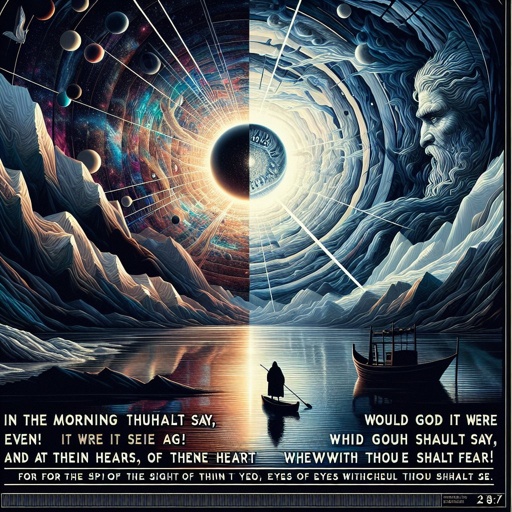
Deuteronomy 28:67 - "In the morning thou shalt say, Would God it were even! and at even thou shalt say, Would God it were morning! for the fear of thine heart wherewith thou shalt fear, and for the sight of thine eyes which thou shalt see."
"In the morning thou shalt say, Would God it were even! and at even thou shalt say, Would God it were morning! for the fear of thine heart wherewith thou shalt fear, and for the sight of thine eyes which thou shalt see." - Deuteronomy 28:67

Deuteronomy 28:28 - "The LORD shall smite thee with madness, and blindness, and astonishment of heart:"

Deuteronomy 28:5 - "Blessed shall be thy basket and thy store."

Deuteronomy 28:17 - "Cursed shall be thy basket and thy store."

Deuteronomy 32:28 - "For they are a nation void of counsel, neither is there any understanding in them."

"The LORD shall smite thee with madness, and blindness, and astonishment of heart:" - Deuteronomy 28:28

Deuteronomy 28:16 - "Cursed shalt thou be in the city, and cursed shalt thou be in the field."

Deuteronomy 28:3 - "Blessed shalt thou be in the city, and blessed shalt thou be in the field."

Deuteronomy 28:42 - "All thy trees and fruit of thy land shall the locust consume."

Deuteronomy 28:46 - "And they shall be upon thee for a sign and for a wonder, and upon thy seed for ever."

Deuteronomy 28:34 - "So that thou shalt be mad for the sight of thine eyes which thou shalt see."

Deuteronomy 22:28 - "¶ If a man find a damsel that is a virgin, which is not betrothed, and lay hold on her, and lie with her, and they be found;"

Deuteronomy 28:27 - "The LORD will smite thee with the botch of Egypt, and with the emerods, and with the scab, and with the itch, whereof thou canst not be healed."

Deuteronomy 28:23 - "And thy heaven that is over thy head shall be brass, and the earth that is under thee shall be iron."

Deuteronomy 28:41 - "Thou shalt beget sons and daughters, but thou shalt not enjoy them; for they shall go into captivity."

Deuteronomy 28:47 - "Because thou servedst not the LORD thy God with joyfulness, and with gladness of heart, for the abundance of all things;"

Deuteronomy 28:50 - "A nation of fierce countenance, which shall not regard the person of the old, nor shew favour to the young:"

Deuteronomy 28:19 - "Cursed shalt thou be when thou comest in, and cursed shalt thou be when thou goest out."

Deuteronomy 28:10 - "And all people of the earth shall see that thou art called by the name of the LORD; and they shall be afraid of thee."

Deuteronomy 28:38 - "Thou shalt carry much seed out into the field, and shalt gather but little in; for the locust shall consume it."

Deuteronomy 28:6 - "Blessed shalt thou be when thou comest in, and blessed shalt thou be when thou goest out."

Deuteronomy 28:18 - "Cursed shall be the fruit of thy body, and the fruit of thy land, the increase of thy kine, and the flocks of thy sheep."

Deuteronomy 29:28 - "And the LORD rooted them out of their land in anger, and in wrath, and in great indignation, and cast them into another land, as it is this day."

Deuteronomy 28:37 - "And thou shalt become an astonishment, a proverb, and a byword, among all nations whither the LORD shall lead thee."

"Cursed shall be thy basket and thy store." - Deuteronomy 28:17

Deuteronomy 28:44 - "He shall lend to thee, and thou shalt not lend to him: he shall be the head, and thou shalt be the tail."

"Blessed shall be thy basket and thy store." - Deuteronomy 28:5

Deuteronomy 28:2 - "And all these blessings shall come on thee, and overtake thee, if thou shalt hearken unto the voice of the LORD thy God."

Deuteronomy 28:26 - "And thy carcase shall be meat unto all fowls of the air, and unto the beasts of the earth, and no man shall fray them away."