What does Deuteronomy 2:6 mean?
“Ye shall buy meat of them for money, that ye may eat; and ye shall also buy water of them for money, that ye may drink.” — Deuteronomy 2:6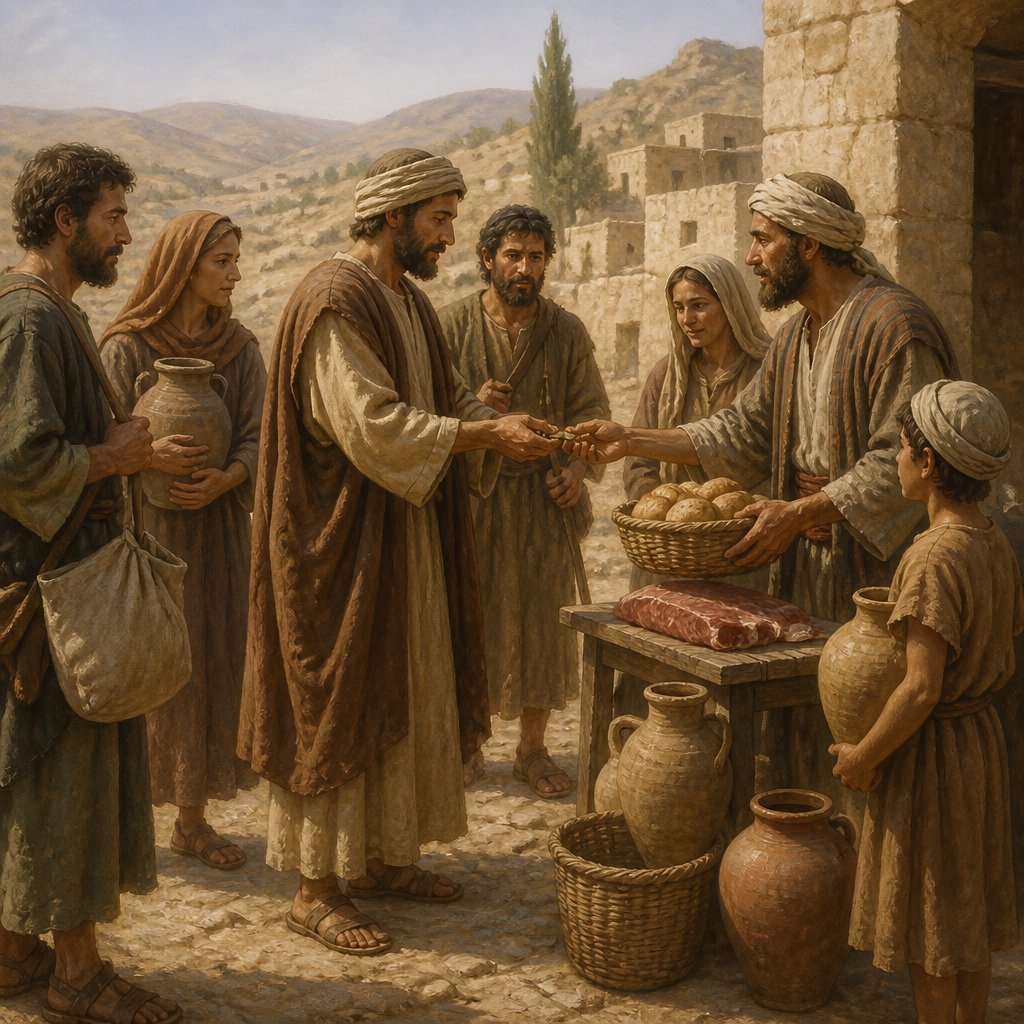
The Bible verse Deuteronomy 2:6 in the King James Version (KJV) reads, "Ye shall buy meat of them for money, that ye may eat; and ye shall also buy water of them for money, that ye may drink." This verse is part of a larger passage that outlines the instructions given by God to the Israelites as they journey through the wilderness. In order to fully understand the meaning and significance of this verse, it is important to analyze it within its broader historical and cultural context.
The Book of Deuteronomy is attributed to Moses and is set within the narrative of the Israelites' exodus from Egypt and their subsequent wandering in the wilderness. It consists largely of Moses delivering a series of speeches to the Israelites, recapping their journey and reiterating the laws and instructions given to them by God. It is written as a historical reminder and a call to obedience to the covenant made between God and the Israelites.
In Deuteronomy 2, Moses recounts the Israelites' journey through the wilderness and their encounters with various other nations. In verse 6 specifically, Moses instructs the Israelites on how to interact with these nations as they pass through their territory. The verse emphasizes the need for the Israelites to buy food and water from the surrounding nations rather than taking these resources by force.
On a surface level, this verse serves as a practical instruction for the Israelites as they navigate their physical journey. It provides guidance on how they should conduct themselves in relation to the other nations they encounter, promoting peaceful and respectful interactions.
However, at a deeper level, this verse also carries significant spiritual and moral implications. It reflects the broader theme of obedience to God's law and trust in His provision. By instructing the Israelites to buy food and water from the other nations, God is emphasizing the importance of honoring the property and resources of others, as well as respecting the boundaries of other nations. This is in line with the broader moral and ethical teachings found throughout the Bible.
Furthermore, the act of purchasing food and water also symbolizes the Israelites' dependence on God's provision. Throughout their journey in the wilderness, the Israelites were entirely reliant on God's supernatural provision of manna and water. However, as they encounter other nations, they are reminded that God can also provide for their needs through the ordinary means of commerce and trade.
This verse also highlights the concept of stewardship and responsible management of resources. By purchasing food and water, the Israelites are being taught to responsibly manage their own resources and finances. This principle of stewardship is a recurring theme throughout the Bible, emphasizing the importance of wisely using and preserving the resources that God has provided.
In a broader theological context, this verse can also be viewed as a foreshadowing of the inclusivity of God's salvation. The Israelites' interaction with other nations serves as a precursor to God's ultimate plan to extend salvation to all people, not just the Israelites. By engaging in commerce and exchange with other nations, the Israelites are symbolically participating in the broader mission of God to bring all people into relationship with Himself.
In conclusion, Deuteronomy 2:6 carries multiple layers of meaning and significance within its historical, cultural, and theological context. It serves as a practical instruction for the Israelites' journey through the wilderness, while also conveying deeper spiritual and moral lessons about obedience, trust in God's provision, stewardship, and the inclusivity of God's salvation plan. Understanding this verse enriches our understanding of the broader themes and messages of the Bible as a whole.
Get our apps


Artwork for Deuteronomy 2:6
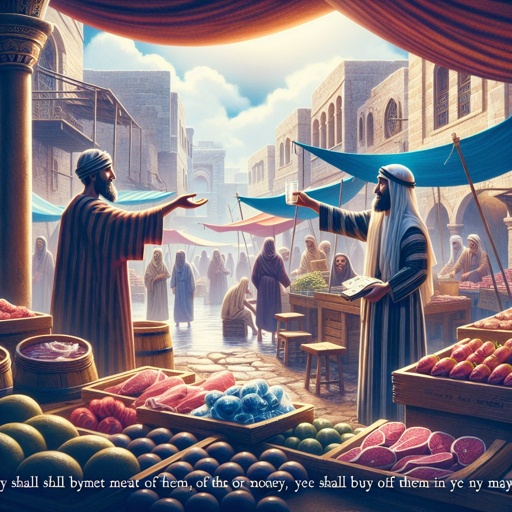
Deuteronomy 2:6 - "Ye shall buy meat of them for money, that ye may eat; and ye shall also buy water of them for money, that ye may drink."
"Ye shall buy meat of them for money, that ye may eat; and ye shall also buy water of them for money, that ye may drink." - Deuteronomy 2:6

Deuteronomy 6:6 - "And these words, which I command thee this day, shall be in thine heart:"

Deuteronomy 34:5-6

Deuteronomy 6:2 - "That thou mightest fear the LORD thy God, to keep all his statutes and his commandments, which I command thee, thou, and thy son, and thy son's son, all the days of thy life; and that thy days may be prolonged."

Deuteronomy 6:4 - "Hear, O Israel: The LORD our God is one LORD:"

Deuteronomy 33:6 - "¶ Let Reuben live, and not die; and let not his men be few."

Deuteronomy 2:2 - "And the LORD spake unto me, saying,"

Deuteronomy 23:6 - "Thou shalt not seek their peace nor their prosperity all thy days for ever."

Deuteronomy 6:16 - "¶ Ye shall not tempt the LORD your God, as ye tempted him in Massah."

Deuteronomy 6:9 - "And thou shalt write them upon the posts of thy house, and on thy gates."

Deuteronomy 6:19 - "To cast out all thine enemies from before thee, as the LORD hath spoken."

Deuteronomy 26:6 - "And the Egyptians evil entreated us, and afflicted us, and laid upon us hard bondage:"

"And these words, which I command thee this day, shall be in thine heart:" - Deuteronomy 6:6

Deuteronomy 24:6 - "¶ No man shall take the nether or the upper millstone to pledge: for he taketh a man's life to pledge."

Deuteronomy 6:13 - "Thou shalt fear the LORD thy God, and serve him, and shalt swear by his name."

Deuteronomy 6:14 - "Ye shall not go after other gods, of the gods of the people which are round about you;"

Deuteronomy 8:6 - "Therefore thou shalt keep the commandments of the LORD thy God, to walk in his ways, and to fear him."

Deuteronomy 6:8 - "And thou shalt bind them for a sign upon thine hand, and they shall be as frontlets between thine eyes."

Deuteronomy 28:6 - "Blessed shalt thou be when thou comest in, and blessed shalt thou be when thou goest out."

Deuteronomy 1:6 - "The LORD our God spake unto us in Horeb, saying, Ye have dwelt long enough in this mount:"

Deuteronomy 21:6 - "And all the elders of that city, that are next unto the slain man, shall wash their hands over the heifer that is beheaded in the valley:"

Deuteronomy 2:17 - "That the LORD spake unto me, saying,"

Deuteronomy 5:6 - "¶ I am the LORD thy God, which brought thee out of the land of Egypt, from the house of bondage."

Deuteronomy 6:12 - "Then beware lest thou forget the LORD, which brought thee forth out of the land of Egypt, from the house of bondage."

Deuteronomy 14:6 - "And every beast that parteth the hoof, and cleaveth the cleft into two claws, and cheweth the cud among the beasts, that ye shall eat."

Deuteronomy 6:5 - "And thou shalt love the LORD thy God with all thine heart, and with all thy soul, and with all thy might."

"And the LORD spake unto me, saying," - Deuteronomy 2:2

Deuteronomy 5:2 - "The LORD our God made a covenant with us in Horeb."

Deuteronomy 9:6 - "Understand therefore, that the LORD thy God giveth thee not this good land to possess it for thy righteousness; for thou art a stiffnecked people."