What does Deuteronomy 34:6 mean?
“And he buried him in a valley in the land of Moab, over against Beth-peor: but no man knoweth of his sepulchre unto this day.” — Deuteronomy 34:6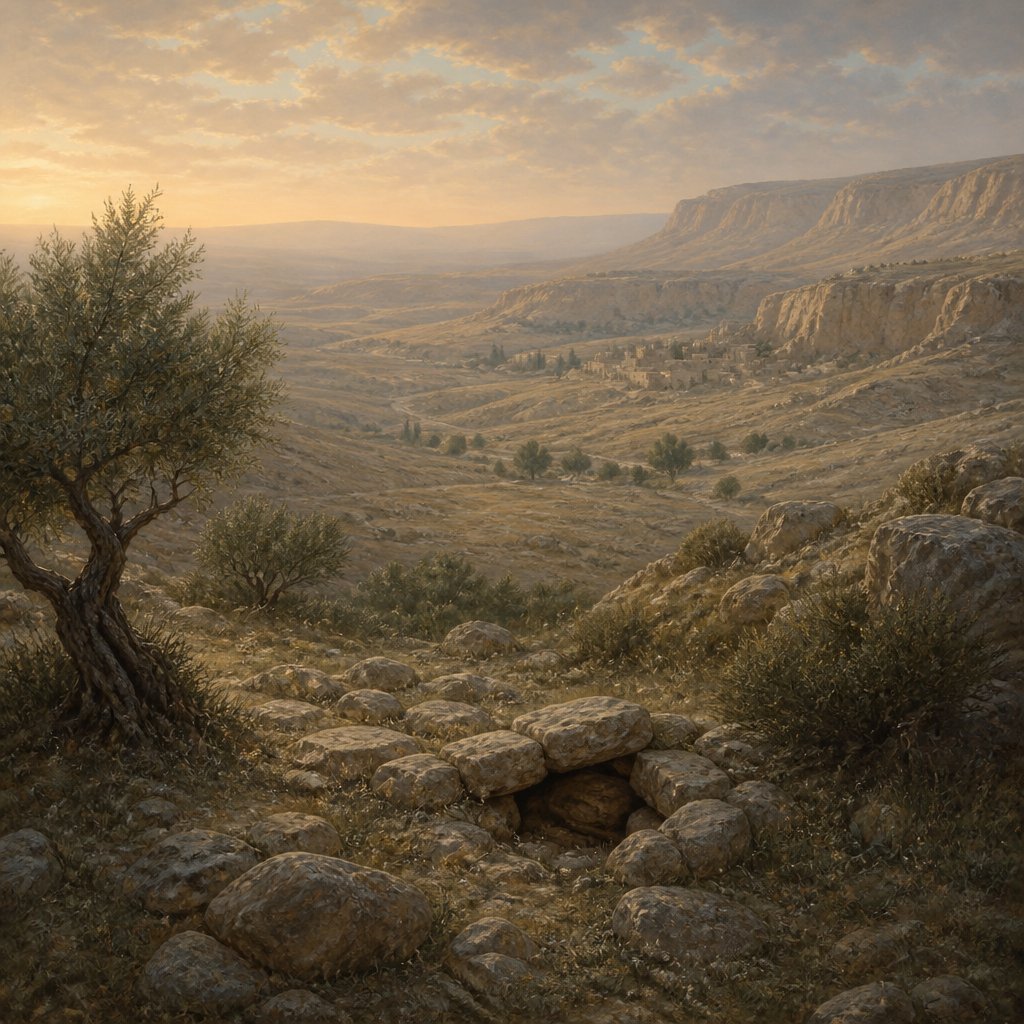
Deuteronomy 34:6 (KJV) says, "And he buried him in a valley in the land of Moab, over against Bethpeor: but no man knoweth of his sepulchre unto this day."
This verse marks the end of the book of Deuteronomy, one of the five books of the Torah, which is also known as the Pentateuch. It closes the story of Moses, the great leader and prophet of the Israelites, who led them out of slavery in Egypt and toward the Promised Land, but was not allowed to enter himself. This verse describes the mysterious burial of Moses and the location of his sepulcher, which remains unknown to this day.
The verse speaks to the themes of legacy, leadership, and the unknown. It reflects on the life and death of Moses, perhaps the most revered figure in the Hebrew Bible, and the impact he had on the people of Israel. It also touches on the concept of the unknown, representing the mysteries of death and the afterlife, as well as the legacy and memory of individuals after they have passed.
The context of this verse is important to understand its full meaning. Moses had brought the Israelites to the edge of the Promised Land, but was not allowed to enter due to his disobedience to God's command. Instead, God showed him the land from Mount Nebo, and it was there that Moses died. The verse takes place after Moses' death, as it describes his burial in the land of Moab. It is a somber ending to the story of Moses, the man who had led the Israelites through their trials and tribulations for forty years in the wilderness.
The symbolic significance of this verse is multi-faceted. Firstly, the act of burying Moses in a valley represents the end of an era. It signifies the completion of the Israelites' journey with Moses, and the transition to a new phase of their history as they prepare to enter the Promised Land without their leader. The specific location of Moses' burial, over against Bethpeor, also holds symbolic meaning as it was a place associated with the worship of foreign gods, highlighting the contrast between the pagan practices of the Moabites and the monotheistic faith of the Israelites.
Furthermore, the secrecy surrounding the location of Moses' sepulcher adds an air of mystery and reverence to his memory. It emphasizes the idea that Moses was a figure of such significance that his final resting place is not for mortal man to know. This enigma deepens the sense of respect and awe for Moses, underscoring his role as a larger-than-life leader and prophet in the eyes of the Israelites.
The verse also raises questions about the idea of legacy and remembrance. Despite the secrecy surrounding his burial, Moses' legacy lives on through the laws and teachings he imparted to the Israelites, as well as through the enduring stories and traditions of his leadership and faith. The verse serves as a reminder that while the physical resting place of a person may remain unknown, their impact and influence can endure for generations to come.
In conclusion, Deuteronomy 34:6 (KJV) holds deep meaning in its portrayal of the end of Moses' life and the mystery surrounding his burial. It encapsulates themes of legacy, leadership, and the unknown, and serves as a poignant conclusion to the book of Deuteronomy. The verse symbolizes the end of an era, the reverence for a great leader, and the enduring impact of a person's legacy. It invites reflection on mortality, remembrance, and the lasting influence of those who have come before us.
Get our apps


Artwork for Deuteronomy 34:6

Deuteronomy 34:6 - "And he buried him in a valley in the land of Moab, over against Beth-peor: but no man knoweth of his sepulchre unto this day."
"And he buried him in a valley in the land of Moab, over against Beth-peor: but no man knoweth of his sepulchre unto this day." - Deuteronomy 34:6

Deuteronomy 34:5-6

Deuteronomy 34:1-4 – Moses views the Promised Land from Mount Nebo.

Deuteronomy 34:1-4 – Moses views the Promised Land from Mount Nebo.

Deuteronomy 34:1-4 – Moses views the Promised Land from Mount Nebo.

Deuteronomy 1:34 - "And the LORD heard the voice of your words, and was wroth, and sware, saying,"

Deuteronomy 34:1-4 – Moses views the Promised Land from Mount Nebo.

Deuteronomy 34:1-4 – Moses views the Promised Land from Mount Nebo.

Deuteronomy 34:3 - "And the south, and the plain of the valley of Jericho, the city of palm trees, unto Zoar."

Deuteronomy 34:1-4 – Moses views the Promised Land from Mount Nebo.

Deuteronomy 34:1-4 – Moses views the Promised Land from Mount Nebo.

Deuteronomy 32:34 - "Is not this laid up in store with me, and sealed up among my treasures?"

Deuteronomy 34:5 - "¶ So Moses the servant of the LORD died there in the land of Moab, according to the word of the LORD."

Matthew 6:34

Deuteronomy 34:10 - "¶ And there arose not a prophet since in Israel like unto Moses, whom the LORD knew face to face,"

Deuteronomy 34:2 - "And all Naphtali, and the land of Ephraim, and Manasseh, and all the land of Judah, unto the utmost sea,"

Deuteronomy 28:34 - "So that thou shalt be mad for the sight of thine eyes which thou shalt see."

Matthew 6:34

Matthew 6:34

Matthew 6:34

Matthew 6:34

Deuteronomy 34:12 - "And in all that mighty hand, and in all the great terror which Moses shewed in the sight of all Israel."

Deuteronomy 34:8 - "¶ And the children of Israel wept for Moses in the plains of Moab thirty days: so the days of weeping and mourning for Moses were ended."

Matthew 6:25 – 34

Deuteronomy 34:7 - "¶ And Moses was an hundred and twenty years old when he died: his eye was not dim, nor his natural force abated."

Deuteronomy 6:6 - "And these words, which I command thee this day, shall be in thine heart:"

Deuteronomy 34:11 - "In all the signs and the wonders, which the LORD sent him to do in the land of Egypt to Pharaoh, and to all his servants, and to all his land,"

Deuteronomy 2:34 - "And we took all his cities at that time, and utterly destroyed the men, and the women, and the little ones, of every city, we left none to remain:"

John 6:34 - "Then said they unto him, Lord, evermore give us this bread."