What does Deuteronomy 3:25 mean?
"I pray thee, let me go over, and see the good land that is beyond Jordan, that goodly mountain, and Lebanon." - Deuteronomy 3:25
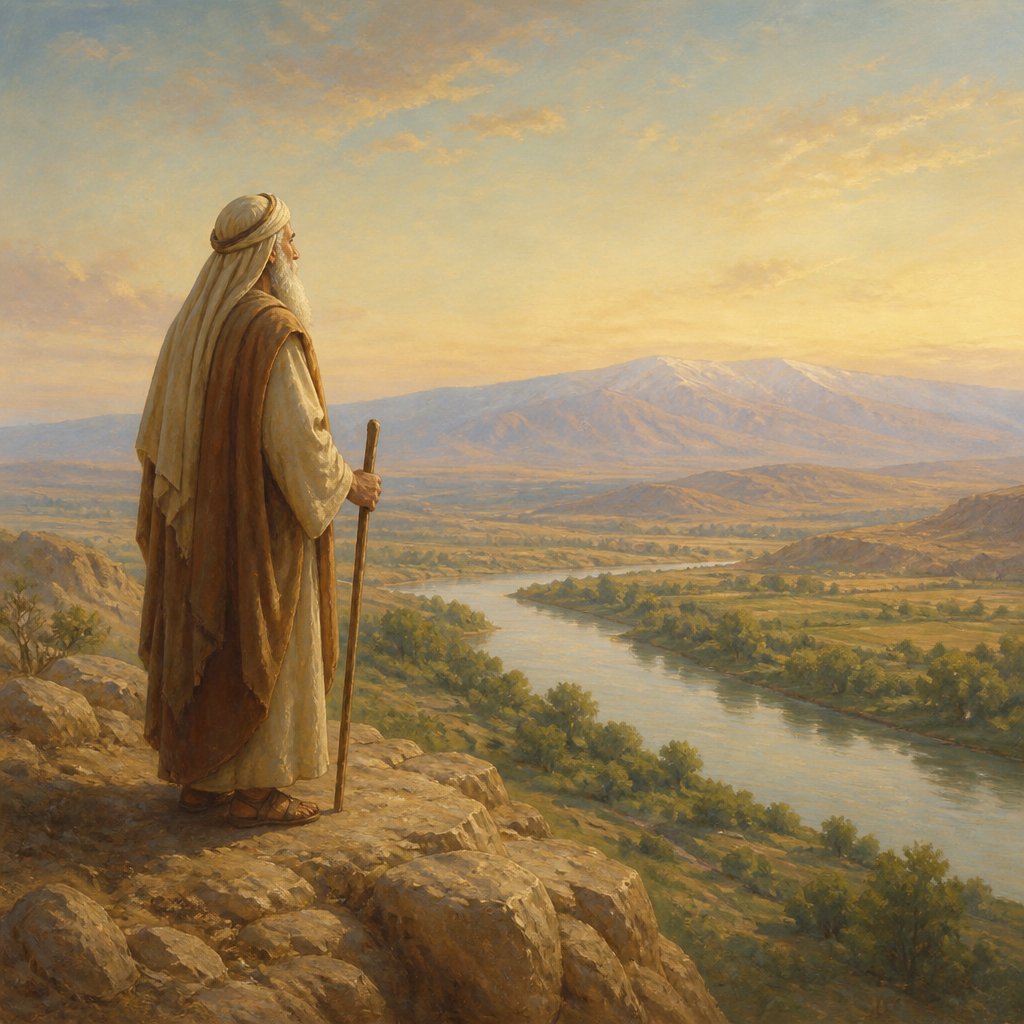
Deuteronomy 3:25 from the King James Version (KJV) reads, "I pray thee, let me go over, and see the good land that is beyond Jordan, that goodly mountain, and Lebanon."
In order to fully understand the depth and meaning of this verse, it is important to consider the context in which it was spoken. Deuteronomy is the fifth book of the Bible and is considered to be a historical record of the teachings and laws that Moses delivered to the Israelites before they entered the Promised Land. In this specific verse, Moses is speaking to the Lord, expressing his desire to see the land that has been promised to the Israelites, beyond the Jordan River.
One of the key themes that can be gleaned from this verse is the notion of faith and trust in God's promises. Throughout the journey of the Israelites, Moses served as their leader and guide, and his request to see the Promised Land reflects his unwavering faith in God's plan for his people. Despite the fact that Moses himself would not enter the land, he remained steadfast in his belief that God's promises would be fulfilled.
Additionally, the verse can also be seen as a reflection of the human desire for a tangible experience of God's blessings. Moses longed to see the "good land" and the "goodly mountain" with his own eyes, as a confirmation of the divine promise. This speaks to the very human need for reassurance and validation, even in the face of unwavering faith.
Symbolically, the "good land" and "goodly mountain" mentioned in the verse can be interpreted as symbols of the blessings and abundance that God has in store for his people. The Promised Land is often viewed as a representation of the ultimate fulfillment of God's covenant with the Israelites, and Moses' desire to see it reflects the deep longing for God's promises to be realized.
Furthermore, the mention of Lebanon in the verse holds additional symbolism. In ancient times, Lebanon was known for its beauty, abundance, and fragrant cedar trees. By including Lebanon in his request, Moses is expressing his yearning to witness the full extent of God's promised blessings – from the fruitful land to the majestic mountains.
In a broader theological context, this verse also speaks to the concept of divine sovereignty and human submission. In asking the Lord to allow him to see the Promised Land, Moses is acknowledging his dependence on God's will and authority. His request is a humble recognition of the fact that it is ultimately God's plan and timing that will determine the fulfillment of the divine promise.
In conclusion, Deuteronomy 3:25 from the King James Version encapsulates powerful themes of faith, trust, and the human longing for God's promises to be realized. It serves as a poignant reminder of the unwavering faith of Moses, as well as the profound symbolism inherent in the Promised Land. The verse also conveys a deeper theological message about divine sovereignty and human submission to God's will. Ultimately, it is a verse that inspires reflection on the nature of faith and the fulfillment of God's promises for his people.
Have questions about Deuteronomy 3:25?
Dive deeper into this scripture with Bible Chat — an AI-powered tool for exploring God's Word through conversation. Ask questions, get context, and grow in your understanding of the Bible.
Get Our Apps


Deuteronomy 3:25 Artwork

Deuteronomy 3:25 - "I pray thee, let me go over, and see the good land that is beyond Jordan, that goodly mountain, and Lebanon."
"I pray thee, let me go over, and see the good land that is beyond Jordan, that goodly mountain, and Lebanon." - Deuteronomy 3:25

Deuteronomy 25:3 - "Forty stripes he may give him, and not exceed: lest, if he should exceed, and beat him above these with many stripes, then thy brother should seem vile unto thee."

Deuteronomy 25:13 - "¶ Thou shalt not have in thy bag divers weights, a great and a small."

Deuteronomy 25:4 - "¶ Thou shalt not muzzle the ox when he treadeth out the corn."

Deuteronomy 31:25 - "That Moses commanded the Levites, which bare the ark of the covenant of the LORD, saying,"

Deuteronomy 25:14 - "Thou shalt not have in thine house divers measures, a great and a small."

Deuteronomy 33:25 - "Thy shoes shall be iron and brass; and as thy days, so shall thy strength be."

Deuteronomy 25:10 - "And his name shall be called in Israel, The house of him that hath his shoe loosed."

Deuteronomy 25:16 - "For all that do such things, and all that do unrighteously, are an abomination unto the LORD thy God."

Deuteronomy 27:25 - "Cursed be he that taketh reward to slay an innocent person. And all the people shall say, Amen."

Deuteronomy 25:17 - "¶ Remember what Amalek did unto thee by the way, when ye were come forth out of Egypt;"

Genesis 25-3

Daniel 3:25

Deuteronomy 25:1 - "If there be a controversy between men, and they come unto judgment, that the judges may judge them; then they shall justify the righteous, and condemn the wicked."

Deuteronomy 32:25 - "The sword without, and terror within, shall destroy both the young man and the virgin, the suckling also with the man of gray hairs."

Deuteronomy 3:15 - "And I gave Gilead unto Machir."

Deuteronomy 25:8 - "Then the elders of his city shall call him, and speak unto him: and if he stand to it, and say, I like not to take her;"

Deuteronomy 3:23 - "And I besought the LORD at that time, saying,"

Deuteronomy 22:25 - "¶ But if a man find a betrothed damsel in the field, and the man force her, and lie with her: then the man only that lay with her shall die:"

Deuteronomy 6:25 - "And it shall be our righteousness, if we observe to do all these commandments before the LORD our God, as he hath commanded us."

Deuteronomy 14:3 - "¶ Thou shalt not eat any abominable thing."

Deuteronomy 25:6 - "And it shall be, that the firstborn which she beareth shall succeed in the name of his brother which is dead, that his name be not put out of Israel."

Deuteronomy 12:25 - "Thou shalt not eat it; that it may go well with thee, and with thy children after thee, when thou shalt do that which is right in the sight of the LORD."

Deuteronomy 3:29 - "So we abode in the valley over against Beth-peor."

Deuteronomy 3:7 - "But all the cattle, and the spoil of the cities, we took for a prey to ourselves."

Deuteronomy 28:3 - "Blessed shalt thou be in the city, and blessed shalt thou be in the field."

Deuteronomy 14:25 - "Then shalt thou turn it into money, and bind up the money in thine hand, and shalt go unto the place which the LORD thy God shall choose:"

Deuteronomy 3:9 - "(Which Hermon the Sidonians call Sirion; and the Amorites call it Shenir;)"
Deuteronomy 25:2 - "And it shall be, if the wicked man be worthy to be beaten, that the judge shall cause him to lie down, and to be beaten before his face, according to his fault, by a certain number."