What does Deuteronomy 4:12 mean?
“And the LORD spake unto you out of the midst of the fire: ye heard the voice of the words, but saw no similitude; only ye heard a voice.” — Deuteronomy 4:12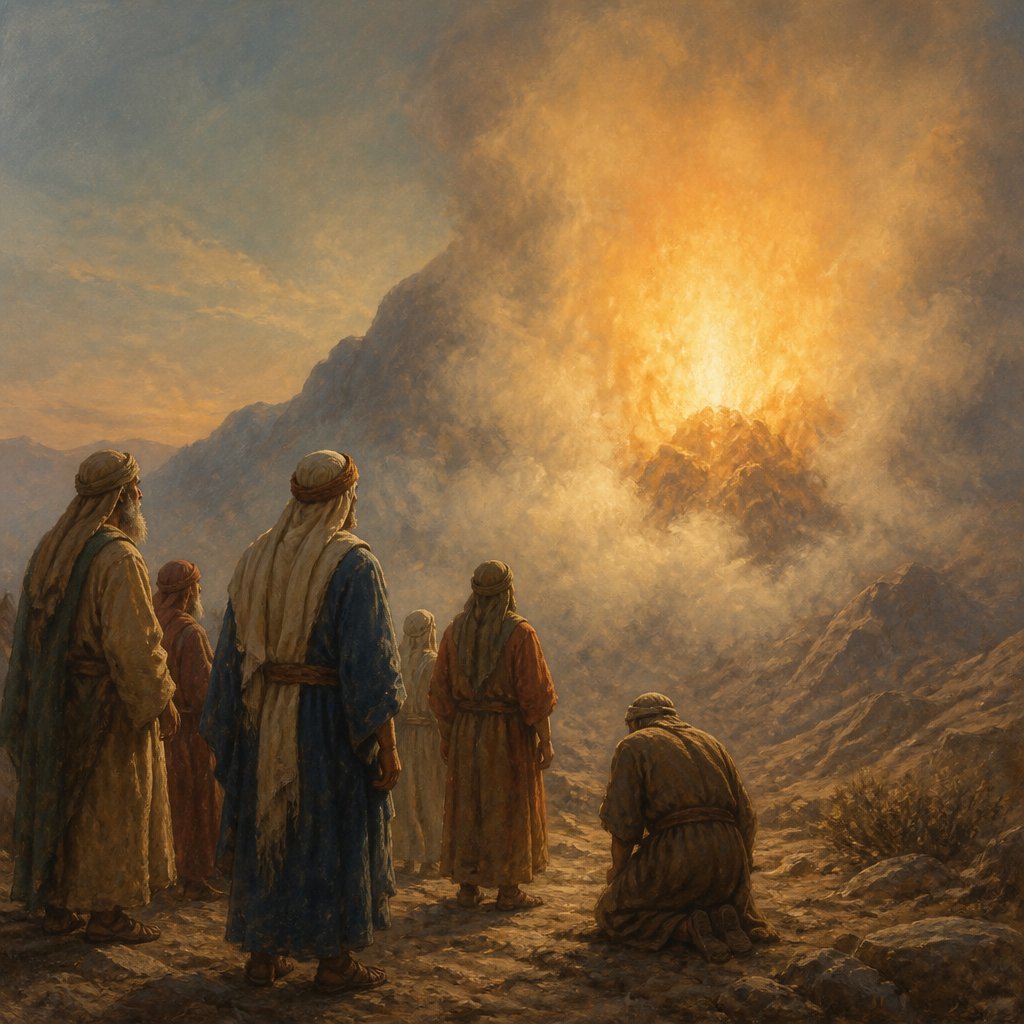
Deuteronomy 4:12 (KJV) states, "And the Lord spake unto you out of the midst of the fire: ye heard the voice of the words, but saw no similitude; only ye heard a voice." This verse is part of a larger passage in the book of Deuteronomy in which Moses is addressing the Israelites and reminding them of their covenant with God. In this specific verse, Moses is recounting the experience of the Israelites at Mount Sinai, where God revealed Himself to them in the form of fire and they heard His voice speaking to them.
The context of this verse is important in understanding its meaning. The book of Deuteronomy is essentially a series of speeches given by Moses to the Israelites as they are about to enter the Promised Land. It serves as a reminder of their history, the laws God has given them, and the consequences of obedience or disobedience. In this particular verse, Moses is reminding the people of the incredible experience they had at Mount Sinai when God revealed Himself to them.
The theme of this verse is that of the transcendence and otherness of God. The fact that the Israelites heard God's voice but saw no similitude emphasizes the mysterious and supernatural nature of God. He is not a physical being that can be seen or comprehended in human terms. This theme is echoed throughout the Bible, emphasizing the idea that God is beyond human understanding and surpasses all human limitations.
The symbolism in this verse is also rich. The fire, which represents God's presence, is a common symbol in the Bible. It signifies purity, holiness, and the power of God. The fact that the Israelites heard God's voice coming from the fire but saw no form or image further emphasizes the idea that God's nature is beyond human understanding. He cannot be reduced to a simple image or representation. This is in stark contrast to the pagan gods of the surrounding nations, which were often represented by idols or images.
Additionally, the idea of hearing but not seeing has spiritual significance. It suggests that faith is not based on physical evidence, but on the unseen and the intangible. This idea is echoed in the New Testament as well, particularly in the book of Hebrews, which defines faith as "the substance of things hoped for, the evidence of things not seen" (Hebrews 11:1, KJV).
Overall, Deuteronomy 4:12 is a powerful reminder of the mysterious and transcendent nature of God. It emphasizes the importance of faith and the belief in the unseen. It also serves as a contrast to the pagan religions of the time, which often relied on physical representations of their gods. This verse is an important part of the larger narrative in the book of Deuteronomy, reminding the Israelites of their history and their covenant with God. Its themes of transcendence and faith continue to resonate throughout the Bible as a whole.
Get our apps


Artwork for Deuteronomy 4:12

Deuteronomy 4:12 - "And the LORD spake unto you out of the midst of the fire: ye heard the voice of the words, but saw no similitude; only ye heard a voice."

"And the LORD spake unto you out of the midst of the fire: ye heard the voice of the words, but saw no similitude; only ye heard a voice." - Deuteronomy 4:12

Deuteronomy 12:4 - "Ye shall not do so unto the LORD your God."

"Ye shall not do so unto the LORD your God." - Deuteronomy 12:4

Deuteronomy 26:4-10

Deuteronomy 26:4-10

Deuteronomy 14:12 - "But these are they of which ye shall not eat: the eagle, and the ossifrage, and the ospray,"

Deuteronomy 24:12 - "And if the man be poor, thou shalt not sleep with his pledge:"

Deuteronomy 4:4 - "But ye that did cleave unto the LORD your God are alive every one of you this day."

Deuteronomy 12:24 - "Thou shalt not eat it; thou shalt pour it upon the earth as water."

Deuteronomy 32:12 - "So the LORD alone did lead him, and there was no strange god with him."

Deuteronomy 5:12 - "Keep the sabbath day to sanctify it, as the LORD thy God hath commanded thee."

Deuteronomy 34:1-4 – Moses views the Promised Land from Mount Nebo.

Deuteronomy 34:1-4 – Moses views the Promised Land from Mount Nebo.

Deuteronomy 34:1-4 – Moses views the Promised Land from Mount Nebo.

Deuteronomy 20:12 - "And if it will make no peace with thee, but will make war against thee, then thou shalt besiege it:"

Deuteronomy 4:44 - "¶ And this is the law which Moses set before the children of Israel:"

Deuteronomy 12:9 - "For ye are not as yet come to the rest and to the inheritance, which the LORD your God giveth you."

Deuteronomy 33:4 - "Moses commanded us a law, even the inheritance of the congregation of Jacob."

Deuteronomy 34:1-4 – Moses views the Promised Land from Mount Nebo.

Deuteronomy 34:1-4 – Moses views the Promised Land from Mount Nebo.

Deuteronomy 6:4 - "Hear, O Israel: The LORD our God is one LORD:"

Deuteronomy 12:19 - "Take heed to thyself that thou forsake not the Levite as long as thou livest upon the earth."

Deuteronomy 12:16 - "Only ye shall not eat the blood; ye shall pour it upon the earth as water."

Deuteronomy 4:24 - "For the LORD thy God is a consuming fire, even a jealous God."

Deuteronomy 34:1-4 – Moses views the Promised Land from Mount Nebo.

Deuteronomy 34:1-4 – Moses views the Promised Land from Mount Nebo.

Deuteronomy 4:41 - "¶ Then Moses severed three cities on this side Jordan toward the sunrising;"

Deuteronomy 14:4 - "These are the beasts which ye shall eat: the ox, the sheep, and the goat,"

Deuteronomy 16:12 - "And thou shalt remember that thou wast a bondman in Egypt: and thou shalt observe and do these statutes."