What does Ecclesiastes 12:14 mean?
“For God shall bring every work into judgment, with every secret thing, whether it be good, or whether it be evil.” — Ecclesiastes 12:14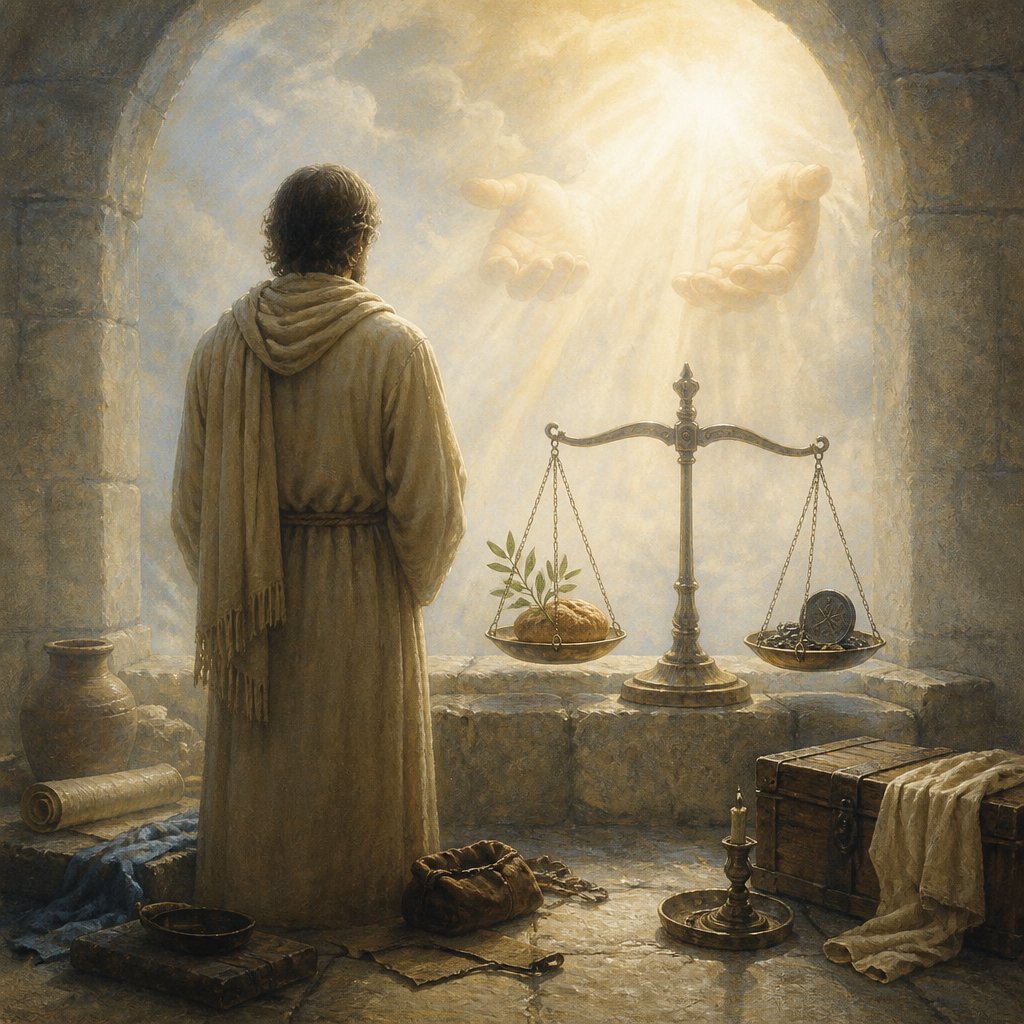
Ecclesiastes 12:14 from the King James Version of the Bible states, "For God shall bring every work into judgment, with every secret thing, whether it be good, or whether it be evil." This verse encapsulates the overarching theme of the book of Ecclesiastes, which is the futility of life without God and the ultimate accountability of all human actions before God.
The book of Ecclesiastes is traditionally attributed to King Solomon, and it is characterized by its existential musings on the meaning of life and the transient nature of human existence. Throughout the book, the author laments the vanity of earthly pursuits and the fleeting nature of pleasure, wealth, and power. He contemplates the inevitability of death and the uncertainty of what comes after. Despite his search for meaning and fulfillment in worldly endeavors, the author ultimately concludes that true purpose and satisfaction can only be found in fearing God and keeping His commandments.
In Ecclesiastes 12:14, the author drives home the idea that every human action, whether public or private, will ultimately be brought to account before God. This verse emphasizes the divine judgment that awaits all individuals, and it underscores the importance of living in accordance with God's will. This call to accountability serves as a sobering reminder that there are eternal consequences for our actions, both good and evil.
The verse also brings to light the idea of divine omniscience. The mention of "every secret thing" in the verse suggests that nothing is hidden from God's knowledge and scrutiny. This notion is echoed in other biblical passages, such as Psalm 90:8 which states, "You have set our iniquities before you, our secret sins in the light of your presence." This concept of divine omniscience serves as a deterrent against moral relativism and the belief that one can escape responsibility for their actions.
Furthermore, the verse touches upon the tension between good and evil. It underscores the reality that both righteousness and wickedness will be judged by God. This reflects the biblical principle of reaping what one sows, as stated in Galatians 6:7, "Do not be deceived: God is not mocked, for whatever one sows, that will he also reap." Thus, Ecclesiastes 12:14 highlights the moral imperative of living a life that is aligned with God's standards of righteousness and justice.
Contextually, Ecclesiastes 12:14 serves as the climax of the author's reflections on the meaning of life and the pursuit of wisdom. Throughout the book, the author grapples with the limitations of human wisdom and the temporal nature of earthly pursuits. In the concluding verses of the book, he exhorts readers to remember their Creator in the days of their youth, before the inevitable decline of old age and death. This call to remember God and keep His commandments is a central theme in Ecclesiastes and is reiterated in the final verse as a crucial aspect of living a life that is pleasing to God.
Symbolically, Ecclesiastes 12:14 represents the culmination of the author's introspective journey and serves as a moral compass for readers. The verse is a stark reminder of the reality of divine judgment and the imperative of living a life that is accountable to God. It also points to the hope of redemption and restoration through Christ, who offers forgiveness and reconciliation to all who place their trust in Him.
In conclusion, Ecclesiastes 12:14 encapsulates the overarching themes of the book of Ecclesiastes, emphasizing the futility of life without God, the accountability of human actions before God, and the imperative of living a life that is aligned with God's will. This verse serves as a poignant reminder of the need for wisdom and a reverent fear of God in all that we do. It challenges readers to consider the eternal ramifications of their choices and underscores the hope of redemption through Christ.
Get our apps


Artwork for Ecclesiastes 12:14

Ecclesiastes 12:14 - "For God shall bring every work into judgment, with every secret thing, whether it be good, or whether it be evil."
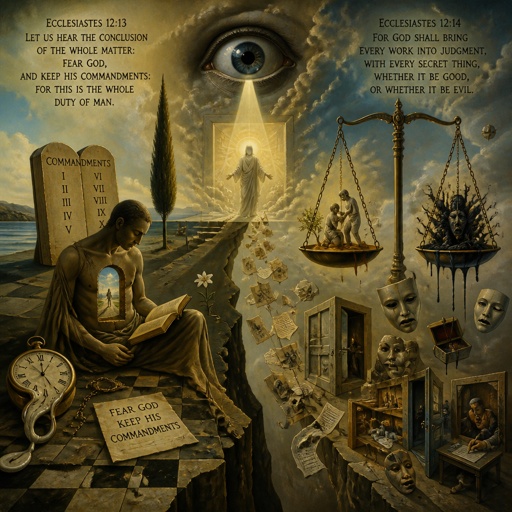
Ecclesiastes 12:13 Let us hear the conclusion of the whole matter: Fear God, and keep his commandments: for this is the whole duty of man. Ecclesiastes 12:14 For God shall bring every work into judgment, with every secret thing, whether it be good, or whether it be evil.
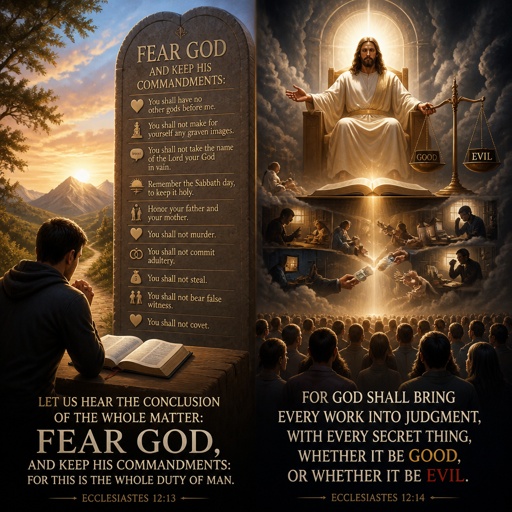
Ecclesiastes 12:13 Let us hear the conclusion of the whole matter: Fear God, and keep his commandments: for this is the whole duty of man. Ecclesiastes 12:14 For God shall bring every work into judgment, with every secret thing, whether it be good, or whether it be evil.
"For God shall bring every work into judgment, with every secret thing, whether it be good, or whether it be evil." - Ecclesiastes 12:14

ecclesiastes 12:1

ecclesiastes 12:1

ecclesiastes 12:1

ecclesiastes 12:1-8

ecclesiastes 12:2-6

ecclesiastes 12:1-8

ecclesiastes 12:1-8

ecclesiastes 12:1-8

ecclesiastes 12:1-8

Ecclesiastes 1:12 - "¶ I the Preacher was king over Israel in Jerusalem."

Ecclesiastes 12:8 - "¶ Vanity of vanities, saith the preacher; all is vanity."

Ecclesiastes 12:12 - "And further, by these, my son, be admonished: of making many books there is no end; and much study is a weariness of the flesh."

Ecclesiastes 12:7 - "Then shall the dust return to the earth as it was: and the spirit shall return unto God who gave it."

Ecclesiastes 3:12 - "I know that there is no good in them, but for a man to rejoice, and to do good in his life."

Ecclesiastes 10:12 - "The words of a wise man's mouth are gracious; but the lips of a fool will swallow up himself."

Ecclesiastes 5:14 - "But those riches perish by evil travail: and he begetteth a son, and there is nothing in his hand."

Ecclesiastes 12:10 - "The preacher sought to find out acceptable words: and that which was written was upright, even words of truth."

Ecclesiastes 12:11 - "The words of the wise are as goads, and as nails fastened by the masters of assemblies, which are given from one shepherd."

Ecclesiastes 4:12 - "And if one prevail against him, two shall withstand him; and a threefold cord is not quickly broken."

Ecclesiastes 4:14 - "For out of prison he cometh to reign; whereas also he that is born in his kingdom becometh poor."

Ecclesiastes 1:14 - "I have seen all the works that are done under the sun; and, behold, all is vanity and vexation of spirit."

Ecclesiastes 7:12 - "For wisdom is a defence, and money is a defence: but the excellency of knowledge is, that wisdom giveth life to them that have it."

"While the sun, or the light, or the moon, or the stars, be not darkened, nor the clouds return after the rain:" - Ecclesiastes 12:2

Ecclesiastes 12:2 - "While the sun, or the light, or the moon, or the stars, be not darkened, nor the clouds return after the rain:"

Ecclesiastes 12:13 - "Let us hear the conclusion of the whole matter: Fear God, and keep his commandments: for this is the whole duty of man."

Ecclesiastes 12:6 - "Or ever the silver cord be loosed, or the golden bowl be broken, or the pitcher be broken at the fountain, or the wheel broken at the cistern."