What does Ecclesiastes 1:14 mean?
“I have seen all the works that are done under the sun; and, behold, all is vanity and vexation of spirit.” — Ecclesiastes 1:14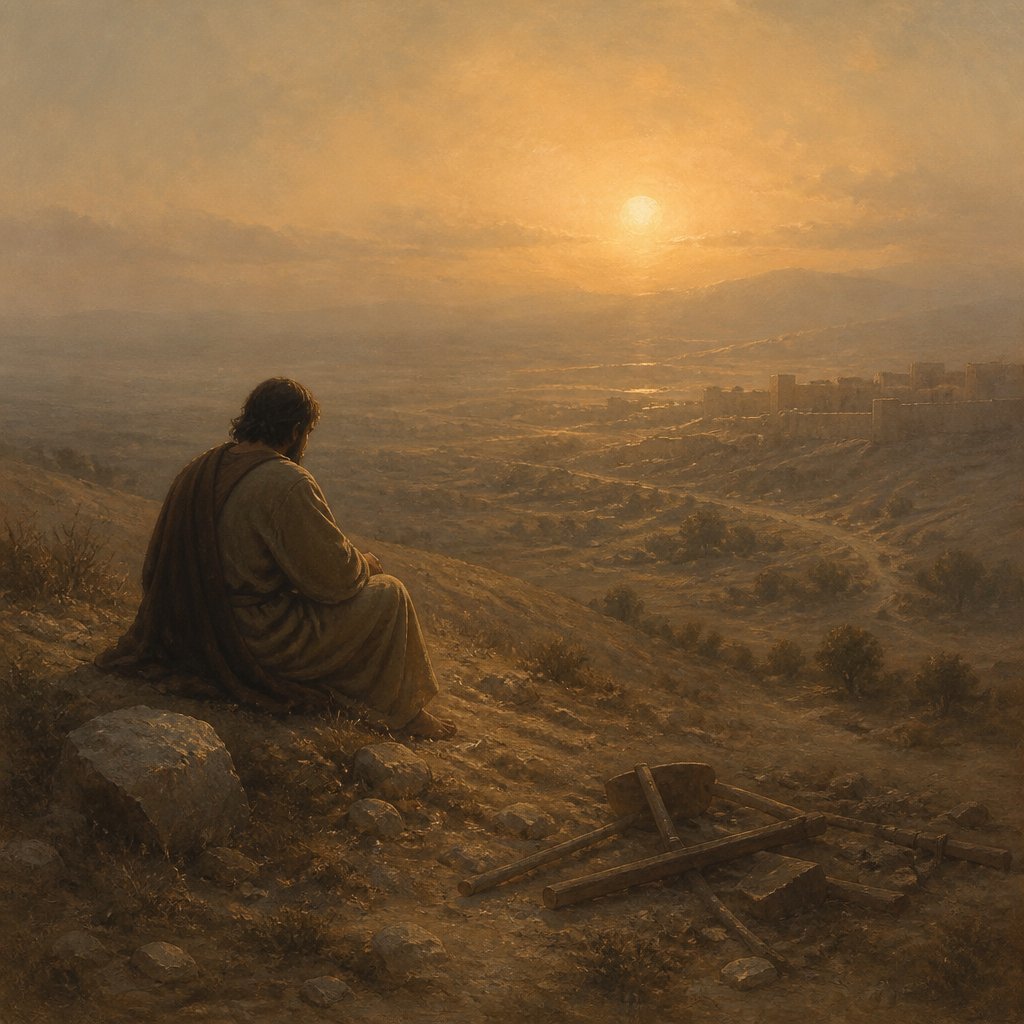
Ecclesiastes 1:14 from the King James Version of the Bible reads, "I have seen all the works that are done under the sun; and, behold, all is vanity and vexation of spirit." This verse is part of the book of Ecclesiastes, where the author, traditionally believed to be Solomon, questions the meaning of life and the futility of human endeavors.
The theme of Ecclesiastes is the fleeting nature of life and the pursuit of worldly pleasures. The author reflects on the emptiness and transitory nature of human existence and the futility of human striving. In verse 14, the author states that he has observed all the works that are done under the sun, implying that he has seen the full range of human activities and accomplishments. Despite this, he concludes that everything is "vanity and vexation of spirit."
The term "vanity" in this context refers to emptiness, worthlessness, and futility. The author is expressing a sense of disillusionment with the pursuits and achievements of humanity. He sees them as ultimately meaningless and unsatisfying. The phrase "vexation of spirit" further emphasizes the sense of frustration and dissatisfaction that accompanies these worldly pursuits.
The verse can be seen as a commentary on the human condition and the limitations of human wisdom and understanding. Despite all of our efforts and achievements, the author suggests that there is a fundamental emptiness and restlessness within the human spirit that cannot be satisfied by the things of the world.
This theme is particularly relevant in today's society, where many people pursue wealth, success, and pleasure in search of fulfillment and meaning. The author of Ecclesiastes suggests that these pursuits ultimately lead to disappointment and a sense of unfulfillment.
In a broader context, Ecclesiastes can be seen as a reflection on the nature of human existence and the ultimate purpose of life. The author questions the value of worldly pursuits and encourages a deeper, more spiritual perspective on life.
The symbolism in this verse lies in the contrast between the works "under the sun" and the emptiness and frustration that the author perceives within them. The phrase "under the sun" is used throughout Ecclesiastes to refer to the realm of human activity and the material world. The author uses this phrase to emphasize the limited and temporary nature of human endeavors, as opposed to the eternal and transcendent nature of God.
Overall, Ecclesiastes 1:14 captures the author's profound sense of disillusionment with human efforts and the pursuit of worldly pleasures. It conveys a message of caution and reflection, urging readers to consider the ultimate purpose and meaning of their lives. The verse invites contemplation on the impermanence of worldly achievements and the need for a deeper, more meaningful connection with the divine. It serves as a reminder to seek fulfillment beyond the transient and ultimately unsatisfying pursuits of the world.
Get our apps


Artwork for Ecclesiastes 1:14

Ecclesiastes 1:14 - "I have seen all the works that are done under the sun; and, behold, all is vanity and vexation of spirit."
"I have seen all the works that are done under the sun; and, behold, all is vanity and vexation of spirit." - Ecclesiastes 1:14

Ecclesiastes 1:4 - "One generation passeth away, and another generation cometh: but the earth abideth for ever."

"One generation passeth away, and another generation cometh: but the earth abideth for ever." - Ecclesiastes 1:4

Ecclesiastes 5:14 - "But those riches perish by evil travail: and he begetteth a son, and there is nothing in his hand."

Ecclesiastes 4:14 - "For out of prison he cometh to reign; whereas also he that is born in his kingdom becometh poor."

ecclesiastes 12:1

ecclesiastes 12:1

Ecclesiastes 1:11

ecclesiastes 12:1

Ecclesiastes 3:1

Ecclesiastes 12:14 - "For God shall bring every work into judgment, with every secret thing, whether it be good, or whether it be evil."

Ecclesiastes 9:14 - "There was a little city, and few men within it; and there came a great king against it, and besieged it, and built great bulwarks against it:"

Ecclesiastes 1:1 - "The words of the Preacher, the son of David, king in Jerusalem."

ecclesiastes 12:1-8
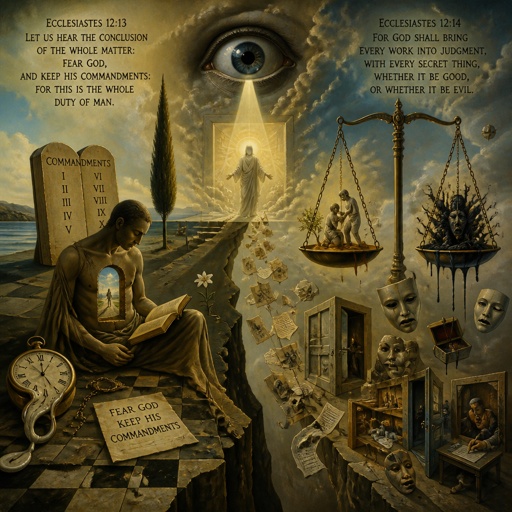
Ecclesiastes 12:13 Let us hear the conclusion of the whole matter: Fear God, and keep his commandments: for this is the whole duty of man. Ecclesiastes 12:14 For God shall bring every work into judgment, with every secret thing, whether it be good, or whether it be evil.
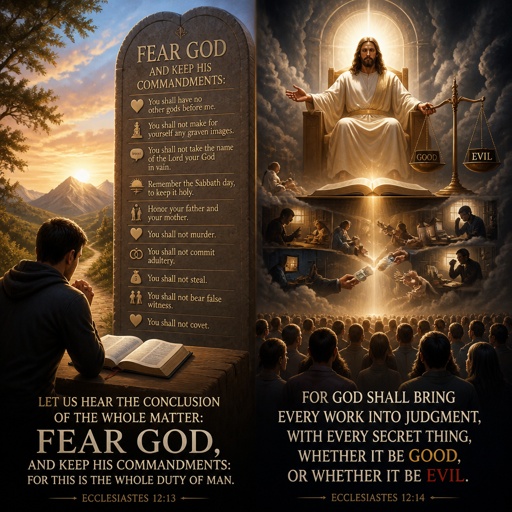
Ecclesiastes 12:13 Let us hear the conclusion of the whole matter: Fear God, and keep his commandments: for this is the whole duty of man. Ecclesiastes 12:14 For God shall bring every work into judgment, with every secret thing, whether it be good, or whether it be evil.

ecclesiastes 12:1-8

ecclesiastes 12:1-8

ecclesiastes 12:1-8

ecclesiastes 12:1-8

Ecclesiastes 2:14 - "The wise man's eyes are in his head; but the fool walketh in darkness: and I myself perceived also that one event happeneth to them all."

Ecclesiastes 10:14 - "A fool also is full of words: a man cannot tell what shall be; and what shall be after him, who can tell him?"

Ecclesiastes 1:12 - "¶ I the Preacher was king over Israel in Jerusalem."

Ecclesiastes 3:1 – "There is a time for everything, and a season for every activity under the heavens."

Ecclesiastes 7:14 - "In the day of prosperity be joyful, but in the day of adversity consider: God also hath set the one over against the other, to the end that man should find nothing after him."

Ecclesiastes 3:1 - "To every thing there is a season, and a time to every purpose under the heaven:"

Ecclesiastes 1:2 - "Vanity of vanities, saith the Preacher, vanity of vanities; all is vanity."

Ecclesiastes 1:15 - "That which is crooked cannot be made straight: and that which is wanting cannot be numbered."

"The words of the Preacher, the son of David, king in Jerusalem." - Ecclesiastes 1:1