What does Ecclesiastes 1:6 mean?
“The wind goeth toward the south, and turneth about unto the north; it whirleth about continually, and the wind returneth again according to his circuits.” — Ecclesiastes 1:6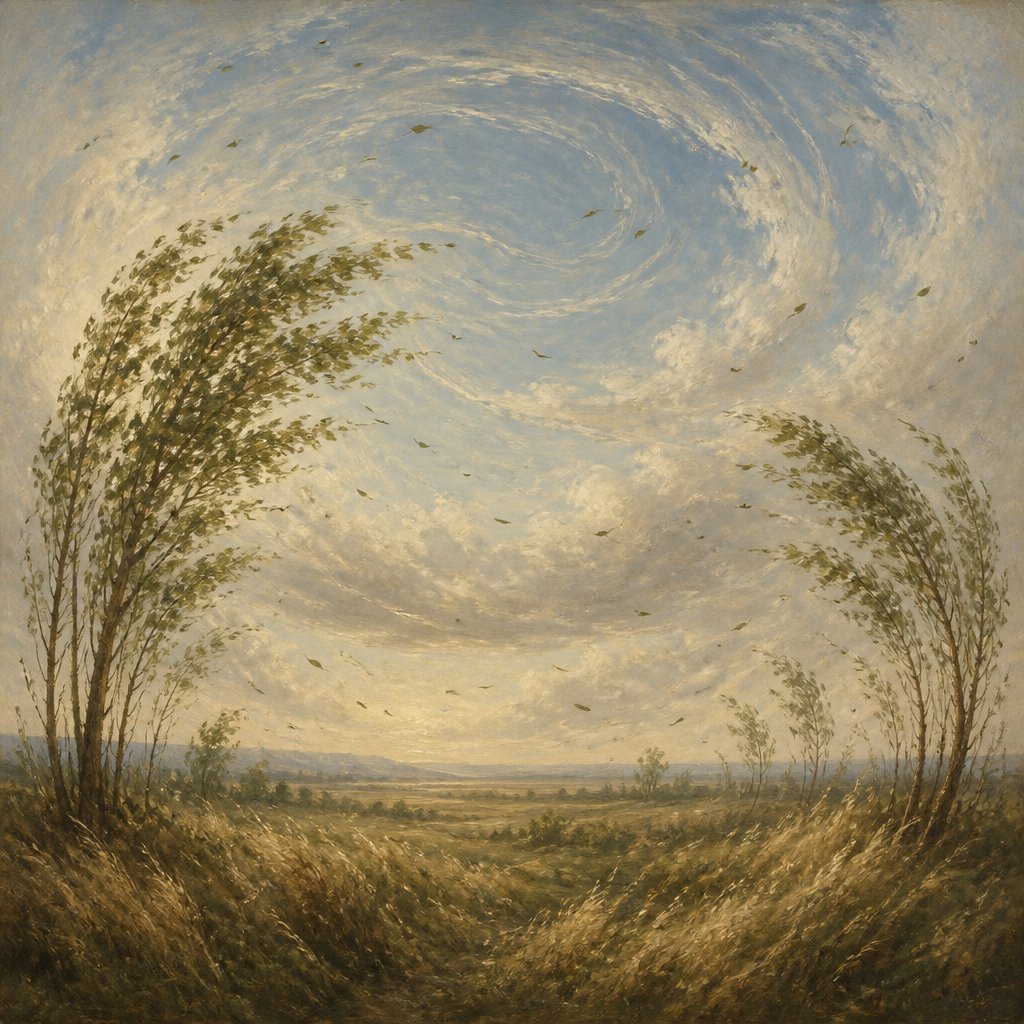
Ecclesiastes 1:6 in the King James Version of the Bible reads, "The wind goeth toward the south, and turneth about unto the north; it whirleth about continually, and the wind returneth again according to his circuits."
This verse is from the book of Ecclesiastes, which is often attributed to King Solomon, the son of King David. The book is a reflection on the meaning of life and the pursuit of happiness, and it is often viewed as a philosophical and existential exploration of these themes.
In Ecclesiastes 1:6, the author uses the imagery of the wind to illustrate the cyclical and repetitive nature of life. The wind is described as going "toward the south, and turneth about unto the north," and "whirleth about continually." This depiction of the wind's constant movement and changing direction is a metaphor for the repetitive and circular nature of human existence.
The verse suggests that just as the wind follows a set pattern and returns to its circuits, so too do the events and experiences of life follow a recurring and unchanging cycle. This idea aligns with the overarching theme of Ecclesiastes, which emphasizes the fleeting and transient nature of life. The verse implies that no matter what efforts humans make to escape the cycle of life, they will ultimately find themselves returning to the same patterns and routines.
The use of the wind as a symbol in this verse also carries a deeper significance. In many religious traditions, the wind is associated with the breath of life and the movement of the spirit. In the Bible, the wind is often used as a symbol of the Holy Spirit and the divine presence. In this context, the wind in Ecclesiastes 1:6 can be seen as representing the divine order and purpose that underlies the cyclical nature of life. It suggests that even though life may seem repetitive and meaningless, there is a greater spiritual significance to the patterns and rhythms of existence.
The verse also reflects the idea of "vanity" or "meaninglessness" that is prevalent throughout the book of Ecclesiastes. The author's use of the wind as a metaphor for the cyclical nature of life conveys a sense of futility and a lack of lasting significance in the human experience. The repetitive movement of the wind serves as a reminder of the ultimately empty and futile nature of human endeavors when viewed from a purely earthly perspective.
This verse can be seen as a reflection on the human tendency to seek purpose and fulfillment in the pursuit of worldly pleasures and achievements. The cyclical nature of the wind serves as a warning against placing too much importance on temporal, transient things, and instead points towards a more spiritual and transcendent understanding of existence.
In the broader context of the book of Ecclesiastes, this verse is one part of the author's exploration of the human condition and the search for meaning in a world that often seems chaotic and confusing. The repetitive movement of the wind reflects the cyclical nature of human experience and the inevitability of both joy and sorrow, success and failure, and life and death. Ultimately, Ecclesiastes encourages readers to question their pursuits and consider the transcendent and eternal aspects of life.
In conclusion, Ecclesiastes 1:6 uses the metaphor of the wind to convey the cyclical and repetitive nature of human existence. The verse reflects the broader themes of the book of Ecclesiastes, including the transient nature of life, the futility of purely earthly pursuits, and the importance of seeking a deeper spiritual understanding of existence. It serves as a reminder to consider the eternal and transcendent aspects of life, rather than becoming caught up in the fleeting and meaningless cycles of the world.
Get our apps


Artwork for Ecclesiastes 1:6

Ecclesiastes 1:6 - "The wind goeth toward the south, and turneth about unto the north; it whirleth about continually, and the wind returneth again according to his circuits."
"The wind goeth toward the south, and turneth about unto the north; it whirleth about continually, and the wind returneth again according to his circuits." - Ecclesiastes 1:6

Ecclesiastes 6:1 - "There is an evil which I have seen under the sun, and it is common among men:"

ecclesiastes 12:2-6

"There is an evil which I have seen under the sun, and it is common among men:" - Ecclesiastes 6:1

Ecclesiastes 10:6 - "Folly is set in great dignity, and the rich sit in low place."

Ecclesiastes 6:7 - "All the labour of man is for his mouth, and yet the appetite is not filled."

Ecclesiastes 3:6 - "A time to get, and a time to lose; a time to keep, and a time to cast away;"

Ecclesiastes 6:11 - "¶ Seeing there be many things that increase vanity, what is man the better?"

Ecclesiastes 6:9 - "¶ Better is the sight of the eyes than the wandering of the desire: this is also vanity and vexation of spirit."

Ecclesiastes 6:4 - "For he cometh in with vanity, and departeth in darkness, and his name shall be covered with darkness."

Ecclesiastes 7:6 - "For as the crackling of thorns under a pot, so is the laughter of the fool: this also is vanity."

ecclesiastes 12:1

ecclesiastes 12:1

Ecclesiastes 8:6 - "¶ Because to every purpose there is time and judgment, therefore the misery of man is great upon him."

Ecclesiastes 4:6 - "Better is an handful with quietness, than both the hands full with travail and vexation of spirit."

Ecclesiastes 6:6 - "¶ Yea, though he live a thousand years twice told, yet hath he seen no good: do not all go to one place?"

Ecclesiastes 1:11

ecclesiastes 12:1

Ecclesiastes 3:1

Ecclesiastes 2:6 - "I made me pools of water, to water therewith the wood that bringeth forth trees:"

Ecclesiastes 1:1 - "The words of the Preacher, the son of David, king in Jerusalem."

ecclesiastes 12:1-8

Ecclesiastes 12:6 - "Or ever the silver cord be loosed, or the golden bowl be broken, or the pitcher be broken at the fountain, or the wheel broken at the cistern."

Ecclesiastes 6:8 - "For what hath the wise more than the fool? what hath the poor, that knoweth to walk before the living?"

ecclesiastes 12:1-8

ecclesiastes 12:1-8

ecclesiastes 12:1-8

ecclesiastes 12:1-8

Ecclesiastes 6:5 - "Moreover he hath not seen the sun, nor known any thing: this hath more rest than the other."