What does Ecclesiastes 2:19 mean?
"And who knoweth whether he shall be a wise man or a fool? yet shall he have rule over all my labour wherein I have laboured, and wherein I have shewed myself wise under the sun. This is also vanity." - Ecclesiastes 2:19
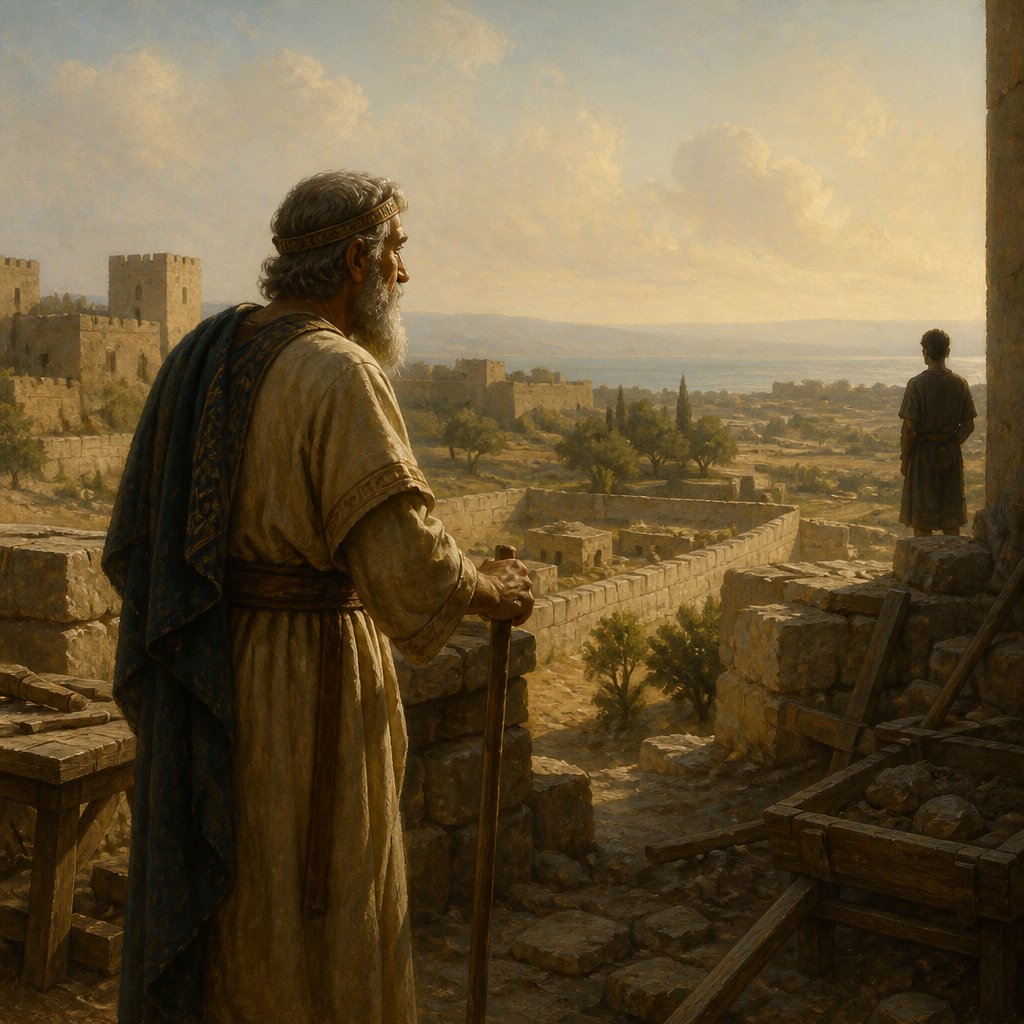
Ecclesiastes 2:19 KJV – “And who knoweth whether he shall be a wise man or a fool? yet shall he have rule over all my labour wherein I have laboured, and wherein I have showed myself wise under the sun. This is also vanity.”
The book of Ecclesiastes is attributed to King Solomon, the son of David, who is renowned for his wisdom and wealth. In this verse, Solomon introduces the theme of the futility and emptiness of life's pursuits, an overarching theme of the entire book. The verse speaks to the uncertainty of the future and the inevitability of death, and ultimately, the vanity of human endeavors in the grand scheme of things.
The verse begins with a rhetorical question, "And who knoweth whether he shall be a wise man or a fool?" This question highlights the unpredictability and uncertainty of life. It speaks to the fact that, despite our best efforts, we cannot control or predict the outcomes of our lives. This is a theme that appears throughout the book of Ecclesiastes – the idea that life is fleeting and unpredictable.
Solomon then continues, "yet shall he have rule over all my labor wherein I have labored, and wherein I have showed myself wise under the sun." Here, he acknowledges that regardless of whether one is wise or foolish, they will still have control and authority over the fruits of their labor. This is a recognition of the reality that, in the end, our achievements and possessions will pass into the hands of others. The transient nature of our accomplishments is a central theme of the book, and Solomon emphasizes this here as well.
The verse concludes with the declaration, "This is also vanity." This phrase serves as a recurring refrain throughout the book of Ecclesiastes, reinforcing the message that all of our striving and labor is ultimately meaningless and fleeting. Solomon uses the word "vanity" to describe the transitory and insubstantial nature of human life, echoing the sentiment expressed in the opening chapter – "Vanity of vanities, saith the Preacher, vanity of vanities; all is vanity."
The context of Ecclesiastes 2:19 is key in understanding the full depth of its meaning. Solomon had indulged in every pleasure and pursuit available to him – wealth, wisdom, pleasure, and accomplishment – only to find that it was all "vanity and a striving after wind." The verse reflects his personal experiences and serves as a cautionary tale to his audience. It encourages them to consider the transient nature of human existence, and to seek meaning and fulfillment in something beyond the material and temporal realms. This broader context informs and enriches the understanding of the verse, deepening its impact and relevance.
The symbolism in Ecclesiastes 2:19 lies in the contrast between wisdom and folly, and the ultimate insignificance of both in the face of mortality and the passage of time. The verse serves as a reminder of the limitations of human knowledge and understanding, as well as the impermanence of our accomplishments. It prompts the reader to contemplate the value of their pursuits and the legacy they will leave behind – a theme that reverberates throughout the entire book of Ecclesiastes.
In conclusion, Ecclesiastes 2:19 offers a sobering reflection on the uncertainty of life, the fleeting nature of human endeavors, and the ultimate futility of worldly pursuits. Its message of the transitory nature of human existence, and the impermanence of our achievements, serves as a thought-provoking and timeless reminder to seek meaning and fulfillment beyond the temporal and material realms. The verse encapsulates the overarching themes of the book of Ecclesiastes, and its profound insights continue to resonate with readers, offering enduring wisdom and perspective on the human condition.
Have questions about Ecclesiastes 2:19?
Dive deeper into this scripture with Bible Chat — an AI-powered tool for exploring God's Word through conversation. Ask questions, get context, and grow in your understanding of the Bible.
Get Our Apps


Ecclesiastes 2:19 Artwork

Ecclesiastes 2:19 - "And who knoweth whether he shall be a wise man or a fool? yet shall he have rule over all my labour wherein I have laboured, and wherein I have shewed myself wise under the sun. This is also vanity."
"And who knoweth whether he shall be a wise man or a fool? yet shall he have rule over all my labour wherein I have laboured, and wherein I have shewed myself wise under the sun. This is also vanity." - Ecclesiastes 2:19

Ecclesiastes 10:19 - "¶ A feast is made for laughter, and wine maketh merry: but money answereth all things."

Ecclesiastes 7:19 - "Wisdom strengtheneth the wise more than ten mighty men which are in the city."

Ecclesiastes 2:2 - "I said of laughter, It is mad: and of mirth, What doeth it?"

ecclesiastes 12:2-6

Ecclesiastes 1:2 - "Vanity of vanities, saith the Preacher, vanity of vanities; all is vanity."

Ecclesiastes 2:13 - "Then I saw that wisdom excelleth folly, as far as light excelleth darkness."

Ecclesiastes 8:2 - "I counsel thee to keep the king's commandment, and that in regard of the oath of God."

"Wisdom strengtheneth the wise more than ten mighty men which are in the city." - Ecclesiastes 7:19
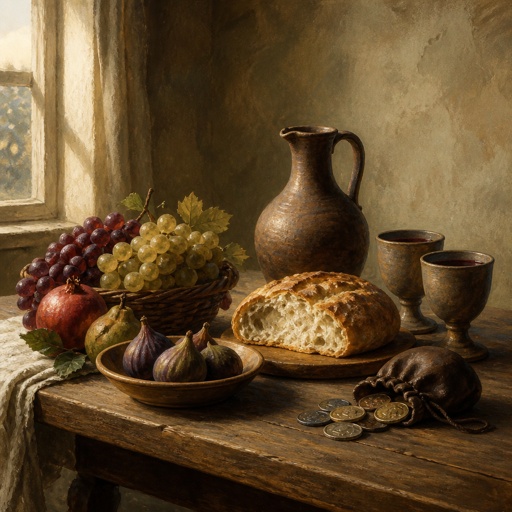
"¶ A feast is made for laughter, and wine maketh merry: but money answereth all things." - Ecclesiastes 10:19

Ecclesiastes 5:19 - "Every man also to whom God hath given riches and wealth, and hath given him power to eat thereof, and to take his portion, and to rejoice in his labour; this is the gift of God."

Ecclesiastes 3:2 - "A time to be born, and a time to die; a time to plant, and a time to pluck up that which is planted;"

Ecclesiastes 2:25 - "For who can eat, or who else can hasten hereunto, more than I?"

Ecclesiastes 10:2 - "A wise man's heart is at his right hand; but a fool's heart at his left."

"I said of laughter, It is mad: and of mirth, What doeth it?" - Ecclesiastes 2:2

Ecclesiastes 2:5 - "I made me gardens and orchards, and I planted trees in them of all kind of fruits:"

Ecclesiastes 2:6 - "I made me pools of water, to water therewith the wood that bringeth forth trees:"

"While the sun, or the light, or the moon, or the stars, be not darkened, nor the clouds return after the rain:" - Ecclesiastes 12:2

Ecclesiastes 12:2 - "While the sun, or the light, or the moon, or the stars, be not darkened, nor the clouds return after the rain:"

Ecclesiastes 2:4 - "I made me great works; I builded me houses; I planted me vineyards:"

Ecclesiastes 4:2 - "Wherefore I praised the dead which are already dead more than the living which are yet alive."

Ecclesiastes 11:2 - "Give a portion to seven, and also to eight; for thou knowest not what evil shall be upon the earth."

Ecclesiastes 2:22 - "For what hath man of all his labour, and of the vexation of his heart, wherein he hath laboured under the sun?"

Ecclesiastes 2:20 - "Therefore I went about to cause my heart to despair of all the labour which I took under the sun."

Ecclesiastes 3:19 - "For that which befalleth the sons of men befalleth beasts; even one thing befalleth them: as the one dieth, so dieth the other; yea, they have all one breath; so that a man hath no preeminence above a beast: for all is vanity."

Ecclesiastes 2:1 - "I said in mine heart, Go to now, I will prove thee with mirth, therefore enjoy pleasure: and, behold, this also is vanity."

Ecclesiastes 7:2 - "¶ It is better to go to the house of mourning, than to go to the house of feasting: for that is the end of all men; and the living will lay it to his heart."

Ecclesiastes 2:23 - "For all his days are sorrows, and his travail grief; yea, his heart taketh not rest in the night. This is also vanity."

Ecclesiastes 2:14 - "The wise man's eyes are in his head; but the fool walketh in darkness: and I myself perceived also that one event happeneth to them all."