What does Ecclesiastes 2:8 mean?
"I gathered me also silver and gold, and the peculiar treasure of kings and of the provinces: I gat me men singers and women singers, and the delights of the sons of men, as musical instruments, and that of all sorts." - Ecclesiastes 2:8
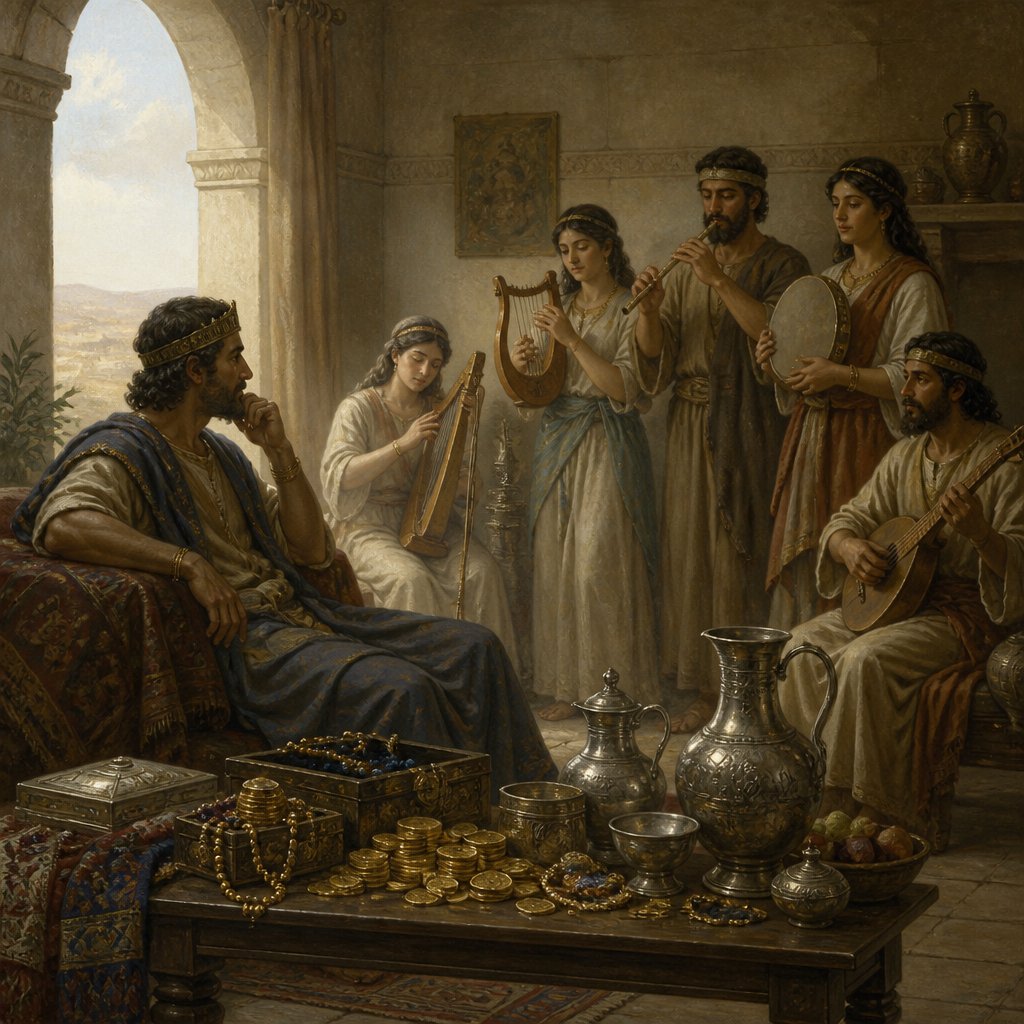
Ecclesiastes 2:8 from the King James Version of the Bible reads: "I gathered me also silver and gold, and the peculiar treasure of kings and of the provinces: I gat me men singers and women singers, and the delights of the sons of men, as musical instruments, and that of all sorts."
The book of Ecclesiastes is written by King Solomon, who is traditionally believed to be the author. In this verse, Solomon reflects on his pursuit of pleasure and worldly riches. He recounts his acquisition of silver and gold, which were considered the most valuable and sought-after commodities during his time. Additionally, he speaks of obtaining the "peculiar treasure of kings and of the provinces," indicating that he had access to the finest and most exclusive goods from various regions.
Solomon also speaks of acquiring men and women singers, along with musical instruments, and other delights of the sons of men. It is evident that he spared no expense in seeking out every form of pleasure and entertainment available to him. Solomon's pursuits were fueled by his great wealth and power as the king of Israel, allowing him to indulge in every desire and whim without limitation.
The theme of materialism and the pursuit of pleasure is central to this passage. Solomon's lavish lifestyle and relentless pursuit of pleasure reflect the futility of worldly pursuits that is a prevalent theme throughout the book of Ecclesiastes. Despite his vast wealth and access to every earthly delight, Solomon ultimately found these pursuits to be empty and unfulfilling. His reflections serve as a cautionary tale about the pitfalls of placing one's happiness and contentment in material possessions and temporary pleasures.
Furthermore, the verse also touches upon the transient nature of worldly treasures and pleasures. The term "peculiar treasure" suggests that Solomon may have possessed unique and rare items of great value, yet he ultimately found them to be lacking in lasting meaning and significance. The pursuit of these treasures did not bring the lasting satisfaction and joy that he had hoped for. This reflection serves as a reminder of the impermanence of all earthly possessions and the insufficiency of worldly pursuits to provide lasting fulfillment.
Symbolically, the treasures and delights that Solomon sought can be seen to represent the various distractions and temptations that can lead individuals away from a life of true meaning and purpose. The pursuit of wealth, pleasure, and prestige may provide temporary satisfaction, but it ultimately leads to emptiness and disillusionment. Solomon's experience serves as a cautionary example of the perils of placing one's hope and happiness in the transient pleasures of this world.
In the broader context of the book of Ecclesiastes, this verse is part of Solomon's overall reflection on the vanity of human endeavors. He is grappling with the existential questions of the meaning of life and the ultimate purpose of human existence. Through his pursuit of pleasure and material wealth, he comes to the realization that these pursuits are ultimately meaningless and cannot satisfy the deepest longings of the human heart. This verse serves as a poignant reminder that true fulfillment and contentment cannot be found in the temporary pleasures and treasures of this world, but rather in a deeper, spiritual fulfillment that transcends material possessions and worldly success.
In conclusion, Ecclesiastes 2:8 captures King Solomon's reflection on the pursuit of pleasure and material wealth. Through his own experiences, he comes to understand the fleeting nature of worldly pursuits and the emptiness that comes from seeking fulfillment in material possessions and temporary pleasures. This verse serves as a timeless reminder of the limitations of worldly treasures and the ultimate emptiness of pursuing a life of indulgence and excess. It calls for a re-evaluation of one's priorities and a shift towards seeking deeper, lasting fulfillment in spiritual and eternal values rather than the transient pleasures of this world.
Have questions about Ecclesiastes 2:8?
Dive deeper into this scripture with Bible Chat — an AI-powered tool for exploring God's Word through conversation. Ask questions, get context, and grow in your understanding of the Bible.
Get Our Apps


Ecclesiastes 2:8 Artwork
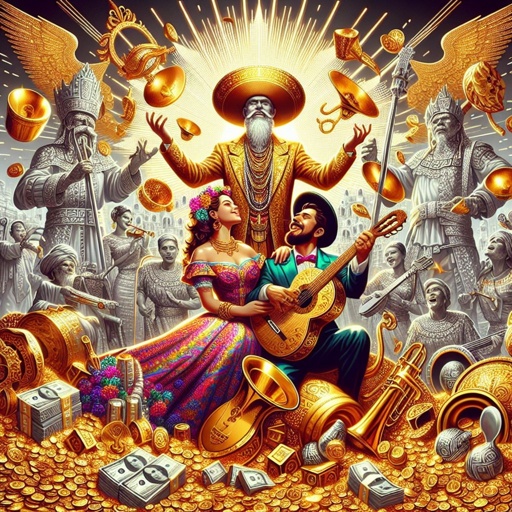
Ecclesiastes 2:8 - "I gathered me also silver and gold, and the peculiar treasure of kings and of the provinces: I gat me men singers and women singers, and the delights of the sons of men, as musical instruments, and that of all sorts."
"I gathered me also silver and gold, and the peculiar treasure of kings and of the provinces: I gat me men singers and women singers, and the delights of the sons of men, as musical instruments, and that of all sorts." - Ecclesiastes 2:8

Ecclesiastes 8:2 - "I counsel thee to keep the king's commandment, and that in regard of the oath of God."

"I counsel thee to keep the king's commandment, and that in regard of the oath of God." - Ecclesiastes 8:2

ecclesiastes 12:1-8

ecclesiastes 12:1-8

ecclesiastes 12:1-8

ecclesiastes 12:1-8

Ecclesiastes 3:7-8

ecclesiastes 12:1-8

Ecclesiastes 12:8 - "¶ Vanity of vanities, saith the preacher; all is vanity."

Ecclesiastes 3:8 - "A time to love, and a time to hate; a time of war, and a time of peace."

Ecclesiastes 8:7 - "For he knoweth not that which shall be: for who can tell him when it shall be?"

Ecclesiastes 8:6 - "¶ Because to every purpose there is time and judgment, therefore the misery of man is great upon him."

Ecclesiastes 9:8 - "Let thy garments be always white; and let thy head lack no ointment."

Ecclesiastes 8:4 - "Where the word of a king is, there is power: and who may say unto him, What doest thou?"

Ecclesiastes 7:8 - "Better is the end of a thing than the beginning thereof: and the patient in spirit is better than the proud in spirit."

Ecclesiastes 2:2 - "I said of laughter, It is mad: and of mirth, What doeth it?"

ecclesiastes 12:2-6

Ecclesiastes 10:8 - "He that diggeth a pit shall fall into it; and whoso breaketh an hedge, a serpent shall bite him."

Ecclesiastes 8:8 - "There is no man that hath power over the spirit to retain the spirit; neither hath he power in the day of death: and there is no discharge in that war; neither shall wickedness deliver those that are given to it."

Ecclesiastes 1:8 - "All things are full of labour; man cannot utter it: the eye is not satisfied with seeing, nor the ear filled with hearing."

Ecclesiastes 8:5 - "Whoso keepeth the commandment shall feel no evil thing: and a wise man's heart discerneth both time and judgment."

Ecclesiastes 8:3 - "Be not hasty to go out of his sight: stand not in an evil thing; for he doeth whatsoever pleaseth him."

Ecclesiastes 6:8 - "For what hath the wise more than the fool? what hath the poor, that knoweth to walk before the living?"

"¶ Vanity of vanities, saith the preacher; all is vanity." - Ecclesiastes 12:8

"1 There is a time for everything, and a season for every activity under the heavens: 2 a time to be born and a time to die, a time to plant and a time to uproot, 3 a time to kill and a time to heal, a time to tear down and a time to build, 4 a time to weep and a time to laugh, a time to mourn and a time to dance, 5 a time to scatter stones and a time to gather them, a time to embrace and a time to refrain from embracing, 6 a time to search and a time to give up, a time to keep and a time to throw away, 7 a time to tear and a time to mend, a time to be silent and a time to speak, 8 a time to love and a time to hate, a time for war and a time for peace." - Ecclesiastes 3:1-8

Ecclesiastes 8:13 - "But it shall not be well with the wicked, neither shall he prolong his days, which are as a shadow; because he feareth not before God."

Ecclesiastes 1:2 - "Vanity of vanities, saith the Preacher, vanity of vanities; all is vanity."

Ecclesiastes 8:11 - "Because sentence against an evil work is not executed speedily, therefore the heart of the sons of men is fully set in them to do evil."