What does Ecclesiastes 3:18 mean?
"I said in mine heart concerning the estate of the sons of men, that God might manifest them, and that they might see that they themselves are beasts." - Ecclesiastes 3:18
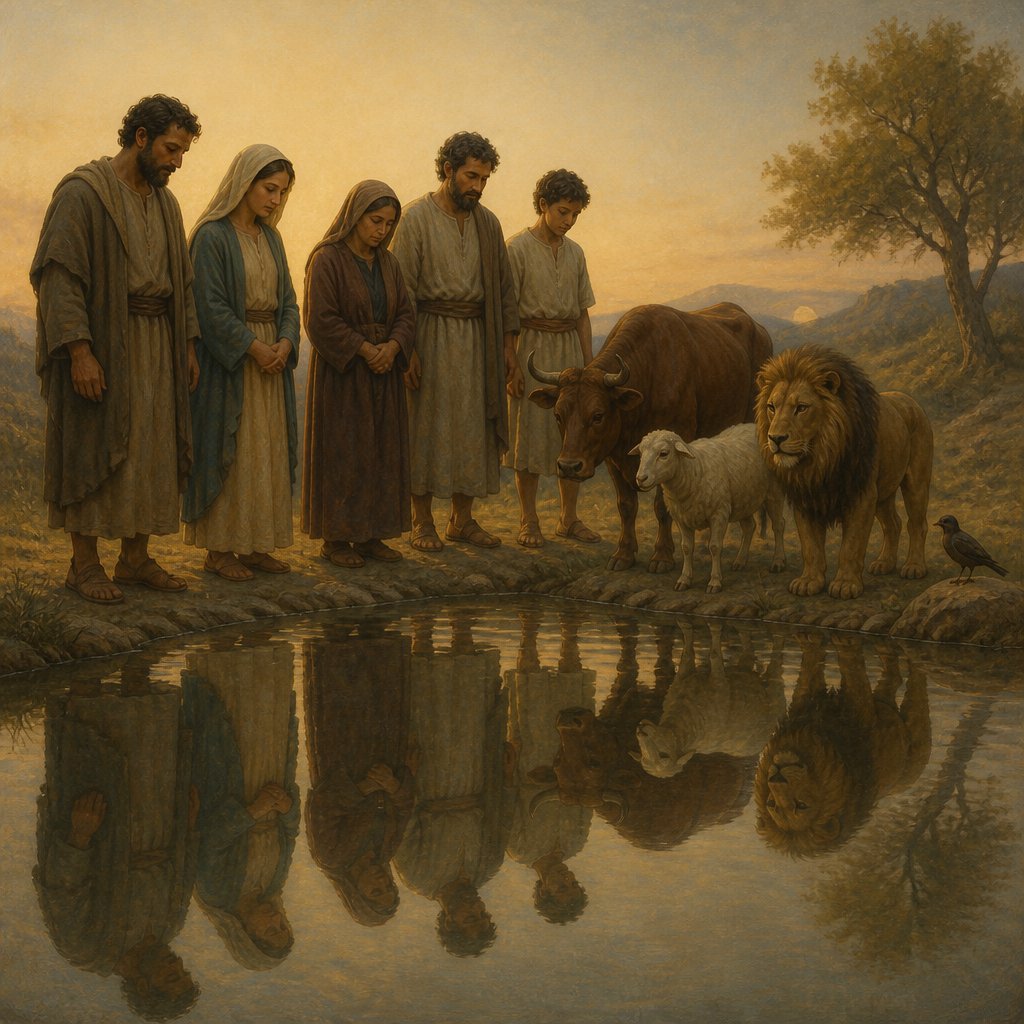
To truly grasp the meaning and significance of Ecclesiastes 3:18 from the King James Version of the Bible, it is essential to consider the context in which it is written. The book of Ecclesiastes is attributed to King Solomon, who is traditionally regarded as one of the wisest and wealthiest rulers in biblical history. Ecclesiastes is a book that reflects on the nature of human existence and the pursuit of meaning and fulfillment in life. The verse in question falls within a passage that explores the concept of time and the cycles of life.
The verse itself reads: "I said in mine heart concerning the estate of the sons of men, that God might manifest them, and that they might see that they themselves are beasts." This verse is a reflection on the nature of humanity and our relationship with God. It implies that, in the eyes of God, humans are not fundamentally different from animals. This may seem like a harsh or pessimistic perspective, but when viewed in the larger context of the book of Ecclesiastes, it serves as a reminder of the limitations and mortality of mankind.
The themes of Ecclesiastes 3:18 are deeply rooted in philosophical inquiry and existential reflection. The verse challenges the human tendency to see ourselves as superior beings and instead points to our shared existence with all living creatures. This serves as a humbling reminder of our place in the natural order and our dependence on God for understanding and meaning.
The context of this verse is also important to consider. The preceding verses in Ecclesiastes 3 discuss the cycles of life and the inevitability of both joyful and sorrowful experiences. This reflects the overall message of the book, which emphasizes the fleeting nature of earthly pursuits and the importance of seeking fulfillment in a higher purpose. In Ecclesiastes 3:18, the notion that humans are akin to beasts in the eyes of God serves to underscore the fleeting nature of our earthly existence and the need to seek spiritual fulfillment beyond material concerns.
The symbolism in this verse lies in the comparison between humans and beasts. By equating mankind with beasts, the verse suggests that there is a fundamental equality in the eyes of God. This symbolizes the transient nature of human life and the reminder that our earthly pursuits are ultimately insignificant in the grand scheme of things. This symbolism serves to direct the reader’s attention to the broader message of Ecclesiastes, which encourages a focus on spiritual fulfillment and a deeper connection with God.
In conclusion, Ecclesiastes 3:18 from the King James Version of the Bible presents a thought-provoking reflection on the nature of humanity and our relationship with God. The verse challenges our perceptions of superiority and prompts us to consider our place in the natural order. The themes, context, and symbolism of this verse serve to emphasize the fleeting nature of earthly pursuits and the importance of seeking spiritual fulfillment. It ultimately encourages a deeper connection with God and a focus on higher purpose.
Have questions about Ecclesiastes 3:18?
Dive deeper into this scripture with Bible Chat — an AI-powered tool for exploring God's Word through conversation. Ask questions, get context, and grow in your understanding of the Bible.
Get Our Apps


Ecclesiastes 3:18 Artwork

Ecclesiastes 3:18 - "I said in mine heart concerning the estate of the sons of men, that God might manifest them, and that they might see that they themselves are beasts."
"I said in mine heart concerning the estate of the sons of men, that God might manifest them, and that they might see that they themselves are beasts." - Ecclesiastes 3:18

"1 There is a time for everything, and a season for every activity under the heavens: 2 a time to be born and a time to die, a time to plant and a time to uproot, 3 a time to kill and a time to heal, a time to tear down and a time to build, 4 a time to weep and a time to laugh, a time to mourn and a time to dance, 5 a time to scatter stones and a time to gather them, a time to embrace and a time to refrain from embracing, 6 a time to search and a time to give up, a time to keep and a time to throw away, 7 a time to tear and a time to mend, a time to be silent and a time to speak, 8 a time to love and a time to hate, a time for war and a time for peace." - Ecclesiastes 3:1-8

Ecclesiastes 3:1

Ecclesiastes 3:3 - "A time to kill, and a time to heal; a time to break down, and a time to build up;"

Ecclesiastes 3:7-8

Ecclesiastes 1:18 - "For in much wisdom is much grief: and he that increaseth knowledge increaseth sorrow."

Ecclesiastes 10:18 - "¶ By much slothfulness the building decayeth; and through idleness of the hands the house droppeth through."

Ecclesiastes 9:18 - "Wisdom is better than weapons of war: but one sinner destroyeth much good."

Ecclesiastes 3:1 – "There is a time for everything, and a season for every activity under the heavens."

Ecclesiastes 3:1 - "To every thing there is a season, and a time to every purpose under the heaven:"

Ecclesiastes 3:9 - "What profit hath he that worketh in that wherein he laboureth?"

Ecclesiastes 3:4 - "A time to weep, and a time to laugh; a time to mourn, and a time to dance;"

Ecclesiastes 3:8 - "A time to love, and a time to hate; a time of war, and a time of peace."

Ecclesiastes 3:6 - "A time to get, and a time to lose; a time to keep, and a time to cast away;"

Ecclesiastes 7:3 - "Sorrow is better than laughter: for by the sadness of the countenance the heart is made better."

Ecclesiastes 3:7 - "A time to rend, and a time to sew; a time to keep silence, and a time to speak;"

Ecclesiastes 3:21 - "Who knoweth the spirit of man that goeth upward, and the spirit of the beast that goeth downward to the earth?"

Ecclesiastes 3:2 - "A time to be born, and a time to die; a time to plant, and a time to pluck up that which is planted;"

Ecclesiastes 3:16 - "¶ And moreover I saw under the sun the place of judgment, that wickedness was there; and the place of righteousness, that iniquity was there."

Ecclesiastes 3:20 - "All go unto one place; all are of the dust, and all turn to dust again."

Ecclesiastes 3:12 - "I know that there is no good in them, but for a man to rejoice, and to do good in his life."

Ecclesiastes 5:3 - "For a dream cometh through the multitude of business; and a fool's voice is known by multitude of words."

Ecclesiastes 1:3 - "What profit hath a man of all his labour which he taketh under the sun?"

Ecclesiastes 3:15 - "That which hath been is now; and that which is to be hath already been; and God requireth that which is past."

Ecclesiastes 3:10 - "I have seen the travail, which God hath given to the sons of men to be exercised in it."

Ecclesiastes 3:13 - "And also that every man should eat and drink, and enjoy the good of all his labour, it is the gift of God."

Ecclesiastes 3:1 – "There is a time for everything, and a season for every activity under the heavens." r

Ecclesiastes 7:18 - "It is good that thou shouldest take hold of this; yea, also from this withdraw not thine hand: for he that feareth God shall come forth of them all."

Ecclesiastes 3:17 - "I said in mine heart, God shall judge the righteous and the wicked: for there is a time there for every purpose and for every work."