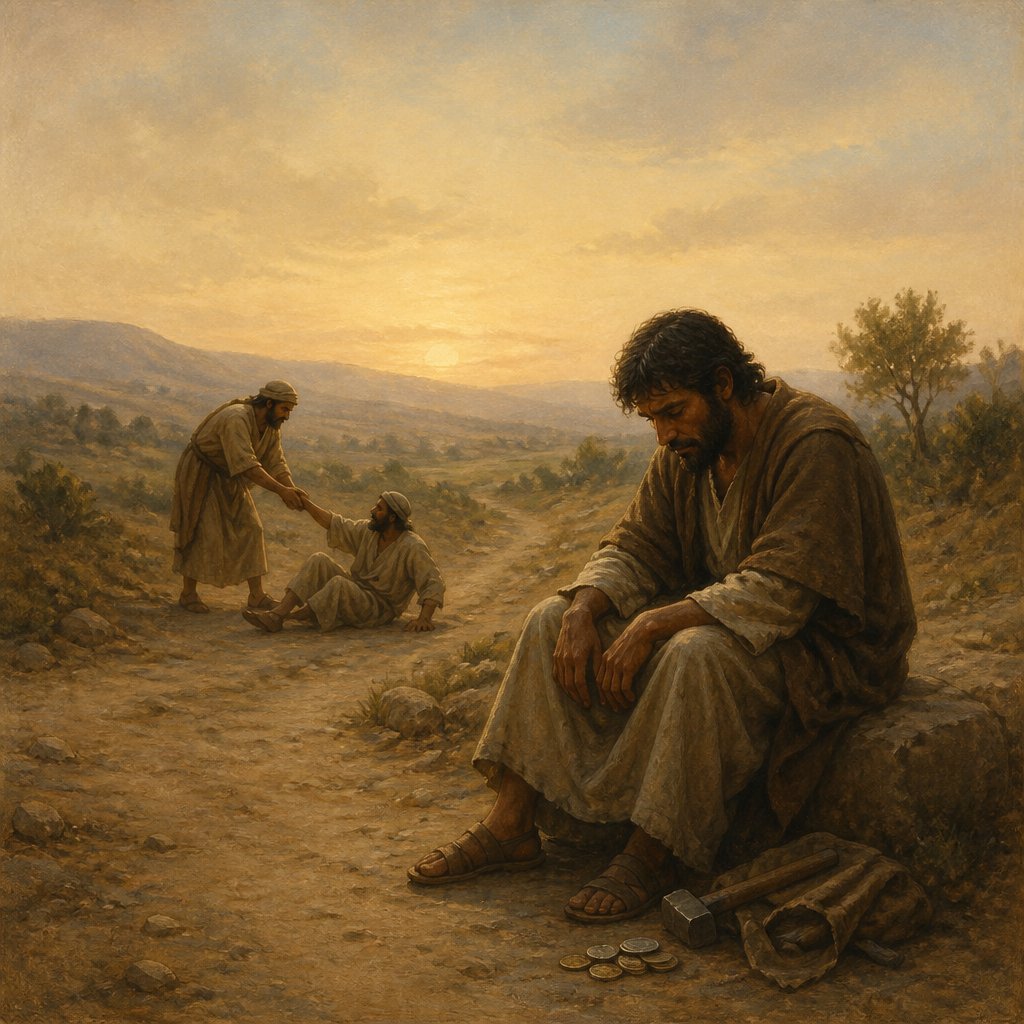
Ecclesiastes 4:8-10 in the King James Version (KJV) reads: "There is one alone, and there is not a second; yea, he hath neither child nor brother: yet is there no end of all his labour; neither is his eye satisfied with riches; neither saith he, For whom do I labour, and bereave my soul of good? This is also vanity, yea, it is a sore travail. Two are better than one; because they have a good reward for their labour. For if they fall, the one will lift up his fellow: but woe to him that is alone when he falleth; for he hath not another to help him up."
The book of Ecclesiastes is known for its philosophical musings on the meaning of life and the fleeting nature of material wealth and pleasures. This particular passage focuses on the idea of the futility of toiling in isolation and the importance of companionship and working together.
The passage starts by describing a man who is alone, with no family or loved ones to share his labor and wealth with. Despite his hard work and accumulation of riches, he finds no satisfaction or end to his toil. This emphasizes the idea that material wealth and possessions can never fully satisfy the longing of the human heart. The passage then questions the purpose of laboring and accumulating wealth if there is no one to share it with, highlighting the emptiness and vanity of such pursuits.
This theme of the emptiness of worldly pursuits is a common one throughout Ecclesiastes. The writer, often believed to be King Solomon, reflects on the transitory nature of wealth, pleasure, and human endeavor. This passage serves as a reminder that true fulfillment and meaning cannot be found in material possessions or personal achievements alone.
The passage then contrasts the solitary individual with the value of companionship and teamwork. It declares that "Two are better than one; because they have a good reward for their labor." This emphasizes the importance of collaboration and mutual support in achieving common goals. The idea is that working together not only brings greater satisfaction and reward but also provides a support system for times of need.
The passage further illustrates this point by highlighting the benefit of having someone to help in times of trouble. It states, "For if they fall, the one will lift up his fellow: but woe to him that is alone when he falleth; for he hath not another to help him up." This serves as a warning against the perils of isolating oneself and the value of having someone to lean on in times of need.
In a broader context, this passage can be seen as a reflection on the human need for connection and community. It acknowledges the inherent interdependence of human beings and the importance of relationships in finding fulfillment and support. This aligns with the broader biblical theme of love, compassion, and caring for one another.
From a symbolic standpoint, the passage can also be seen as a metaphor for the Christian life. It emphasizes the value of spiritual fellowship and the idea that no one should walk the path of faith alone. Just as in the passage, where two are better than one, Christians are encouraged to come together in community, to lift each other up, and to support one another in their spiritual journey.
In conclusion, Ecclesiastes 4:8-10 offers deeply profound insights into the human condition, the pursuit of material wealth, and the value of companionship. It serves as a reminder that true fulfillment cannot be found in isolation or in the accumulation of earthly riches, but rather in the connections we build with others and the mutual support we offer and receive. It challenges readers to cultivate meaningful relationships, work together for common goals, and to seek true satisfaction beyond the fleeting pleasures of the world.
Get our apps


Artwork for Ecclesiastes 4:8-10

Ecclesiastes 4:8-10 - "There is one alone, and there is not a second; yea, he hath neither child nor brother: yet is there no end of all his labour; neither is his eye satisfied with riches; neither saith he, For whom do I labour, and bereave my soul of good? This is also vanity, yea, it is a sore travail. Two are better than one; because they have a good reward for their labour. For if they fall, the one will lift up his fellow: but woe to him that is alone when he falleth; for he hath not another to help him up."

"There is one alone, and there is not a second; yea, he hath neither child nor brother: yet is there no end of all his labour; neither is his eye satisfied with riches; neither saith he, For whom do I labour, and bereave my soul of good? This is also vanity, yea, it is a sore travail. Two are better than one; because they have a good reward for their labour. For if they fall, the one will lift up his fellow: but woe to him that is alone when he falleth; for he hath not another to help him up." - Ecclesiastes 4:8-10

Ecclesiastes 10:8 - "He that diggeth a pit shall fall into it; and whoso breaketh an hedge, a serpent shall bite him."

Ecclesiastes 8:4 - "Where the word of a king is, there is power: and who may say unto him, What doest thou?"

Ecclesiastes 10:4 - "If the spirit of the ruler rise up against thee, leave not thy place; for yielding pacifieth great offences."

Ecclesiastes 4:10 - "For if they fall, the one will lift up his fellow: but woe to him that is alone when he falleth; for he hath not another to help him up."

Ecclesiastes 8:10 - "And so I saw the wicked buried, who had come and gone from the place of the holy, and they were forgotten in the city where they had so done: this is also vanity."

"Two are better than one, because they have a good return for their labor: If either of them falls down, one can help the other up. But pity anyone who falls and has no one to help them up." - Ecclesiastes 4:9-10

"He that diggeth a pit shall fall into it; and whoso breaketh an hedge, a serpent shall bite him." - Ecclesiastes 10:8

ecclesiastes 12:1-8

"Where the word of a king is, there is power: and who may say unto him, What doest thou?" - Ecclesiastes 8:4

ecclesiastes 12:1-8

ecclesiastes 12:1-8

ecclesiastes 12:1-8

Ecclesiastes 3:7-8

ecclesiastes 12:1-8

Ecclesiastes 4:9-10 - "Two are better than one, because they have a good return for their labor: If either of them falls down, one can help the other up. But pity anyone who falls and has no one to help them up."

Ecclesiastes 12:8 - "¶ Vanity of vanities, saith the preacher; all is vanity."
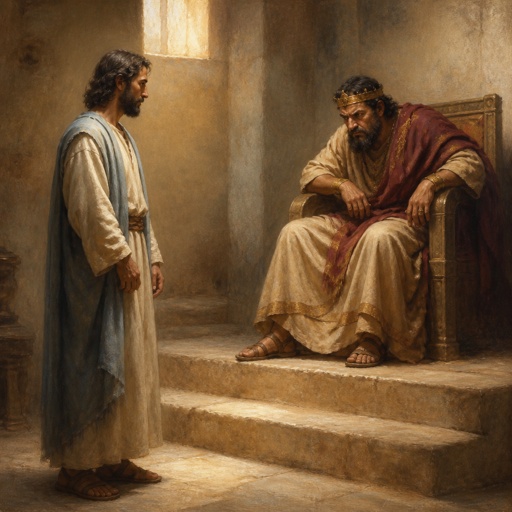
"If the spirit of the ruler rise up against thee, leave not thy place; for yielding pacifieth great offences." - Ecclesiastes 10:4

Ecclesiastes 10:10 - "If the iron be blunt, and he do not whet the edge, then must he put to more strength: but wisdom is profitable to direct."

Ecclesiastes 3:8 - "A time to love, and a time to hate; a time of war, and a time of peace."

Ecclesiastes 10:6 - "Folly is set in great dignity, and the rich sit in low place."

Ecclesiastes 10:11 - "Surely the serpent will bite without enchantment; and a babbler is no better."

Ecclesiastes 8:2 - "I counsel thee to keep the king's commandment, and that in regard of the oath of God."

Ecclesiastes 4:7 - "Then I returned, and I saw vanity under the sun."

Ecclesiastes 8:7 - "For he knoweth not that which shall be: for who can tell him when it shall be?"

Ecclesiastes 10:18 - "¶ By much slothfulness the building decayeth; and through idleness of the hands the house droppeth through."

Ecclesiastes 10:19 - "¶ A feast is made for laughter, and wine maketh merry: but money answereth all things."

Ecclesiastes 3:4 - "A time to weep, and a time to laugh; a time to mourn, and a time to dance;"

Ecclesiastes 4:8 - "There is one alone, and there is not a second; yea, he hath neither child nor brother: yet is there no end of all his labour; neither is his eye satisfied with riches; neither saith he, For whom do I labour, and bereave my soul of good? This is also vanity, yea, it is a sore travail."