What does Ecclesiastes 5:13 mean?
“There is a sore evil which I have seen under the sun, namely, riches kept for the owners thereof to their hurt.” — Ecclesiastes 5:13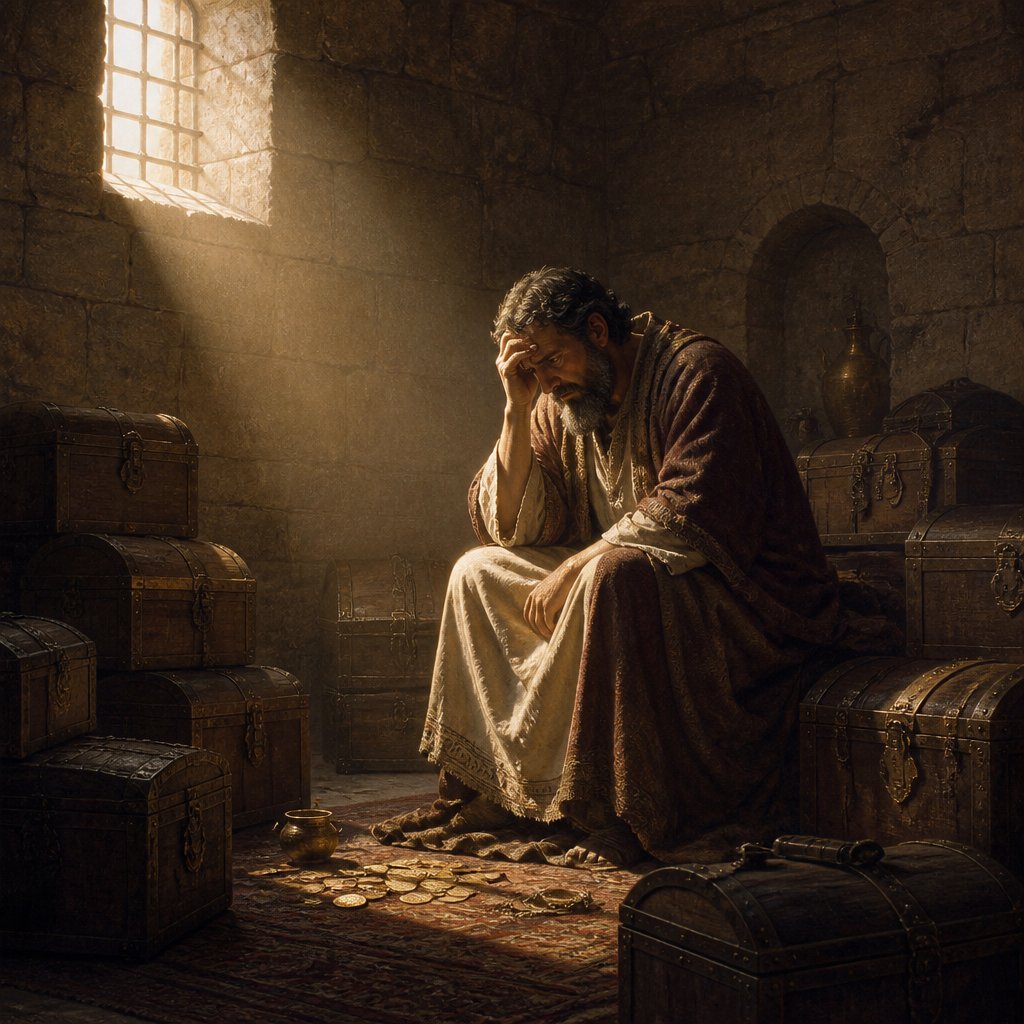
Ecclesiastes 5:13 in the King James Version of the Bible reads: "There is a sore evil which I have seen under the sun, namely, riches kept for the owners thereof to their hurt."
The book of Ecclesiastes is often attributed to King Solomon, the wise and wealthy king of Israel. In this particular verse, the author discusses the problem of hoarding wealth and the negative consequences it brings. The verse is part of a larger passage in which the author reflects on the futility of worldly pursuits and the transient nature of material possessions.
The phrase "sore evil" in this verse refers to a great or severe evil, emphasizing the seriousness of the issue at hand. The author, with the insight gained from his wisdom and experiences, observes that there is a specific type of evil related to the accumulation of riches. This evil is not of external origin but arises from within the hearts of those who possess wealth.
The verse is set "under the sun," a phrase frequently used in Ecclesiastes to refer to life and human activity on earth, signifying the author's observations of the world around him. The context of the verse is important as it underscores the author's reflections on the human condition and the struggles inherent in the pursuit of wealth and material possessions.
The central theme of Ecclesiastes 5:13 is the harmful impact of storing up riches for oneself. The author is cautioning against the tendency to amass wealth at the expense of one's well-being and spiritual health. The pursuit of riches, while seen as a symbol of success and security, can lead to moral and spiritual decay if not kept in check. The verse serves as a warning to the reader to consider the true cost of wealth and the potential harm it can bring when prioritized above all else.
The symbolism in this verse is tied to the concept of wealth and its intrinsic value. The act of hoarding riches is symbolic of a deeper spiritual issue – the misplaced priorities and distorted values that can lead to one's downfall. The accumulation of wealth is not inherently evil, but when it becomes an end in itself and is hoarded without regard for others or for the greater good, it can lead to moral and relational harm.
In a broader context, Ecclesiastes 5:13 speaks to the universal struggle of humanity with the pursuit of material wealth and the empty promises it often brings. The verse resonates with timeless wisdom that transcends cultural and historical boundaries. The pursuit of riches is a common theme throughout human history, and the cautionary message of this verse remains relevant in contemporary society.
Ultimately, Ecclesiastes 5:13 serves as a sobering reminder of the potential consequences of prioritizing material wealth at the expense of spiritual and relational well-being. The verse prompts readers to examine their own attitudes towards wealth and to consider the true value of riches in the grand scheme of life. It calls for a reevaluation of priorities and a deeper understanding of the fleeting nature of worldly possessions. The wisdom contained in this verse challenges readers to seek a more balanced and meaningful approach to wealth and abundance, rooted in a deeper understanding of its true purpose and significance in the context of a well-lived life.
Get our apps


Artwork for Ecclesiastes 5:13

Ecclesiastes 5:13 - "There is a sore evil which I have seen under the sun, namely, riches kept for the owners thereof to their hurt."
"There is a sore evil which I have seen under the sun, namely, riches kept for the owners thereof to their hurt." - Ecclesiastes 5:13

Ecclesiastes 5:5 - "Better is it that thou shouldest not vow, than that thou shouldest vow and not pay."

Ecclesiastes 2:13 - "Then I saw that wisdom excelleth folly, as far as light excelleth darkness."

Ecclesiastes 5:9 - "¶ Moreover the profit of the earth is for all: the king himself is served by the field."

Ecclesiastes 4:5 - "The fool foldeth his hands together, and eateth his own flesh."

Ecclesiastes 10:13 - "The beginning of the words of his mouth is foolishness: and the end of his talk is mischievous madness."

Ecclesiastes 7:5 - "It is better to hear the rebuke of the wise, than for a man to hear the song of fools."

Ecclesiastes 5:7 - "For in the multitude of dreams and many words there are also divers vanities: but fear thou God."

Ecclesiastes 4:13 - "¶ Better is a poor and a wise child than an old and foolish king, who will no more be admonished."

Ecclesiastes 9:13 - "¶ This wisdom have I seen also under the sun, and it seemed great unto me:"

Ecclesiastes 7:13 - "Consider the work of God: for who can make that straight, which he hath made crooked?"

Ecclesiastes 5:3 - "For a dream cometh through the multitude of business; and a fool's voice is known by multitude of words."

Ecclesiastes 3:13 - "And also that every man should eat and drink, and enjoy the good of all his labour, it is the gift of God."

Ecclesiastes 5:14 - "But those riches perish by evil travail: and he begetteth a son, and there is nothing in his hand."

Ecclesiastes 10:5 - "There is an evil which I have seen under the sun, as an error which proceedeth from the ruler:"

Ecclesiastes 2:5 - "I made me gardens and orchards, and I planted trees in them of all kind of fruits:"

Ecclesiastes 12:13 - "Let us hear the conclusion of the whole matter: Fear God, and keep his commandments: for this is the whole duty of man."

"Better is it that thou shouldest not vow, than that thou shouldest vow and not pay." - Ecclesiastes 5:5

Ecclesiastes 1:5 - "The sun also ariseth, and the sun goeth down, and hasteth to his place where he arose."

Ecclesiastes 5:10 - "He that loveth silver shall not be satisfied with silver; nor he that loveth abundance with increase: this is also vanity."
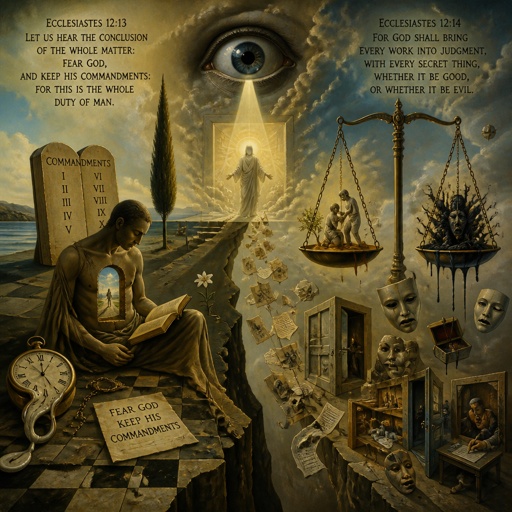
Ecclesiastes 12:13 Let us hear the conclusion of the whole matter: Fear God, and keep his commandments: for this is the whole duty of man. Ecclesiastes 12:14 For God shall bring every work into judgment, with every secret thing, whether it be good, or whether it be evil.

Ecclesiastes 5:11 - "When goods increase, they are increased that eat them: and what good is there to the owners thereof, saving the beholding of them with their eyes?"

Ecclesiastes 5:17 - "All his days also he eateth in darkness, and he hath much sorrow and wrath with his sickness."

Ecclesiastes 8:5 - "Whoso keepeth the commandment shall feel no evil thing: and a wise man's heart discerneth both time and judgment."

Ecclesiastes 3:5 - "A time to cast away stones, and a time to gather stones together; a time to embrace, and a time to refrain from embracing;"

Ecclesiastes 5:20 - "For he shall not much remember the days of his life; because God answereth him in the joy of his heart."

Ecclesiastes 8:13 - "But it shall not be well with the wicked, neither shall he prolong his days, which are as a shadow; because he feareth not before God."
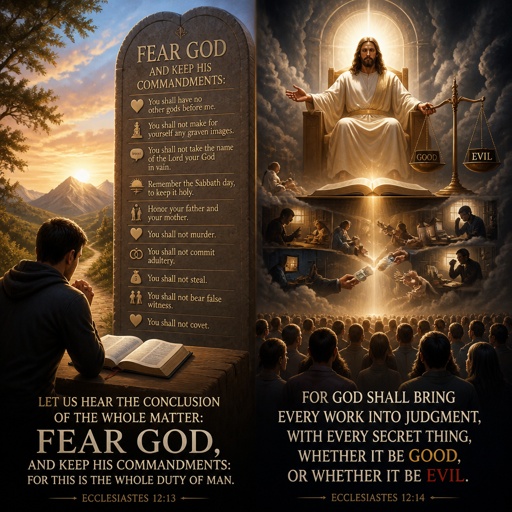
Ecclesiastes 12:13 Let us hear the conclusion of the whole matter: Fear God, and keep his commandments: for this is the whole duty of man. Ecclesiastes 12:14 For God shall bring every work into judgment, with every secret thing, whether it be good, or whether it be evil.

Ecclesiastes 6:5 - "Moreover he hath not seen the sun, nor known any thing: this hath more rest than the other."