What does Ecclesiastes 5:14 mean?
“But those riches perish by evil travail: and he begetteth a son, and there is nothing in his hand.” — Ecclesiastes 5:14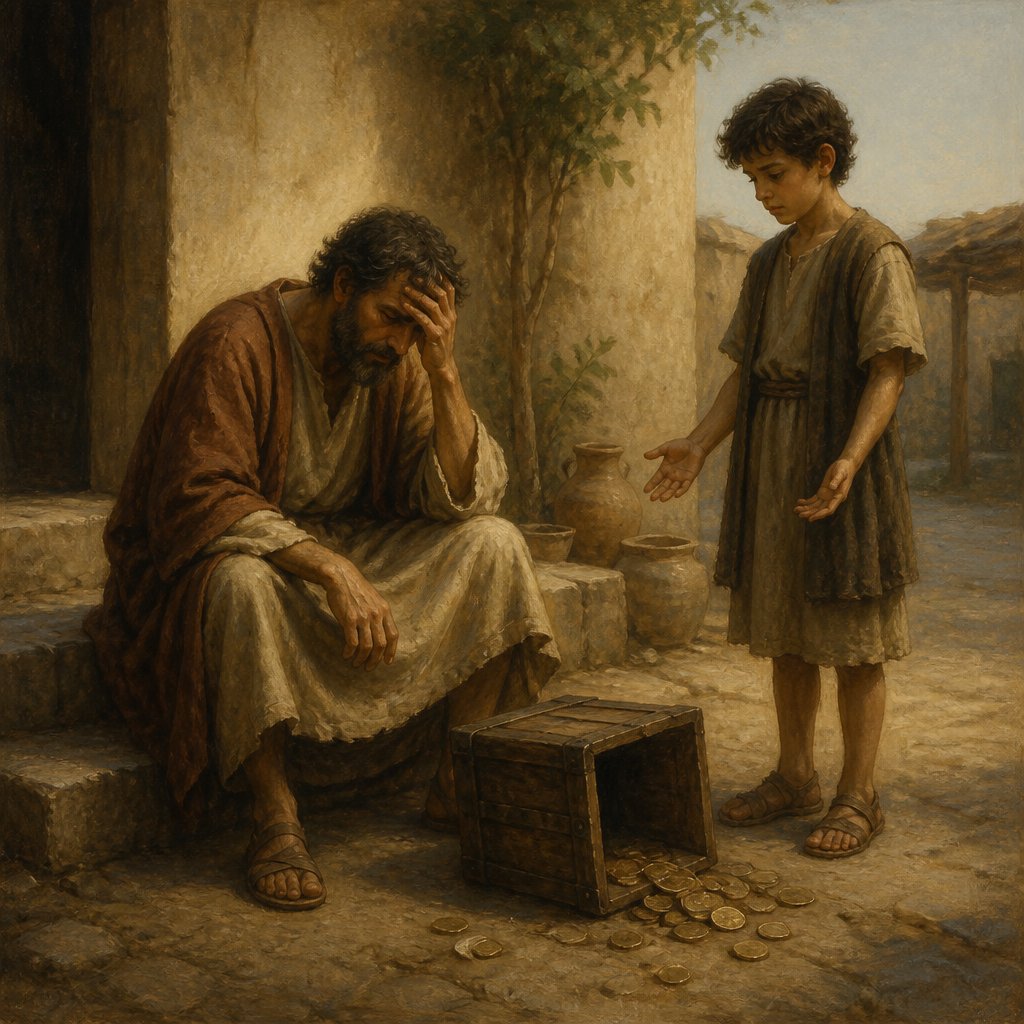
Ecclesiastes 5:14, from the King James Version of the Bible, reads: "But those riches perish by evil travail: and he begetteth a son, and there is nothing in his hand." This verse is part of the book of Ecclesiastes, which is attributed to King Solomon and is known for its philosophical reflections on the vanity and transience of human existence.
In this verse, the author is reflecting on the nature of wealth and its ultimate futility in the face of adversity. The phrase "those riches perish by evil travail" suggests that the accumulation of wealth is ultimately fleeting and vulnerable to being lost through various forms of misfortune or calamity. This mirrors the broader theme in Ecclesiastes of the impermanence of material possessions and the futility of relying on them for lasting fulfillment or security.
The second part of the verse, "and he begetteth a son, and there is nothing in his hand," further emphasizes the insignificance of material wealth in the grand scheme of life. The birth of a child, typically seen as a symbol of hope and legacy, is juxtaposed with the emptiness or lack of substance in the father's hand. This serves to underscore the idea that even the joys and responsibilities of parenthood are ultimately overshadowed by the transient nature of earthly riches.
The overarching message of Ecclesiastes 5:14 is a cautionary reminder of the limitations of material wealth and the importance of prioritizing spiritual and eternal values. The pursuit of riches, power, and success is ultimately futile when confronted with the unpredictability of life and the certainty of death. The verse encourages readers to seek a deeper, more enduring source of meaning and fulfillment beyond the fleeting pleasures and possessions of this world.
In a broader context, Ecclesiastes 5:14 is part of a larger thematic exploration of the human condition and the quest for meaning and purpose. The book of Ecclesiastes as a whole grapples with the existential questions of life, the inevitability of death, and the uncertainty of the future. It serves as a sobering reflection on the limitations of human wisdom and the fleeting nature of worldly achievements.
The verse also contains biblical symbolism that invites readers to reflect on the nature of inheritance and legacy. The mention of begetting a son and having nothing in one's hand speaks to the idea of passing down material wealth and possessions to future generations. However, the verse suggests that such inheritance is ultimately fleeting and insecure, pointing to the need for a deeper, more enduring legacy of faith, values, and character.
Overall, Ecclesiastes 5:14 offers a poignant reflection on the transient and ultimately unsatisfying nature of material wealth and earthly possessions. It calls readers to consider the deeper, more enduring values of faith, wisdom, and spiritual fulfillment as the true sources of meaning and purpose. In doing so, it offers a timeless message that resonates with the universal human experience and the perennial quest for fulfillment and significance.
Get our apps


Artwork for Ecclesiastes 5:14

Ecclesiastes 5:14 - "But those riches perish by evil travail: and he begetteth a son, and there is nothing in his hand."
"But those riches perish by evil travail: and he begetteth a son, and there is nothing in his hand." - Ecclesiastes 5:14

Ecclesiastes 5:5 - "Better is it that thou shouldest not vow, than that thou shouldest vow and not pay."

Ecclesiastes 5:9 - "¶ Moreover the profit of the earth is for all: the king himself is served by the field."

Ecclesiastes 4:5 - "The fool foldeth his hands together, and eateth his own flesh."

Ecclesiastes 7:5 - "It is better to hear the rebuke of the wise, than for a man to hear the song of fools."

Ecclesiastes 5:7 - "For in the multitude of dreams and many words there are also divers vanities: but fear thou God."

Ecclesiastes 4:14 - "For out of prison he cometh to reign; whereas also he that is born in his kingdom becometh poor."

Ecclesiastes 1:14 - "I have seen all the works that are done under the sun; and, behold, all is vanity and vexation of spirit."

Ecclesiastes 5:3 - "For a dream cometh through the multitude of business; and a fool's voice is known by multitude of words."

Ecclesiastes 10:5 - "There is an evil which I have seen under the sun, as an error which proceedeth from the ruler:"

Ecclesiastes 2:5 - "I made me gardens and orchards, and I planted trees in them of all kind of fruits:"

Ecclesiastes 12:14 - "For God shall bring every work into judgment, with every secret thing, whether it be good, or whether it be evil."

"Better is it that thou shouldest not vow, than that thou shouldest vow and not pay." - Ecclesiastes 5:5

Ecclesiastes 1:5 - "The sun also ariseth, and the sun goeth down, and hasteth to his place where he arose."

Ecclesiastes 9:14 - "There was a little city, and few men within it; and there came a great king against it, and besieged it, and built great bulwarks against it:"

Ecclesiastes 5:10 - "He that loveth silver shall not be satisfied with silver; nor he that loveth abundance with increase: this is also vanity."
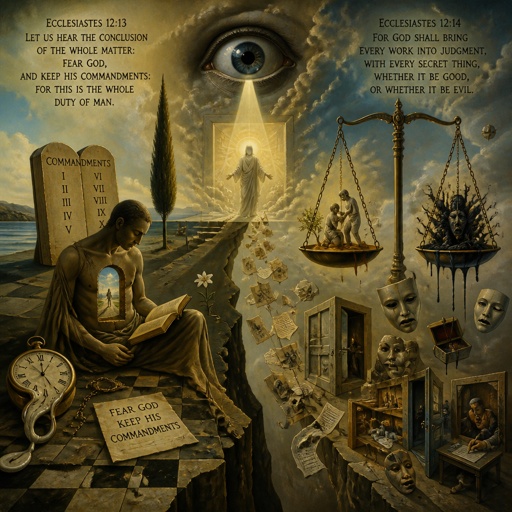
Ecclesiastes 12:13 Let us hear the conclusion of the whole matter: Fear God, and keep his commandments: for this is the whole duty of man. Ecclesiastes 12:14 For God shall bring every work into judgment, with every secret thing, whether it be good, or whether it be evil.

Ecclesiastes 5:13 - "There is a sore evil which I have seen under the sun, namely, riches kept for the owners thereof to their hurt."

Ecclesiastes 5:11 - "When goods increase, they are increased that eat them: and what good is there to the owners thereof, saving the beholding of them with their eyes?"

Ecclesiastes 5:17 - "All his days also he eateth in darkness, and he hath much sorrow and wrath with his sickness."

Ecclesiastes 8:5 - "Whoso keepeth the commandment shall feel no evil thing: and a wise man's heart discerneth both time and judgment."

Ecclesiastes 3:5 - "A time to cast away stones, and a time to gather stones together; a time to embrace, and a time to refrain from embracing;"

Ecclesiastes 5:20 - "For he shall not much remember the days of his life; because God answereth him in the joy of his heart."
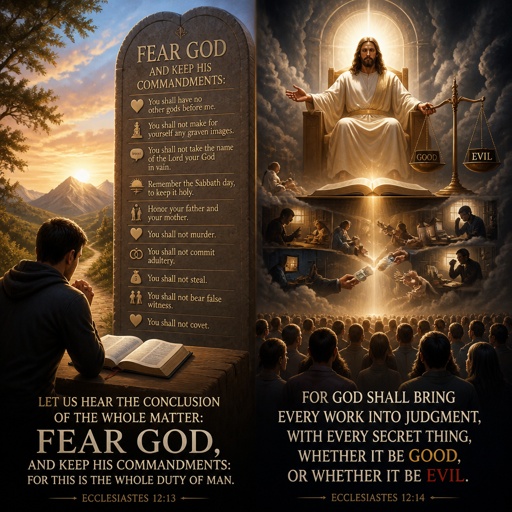
Ecclesiastes 12:13 Let us hear the conclusion of the whole matter: Fear God, and keep his commandments: for this is the whole duty of man. Ecclesiastes 12:14 For God shall bring every work into judgment, with every secret thing, whether it be good, or whether it be evil.

Ecclesiastes 2:14 - "The wise man's eyes are in his head; but the fool walketh in darkness: and I myself perceived also that one event happeneth to them all."

Ecclesiastes 6:5 - "Moreover he hath not seen the sun, nor known any thing: this hath more rest than the other."

Ecclesiastes 5:12 - "The sleep of a labouring man is sweet, whether he eat little or much: but the abundance of the rich will not suffer him to sleep."

Ecclesiastes 10:14 - "A fool also is full of words: a man cannot tell what shall be; and what shall be after him, who can tell him?"

Ecclesiastes 9:5 - "For the living know that they shall die: but the dead know not any thing, neither have they any more a reward; for the memory of them is forgotten."