What does Ecclesiastes 6:3 mean?
"¶ If a man beget an hundred children, and live many years, so that the days of his years be many, and his soul be not filled with good, and also that he have no burial; I say, that an untimely birth is better than he." - Ecclesiastes 6:3
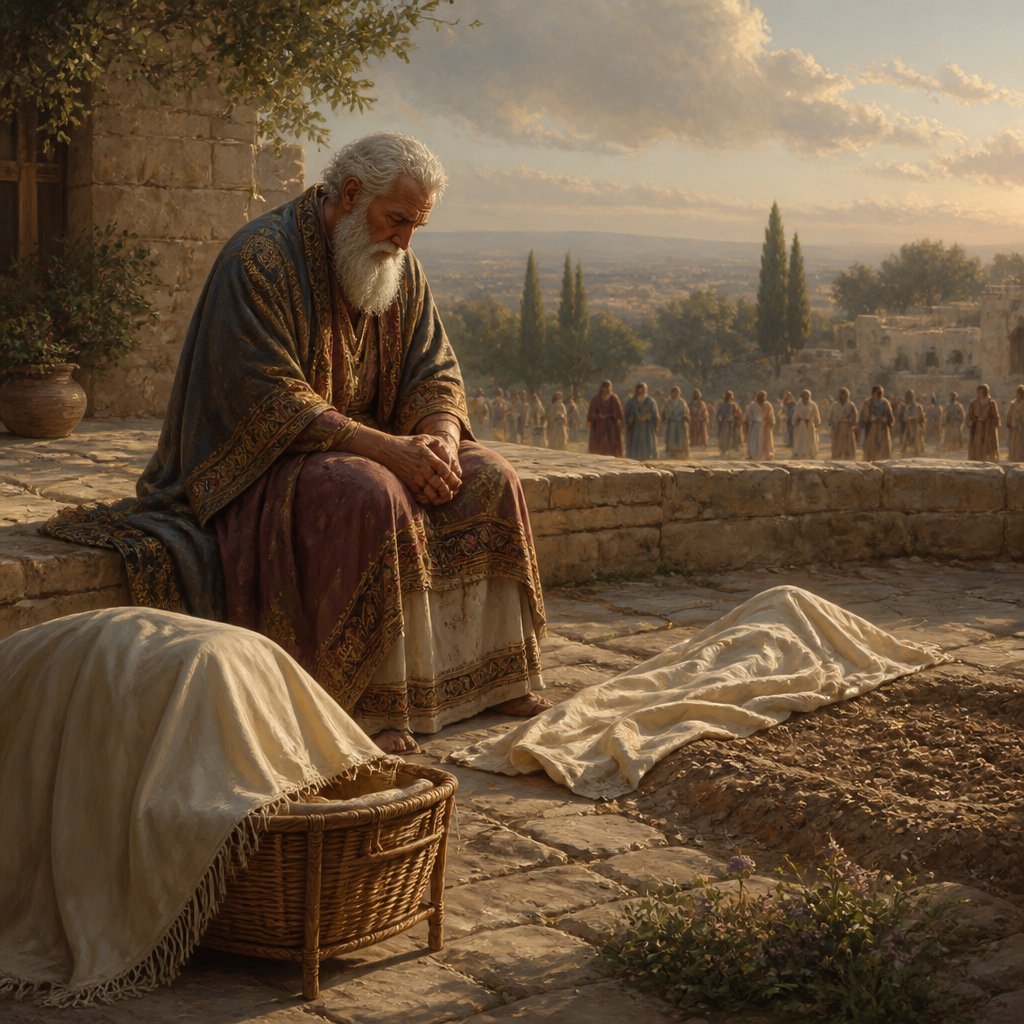
Ecclesiastes 6:3 in the King James Version of the Bible reads, "If a man beget an hundred children, and live many years, so that the days of his years be many, and his soul be not filled with good, and also that he have no burial; I say, that an untimely birth is better than he."
This verse is part of the book of Ecclesiastes, which is traditionally attributed to King Solomon, often considered one of the wisest men in the Bible. The book explores the meaning of life and the futility of human efforts, and this particular verse reflects the idea that having many children and living a long life are ultimately meaningless if a person has not experienced true fulfillment and a proper burial.
The verse begins with a hypothetical scenario in which a man has many children and a long life. This abundance is meant to represent great success and blessing, as children in ancient Israel were seen as a sign of wealth and divine favor (Psalm 127:3-5). However, despite these outward signs of prosperity, the man's soul is not satisfied with good. This emphasizes the hollowness of worldly success and the insatiable nature of human desires – no matter how much we achieve or possess, it can never fully satisfy our deepest longings.
Additionally, the mention of the man not receiving a proper burial adds another layer to the meaning of the verse. In ancient Israel, a proper burial was of utmost importance, as it was believed to be a crucial part of ensuring peace and rest for the deceased in the afterlife. Therefore, not receiving a proper burial was seen as a great dishonor (Jeremiah 22:19, 1 Kings 13:22). The combination of unfulfilled desires in life and lack of honor in death paints a bleak picture of a life that ultimately lacks meaning and fulfillment, despite outward signs of success and prosperity.
The concluding statement that an untimely birth is better than such a life adds a startling contrast to the previous descriptions of abundance and longevity. In ancient Near Eastern cultures, an untimely birth or miscarriage was seen as a great tragedy, as it was a loss of potential life and future. However, in this context, the untimely birth is preferable to a life without true fulfillment and honor. This bold statement emphasizes the great emptiness and futility of a life lived solely for material success and earthly achievements.
The overarching theme of Ecclesiastes 6:3 is the idea that worldly accomplishments and success, even in great abundance, are ultimately meaningless if they do not lead to true satisfaction and fulfillment. It challenges the reader to consider the deeper purpose and meaning of life beyond the pursuit of wealth, power, and longevity.
The verse also touches on the theme of mortality and the transience of life. Despite the emphasis on long life in the verse, the ultimate focus is on the emptiness of a life lived without true fulfillment and the inevitability of death. This serves as a reminder of the brevity of human life and the importance of seeking meaning and fulfillment in the time we have.
Symbolically, the verse can be seen as a warning against placing too much value on earthly success and accomplishments, as they ultimately cannot provide lasting satisfaction and purpose. It challenges the reader to seek fulfillment in deeper, spiritual matters and to consider the legacy they will leave behind, both in life and in death.
In conclusion, Ecclesiastes 6:3 presents a thought-provoking reflection on the futility of seeking fulfillment solely through worldly success and achievements. It challenges the reader to consider the deeper meaning and purpose of life, beyond material abundance and longevity, and emphasizes the importance of finding true satisfaction and honor in life and death. It serves as a poignant reminder of the transience of human life and the need to seek fulfillment in matters beyond the temporal and fleeting.
Have questions about Ecclesiastes 6:3?
Dive deeper into this scripture with Bible Chat — an AI-powered tool for exploring God's Word through conversation. Ask questions, get context, and grow in your understanding of the Bible.
Get Our Apps


Ecclesiastes 6:3 Artwork

Ecclesiastes 6:3 - "¶ If a man beget an hundred children, and live many years, so that the days of his years be many, and his soul be not filled with good, and also that he have no burial; I say, that an untimely birth is better than he."
"¶ If a man beget an hundred children, and live many years, so that the days of his years be many, and his soul be not filled with good, and also that he have no burial; I say, that an untimely birth is better than he." - Ecclesiastes 6:3

Ecclesiastes 3:6 - "A time to get, and a time to lose; a time to keep, and a time to cast away;"

"A time to get, and a time to lose; a time to keep, and a time to cast away;" - Ecclesiastes 3:6

Ecclesiastes 3:1

ecclesiastes 12:2-6

Ecclesiastes 3:3 - "A time to kill, and a time to heal; a time to break down, and a time to build up;"

Ecclesiastes 3:7-8

Ecclesiastes 3:1 – "There is a time for everything, and a season for every activity under the heavens."

Ecclesiastes 10:6 - "Folly is set in great dignity, and the rich sit in low place."

Ecclesiastes 6:7 - "All the labour of man is for his mouth, and yet the appetite is not filled."

Ecclesiastes 6:11 - "¶ Seeing there be many things that increase vanity, what is man the better?"

Ecclesiastes 3:1 - "To every thing there is a season, and a time to every purpose under the heaven:"

Ecclesiastes 3:9 - "What profit hath he that worketh in that wherein he laboureth?"

Ecclesiastes 3:4 - "A time to weep, and a time to laugh; a time to mourn, and a time to dance;"

Ecclesiastes 3:8 - "A time to love, and a time to hate; a time of war, and a time of peace."

Ecclesiastes 6:9 - "¶ Better is the sight of the eyes than the wandering of the desire: this is also vanity and vexation of spirit."

Ecclesiastes 6:1 - "There is an evil which I have seen under the sun, and it is common among men:"

Ecclesiastes 6:4 - "For he cometh in with vanity, and departeth in darkness, and his name shall be covered with darkness."

Ecclesiastes 7:6 - "For as the crackling of thorns under a pot, so is the laughter of the fool: this also is vanity."

Ecclesiastes 7:3 - "Sorrow is better than laughter: for by the sadness of the countenance the heart is made better."

Ecclesiastes 8:6 - "¶ Because to every purpose there is time and judgment, therefore the misery of man is great upon him."

Ecclesiastes 4:6 - "Better is an handful with quietness, than both the hands full with travail and vexation of spirit."

Ecclesiastes 6:6 - "¶ Yea, though he live a thousand years twice told, yet hath he seen no good: do not all go to one place?"

Ecclesiastes 3:7 - "A time to rend, and a time to sew; a time to keep silence, and a time to speak;"

Ecclesiastes 2:6 - "I made me pools of water, to water therewith the wood that bringeth forth trees:"

Ecclesiastes 3:21 - "Who knoweth the spirit of man that goeth upward, and the spirit of the beast that goeth downward to the earth?"

Ecclesiastes 3:2 - "A time to be born, and a time to die; a time to plant, and a time to pluck up that which is planted;"

Ecclesiastes 3:16 - "¶ And moreover I saw under the sun the place of judgment, that wickedness was there; and the place of righteousness, that iniquity was there."

Ecclesiastes 3:20 - "All go unto one place; all are of the dust, and all turn to dust again."