What does Ecclesiastes 7:14 mean?
“In the day of prosperity be joyful, but in the day of adversity consider: God also hath set the one over against the other, to the end that man should find nothing after him.” — Ecclesiastes 7:14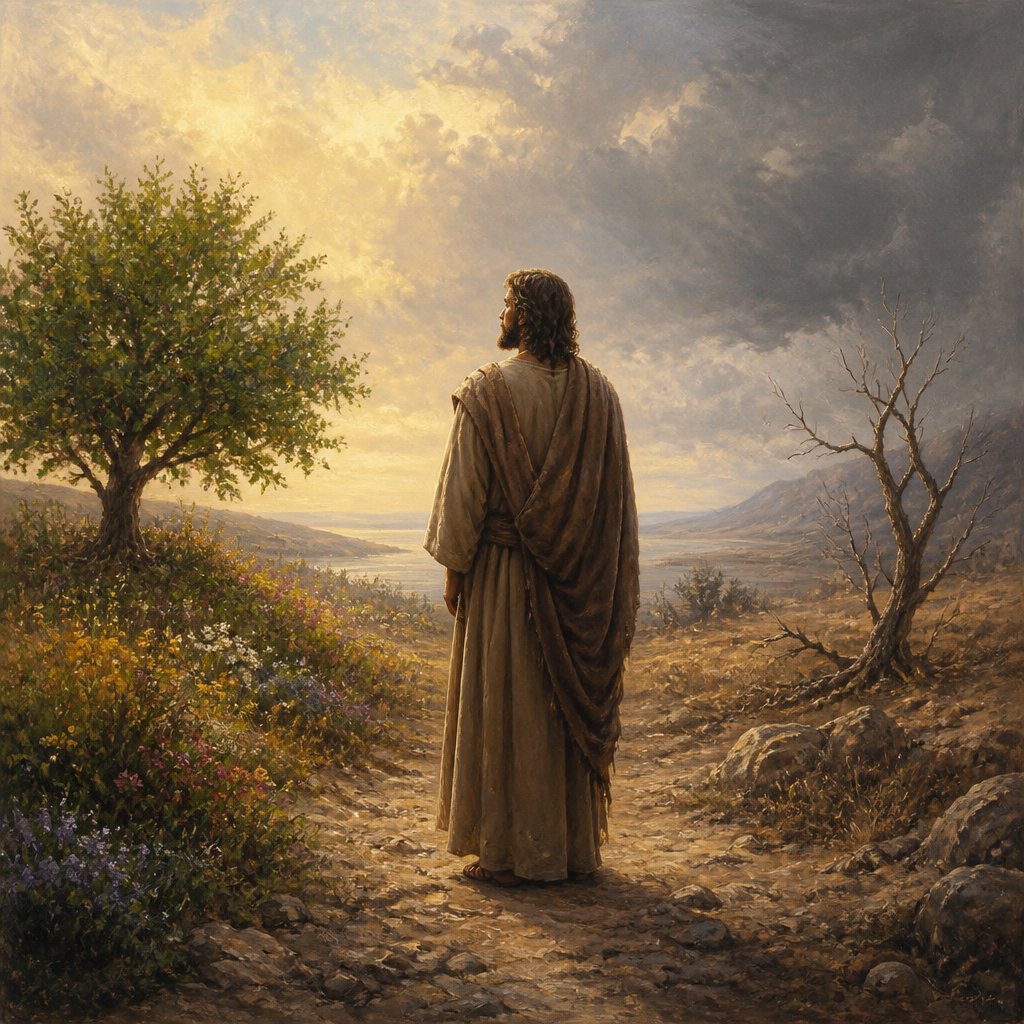
"Ecclesiastes 7:14: In the day of prosperity be joyful, but in the day of adversity consider: God also hath set the one over against the other, to the end that man should find nothing after him."
This verse from the book of Ecclesiastes offers wisdom and guidance for navigating the inevitable ebbs and flows of life. The author, traditionally believed to be King Solomon, reflects on the nature of both prosperity and adversity, urging readers to approach each with a measured and thoughtful mindset.
The verse begins with the exhortation to "be joyful" in the day of prosperity. This encourages a spirit of gratitude and celebration when things are going well. It is a reminder to appreciate and savor the good times, recognizing them as gifts from God. The language of "joy" suggests a deep, abiding happiness that comes from an inner realization of blessings rather than momentary pleasures. This theme of joy in prosperity is a common one in the biblical tradition, with verses such as Philippians 4:4 echoing the sentiment: "Rejoice in the Lord always: and again I say, Rejoice."
However, the verse quickly transitions to a sobering admonition for the day of adversity: "consider." This calls for a different response to challenging times. Rather than despair or resignation, the text challenges the reader to engage in thoughtful reflection and introspection when facing difficulties. The word "consider" implies a deliberate and intentional evaluation of one's circumstances, seeking to find meaning and purpose even in the midst of adversity. This reflects a fundamental belief in the biblical tradition that God is present and at work even in the most difficult of times.
The verse then offers an explanation for the presence of both prosperity and adversity in life: "God also hath set the one over against the other." This suggests a divine orchestration of the varied experiences of human existence. It acknowledges that both joy and suffering are integral parts of life, and that they exist in tension with one another. The purpose of this intertwining is to lead to a deeper understanding and appreciation of life as a whole.
The verse concludes with a profound statement about the ultimate outcome of this divine arrangement: "to the end that man should find nothing after him." This enigmatic phrase has been interpreted in various ways by scholars and theologians. Some see it as a reminder of the ultimate transience of human existence, reflecting the broader theme of mortality and the fleeting nature of earthly pursuits found in the book of Ecclesiastes. Others understand it as a call to humility and contentment, recognizing that our accomplishments and possessions ultimately hold little lasting significance in the grand scheme of things.
The themes and messages of Ecclesiastes 7:14 are deeply rooted in the broader context of the book. Throughout Ecclesiastes, the author grapples with the existential questions of human existence, the nature of wisdom, and the pursuit of meaning and fulfillment. The book as a whole challenges conventional wisdom and worldly pursuits, pointing to the ultimate futility of seeking fulfillment apart from a right relationship with God.
The symbolism in this verse lies in the contrast between prosperity and adversity. These two experiences are emblematic of the broader spectrum of human existence, encompassing both times of abundance and times of scarcity, joy and sorrow, success and failure. The deliberate juxtaposition of these contrasting states serves as a microcosm for the complexities and contradictions of life itself.
In conclusion, Ecclesiastes 7:14 offers a profound meditation on the nature of life's vicissitudes and the divine purpose behind them. It encourages a balanced and thoughtful approach to both prosperity and adversity, recognizing them as integral parts of the human experience. Ultimately, the verse points to a deeper spiritual truth that transcends the fleeting nature of worldly pursuits, inviting the reader to seek lasting meaning and fulfillment in a right relationship with God.
Get our apps


Artwork for Ecclesiastes 7:14

Ecclesiastes 7:14 - "In the day of prosperity be joyful, but in the day of adversity consider: God also hath set the one over against the other, to the end that man should find nothing after him."
"In the day of prosperity be joyful, but in the day of adversity consider: God also hath set the one over against the other, to the end that man should find nothing after him." - Ecclesiastes 7:14

Ecclesiastes 7:7 - "¶ Surely oppression maketh a wise man mad; and a gift destroyeth the heart."

Ecclesiastes 3:7-8

Ecclesiastes 7:11 - "¶ Wisdom is good with an inheritance: and by it there is profit to them that see the sun."

Ecclesiastes 4:7 - "Then I returned, and I saw vanity under the sun."

Ecclesiastes 7:9 - "Be not hasty in thy spirit to be angry: for anger resteth in the bosom of fools."

Ecclesiastes 6:7 - "All the labour of man is for his mouth, and yet the appetite is not filled."

Ecclesiastes 7:20 - "For there is not a just man upon earth, that doeth good, and sinneth not."

Ecclesiastes 7:3 - "Sorrow is better than laughter: for by the sadness of the countenance the heart is made better."

Ecclesiastes 11:7 - "¶ Truly the light is sweet, and a pleasant thing it is for the eyes to behold the sun:"

Ecclesiastes 7:4 - "The heart of the wise is in the house of mourning; but the heart of fools is in the house of mirth."

Ecclesiastes 5:14 - "But those riches perish by evil travail: and he begetteth a son, and there is nothing in his hand."

Ecclesiastes 8:7 - "For he knoweth not that which shall be: for who can tell him when it shall be?"

Ecclesiastes 5:7 - "For in the multitude of dreams and many words there are also divers vanities: but fear thou God."

Ecclesiastes 7:19 - "Wisdom strengtheneth the wise more than ten mighty men which are in the city."

Ecclesiastes 3:7 - "A time to rend, and a time to sew; a time to keep silence, and a time to speak;"

Ecclesiastes 7:24 - "That which is far off, and exceeding deep, who can find it out?"

Ecclesiastes 7:6 - "For as the crackling of thorns under a pot, so is the laughter of the fool: this also is vanity."

Ecclesiastes 7:5 - "It is better to hear the rebuke of the wise, than for a man to hear the song of fools."

Ecclesiastes 4:14 - "For out of prison he cometh to reign; whereas also he that is born in his kingdom becometh poor."

Ecclesiastes 1:14 - "I have seen all the works that are done under the sun; and, behold, all is vanity and vexation of spirit."

Ecclesiastes 12:7 - "Then shall the dust return to the earth as it was: and the spirit shall return unto God who gave it."

Ecclesiastes 12:14 - "For God shall bring every work into judgment, with every secret thing, whether it be good, or whether it be evil."

Ecclesiastes 7:23 - "¶ All this have I proved by wisdom: I said, I will be wise; but it was far from me."

Ecclesiastes 7:13 - "Consider the work of God: for who can make that straight, which he hath made crooked?"

Ecclesiastes 7:8 - "Better is the end of a thing than the beginning thereof: and the patient in spirit is better than the proud in spirit."

Ecclesiastes 7:1 - "A good name is better than precious ointment; and the day of death than the day of one's birth."

Ecclesiastes 10:7 - "I have seen servants upon horses, and princes walking as servants upon the earth."

Ecclesiastes 7:12 - "For wisdom is a defence, and money is a defence: but the excellency of knowledge is, that wisdom giveth life to them that have it."