What does Ecclesiastes 9:14 mean?
"There was a little city, and few men within it; and there came a great king against it, and besieged it, and built great bulwarks against it:" - Ecclesiastes 9:14
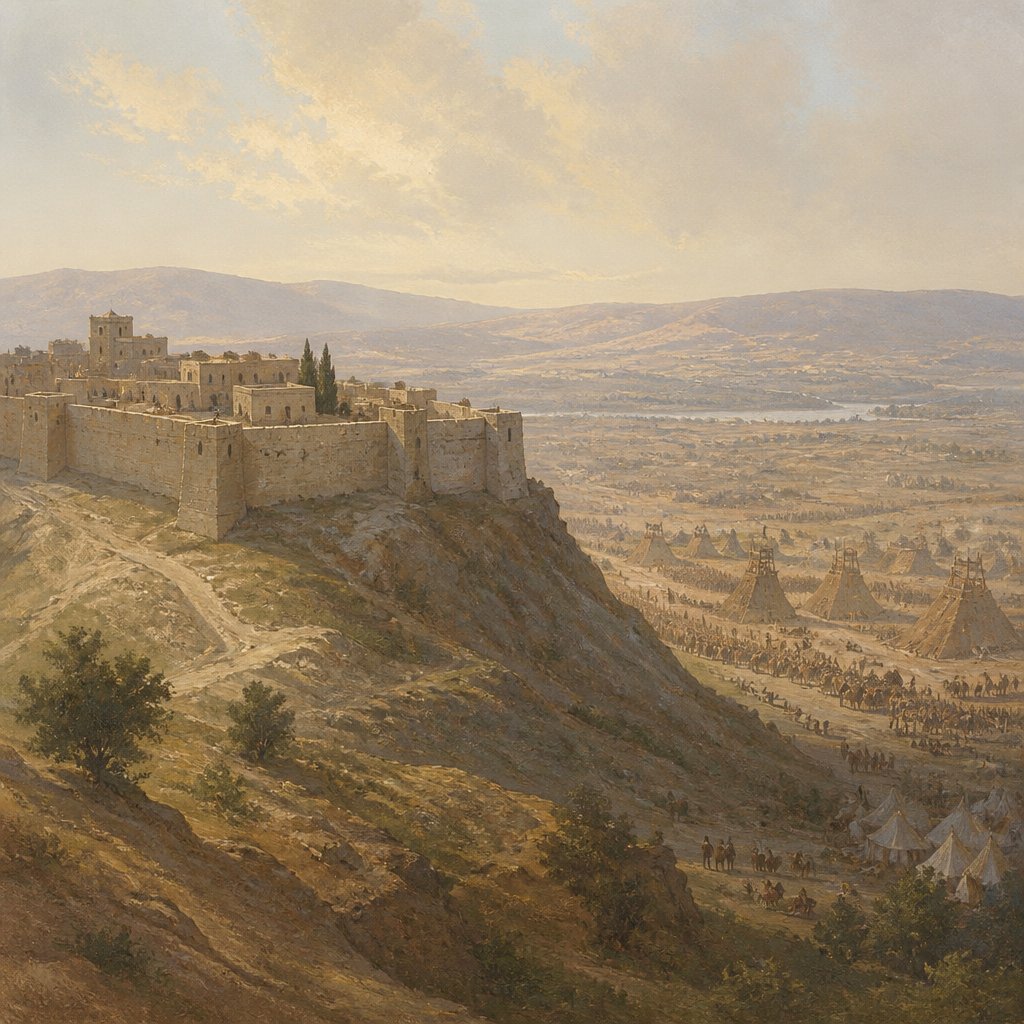
Ecclesiastes 9:14 from the King James Version of the Bible reads, "There was a little city, and few men within it; and there came a great king against it, and besieged it, and built great bulwarks against it." This verse is a part of the Old Testament book of Ecclesiastes, which is traditionally attributed to King Solomon. It is a verse that presents a parable that is rich in symbolism and universal themes.
The verse begins by setting the scene for the parable, describing a small city with a small population. This is a picture of vulnerability and fragility – a city that is not fortified or well-defended. The small number of inhabitants also highlights the city's lack of resources and power. In this way, the small city can be seen as representative of the individual human soul – small, limited, and vulnerable in the face of the forces that surround it.
The parable then introduces a great king who comes against the city and besieges it. This king represents a powerful and oppressive force that threatens the existence of the small city. The act of besieging the city signifies a prolonged and relentless attack, suggesting that the threat is not fleeting or easily overcome. The building of great bulwarks further emphasizes the king's determination to conquer and subdue the city. This image evokes a sense of overwhelming power and domination.
One of the key themes in this parable is the contrast between the weak and the powerful, the small and the great. The small city and its few inhabitants stand in stark contrast to the great king and his formidable army. This asymmetry in power reflects the fundamental imbalance in the world and the human condition. It depicts the vulnerability of the individual in the face of powerful external forces that can threaten their well-being and security.
The parable also conveys a message about the inevitability of conflict and struggle in life. The city's encounter with the great king and his siege exemplifies the adversity and challenges that people confront in their lives. It serves as a reminder that nobody is immune to the trials and tribulations of the world, and that adversity can come in unexpected and overwhelming forms.
The symbolism in this parable can also be interpreted in spiritual terms, representing the struggle between good and evil, or the conflict between the individual soul and the forces of darkness. The great king may be understood as a symbol of evil or temptation, seeking to subjugate and destroy the small city – a representation of the human soul striving to resist and survive in the face of such threats.
In the context of the book of Ecclesiastes, the parable of the small city and the great king can be seen as a reflection on the larger themes of the book. Ecclesiastes is a philosophical and reflective work that explores the meaning and purpose of life, as well as the human experience of joy, sorrow, and the passage of time. The parable serves as a vivid illustration of the precarious nature of human existence and the inevitability of hardship and adversity.
In conclusion, Ecclesiastes 9:14 presents a powerful parable that conveys profound insights into the human condition and the challenges of life. It illustrates the vulnerability of the individual in the face of powerful external forces, and the inevitability of conflict and struggle. The symbolism of the parable lends itself to a range of interpretations, from the personal and existential to the spiritual and moral. Overall, this verse offers a thought-provoking reflection on the nature of human existence and the universal themes of power, vulnerability, and adversity.
Have questions about Ecclesiastes 9:14?
Dive deeper into this scripture with Bible Chat — an AI-powered tool for exploring God's Word through conversation. Ask questions, get context, and grow in your understanding of the Bible.
Get Our Apps


Ecclesiastes 9:14 Artwork

Ecclesiastes 9:14 - "There was a little city, and few men within it; and there came a great king against it, and besieged it, and built great bulwarks against it:"
"There was a little city, and few men within it; and there came a great king against it, and besieged it, and built great bulwarks against it:" - Ecclesiastes 9:14

Ecclesiastes 3:9 - "What profit hath he that worketh in that wherein he laboureth?"

Ecclesiastes 7:9 - "Be not hasty in thy spirit to be angry: for anger resteth in the bosom of fools."

Ecclesiastes 5:9 - "¶ Moreover the profit of the earth is for all: the king himself is served by the field."

Ecclesiastes 6:9 - "¶ Better is the sight of the eyes than the wandering of the desire: this is also vanity and vexation of spirit."

Ecclesiastes 4:9 - "¶ Two are better than one; because they have a good reward for their labour."

Ecclesiastes 5:14 - "But those riches perish by evil travail: and he begetteth a son, and there is nothing in his hand."

Ecclesiastes 9:4 - "¶ For to him that is joined to all the living there is hope: for a living dog is better than a dead lion."

Ecclesiastes 9:8 - "Let thy garments be always white; and let thy head lack no ointment."

Ecclesiastes 9:18 - "Wisdom is better than weapons of war: but one sinner destroyeth much good."

Ecclesiastes 4:14 - "For out of prison he cometh to reign; whereas also he that is born in his kingdom becometh poor."

Ecclesiastes 1:14 - "I have seen all the works that are done under the sun; and, behold, all is vanity and vexation of spirit."

Ecclesiastes 9:13 - "¶ This wisdom have I seen also under the sun, and it seemed great unto me:"

Ecclesiastes 12:14 - "For God shall bring every work into judgment, with every secret thing, whether it be good, or whether it be evil."

Ecclesiastes 10:9 - "Whoso removeth stones shall be hurt therewith; and he that cleaveth wood shall be endangered thereby."

Ecclesiastes 9:17 - "The words of wise men are heard in quiet more than the cry of him that ruleth among fools."

Ecclesiastes 1:9 - "The thing that hath been, it is that which shall be; and that which is done is that which shall be done: and there is no new thing under the sun."

Ecclesiastes 9:16 - "Then said I, Wisdom is better than strength: nevertheless the poor man's wisdom is despised, and his words are not heard."

Ecclesiastes 2:14 - "The wise man's eyes are in his head; but the fool walketh in darkness: and I myself perceived also that one event happeneth to them all."

Ecclesiastes 10:14 - "A fool also is full of words: a man cannot tell what shall be; and what shall be after him, who can tell him?"

Ecclesiastes 9:15 - "Now there was found in it a poor wise man, and he by his wisdom delivered the city; yet no man remembered that same poor man."

Ecclesiastes 2:9 - "So I was great, and increased more than all that were before me in Jerusalem: also my wisdom remained with me."

Ecclesiastes 9:5 - "For the living know that they shall die: but the dead know not any thing, neither have they any more a reward; for the memory of them is forgotten."

"Be not hasty in thy spirit to be angry: for anger resteth in the bosom of fools." - Ecclesiastes 7:9

Ecclesiastes 9:6 - "Also their love, and their hatred, and their envy, is now perished; neither have they any more a portion for ever in any thing that is done under the sun."

Ecclesiastes 9:7 - "¶ Go thy way, eat thy bread with joy, and drink thy wine with a merry heart; for God now accepteth thy works."

Ecclesiastes 9:10 - "Whatsoever thy hand findeth to do, do it with thy might; for there is no work, nor device, nor knowledge, nor wisdom, in the grave, whither thou goest."

"What profit hath he that worketh in that wherein he laboureth?" - Ecclesiastes 3:9

"¶ Moreover the profit of the earth is for all: the king himself is served by the field." - Ecclesiastes 5:9