What does Ephesians 2:5 mean?
“Even when we were dead in sins, hath quickened us together with Christ, ( by grace ye are saved;)” — Ephesians 2:5
Ephesians 2:5 (KJV) states: "Even when we were dead in sins, hath quickened us together with Christ, (by grace ye are saved;)."
This verse is part of the letter to the Ephesians in the New Testament, written by the apostle Paul. In this verse, Paul is addressing the believers in Ephesus and reminding them of the incredible gift of grace that God has given them through the sacrifice of Jesus Christ. The verse emphasizes the power of God's grace to bring spiritual life to those who were previously dead in their sins.
The theme of spiritual rebirth and renewal is central to Ephesians 2:5. The phrase "Even when we were dead in sins" highlights the spiritual condition of humanity before experiencing the grace of God. When Paul speaks of being "dead in sins," he is referring to the state of spiritual separation from God that all people experience as a result of their sin. However, the verse goes on to affirm that God, in His mercy and love, has "quickened us together with Christ." This means that through the sacrifice of Jesus Christ, believers have been made alive spiritually and have been united with Him in His resurrection.
The phrase "by grace ye are saved" underscores the unmerited nature of God's gift of salvation. It is not something that can be earned through human effort or good works, but rather it is freely given by God out of His love for humanity. This theme of grace as the means of salvation is a recurring motif in Paul's writings and is foundational to the Christian faith.
When examining the context of Ephesians 2:5 within the larger passage, it is important to consider the preceding verses as well. In Ephesians 2:1-3, Paul describes the sinful state of humanity before salvation, emphasizing the need for spiritual transformation. He then contrasts this with the transformation that takes place through the grace of God in verses 4-7. This contrasts serves to highlight the power of God's grace to bring about spiritual renewal and reconciliation with Him.
Symbolism is also present in this verse, particularly in the imagery of being "quickened together with Christ." This imagery conveys the idea of being made alive or given new life, which is a central aspect of the Christian faith. It symbolizes the spiritual rebirth and renewal that believers experience through their union with Christ. The metaphor of being raised to new life with Christ parallels the concept of being born again in the Christian faith, emphasizing the transformative nature of salvation.
Overall, Ephesians 2:5 offers a powerful message of hope and redemption through the grace of God. It serves as a reminder of the spiritual transformation that believers experience through their faith in Jesus Christ and the unmerited nature of God's gift of salvation. The verse emphasizes the central theme of grace as the means of spiritual renewal and reconciliation with God, and it serves as a source of encouragement and inspiration for believers in their spiritual journey.
Get our apps


Artwork for Ephesians 2:5
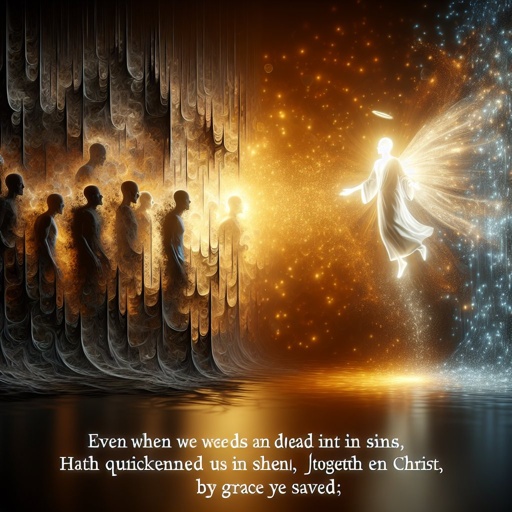
Ephesians 2:5 - "Even when we were dead in sins, hath quickened us together with Christ, (by grace ye are saved;)"

"Even when we were dead in sins, hath quickened us together with Christ, (by grace ye are saved;)" - Ephesians 2:5

Ephesians 5:2 - "And walk in love, as Christ also hath loved us, and hath given himself for us an offering and a sacrifice to God for a sweetsmelling savour."

Ephesians 5:21

Ephesians 5:1-2 - "Therefore be imitators of God, as beloved children. And walk in love, as Christ loved us and gave himself up for us, a fragrant offering and sacrifice to God."

"And walk in love, as Christ also hath loved us, and hath given himself for us an offering and a sacrifice to God for a sweetsmelling savour." - Ephesians 5:2

Ephesians 4:1-5

Ephesians 4:1-5

Ephesians 4:1-5

Ephesians 4:1-5

Ephesians 4:1-5

Ephesians 4:1-5

Ephesians 4:1-5

Ephesians 4:1-5

Ephesians 4:1-5

Ephesians 4:1-5

Ephesians 4:1-5

Ephesians 4:1-5

Ephesians 4:1-5

Ephesians 4:1-5

Ephesians 4:1-5

Ephesians 4:1-5

Ephesians 4:1-5

Ephesians 4:1-5

Ephesians 4:1-5

Ephesians 4:4-5

Ephesians 4:1-5

Ephesians 4:1-5

Ephesians 4:1-5

Ephesians 4:1-5