What does Ephesians 3:20-21 mean?
“Now unto him that is able to do exceeding abundantly above all that we ask or think, according to the power that worketh in us, Unto him be glory in the church by Christ Jesus throughout all ages, world without end. Amen.” — Ephesians 3:20-21
“Now unto him that is able to do exceeding abundantly above all that we ask or think, according to the power that worketh in us, Unto him be glory in the church by Christ Jesus throughout all ages, world without end. Amen.” (Ephesians 3:20-21, KJV)
These words come at the crest of Paul’s prayer in Ephesians 3, where he has been asking that believers might be “strengthened with might by his Spirit in the inner man,” that “Christ may dwell in your hearts by faith,” and that they might be able to comprehend “the love of Christ, which passeth knowledge,” and be “filled with all the fulness of God” (Ephesians 3:16-19, KJV). Verses 20 and 21 are the doxology that seals that prayer, turning from petition to praise. In other words, Paul does not end by merely hoping these things could be true; he ends by worshipping the God who is not limited by the size of the request or the reach of the mind.
The meaning of “unto him that is able” is first about God’s sufficiency. Paul points to God’s ability, not man’s. The phrase “exceeding abundantly above all that we ask or think” stacks superlatives to press the reader beyond ordinary expectations. The point is not simply that God answers prayers, but that God’s capacity to act surpasses both spoken requests (“ask”) and unspoken conceptions (“think”). The verse teaches a doctrine of divine greatness that outstrips human calculation. Yet it is not a blank check for every desire; the surrounding prayer has been about inner strengthening, Christ’s indwelling, love, comprehension, and fulness. The “above all” operates in the orbit of God’s redemptive purpose and the spiritual transformation Paul has just described, showing that what God intends for his people is larger than what they can even formulate.
A crucial theme is that this surpassing work happens “according to the power that worketh in us.” God’s “exceeding abundantly” is not portrayed as distant spectacle but as a present operation within believers. This phrase ties God’s transcendent ability to his immanent activity. The “power” is not merely external intervention; it is a working power “in us,” consistent with Paul’s earlier language of the “inner man” and Christ dwelling “in your hearts by faith.” The symbolism is inward habitation and inward energizing: God is not only over his people, granting gifts from afar, but within them, shaping desires, strengthening faith, enlarging understanding, and forming a life that can bear the weight of “the love of Christ.” This also safeguards the meaning from becoming purely material or circumstantial. Paul’s emphasis is the divine power that creates spiritual capacity—capacity to love, to endure, to know, to be filled.
Verse 21 turns that power and generosity toward its ultimate end: “Unto him be glory.” The purpose of God’s exceeding work is doxological. God’s gifts do not terminate on the believer as the final destination; they return as glory to God. The location and means of that glory are stated with precision: “in the church by Christ Jesus.” The church, in Ephesians, is not an afterthought but the gathered people in whom God displays his wisdom and grace. By saying glory is “in the church,” Paul assigns the community of believers a symbolic role as a living theater of God’s work. The church becomes the place where God’s power “that worketh in us” is seen in reconciled lives, shared faith, and Christlike love. Yet the church does not generate that glory on its own; it is “by Christ Jesus.” Christ is the mediator through whom glory is offered and through whom the church exists and thrives. This protects the meaning from either individualism or institutional pride: the church glorifies God only as it is joined to Christ and acts through him.
The scope of this glory is as sweeping as Paul can express: “throughout all ages, world without end.” The phrase stretches the reader’s horizon beyond a single moment of answered prayer or a single generation’s experience. It places the church’s worship and God’s fame in an unbroken continuum. The symbolism is perpetual praise, an everlasting story in which God’s ability and God’s glory never diminish. Paul’s “Amen” is not a mere closing word; it is assent, a seal of certainty, a confession that what has been prayed and praised is trustworthy.
Taken together, Ephesians 3:20-21 teaches that the God revealed in Christ is not constrained by human petitions or imagination, that his mighty work is present and inward, that the goal of his work is his glory, and that this glory is displayed in the church through Christ across all time. The significance is both humbling and enlarging: humbling because it centers everything on God’s ability and God’s glory, and enlarging because it invites believers to pray and live with the confidence that God’s working power within them is greater than their limits, and that their lives, joined to the church and anchored in Christ, participate in an eternal purpose “world without end.”
Get our apps


Artwork for Ephesians 3:20-21

Ephesians 3:20-21 - "Now to him who is able to do immeasurably more than all we ask or imagine, according to his power that is at work within us, to him be glory in the church and in Christ Jesus throughout all generations, for ever and ever! Amen."
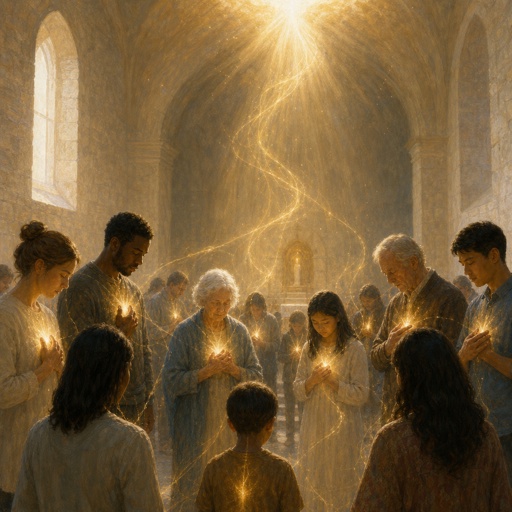
"Now to him who is able to do immeasurably more than all we ask or imagine, according to his power that is at work within us, to him be glory in the church and in Christ Jesus throughout all generations, for ever and ever! Amen." - Ephesians 3:20-21

Job 3:20-21 - "Job 3:20-21: Why is light given to those in misery, and life to the bitter of soul, to those who long for death that does not come, who search for it more than for hidden treasure?"

Ephesians 3:21 - "Unto him be glory in the church by Christ Jesus throughout all ages, world without end. Amen."

Ephesians 3:20 - "Now unto him that is able to do exceeding abundantly above all that we ask or think, according to the power that worketh in us,"

"Job 3:20-21: Why is light given to those in misery, and life to the bitter of soul, to those who long for death that does not come, who search for it more than for hidden treasure?" - Job 3:20-21

Colossians 3:20-21 - "Children, obey your parents in everything, for this pleases the Lord. Fathers, do not embitter your children, or they will become discouraged."

Ephesians 5:21

Ephesians 3

Ephesians 3

Ephesians 4:20 - "But ye have not so learned Christ;"

Ephesians 5:21 - "Submitting yourselves one to another in the fear of God."

Ephesians 1:20-21 - "Which he exerted in Christ when he raised him from the dead and seated him at his right hand in the heavenly realms, far above all rule and authority, power and dominion, and every name that is invoked, not only in the present age but also in the one to come."

"Unto him be glory in the church by Christ Jesus throughout all ages, world without end. Amen." - Ephesians 3:21

Matthew 21:21 Philippians 4:6-7 Ephesians 6:10-18 Put the words on the photo

Ephesians 1:3

Matthew 21:21 Philippians 4:6-7 Ephesians 6:10-18
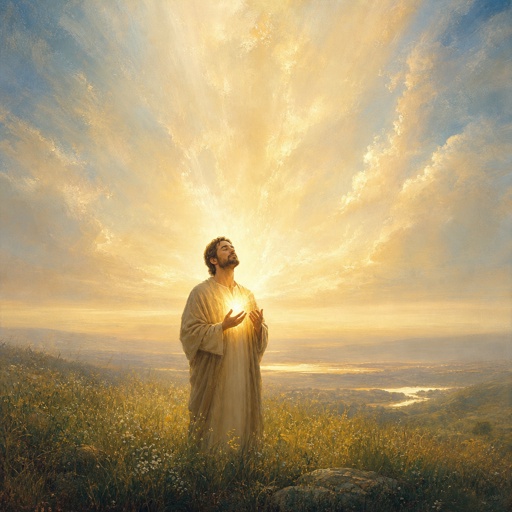
"Now unto him that is able to do exceeding abundantly above all that we ask or think, according to the power that worketh in us," - Ephesians 3:20

Ephesians 2:21 - "In whom all the building fitly framed together groweth unto an holy temple in the Lord:"

Ephesians 4:21 - "If so be that ye have heard him, and have been taught by him, as the truth is in Jesus:"
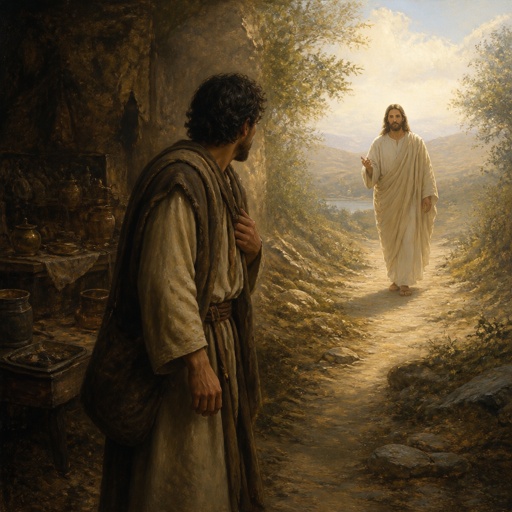
"But ye have not so learned Christ;" - Ephesians 4:20
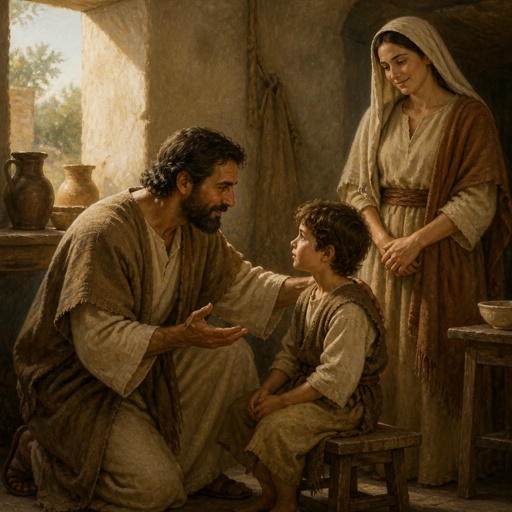
"Children, obey your parents in everything, for this pleases the Lord. Fathers, do not embitter your children, or they will become discouraged." - Colossians 3:20-21

Ephesians 2:20 - "And are built upon the foundation of the apostles and prophets, Jesus Christ himself being the chief corner stone;"

Ephesians 3:15 - "Of whom the whole family in heaven and earth is named,"

Ephesians 4:3 - "Endeavouring to keep the unity of the Spirit in the bond of peace."

Ephesians 3:3 - "How that by revelation he made known unto me the mystery; (as I wrote afore in few words,"

Ephesians 6:20 - "For which I am an ambassador in bonds: that therein I may speak boldly, as I ought to speak."
Ephesians 5:20 - "Giving thanks always for all things unto God and the Father in the name of our Lord Jesus Christ;"

"Submitting yourselves one to another in the fear of God." - Ephesians 5:21

Ephesians 6:3 - "That it may be well with thee, and thou mayest live long on the earth."