What does Ephesians 5:25 mean?
“Husbands, love your wives, even as Christ also loved the church, and gave himself for it;” — Ephesians 5:25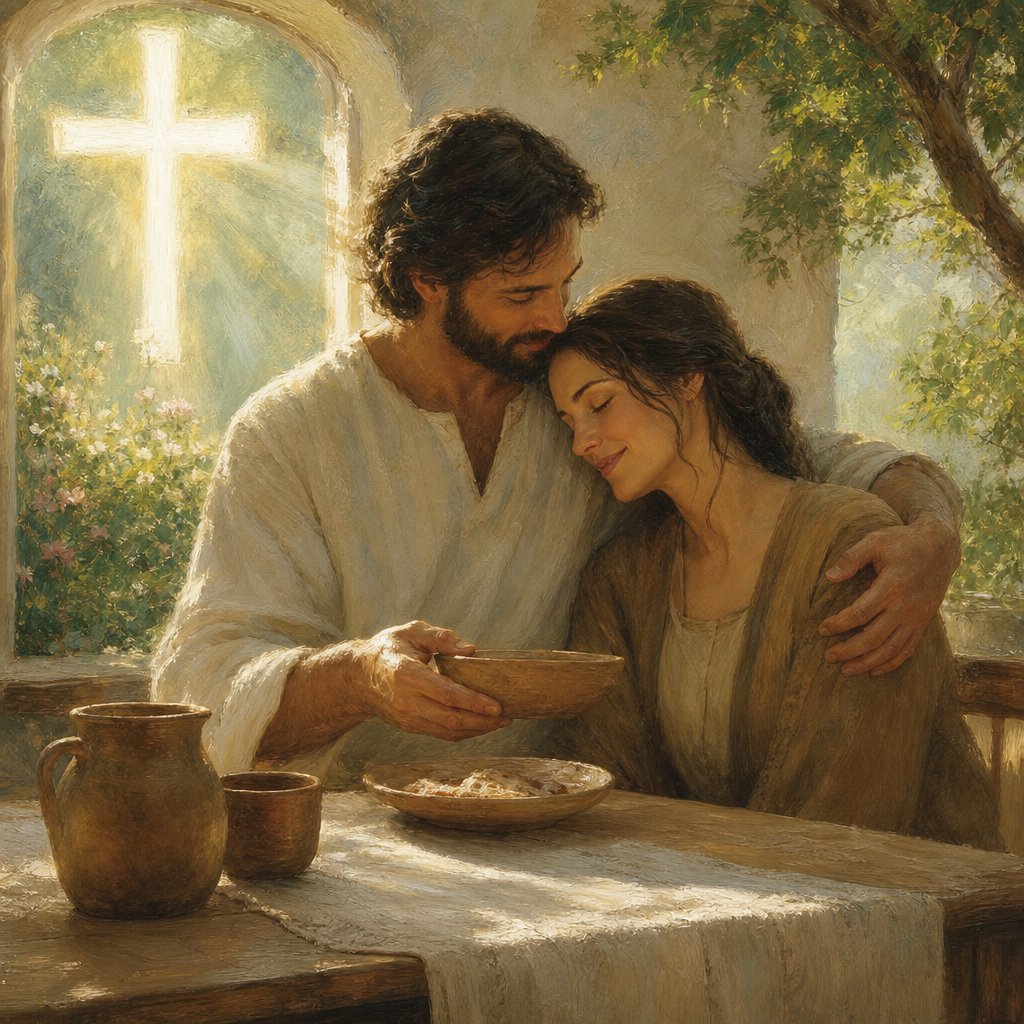
“Ephesians 5:25” in the King James Version reads, “Husbands, love your wives, even as Christ also loved the church, and gave himself for it.”
In its immediate context, this sentence stands inside Paul’s longer exhortation about the Christian household and the shape that Spirit-filled life takes in ordinary relationships. Just before it, the passage calls believers to walk “in love” and “as children of light,” and it frames family life within reverence toward Christ. When Paul turns to husbands and wives, he does not begin by giving a husband the language of privilege, but the language of sacrificial love. The command is not first about authority, personality, or compatibility; it is about a particular kind of love, measured and defined by a particular pattern: “even as Christ also loved the church.” The verse asks a husband to look away from cultural models of dominance or self-fulfillment and to take Christ’s love as the standard, the source, and the shape of his own.
The central theme is love that costs. The phrase “gave himself for it” interprets what Christ’s love looks like. In KJV language, Christ’s love is not merely affection, admiration, or verbal commitment; it is self-gift. It points to the cross without needing to name it. The giving of “himself” gathers up the whole movement of Christ’s humility and obedience unto death. Love, in this verse, is not defined by what it feels, but by what it does for the beloved, even at personal expense. The husband is therefore called to a love that actively seeks the wife’s good, that bears burdens, that protects, that serves, that yields up self-centeredness, and that is willing to suffer loss rather than make the marriage revolve around his own comfort.
Another major theme is covenantal devotion. Paul does not say, “love your wives as you love yourself,” though he will echo that idea later in the same chapter; he says, “even as Christ also loved the church.” That comparison carries the weight of Christ’s steadfast commitment to his people. The church, in the New Testament, is not presented as having earned Christ’s devotion; it is loved, pursued, and redeemed. In the same way, the husband’s love is framed not as a reward for his wife’s performance, but as a faithful posture grounded in commitment. The verse assumes marriage as a covenant relationship in which love is practiced as a steady moral and spiritual duty, not simply an emotional response.
The symbolism of “Christ” and “the church” is also crucial. Paul is not merely using a convenient illustration; he is showing that marriage, in God’s design, has a meaning that points beyond itself. Christ is the bridegroom who loves; the church is the beloved people for whom he gives himself. By telling husbands to love “even as” Christ loved the church, Paul implies that marriage is meant to reflect, in miniature, the redemptive love at the heart of the gospel. A husband’s love is to be a visible, lived parable—imperfect but real—of Christ’s self-giving. This gives marriage a spiritual significance that cannot be reduced to social arrangement or private companionship: it becomes a stage on which the character of Christlike love is displayed.
The wording “the church” adds another layer, because the church is plural, composed of many people with many weaknesses, yet Christ’s love remains purposeful and saving. Christ’s love is not sentimental; it is holy and effective. It aims at the church’s good, not merely Christ’s immediate ease. When that pattern is applied to marriage, it suggests that a husband’s love should be intentional and constructive, aimed at the wellbeing of the one he loves, and marked by patience and endurance. The verse does not present love as permissiveness or indulgence, but as a steady giving of self that seeks the true good of the beloved.
The significance of “gave himself” also highlights the nature of leadership implied in the wider passage. Whatever role distinctions the surrounding verses address, Ephesians 5:25 makes clear that the husband’s calling is not to take, but to give; not to be served, but to serve. If Christ’s love is the template, then any notion of harshness, coercion, or self-importance is exposed as a contradiction. The only “headship” that fits the verse is cruciform in shape—formed by self-sacrifice, responsibility, and care. This is why the verse has such moral force: it binds a husband’s conduct to the highest example imaginable, the love of Christ that does not cling to rights but relinquishes them for the beloved.
Finally, the verse carries gospel resonance for both marriage and faith. It teaches that Christian love is anchored in what Christ has already done. The husband is not asked to invent a new ethic from scratch; he is asked to imitate a Savior. In that sense, Ephesians 5:25 is both command and invitation: a command that defines the husband’s duty, and an invitation to let the story of Christ’s love govern the home. Its significance is that it places the cross at the center of marital love, making sacrifice, fidelity, and active care the measure of what it means to love a wife “even as Christ also loved the church, and gave himself for it.”
Get our apps


Artwork for Ephesians 5:25

Ephesians 5:25 - "Husbands, love your wives, even as Christ also loved the church, and gave himself for it;"

"Husbands, love your wives, even as Christ also loved the church, and gave himself for it;" - Ephesians 5:25

"Husbands, love your wives, even as Christ also loved the church, and gave himself for it;" - Ephesians 5:25

Ephesians 5:25-27 - "Husbands, love your wives, just as Christ loved the church and gave himself up for her to make her holy, cleansing her by the washing with water through the word, and to present her to himself as a radiant church, without stain or wrinkle or any other blemish, but holy and blameless."
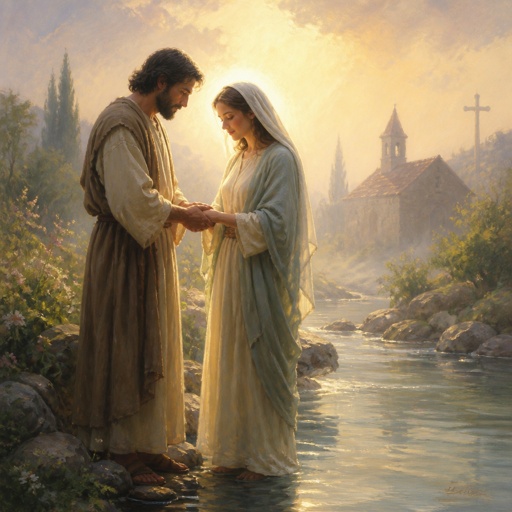
"Husbands, love your wives, just as Christ loved the church and gave himself up for her to make her holy, cleansing her by the washing with water through the word, and to present her to himself as a radiant church, without stain or wrinkle or any other blemish, but holy and blameless." - Ephesians 5:25-27

Ephesians 5:21

Ephesians 4:1-5

Ephesians 4:1-5

Ephesians 4:1-5

Ephesians 4:1-5

Ephesians 4:1-5

Ephesians 4:1-5

Ephesians 4:1-5

Ephesians 4:1-5

Ephesians 4:1-5

Ephesians 4:1-5

Ephesians 4:1-5

Ephesians 4:1-5

Ephesians 4:1-5

Ephesians 4:1-5

Ephesians 4:1-5

Ephesians 4:1-5

Ephesians 4:1-5

Ephesians 4:1-5

Ephesians 4:1-5

Ephesians 4:4-5

Ephesians 4:1-5

Ephesians 4:1-5

Ephesians 4:1-5

Ephesians 4:1-5