What does Ephesians 5:5-6 mean?
“For this ye know, that no whoremonger, nor unclean person, nor covetous man, who is an idolater, hath any inheritance in the kingdom of Christ and of God. Let no man deceive you with vain words: for because of these things cometh the wrath of God upon the children of disobedience.” — Ephesians 5:5-6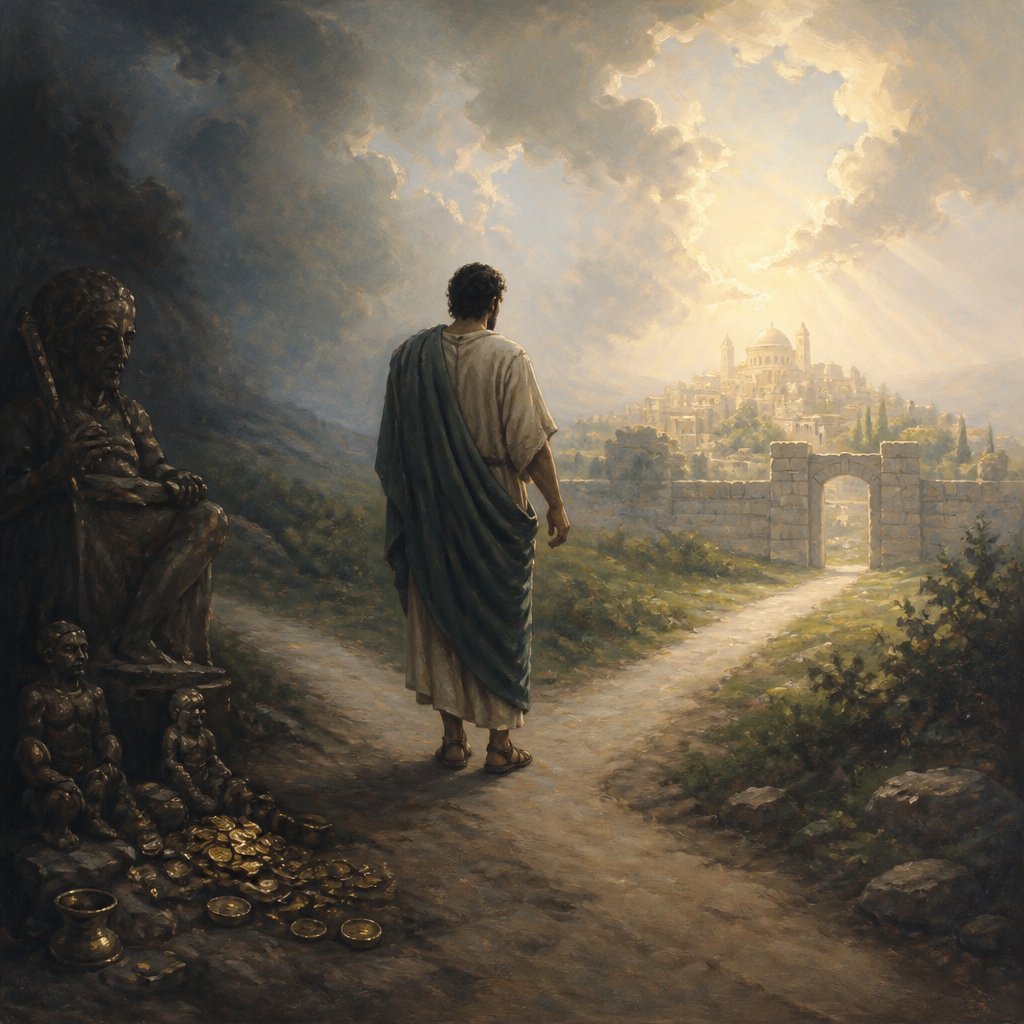
Ephesians 5:5-6 from the King James Version (KJV) of the Bible reads, "For this ye know, that no whoremonger, nor unclean person, nor covetous man, who is an idolater, hath any inheritance in the kingdom of Christ and of God. Let no man deceive you with vain words: for because of these things cometh the wrath of God upon the children of disobedience."
This passage from the letter to the Ephesians, written by the apostle Paul, addresses the concept of righteousness and warns against sinful behavior. It emphasizes the importance of living a life that is in line with the teachings of Christ and avoiding the temptations of the world. Let's delve deeper into the meaning and commentary of these verses, exploring the themes, context, and symbolism present in the text.
The overarching theme of Ephesians 5:5-6 is the contrast between righteous living and sinful behavior. Paul is exhorting the Ephesian believers to uphold a standard of holiness and purity, rejecting immoral practices and worldly desires. The passage lays out a clear delineation between those who will inherit the kingdom of Christ and God and those who will not. It serves as a warning against the consequences of disobedience and the pursuit of sinful pleasures.
The context of these verses is important for understanding their significance. The apostle Paul is writing to the Christian community in Ephesus, addressing various aspects of Christian living and spiritual growth. In the preceding verses, he discusses the idea of walking in love and light, emphasizing the need for moral purity and spiritual discernment. Paul's exhortation in Ephesians 5:5-6 is part of his broader teachings on the transformation of believers' lives and their separation from the corrupt practices of the world.
The language used in these verses is strong and uncompromising, reflecting the seriousness of the message. The terms "whoremonger," "unclean person," and "covetous man" are used to describe those who engage in immoral and selfish behavior. The reference to idolatry further reinforces the idea that pursuing worldly desires can become an idol, taking precedence over one's devotion to God. The language serves as a stark reminder of the consequences of unrighteous living and the need for believers to guard against deception and vain words.
Symbolism in Ephesians 5:5-6 is evident in the contrast between the kingdom of Christ and God and the children of disobedience. The kingdom of Christ and God represents the realm of righteousness, purity, and eternal inheritance for those who walk in obedience to God's will. In contrast, the children of disobedience are characterized by their sinful and ungodly pursuits, facing the wrath of God as a result. This symbolism serves to underscore the dichotomy between light and darkness, righteousness and unrighteousness, and the eternal implications of one's choices.
In conclusion, Ephesians 5:5-6 contains a powerful exhortation from the apostle Paul to the believers in Ephesus, urging them to pursue righteousness and to reject sinful behavior. The passage highlights the themes of moral purity, spiritual discernment, and the consequences of disobedience. It is a sobering reminder of the need for believers to guard against deception and to uphold a standard of holiness in their lives. Through its strong language and symbolism, this passage continues to resonate as a timeless lesson on the importance of living a life that is pleasing to God.
Get our apps


Artwork for Ephesians 5:5-6
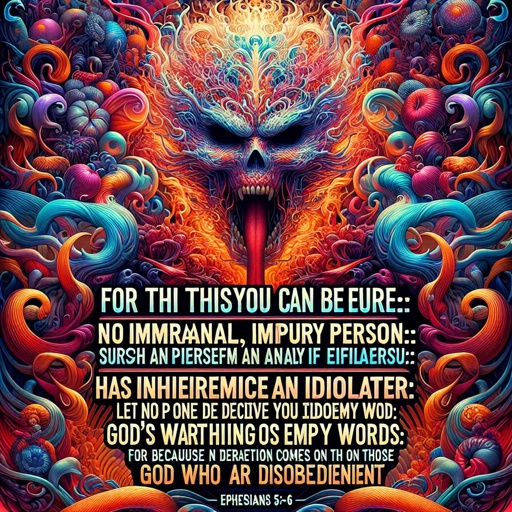
Ephesians 5:5-6 - "For of this you can be sure: No immoral, impure or greedy person—such a person is an idolater—has any inheritance in the kingdom of Christ and of God. Let no one deceive you with empty words, for because of such things God’s wrath comes on those who are disobedient."
"For of this you can be sure: No immoral, impure or greedy person—such a person is an idolater—has any inheritance in the kingdom of Christ and of God. Let no one deceive you with empty words, for because of such things God’s wrath comes on those who are disobedient." - Ephesians 5:5-6
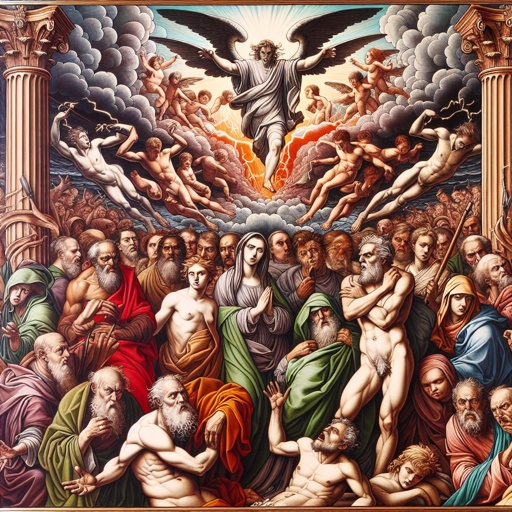
Ephesians 5:6 - "Let no man deceive you with vain words: for because of these things cometh the wrath of God upon the children of disobedience."

Ephesians 6:5 - "Servants, be obedient to them that are your masters according to the flesh, with fear and trembling, in singleness of your heart, as unto Christ;"

Ephesians 5:21

Ephesians 4:1-5

Ephesians 4:1-5

Ephesians 4:1-5

Ephesians 4:1-5

Ephesians 4:1-5

Ephesians 4:1-5

Ephesians 4:1-5

Ephesians 4:1-5

Ephesians 4:1-5

Ephesians 4:1-5

Ephesians 4:1-5

Ephesians 4:1-5

Ephesians 4:1-5

Ephesians 4:1-5

Ephesians 4:1-5

Ephesians 4:1-5

Ephesians 4:1-5

Ephesians 4:1-5

Ephesians 4:1-5

Ephesians 4:4-5

Ephesians 4:1-5

Ephesians 4:1-5

Ephesians 4:1-5

Ephesians 4:1-5

Ephesians 4:1-5