What does Esther 10:3 mean?
“For Mordecai the Jew was next unto king Ahasuerus, and great among the Jews, and accepted of the multitude of his brethren, seeking the wealth of his people, and speaking peace to all his seed.” — Esther 10:3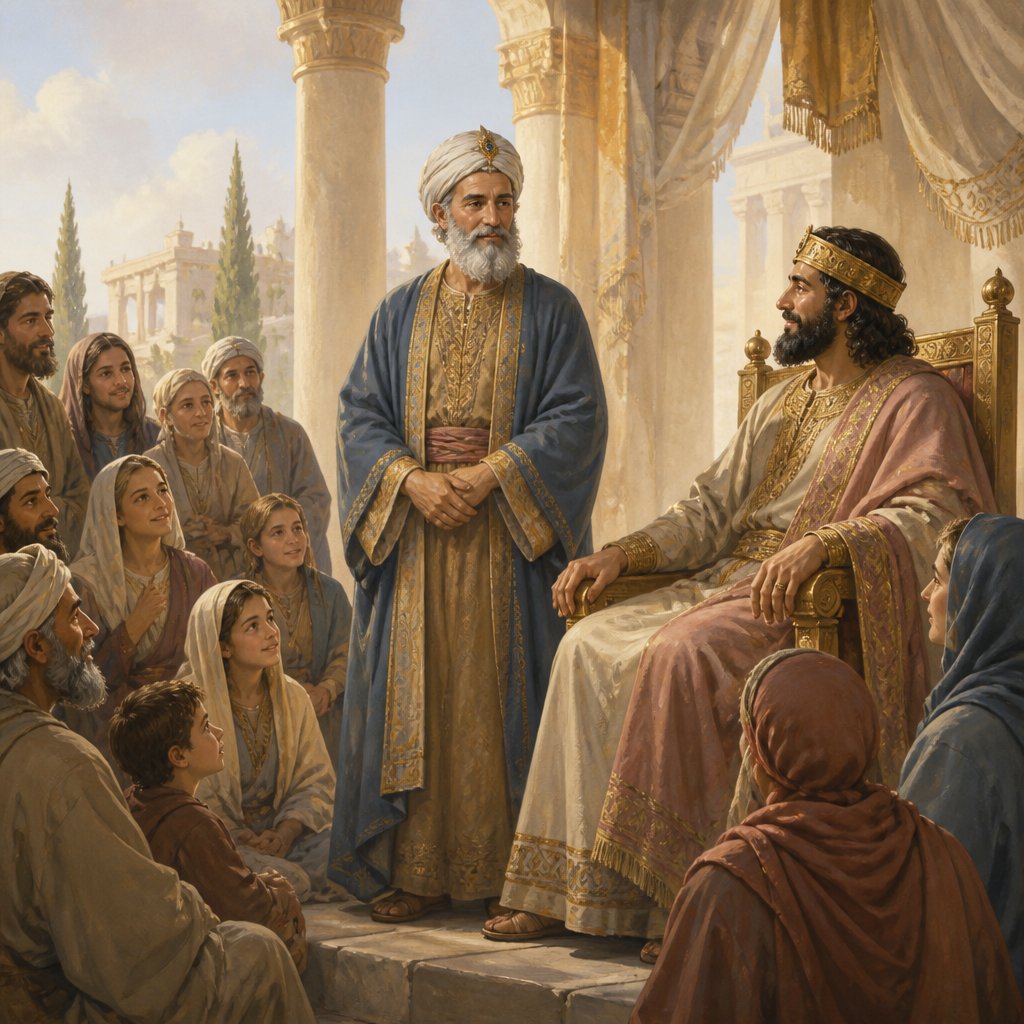
Esther 10:3 (KJV) states, "For Mordecai the Jew was next unto king Ahasuerus, and great among the Jews, and accepted of the multitude of his brethren, seeking the wealth of his people, and speaking peace to all his seed."
The book of Esther is a fascinating and thought-provoking narrative that is filled with drama, intrigue, and ultimately, redemption. The story revolves around a Jewish woman, Esther, who becomes the Queen of Persia and uses her position to thwart a plot to exterminate the Jewish people. This verse comes at the end of the book and is a reflection on the rise of Mordecai, Esther's cousin, to a position of prominence and influence in the Persian Empire.
The verse begins by stating that Mordecai was "next unto king Ahasuerus", indicating that he was second in command to the king himself. This is a significant detail as Mordecai, a Jew, had risen to a position of great power and authority in a foreign land. It speaks to his intelligence, wisdom, and diplomatic skills, as well as the favor he enjoyed with the king. This part of the verse underscores the theme of divine providence and the way in which God can elevate the humble and the faithful to positions of influence and leadership.
The verse goes on to describe Mordecai as "great among the Jews" and "accepted of the multitude of his brethren". This reflects the deep respect and admiration that Mordecai garnered from his fellow Jews. Despite his prominent position in the Persian court, Mordecai remained connected to his people and was dedicated to seeking their welfare. This part of the verse highlights Mordecai's commitment to his faith and his unwavering support for his fellow Jews. It also serves as a reminder of the importance of remaining rooted in one's heritage and community, even in the midst of success and prosperity.
The verse concludes by stating that Mordecai was "speaking peace to all his seed". This phrase suggests that Mordecai was a peacemaker and a unifier, working to promote harmony and understanding among his people. It also implies that he was concerned with the well-being and prosperity of future generations, seeking to ensure a peaceful and secure future for his descendants. This aspect of the verse underscores the importance of leadership that is focused on reconciliation and building a better future for the next generation.
In terms of context, this verse serves as a fitting conclusion to the book of Esther. It reflects on the impact of Mordecai's actions and the way in which he used his position of influence to benefit his people. It also highlights the ultimate triumph of the Jewish people over their enemies, as well as the divine providence that guided them through their trials and tribulations.
Symbolically, this verse can be seen as a representation of the power of faith, courage, and righteousness. It serves as a testament to the way in which individuals can make a positive impact in the world, even in the most challenging and oppressive circumstances. Mordecai's rise to prominence and his dedication to the welfare of his people is a powerful example of the way in which God can use individuals to bring about justice and redemption.
In conclusion, Esther 10:3 is a profound and inspiring verse that encapsulates the themes of faith, leadership, and divine providence that are central to the book of Esther. It serves as a reminder of the importance of remaining true to one's beliefs and heritage, as well as the potential for individuals to make a meaningful and lasting impact in the world. Through the story of Mordecai, the verse offers hope and encouragement to those who strive to uphold their principles and seek the welfare of others.
Get our apps


Artwork for Esther 10:3

Esther 10:3 - "For Mordecai the Jew was next unto king Ahasuerus, and great among the Jews, and accepted of the multitude of his brethren, seeking the wealth of his people, and speaking peace to all his seed."
"For Mordecai the Jew was next unto king Ahasuerus, and great among the Jews, and accepted of the multitude of his brethren, seeking the wealth of his people, and speaking peace to all his seed." - Esther 10:3
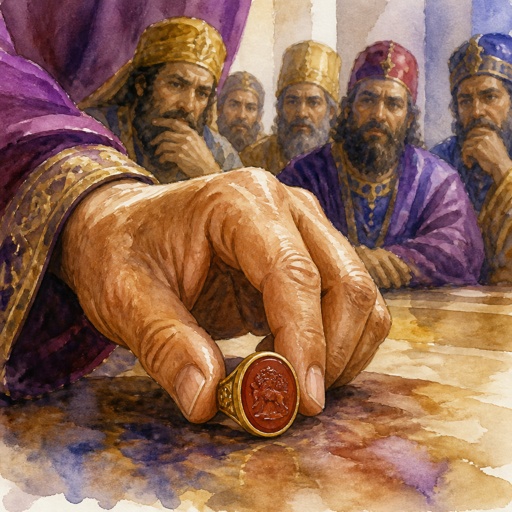
Esther 3:10 focus on ring

Esther 3:10 - "And the king took his ring from his hand, and gave it unto Haman the son of Hammedatha the Agagite, the Jews' enemy."

Esther 4:10 - "¶ Again Esther spake unto Hatach, and gave him commandment unto Mordecai;"

Esther 2:10 - "Esther had not shewed her people nor her kindred: for Mordecai had charged her that she should not shew it."

Esther 5:3 - "Then said the king unto her, What wilt thou, queen Esther? and what is thy request? it shall be even given thee to the half of the kingdom."

"¶ Again Esther spake unto Hatach, and gave him commandment unto Mordecai;" - Esther 4:10

Esther 10:1 - "And the king Ahasuerus laid a tribute upon the land, and upon the isles of the sea."

Esther 3:3 - "Then the king's servants, which were in the king's gate, said unto Mordecai, Why transgressest thou the king's commandment?"
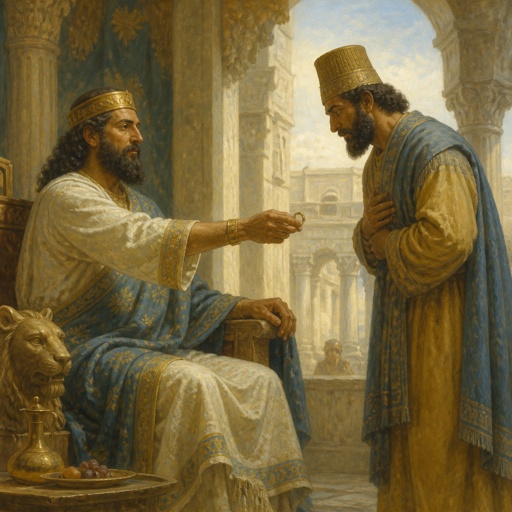
"And the king took his ring from his hand, and gave it unto Haman the son of Hammedatha the Agagite, the Jews' enemy." - Esther 3:10

Esther 8:3 - "¶ And Esther spake yet again before the king, and fell down at his feet, and besought him with tears to put away the mischief of Haman the Agagite, and his device that he had devised against the Jews."

Esther 9:10 - "The ten sons of Haman the son of Hammedatha, the enemy of the Jews, slew they; but on the spoil laid they not their hand."

Esther 7:3 - "Then Esther the queen answered and said, If I have found favour in thy sight, O king, and if it please the king, let my life be given me at my petition, and my people at my request:"

Esther 7:10 - "So they hanged Haman on the gallows that he had prepared for Mordecai. Then was the king's wrath pacified."

Esther 3:5 - "And when Haman saw that Mordecai bowed not, nor did him reverence, then was Haman full of wrath."

"Esther had not shewed her people nor her kindred: for Mordecai had charged her that she should not shew it." - Esther 2:10

Esther 5:10 - "Nevertheless Haman refrained himself: and when he came home, he sent and called for his friends, and Zeresh his wife."

Esther 8:10 - "And he wrote in the king Ahasuerus' name, and sealed it with the king's ring, and sent letters by posts on horseback, and riders on mules, camels, and young dromedaries:"

Esther 9:3 - "And all the rulers of the provinces, and the lieutenants, and the deputies, and officers of the king, helped the Jews; because the fear of Mordecai fell upon them."

Esther 3:14 - "The copy of the writing for a commandment to be given in every province was published unto all people, that they should be ready against that day."

Esther 3:11 - "And the king said unto Haman, The silver is given to thee, the people also, to do with them as it seemeth good to thee."

Esther 10:2 - "And all the acts of his power and of his might, and the declaration of the greatness of Mordecai, whereunto the king advanced him, are they not written in the book of the chronicles of the kings of Media and Persia?"
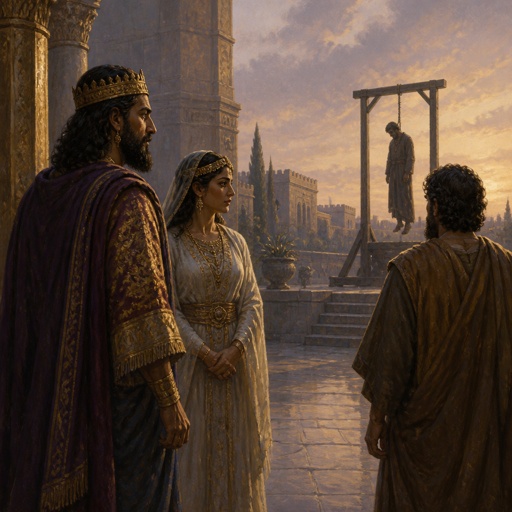
"So they hanged Haman on the gallows that he had prepared for Mordecai. Then was the king's wrath pacified." - Esther 7:10
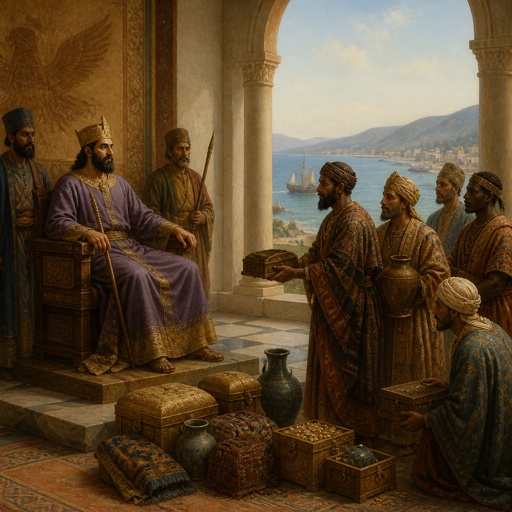
"And the king Ahasuerus laid a tribute upon the land, and upon the isles of the sea." - Esther 10:1
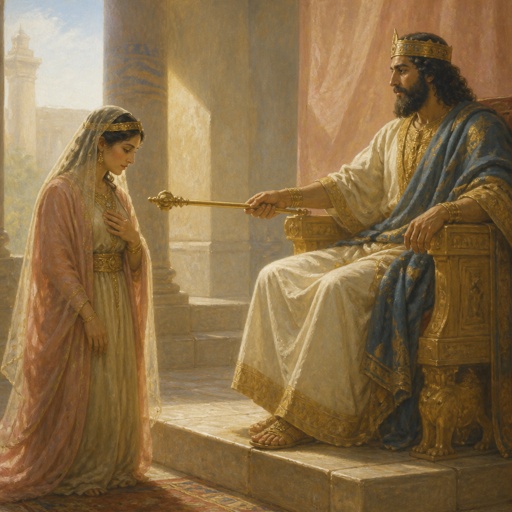
"Then said the king unto her, What wilt thou, queen Esther? and what is thy request? it shall be even given thee to the half of the kingdom." - Esther 5:3

Esther 3:15 - "The posts went out, being hastened by the king's commandment, and the decree was given in Shushan the palace. And the king and Haman sat down to drink; but the city Shushan was perplexed."

Esther 6:3 - "And the king said, What honour and dignity hath been done to Mordecai for this? Then said the king's servants that ministered unto him, There is nothing done for him."

Esther 3:1 - "After these things did king Ahasuerus promote Haman the son of Hammedatha the Agagite, and advanced him, and set his seat above all the princes that were with him."

Esther 4:3 - "And in every province, whithersoever the king's commandment and his decree came, there was great mourning among the Jews, and fasting, and weeping, and wailing; and many lay in sackcloth and ashes."