What does Esther 1:12 mean?
“But the queen Vashti refused to come at the king’s commandment by his chamberlains: therefore was the king very wroth, and his anger burned in him.” — Esther 1:12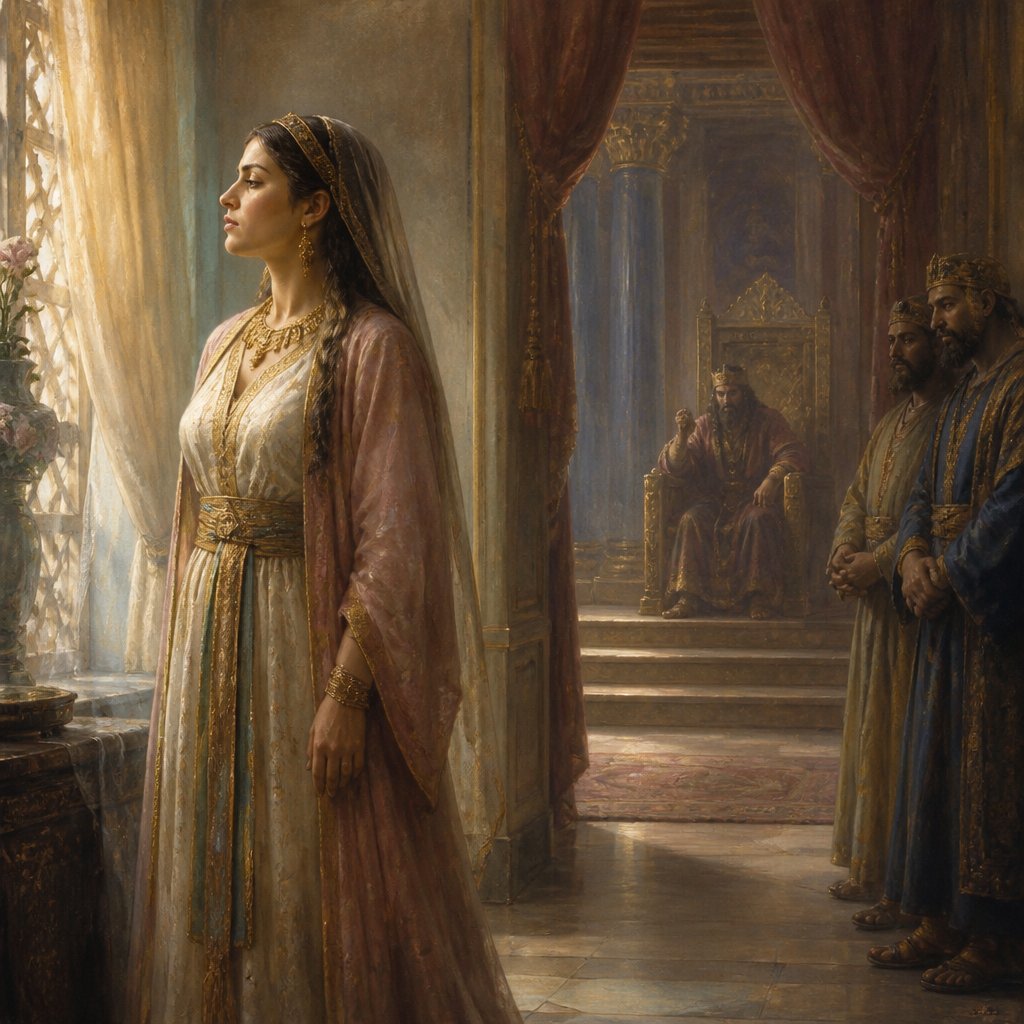
Esther 1:12 from the King James Version of the Bible reads: “But the queen Vashti refused to come at the king’s commandment by his chamberlains: therefore was the king very wroth, and his anger burned in him.” This verse is significant in the biblical book of Esther, as it sets the stage for the events that unfold throughout the rest of the story.
The book of Esther is set during the time of the Persian Empire and tells the story of a Jewish woman named Esther who becomes queen to King Xerxes (Ahasuerus in Hebrew), and ultimately saves her people from destruction. In the first chapter, King Xerxes throws a lavish banquet for all his princes and servants, showcasing the wealth and power of his kingdom. During this banquet, he also holds a separate banquet for the women, and it is during this feast that Queen Vashti refuses to appear before the king when summoned.
The refusal of Queen Vashti to appear before King Xerxes at his command becomes the catalyst for the rest of the story. The king’s anger at her refusal ultimately leads to her dismissal as queen and sets the stage for Esther to become the new queen of Persia.
Several themes can be drawn from Esther 1:12, including the significance of obedience, the consequences of pride and power, and the sovereignty of God. Queen Vashti’s refusal to come when summoned by the king represents a significant act of disobedience, particularly in the context of ancient Persian society, where it was expected for the queen to submit to the king's command. This act of defiance sets the stage for the power struggle between King Xerxes and Vashti, as well as the eventual rise of Esther.
Furthermore, Esther 1:12 also reflects the consequences of pride and power. King Xerxes' reaction to Vashti's refusal to appear before him shows his anger and his desire to maintain control and authority over his kingdom and household. This sets the stage for the eventual downfall of Vashti and the rise of Esther, as King Xerxes seeks to assert his power and control over his kingdom and his people.
In addition, Esther 1:12 also highlights the sovereignty of God in the unfolding events of the story. While Queen Vashti’s actions may have seemed rebellious in the eyes of King Xerxes, it ultimately served as a pivotal moment in God’s plan for the salvation of the Jewish people. The refusal of Vashti leads to the rise of Esther, who ultimately becomes an instrument in God’s hands to deliver her people from destruction.
Symbolically, the refusal of Queen Vashti to come before King Xerxes can be seen as a representation of the theme of standing up against injustice and oppression. Vashti’s refusal to appease the king's command is a bold assertion of her own dignity and independence, which resonates with the larger theme of Esther, where Esther takes a stand for her people in the face of impending danger.
In conclusion, Esther 1:12 is a pivotal verse in the book of Esther, setting the stage for the unfolding events in the story. It highlights significant themes of obedience, the consequences of pride and power, and the sovereignty of God. It also serves as a symbol of standing up against injustice and oppression. As readers delve deeper into the book of Esther, they can explore the rich layers of meaning and significance within this powerful and timeless narrative.
Get our apps


Artwork for Esther 1:12

Esther 1:12 - "But the queen Vashti refused to come at the king's commandment by his chamberlains: therefore was the king very wroth, and his anger burned in him."
"But the queen Vashti refused to come at the king's commandment by his chamberlains: therefore was the king very wroth, and his anger burned in him." - Esther 1:12

Esther 4:12 - "And they told to Mordecai Esther's words."

Esther 7:1 - "So the king and Haman came to banquet with Esther the queen."
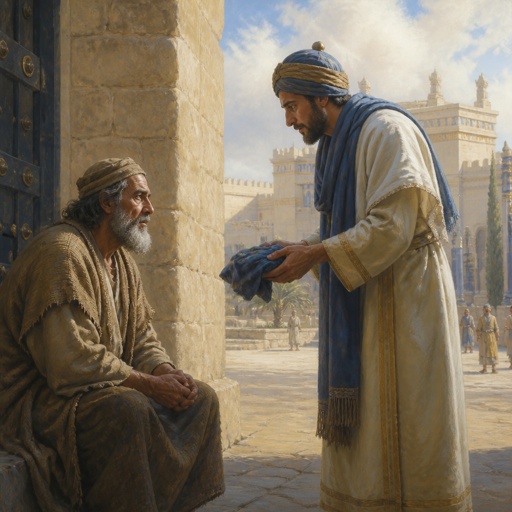
"And they told to Mordecai Esther's words." - Esther 4:12

Esther 1:2 - "That in those days, when the king Ahasuerus sat on the throne of his kingdom, which was in Shushan the palace,"

Esther 1:17

Esther 8:1 - "On that day did the king Ahasuerus give the house of Haman the Jews' enemy unto Esther the queen. And Mordecai came before the king; for Esther had told what he was unto her."

Esther 5:12 - "Haman said moreover, Yea, Esther the queen did let no man come in with the king unto the banquet that she had prepared but myself; and to morrow am I invited unto her also with the king."

Esther, the courageous queen

"So the king and Haman came to banquet with Esther the queen." - Esther 7:1

Esther 1:6

Esther 6:12 - "¶ And Mordecai came again to the king's gate. But Haman hasted to his house mourning, and having his head covered."

Esther 9:12 - "¶ And the king said unto Esther the queen, The Jews have slain and destroyed five hundred men in Shushan the palace, and the ten sons of Haman; what have they done in the rest of the king's provinces? now what is thy petition? and it shall be granted thee: or what is thy request further? and it shall be done."

Esther 8:12 - "Upon one day in all the provinces of king Ahasuerus, namely, upon the thirteenth day of the twelfth month, which is the month Adar."
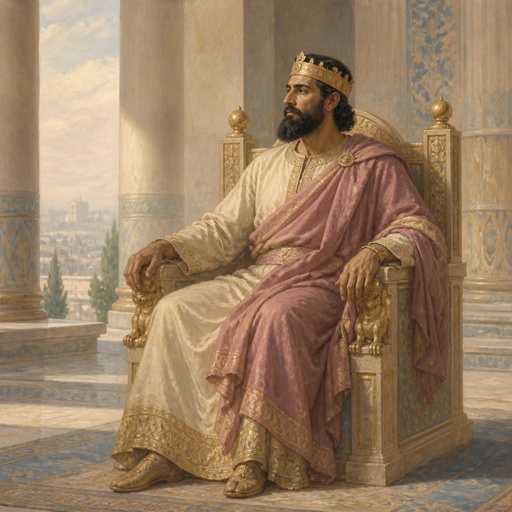
"That in those days, when the king Ahasuerus sat on the throne of his kingdom, which was in Shushan the palace," - Esther 1:2

Esther 10:1 - "And the king Ahasuerus laid a tribute upon the land, and upon the isles of the sea."

"On that day did the king Ahasuerus give the house of Haman the Jews' enemy unto Esther the queen. And Mordecai came before the king; for Esther had told what he was unto her." - Esther 8:1

Esther 1:21 - "And the saying pleased the king and the princes; and the king did according to the word of Memucan:"

Esther 5:1 - "Now it came to pass on the third day, that Esther put on her royal apparel, and stood in the inner court of the king's house, over against the king's house: and the king sat upon his royal throne in the royal house, over against the gate of the house."

Esther 1:9 - "Also Vashti the queen made a feast for the women in the royal house which belonged to king Ahasuerus."

Esther 1:1 - "Now it came to pass in the days of Ahasuerus, (this is Ahasuerus which reigned, from India even unto Ethiopia, over an hundred and seven and twenty provinces:)"

Esther 6:1 - "On that night could not the king sleep, and he commanded to bring the book of records of the chronicles; and they were read before the king."

Esther 1:11 - "To bring Vashti the queen before the king with the crown royal, to shew the people and the princes her beauty: for she was fair to look on."

Hosea 1:2-11;2:14;3:5
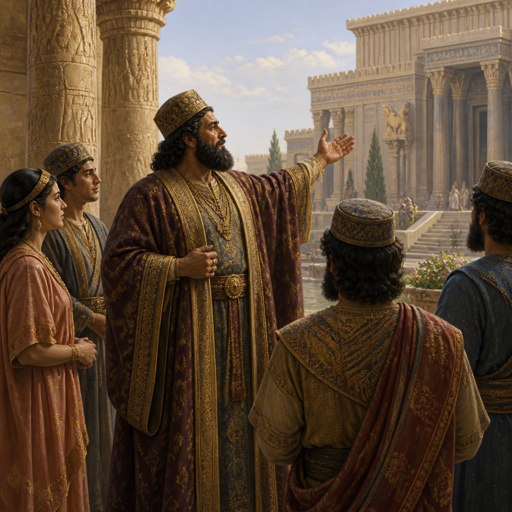
"Haman said moreover, Yea, Esther the queen did let no man come in with the king unto the banquet that she had prepared but myself; and to morrow am I invited unto her also with the king." - Esther 5:12
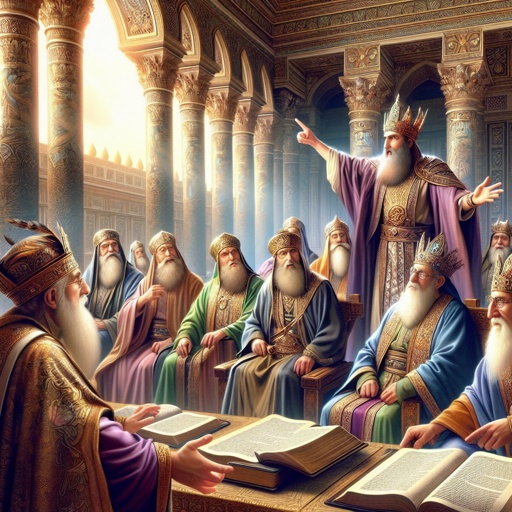
Esther 1:13 - "¶ Then the king said to the wise men, which knew the times, (for so was the king's manner toward all that knew law and judgment:"

Esther 1:7 - "And they gave them drink in vessels of gold, (the vessels being diverse one from another,) and royal wine in abundance, according to the state of the king."

Esther 1:4 - "When he shewed the riches of his glorious kingdom and the honour of his excellent majesty many days, even an hundred and fourscore days."

Esther 2:1 - "After these things, when the wrath of king Ahasuerus was appeased, he remembered Vashti, and what she had done, and what was decreed against her."