What does Esther 1:4 mean?
“When he shewed the riches of his glorious kingdom and the honour of his excellent majesty many days, even an hundred and fourscore days.” — Esther 1:4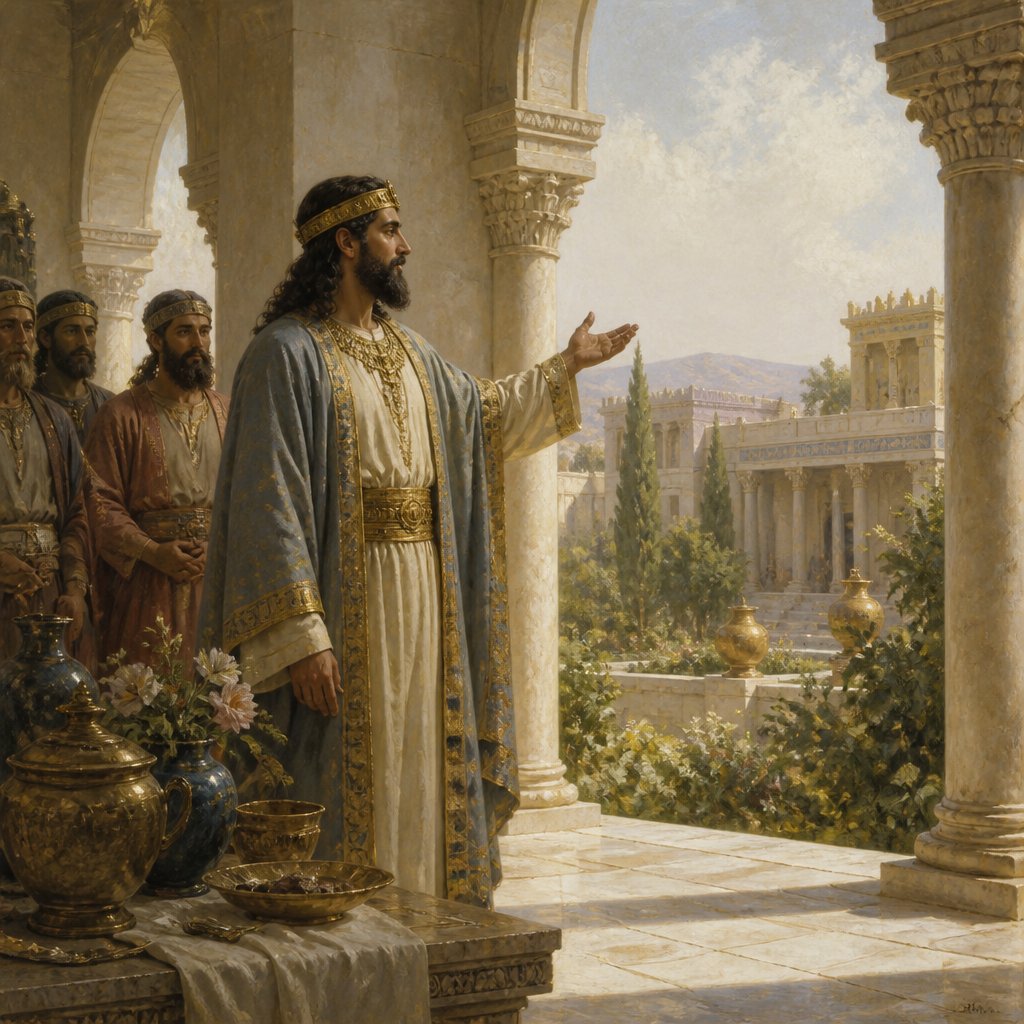
The verse Esther 1:4 from the King James Version of the Bible reads: "When he showed the riches of his glorious kingdom and the honour of his excellent majesty many days, even an hundred and fourscore days." This verse is found in the book of Esther, which is one of the historical books in the Old Testament. It is a verse that describes the opulence and grandeur of King Ahasuerus' kingdom and his display of wealth and power.
The book of Esther is set during the reign of King Ahasuerus, also known as Xerxes I, who ruled over the Persian Empire from 486-465 B.C. The verse emphasizes the opulence and extravagance of the king's reign by describing his display of wealth and honor over a period of 180 days. This display of wealth and power was likely meant to showcase the might and grandeur of the Persian Empire to the nobles and officials in his kingdom. It is also important to note that this extravagant display ultimately sets the stage for the events that unfold in the rest of the book.
The themes present in this verse include power, wealth, and honor. The king's display of his kingdom’s riches and honor reflects his authority and grandeur as a ruler. It also highlights the stark contrast between the king's opulence and the poverty and struggle faced by many of his subjects. This dichotomy sets the stage for the tension and conflict that arises later in the story, particularly between the king and his queen, Esther.
The context of this verse is also significant. The 180-day display of the king's riches and honor was a grand and extravagant affair meant to showcase the might and splendor of the Persian Empire. During this time, the king held a banquet for all the people from the greatest to the least in the city of Shushan. This event was not just a lavish display of wealth, but also an opportunity for the king to assert his authority and exhibit his power over his subjects.
Symbolism can also be found within this verse. The king's display of his glorious kingdom and excellent majesty can be seen as a symbol of his worldly power and authority. The grandeur of his kingdom represents the vastness and richness of his dominion, and his honor signifies the respect and reverence that was given to him as a ruler. This display of wealth and honor can also be seen as a reflection of the earthly power and wealth that is so often idolized and sought after in the world.
In conclusion, Esther 1:4 from the King James Version of the Bible portrays the opulence and grandeur of King Ahasuerus' kingdom and the display of his wealth and power over a period of 180 days. The verse sets the stage for the events that unfold in the rest of the book of Esther, highlighting themes of power, wealth, and honor. The context of the verse emphasizes the tension between the king's opulence and the struggle of his subjects. Symbolically, the verse represents the worldly power and wealth that is often idolized in the world. Overall, this verse serves as a reflection on the earthly power and authority of rulers and the stark contrast it creates with the struggles of their subjects.
Get our apps


Artwork for Esther 1:4

Esther 1:4 - "When he shewed the riches of his glorious kingdom and the honour of his excellent majesty many days, even an hundred and fourscore days."
"When he shewed the riches of his glorious kingdom and the honour of his excellent majesty many days, even an hundred and fourscore days." - Esther 1:4

Esther 8:4 - "Then the king held out the golden sceptre toward Esther. So Esther arose, and stood before the king,"

Esther 4:15 - "¶ Then Esther bade them return Mordecai this answer,"

Esther 4:9 - "And Hatach came and told Esther the words of Mordecai."

Esther 4:10 - "¶ Again Esther spake unto Hatach, and gave him commandment unto Mordecai;"

Esther 4:17 - "So Mordecai went his way, and did according to all that Esther had commanded him."
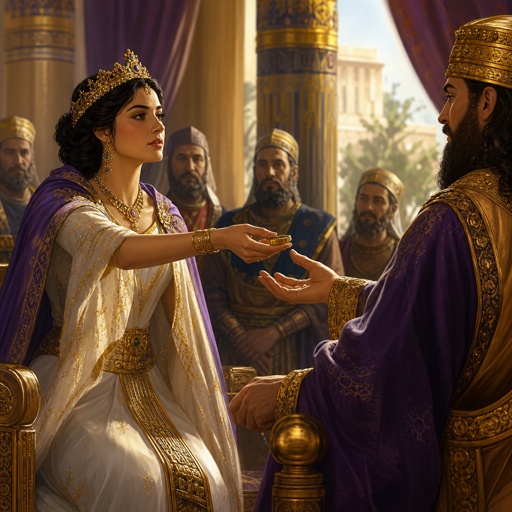
Esther 8:4

Esther 4:12 - "And they told to Mordecai Esther's words."

"And Hatach came and told Esther the words of Mordecai." - Esther 4:9

"¶ Then Esther bade them return Mordecai this answer," - Esther 4:15

Esther 4:13 - "Then Mordecai commanded to answer Esther, Think not with thyself that thou shalt escape in the king's house, more than all the Jews."

Esther 5:4 - "And Esther answered, If it seem good unto the king, let the king and Haman come this day unto the banquet that I have prepared for him."

Esther 7:1 - "So the king and Haman came to banquet with Esther the queen."

Esther 4:1 - "When Mordecai perceived all that was done, Mordecai rent his clothes, and put on sackcloth with ashes, and went out into the midst of the city, and cried with a loud and a bitter cry;"

"Then the king held out the golden sceptre toward Esther. So Esther arose, and stood before the king," - Esther 8:4

Esther 4:5 - "Then called Esther for Hatach, one of the king's chamberlains, whom he had appointed to attend upon her, and gave him a commandment to Mordecai, to know what it was, and why it was."

Esther 1:17

Esther 8:1 - "On that day did the king Ahasuerus give the house of Haman the Jews' enemy unto Esther the queen. And Mordecai came before the king; for Esther had told what he was unto her."
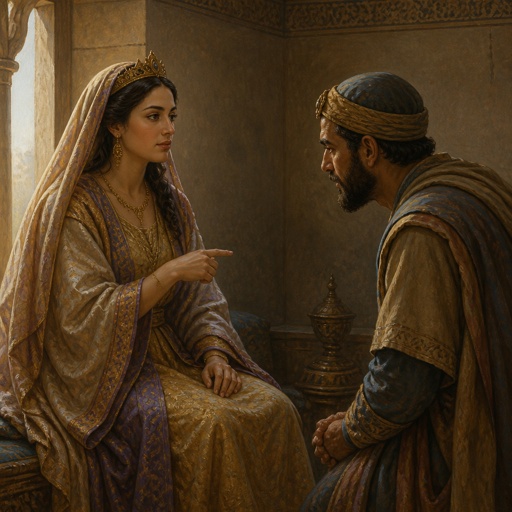
"¶ Again Esther spake unto Hatach, and gave him commandment unto Mordecai;" - Esther 4:10
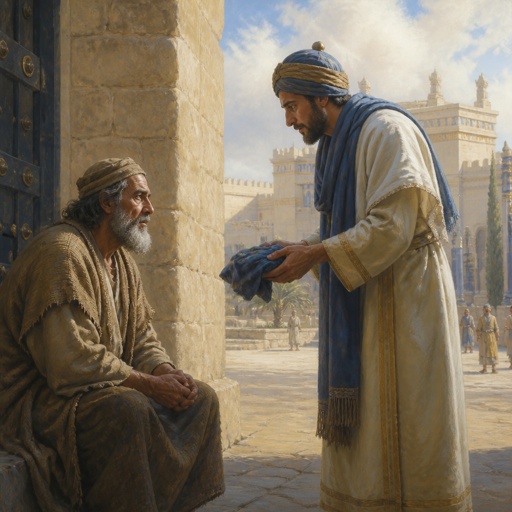
"And they told to Mordecai Esther's words." - Esther 4:12

Esther, the courageous queen

"So the king and Haman came to banquet with Esther the queen." - Esther 7:1

Esther 1:6

"So Mordecai went his way, and did according to all that Esther had commanded him." - Esther 4:17
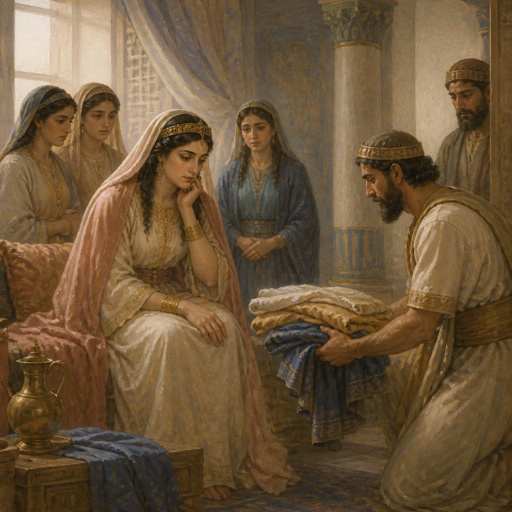
"¶ So Esther's maids and her chamberlains came and told it her. Then was the queen exceedingly grieved; and she sent raiment to clothe Mordecai, and to take away his sackcloth from him: but he received it not." - Esther 4:4

Esther 4:6 - "So Hatach went forth to Mordecai unto the street of the city, which was before the king's gate."

Esther 4:4 - "¶ So Esther's maids and her chamberlains came and told it her. Then was the queen exceedingly grieved; and she sent raiment to clothe Mordecai, and to take away his sackcloth from him: but he received it not."

Esther 4:2 - "And came even before the king's gate: for none might enter into the king's gate clothed with sackcloth."

Esther 4:8 - "Also he gave him the copy of the writing of the decree that was given at Shushan to destroy them, to shew it unto Esther, and to declare it unto her, and to charge her that she should go in unto the king, to make supplication unto him, and to make request before him for her people."