What does Esther 2:13 mean?
“Then thus came every maiden unto the king; whatsoever she desired was given her to go with her out of the house of the women unto the king’s house.” — Esther 2:13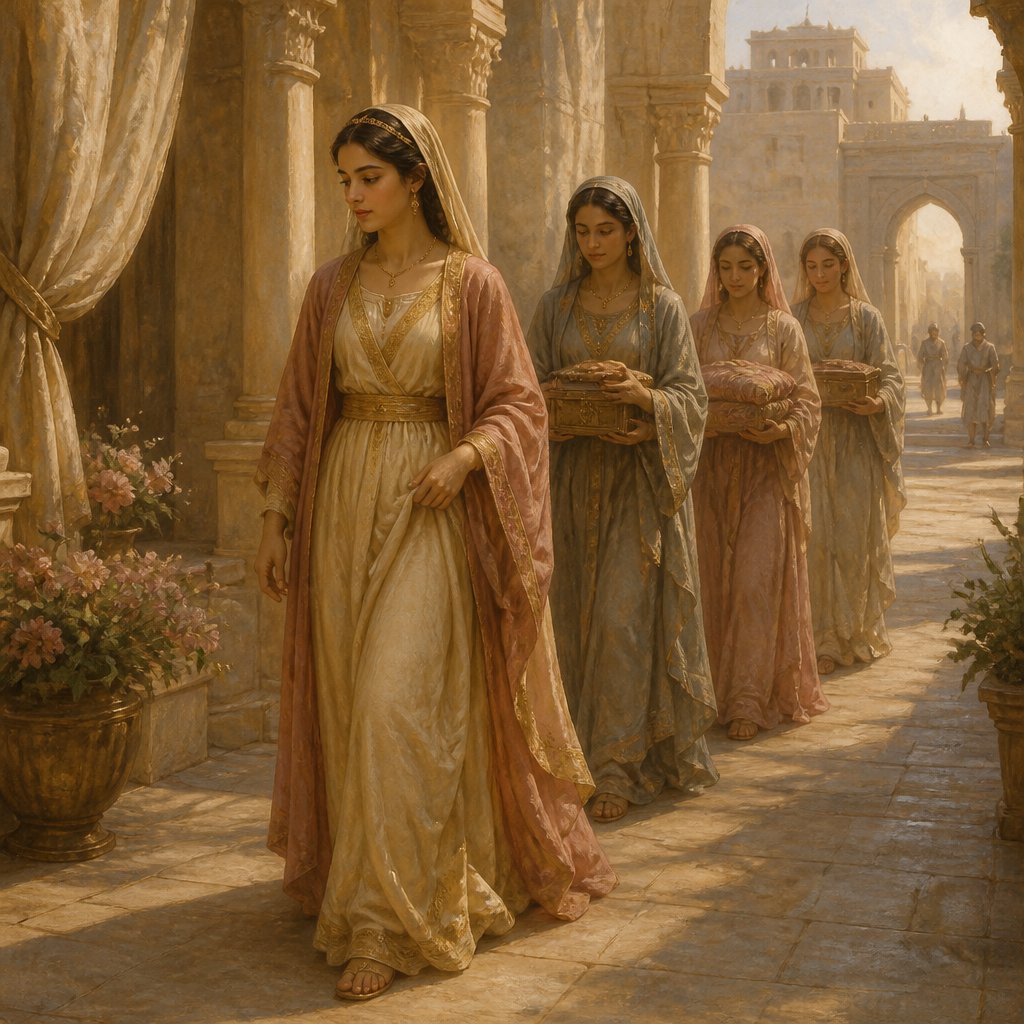
The Bible verse Esther 2:13 from the King James Version (KJV) reads, "Then thus came every maiden unto the king; whatsoever she desired was given her to go with her out of the house of the women unto the king's house." This verse is taken from the book of Esther, which tells the story of a Jewish orphan girl who becomes the queen of Persia and ultimately saves her people from destruction.
In this particular verse, we see the culmination of a selection process in which young women are brought before King Ahasuerus to be considered as a potential queen. Each maiden is allowed to bring with her whatever she desires as she transitions from the house of the women to the king's house. From a literal standpoint, this verse represents a moment of great significance for the maiden who is chosen to become queen, as she is granted all that she desires to accompany her on this momentous journey.
In the larger context of the book of Esther, this verse is part of a story that is rich in themes such as the providence of God, the courage of individuals, and the divine unfolding of events to bring about justice and deliverance. The story of Esther takes place during a time when the Jewish people were living in exile in Persia, and it serves as a powerful reminder of how God can work behind the scenes to bring about redemption and restoration for His people.
One of the key themes in the book of Esther is the idea of providence, or the guiding hand of God in the events of human history. Although the name of God is not explicitly mentioned in the book, His presence and influence are evident throughout the story. In this verse, we can see how the selection of the queen is not left to chance, but rather orchestrated by divine providence. The fact that each maiden is granted whatever she desires to bring with her symbolizes the idea that God is in control of the entire process, ensuring that the chosen maiden is properly prepared to assume her role as queen.
Another important theme in the book of Esther is the courage of individuals to stand up for what is right, even in the face of great danger. Esther herself embodies this theme, as she risks her own life to approach the king and plead for the salvation of her people. The selection process described in this verse sets the stage for Esther's own remarkable act of courage, as she steps into the role that God has prepared for her and uses her position to bring about the deliverance of her people.
Symbolically, this verse can be interpreted as a representation of the journey from captivity to freedom. The transition from the house of the women to the king's house mirrors the larger narrative of the Jewish people moving from exile and oppression to liberation and restoration. The fact that each maiden is allowed to bring with her whatever she desires can be seen as a symbol of the abundance and blessings that God bestows upon His people as they make this journey from bondage to freedom.
In conclusion, Esther 2:13 is a verse with deep spiritual significance, reflecting themes of providence, courage, and the journey from captivity to freedom. It serves as a powerful reminder of God's presence and influence in the events of human history, and it sets the stage for the unfolding of a truly remarkable story of redemption and deliverance.
Get our apps


Artwork for Esther 2:13

Esther 2:13 - "Then thus came every maiden unto the king; whatsoever she desired was given her to go with her out of the house of the women unto the king's house."
"Then thus came every maiden unto the king; whatsoever she desired was given her to go with her out of the house of the women unto the king's house." - Esther 2:13

Esther 4:13 - "Then Mordecai commanded to answer Esther, Think not with thyself that thou shalt escape in the king's house, more than all the Jews."

Esther 2:22 - "And the thing was known to Mordecai, who told it unto Esther the queen; and Esther certified the king thereof in Mordecai's name."

Esther 9:13 - "Then said Esther, If it please the king, let it be granted to the Jews which are in Shushan to do to morrow also according unto this day's decree, and let Haman's ten sons be hanged upon the gallows."

Esther 5:2 - "And it was so, when the king saw Esther the queen standing in the court, that she obtained favour in his sight: and the king held out to Esther the golden sceptre that was in his hand. So Esther drew near, and touched the top of the sceptre."

Esther 7:2 - "And the king said again unto Esther on the second day at the banquet of wine, What is thy petition, queen Esther? and it shall be granted thee: and what is thy request? and it shall be performed, even to the half of the kingdom."

Esther 2:20 - "Esther had not yet shewed her kindred nor her people; as Mordecai had charged her: for Esther did the commandment of Mordecai, like as when she was brought up with him."

Esther 5:2

Esther 5:2

Esther 5:2

Esther 2:11 - "And Mordecai walked every day before the court of the women's house, to know how Esther did, and what should become of her."

Esther 2:10 - "Esther had not shewed her people nor her kindred: for Mordecai had charged her that she should not shew it."

Esther 5:2 - "And it was so, when the king saw Esther the queen standing in the court, that she obtained favour in his sight: and the king held out to Esther the golden sceptre that was in his hand. So Esther drew near, and touched the top of the sceptre."

"And the thing was known to Mordecai, who told it unto Esther the queen; and Esther certified the king thereof in Mordecai's name." - Esther 2:22

Esther 2:16 - "So Esther was taken unto king Ahasuerus into his house royal in the tenth month, which is the month Tebeth, in the seventh year of his reign."

Esther 8:2 - "And the king took off his ring, which he had taken from Haman, and gave it unto Mordecai. And Esther set Mordecai over the house of Haman."

Esther 5:13 - "Yet all this availeth me nothing, so long as I see Mordecai the Jew sitting at the king's gate."
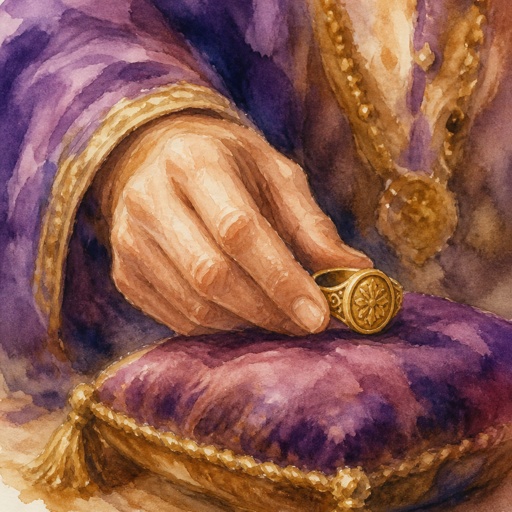
Esther 8:2 focus on the ring
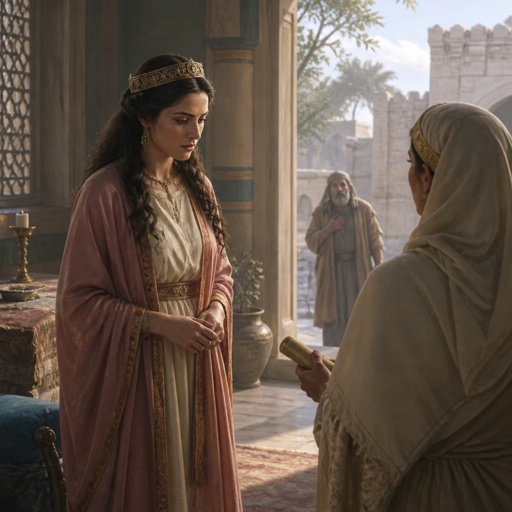
"Then Mordecai commanded to answer Esther, Think not with thyself that thou shalt escape in the king's house, more than all the Jews." - Esther 4:13

Esther 2:15 - "¶ Now when the turn of Esther, the daughter of Abihail the uncle of Mordecai, who had taken her for his daughter, was come to go in unto the king, she required nothing but what Hegai the king's chamberlain, the keeper of the women, appointed. And Esther obtained favour in the sight of all them that looked upon her."
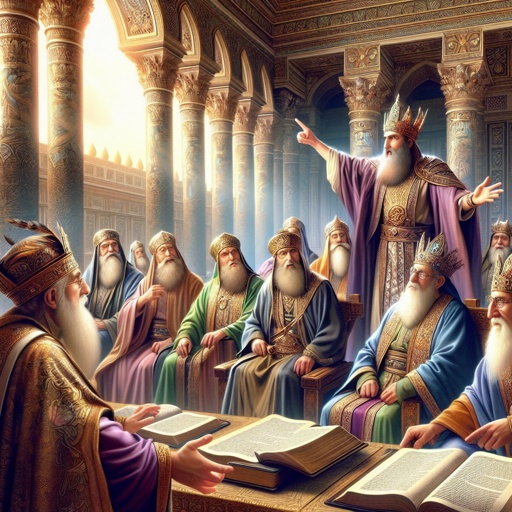
Esther 1:13 - "¶ Then the king said to the wise men, which knew the times, (for so was the king's manner toward all that knew law and judgment:"

Esther 2:2 - "Then said the king's servants that ministered unto him, Let there be fair young virgins sought for the king:"

Esther 8:13 - "The copy of the writing for a commandment to be given in every province was published unto all people, and that the Jews should be ready against that day to avenge themselves on their enemies."

Esther 2:17 - "And the king loved Esther above all the women, and she obtained grace and favour in his sight more than all the virgins; so that he set the royal crown upon her head, and made her queen instead of Vashti."

Esther 2:7 - "And he brought up Hadassah, that is, Esther, his uncle's daughter: for she had neither father nor mother, and the maid was fair and beautiful; whom Mordecai, when her father and mother were dead, took for his own daughter."
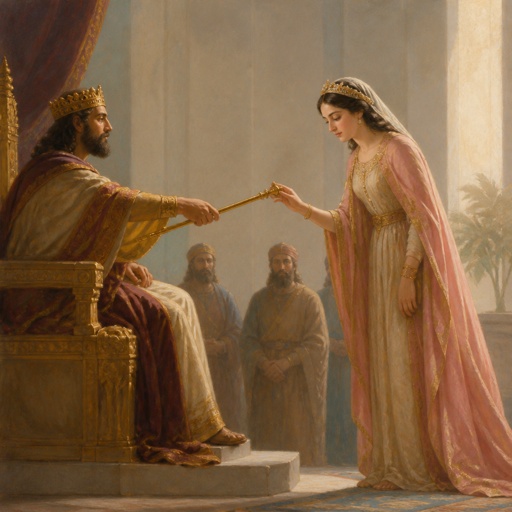
"And it was so, when the king saw Esther the queen standing in the court, that she obtained favour in his sight: and the king held out to Esther the golden sceptre that was in his hand. So Esther drew near, and touched the top of the sceptre." - Esther 5:2

Esther 2:8 - "¶ So it came to pass, when the king's commandment and his decree was heard, and when many maidens were gathered together unto Shushan the palace, to the custody of Hegai, that Esther was brought also unto the king's house, to the custody of Hegai, keeper of the women."

Esther 2:19 - "And when the virgins were gathered together the second time, then Mordecai sat in the king's gate."

Esther 1:2 - "That in those days, when the king Ahasuerus sat on the throne of his kingdom, which was in Shushan the palace,"