What does Esther 2:2 mean?
“Then said the king’s servants that ministered unto him, Let there be fair young virgins sought for the king:” — Esther 2:2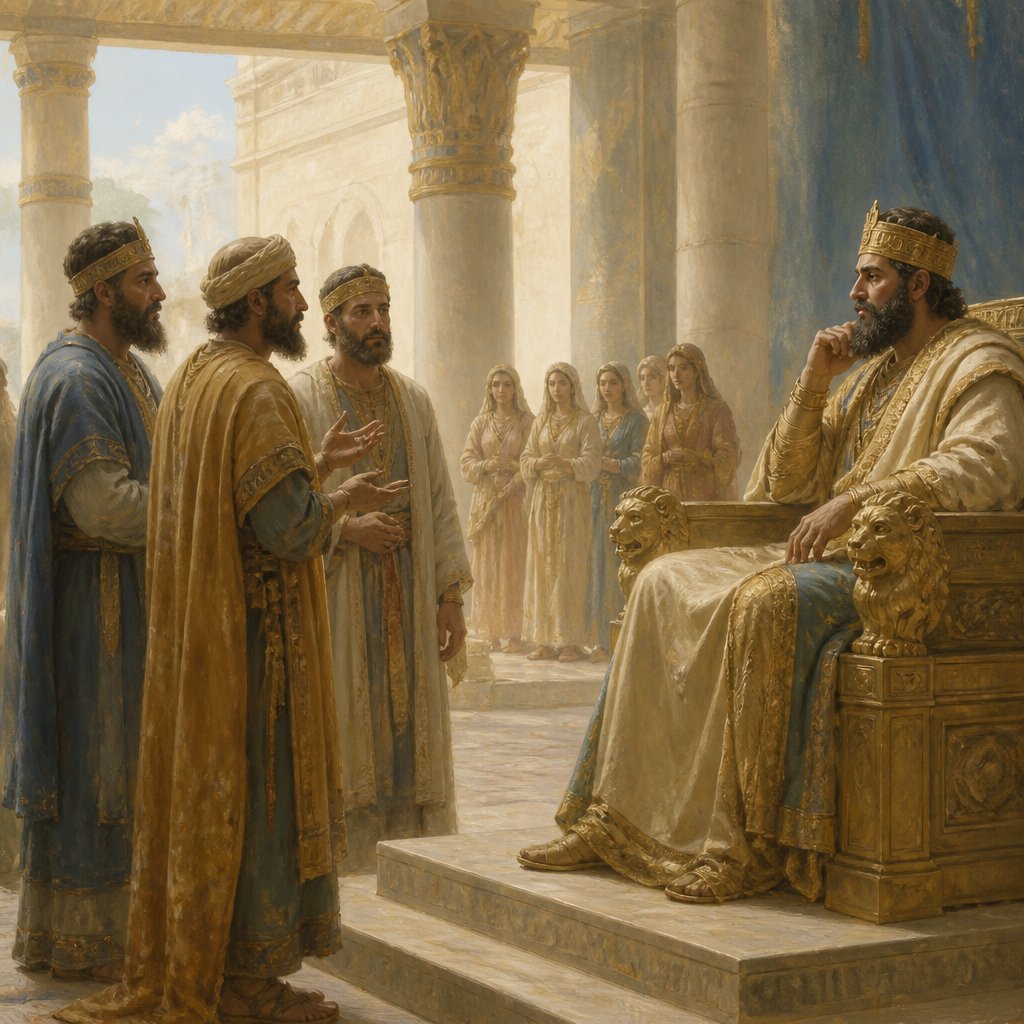
Esther 2:2 in the King James Version of the Bible reads as follows:
"Then said the king's servants that ministered unto him, Let there be fair young virgins sought for the king:"
The book of Esther is set in the Persian Empire during the reign of King Ahasuerus, also known as Xerxes I. This particular verse comes at a crucial point in the narrative when King Ahasuerus is searching for a new queen to replace Queen Vashti, who had been deposed for disobedience.
The context of this verse is important to understand its significance. After Vashti's dismissal, the king's advisors suggest finding beautiful young virgins from all the provinces of the empire to be brought to the palace so that the king can choose a new queen. The verse underscores the privilege and power of the king and his court, as well as the subjugation and objectification of the young women who are chosen to compete for the position of queen.
One of the themes that can be observed in this verse is the contrast between the opulence and extravagance of the Persian court and the vulnerability and disposability of the young women who are brought to the palace. The king's servants are focused on the outward appearance of the virgins, seeking only the most fair and attractive candidates to present to the king. This emphasis on physical beauty reflects the superficiality and shallowness of the king's selection process, as well as the objectification of women in a patriarchal society.
The verse also highlights the unequal power dynamics at play within the Persian Empire. The king and his court wield immense power and authority, as evidenced by their ability to command the search for beautiful virgins without regard for the wishes or well-being of the young women themselves. This imbalance of power is a recurring theme throughout the book of Esther, as it sets the stage for the conflicts and struggles that unfold as the narrative progresses.
In addition to its thematic significance, Esther 2:2 also contains symbolism that is worth exploring. The emphasis on seeking fair young virgins for the king symbolizes the societal expectations and pressures placed on women to conform to certain standards of beauty and virtue. It also symbolizes the commodification of women within a patriarchal system, where they are viewed as objects to be acquired and possessed by men in positions of power.
Furthermore, the search for a new queen can be seen as a symbol of transition and change within the Persian Empire. The selection of a new queen represents a shift in leadership and the potential for new alliances and influences at court. This transition becomes the catalyst for the events that ultimately lead to Esther's elevation as queen and her pivotal role in saving the Jewish people from annihilation.
In conclusion, Esther 2:2 is a verse that holds significant meaning within the larger context of the book of Esther. It highlights themes of power, privilege, and objectification, while also containing symbolism that reflects the societal dynamics and transitions at play within the Persian Empire. Understanding the depth and complexity of this verse enriches our appreciation for the broader narrative of Esther and its enduring relevance.
Get our apps


Artwork for Esther 2:2

Esther 2:2 - "Then said the king's servants that ministered unto him, Let there be fair young virgins sought for the king:"
"Then said the king's servants that ministered unto him, Let there be fair young virgins sought for the king:" - Esther 2:2

Esther 2:22 - "And the thing was known to Mordecai, who told it unto Esther the queen; and Esther certified the king thereof in Mordecai's name."

Esther 5:2

Esther 5:2

Esther 5:2

Esther 5:2 - "And it was so, when the king saw Esther the queen standing in the court, that she obtained favour in his sight: and the king held out to Esther the golden sceptre that was in his hand. So Esther drew near, and touched the top of the sceptre."

Esther 2:11 - "And Mordecai walked every day before the court of the women's house, to know how Esther did, and what should become of her."

Esther 2:20 - "Esther had not yet shewed her kindred nor her people; as Mordecai had charged her: for Esther did the commandment of Mordecai, like as when she was brought up with him."

Esther 2:10 - "Esther had not shewed her people nor her kindred: for Mordecai had charged her that she should not shew it."

Esther 7:2 - "And the king said again unto Esther on the second day at the banquet of wine, What is thy petition, queen Esther? and it shall be granted thee: and what is thy request? and it shall be performed, even to the half of the kingdom."
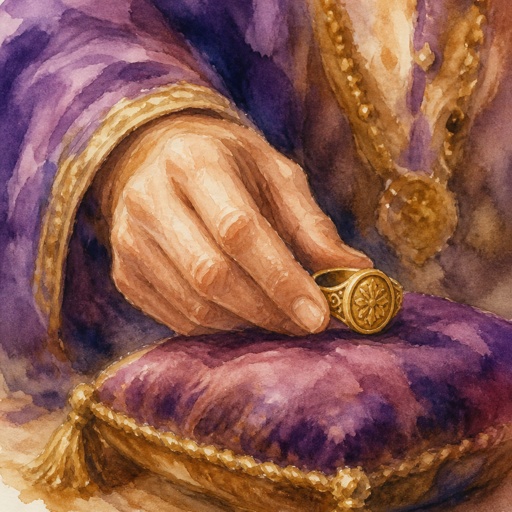
Esther 8:2 focus on the ring

Esther 2:16 - "So Esther was taken unto king Ahasuerus into his house royal in the tenth month, which is the month Tebeth, in the seventh year of his reign."

Esther 8:2 - "And the king took off his ring, which he had taken from Haman, and gave it unto Mordecai. And Esther set Mordecai over the house of Haman."

Esther 5:2 - "And it was so, when the king saw Esther the queen standing in the court, that she obtained favour in his sight: and the king held out to Esther the golden sceptre that was in his hand. So Esther drew near, and touched the top of the sceptre."

"And the thing was known to Mordecai, who told it unto Esther the queen; and Esther certified the king thereof in Mordecai's name." - Esther 2:22

Esther 2:15 - "¶ Now when the turn of Esther, the daughter of Abihail the uncle of Mordecai, who had taken her for his daughter, was come to go in unto the king, she required nothing but what Hegai the king's chamberlain, the keeper of the women, appointed. And Esther obtained favour in the sight of all them that looked upon her."

Esther 2:19 - "And when the virgins were gathered together the second time, then Mordecai sat in the king's gate."

Esther 1:2 - "That in those days, when the king Ahasuerus sat on the throne of his kingdom, which was in Shushan the palace,"

Esther 4:2 - "And came even before the king's gate: for none might enter into the king's gate clothed with sackcloth."

Esther 2:7 - "And he brought up Hadassah, that is, Esther, his uncle's daughter: for she had neither father nor mother, and the maid was fair and beautiful; whom Mordecai, when her father and mother were dead, took for his own daughter."

Esther 2:17 - "And the king loved Esther above all the women, and she obtained grace and favour in his sight more than all the virgins; so that he set the royal crown upon her head, and made her queen instead of Vashti."

Esther 2:8 - "¶ So it came to pass, when the king's commandment and his decree was heard, and when many maidens were gathered together unto Shushan the palace, to the custody of Hegai, that Esther was brought also unto the king's house, to the custody of Hegai, keeper of the women."

Esther 2:4 - "And let the maiden which pleaseth the king be queen instead of Vashti. And the thing pleased the king; and he did so."

Esther 2:5 - "¶ Now in Shushan the palace there was a certain Jew, whose name was Mordecai, the son of Jair, the son of Shimei, the son of Kish, a Benjamite;"

Esther 2:23 - "And when inquisition was made of the matter, it was found out; therefore they were both hanged on a tree: and it was written in the book of the chronicles before the king."
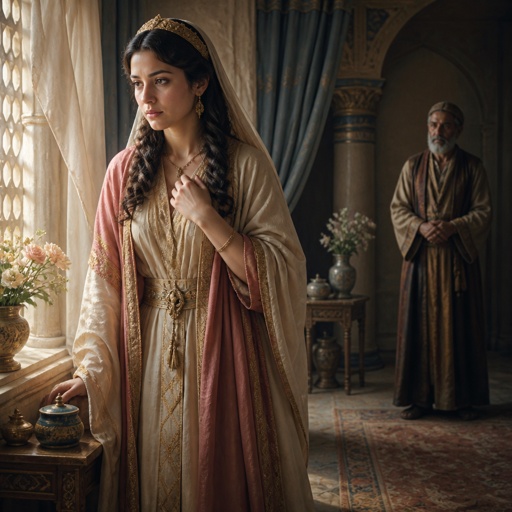
"Esther had not shewed her people nor her kindred: for Mordecai had charged her that she should not shew it." - Esther 2:10

Esther 2:1 - "After these things, when the wrath of king Ahasuerus was appeased, he remembered Vashti, and what she had done, and what was decreed against her."
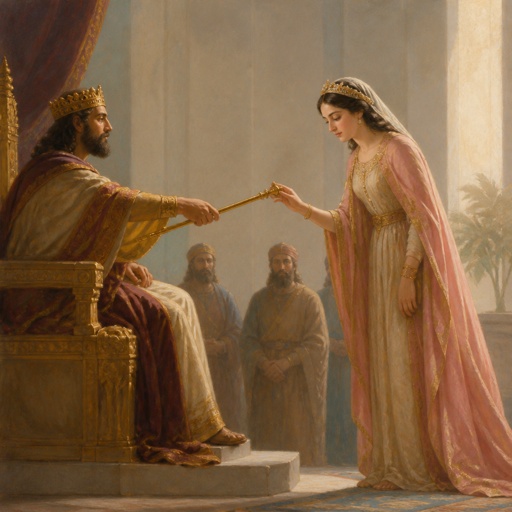
"And it was so, when the king saw Esther the queen standing in the court, that she obtained favour in his sight: and the king held out to Esther the golden sceptre that was in his hand. So Esther drew near, and touched the top of the sceptre." - Esther 5:2
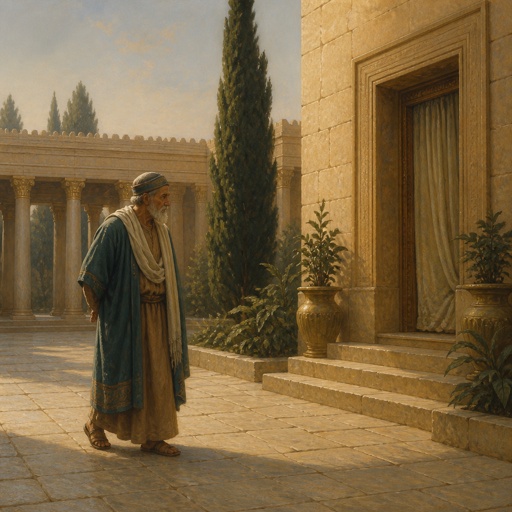
"And Mordecai walked every day before the court of the women's house, to know how Esther did, and what should become of her." - Esther 2:11