What does Esther 3:1 mean?
"After these things did king Ahasuerus promote Haman the son of Hammedatha the Agagite, and advanced him, and set his seat above all the princes that were with him." - Esther 3:1
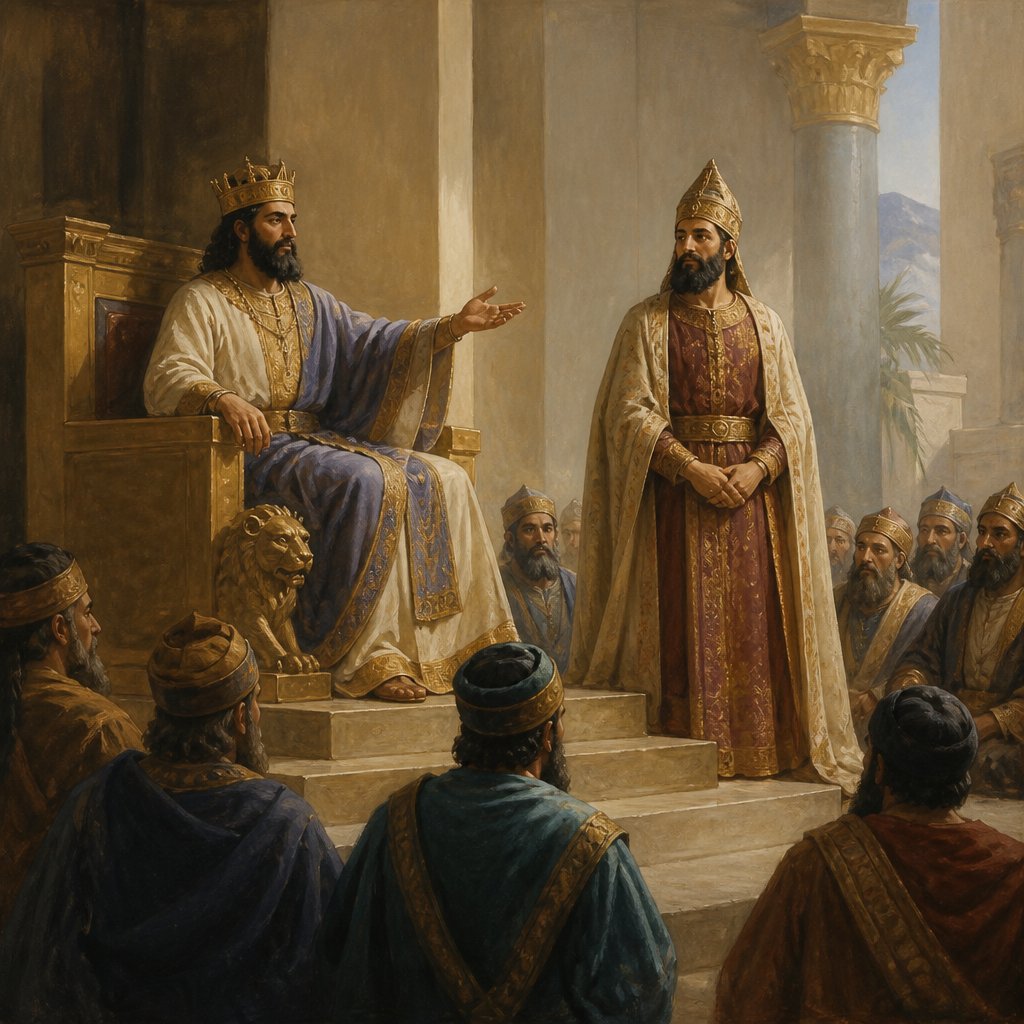
Esther 3:1 in the King James Version (KJV) states: "After these things did king Ahasuerus promote Haman the son of Hammedatha the Agagite, and advanced him, and set his seat above all the princes that were with him."
The book of Esther in the Bible is a fascinating story of courage, faith, and ultimately, redemption. It is set during the time of the Persian Empire, and even though the name of God is not mentioned in the book, His providential care and protection of His people are evident throughout the narrative. The verse in question marks a turning point in the story, as King Ahasuerus promotes Haman, setting off a chain of events that will have significant consequences for the Jewish people.
To fully understand the meaning of Esther 3:1, it is important to examine the historical and cultural context in which it is situated. King Ahasuerus, also known as Xerxes I, was the ruler of the vast Persian Empire, which at the time extended from India to Ethiopia. The promotion of Haman, an Agagite, was a significant act, as it elevated him to a position of great authority and influence in the empire.
The Agagites were descendants of Agag, the king of the Amalekites, a long-standing enemy of the Israelites. The promotion of Haman, therefore, was deeply troubling to the Jewish people, as it meant that someone with a historical animosity towards them was now in a position of power. This serves as a reminder of the ongoing conflict between the forces of good and evil, as represented by the Israelites and their enemies, throughout history.
The book of Esther is rich in symbolism, and the promotion of Haman can be seen as a metaphor for the rise of worldly power and evil. It is a reminder that in a fallen world, those who seek to do harm can often find themselves in positions of authority and influence. This can be a source of fear and anxiety for God's people, but as the rest of the story demonstrates, God is ultimately in control and will deliver His people from the schemes of the enemy.
The theme of providence is central to the book of Esther. Despite the apparent absence of God's name, His guiding hand is evident in the events that unfold. The promotion of Haman ultimately sets the stage for Esther to be raised up as queen and for Mordecai to play a crucial role in thwarting Haman's plot to destroy the Jewish people. This demonstrates that God is always at work behind the scenes, orchestrating events for the ultimate good of His people.
In a broader sense, Esther 3:1 serves as a reminder that the world is often a place of power struggles, where the wicked can rise to positions of authority. This is a reality that has played out throughout history and continues to be relevant today. It is a call for God's people to remain steadfast in their faith and to trust in His providential care, even in the face of seemingly insurmountable challenges.
In conclusion, Esther 3:1 marks a pivotal moment in the book of Esther, as it sets the stage for the conflict that will unfold. It serves as a reminder of the ongoing struggle between good and evil, the providential care of God, and the ultimate victory of His people. It is a passage that inspires hope and faith in the face of adversity and demonstrates that God is always at work, even in the darkest of times.
Have questions about Esther 3:1?
Dive deeper into this scripture with Bible Chat — an AI-powered tool for exploring God's Word through conversation. Ask questions, get context, and grow in your understanding of the Bible.
Get Our Apps


Esther 3:1 Artwork

Esther 3:1 - "After these things did king Ahasuerus promote Haman the son of Hammedatha the Agagite, and advanced him, and set his seat above all the princes that were with him."
"After these things did king Ahasuerus promote Haman the son of Hammedatha the Agagite, and advanced him, and set his seat above all the princes that were with him." - Esther 3:1

Esther 5:3 - "Then said the king unto her, What wilt thou, queen Esther? and what is thy request? it shall be even given thee to the half of the kingdom."

Esther 7:1 - "So the king and Haman came to banquet with Esther the queen."
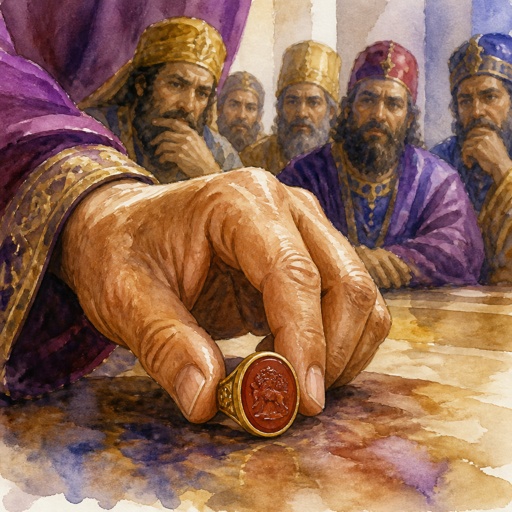
Esther 3:10 focus on ring

Esther 1:17

Esther 8:1 - "On that day did the king Ahasuerus give the house of Haman the Jews' enemy unto Esther the queen. And Mordecai came before the king; for Esther had told what he was unto her."

Esther 1:3 - "In the third year of his reign, he made a feast unto all his princes and his servants; the power of Persia and Media, the nobles and princes of the provinces, being before him:"

Esther 3:3 - "Then the king's servants, which were in the king's gate, said unto Mordecai, Why transgressest thou the king's commandment?"

Esther 8:3 - "¶ And Esther spake yet again before the king, and fell down at his feet, and besought him with tears to put away the mischief of Haman the Agagite, and his device that he had devised against the Jews."

Esther 1:6

Esther, the courageous queen

Esther 7:3 - "Then Esther the queen answered and said, If I have found favour in thy sight, O king, and if it please the king, let my life be given me at my petition, and my people at my request:"

"So the king and Haman came to banquet with Esther the queen." - Esther 7:1

Esther 3:5 - "And when Haman saw that Mordecai bowed not, nor did him reverence, then was Haman full of wrath."

Esther 9:3 - "And all the rulers of the provinces, and the lieutenants, and the deputies, and officers of the king, helped the Jews; because the fear of Mordecai fell upon them."

Esther 3:14 - "The copy of the writing for a commandment to be given in every province was published unto all people, that they should be ready against that day."

Esther 3:11 - "And the king said unto Haman, The silver is given to thee, the people also, to do with them as it seemeth good to thee."

Esther 3:10 - "And the king took his ring from his hand, and gave it unto Haman the son of Hammedatha the Agagite, the Jews' enemy."

Esther 10:1 - "And the king Ahasuerus laid a tribute upon the land, and upon the isles of the sea."
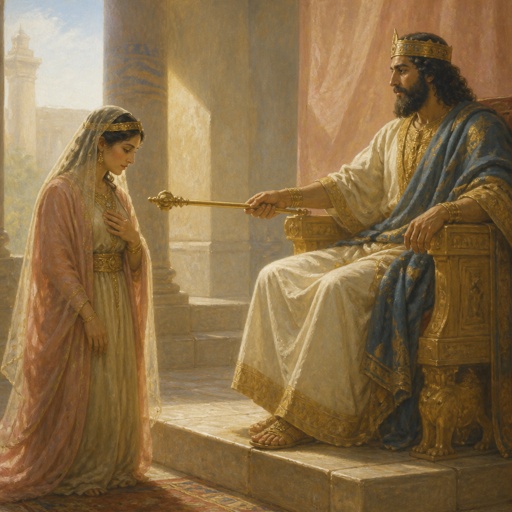
"Then said the king unto her, What wilt thou, queen Esther? and what is thy request? it shall be even given thee to the half of the kingdom." - Esther 5:3

Esther 1:21 - "And the saying pleased the king and the princes; and the king did according to the word of Memucan:"

"On that day did the king Ahasuerus give the house of Haman the Jews' enemy unto Esther the queen. And Mordecai came before the king; for Esther had told what he was unto her." - Esther 8:1

Esther 5:1 - "Now it came to pass on the third day, that Esther put on her royal apparel, and stood in the inner court of the king's house, over against the king's house: and the king sat upon his royal throne in the royal house, over against the gate of the house."

Esther 3:15 - "The posts went out, being hastened by the king's commandment, and the decree was given in Shushan the palace. And the king and Haman sat down to drink; but the city Shushan was perplexed."

Esther 6:3 - "And the king said, What honour and dignity hath been done to Mordecai for this? Then said the king's servants that ministered unto him, There is nothing done for him."

Esther 4:3 - "And in every province, whithersoever the king's commandment and his decree came, there was great mourning among the Jews, and fasting, and weeping, and wailing; and many lay in sackcloth and ashes."

Esther 1:2 - "That in those days, when the king Ahasuerus sat on the throne of his kingdom, which was in Shushan the palace,"

Esther 1:9 - "Also Vashti the queen made a feast for the women in the royal house which belonged to king Ahasuerus."
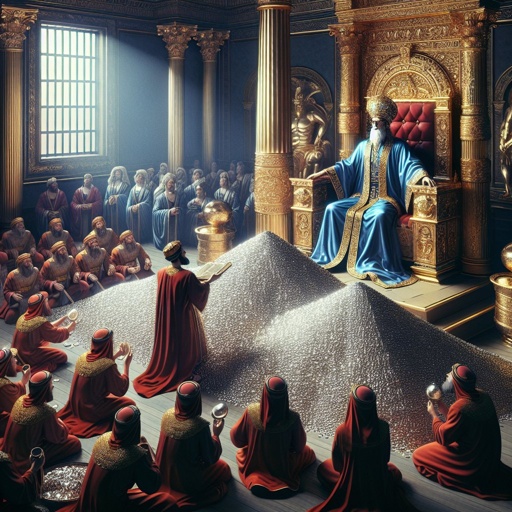
Esther 3:9 - "If it please the king, let it be written that they may be destroyed: and I will pay ten thousand talents of silver to the hands of those that have the charge of the business, to bring it into the king's treasuries."