What does Esther 3:2 mean?
“And all the king’s servants, that were in the king’s gate, bowed, and reverenced Haman: for the king had so commanded concerning him. But Mordecai bowed not, nor did him reverence.” — Esther 3:2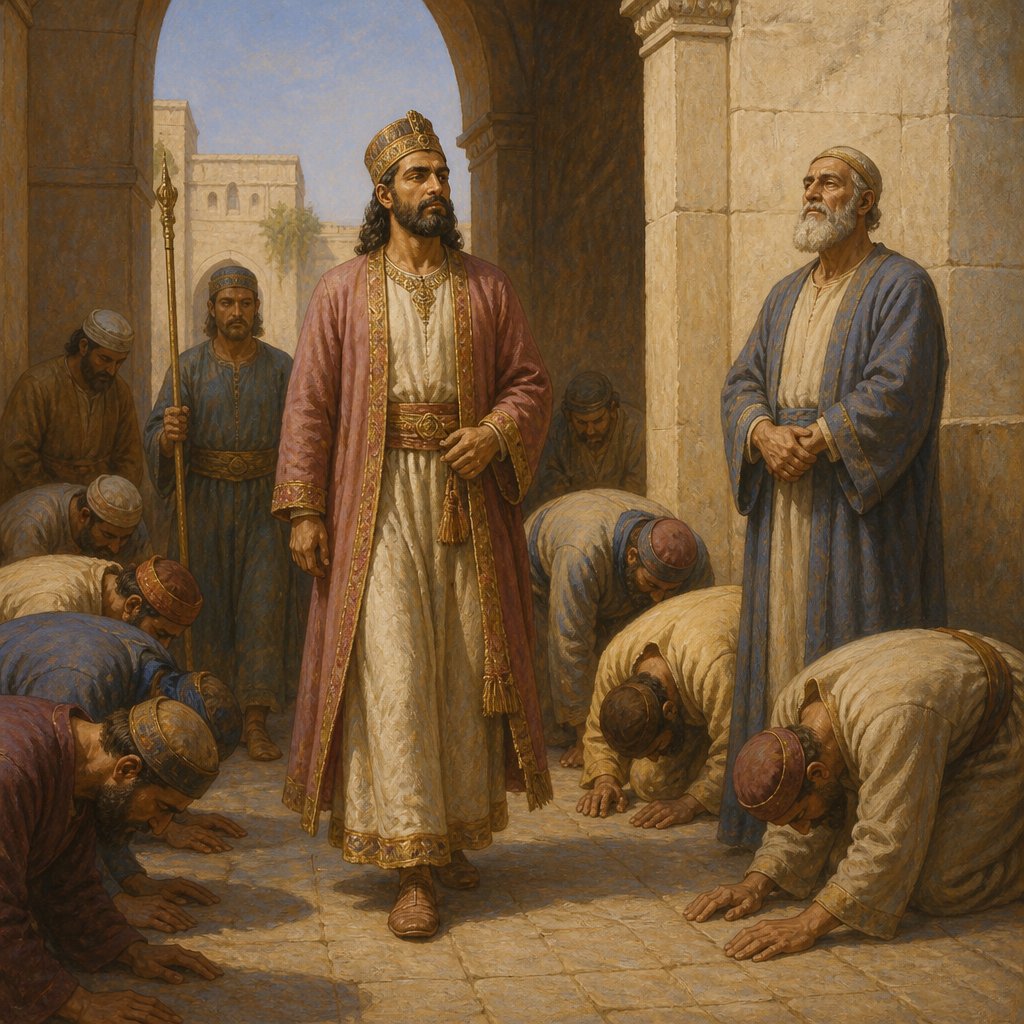
Esther 3:2 in the King James Version of the Bible reads, "And all the king's servants, that were in the king's gate, bowed, and reverenced Haman: for the king had so commanded concerning him. But Mordecai bowed not, nor did him reverence."
This verse is from the book of Esther, which is a part of the Old Testament. The book of Esther tells the story of a Jewish girl named Esther who becomes queen to King Xerxes of Persia. The story takes place during the reign of Xerxes, who reigned from 486-465 B.C. The book of Esther is unique in that it is the only book in the Bible where the name of God is not mentioned. However, many theologians and scholars believe that the hand of God is evident throughout the story.
In this particular verse, we see Mordecai, a Jewish man and cousin to Esther, who is unwilling to bow down and show reverence to Haman, an Agagite and high-ranking official in King Xerxes' court. The reason for Mordecai's refusal is due to Haman's demand for reverence, which goes against the Jewish law that prohibits bowing down to anyone but God.
The themes and lessons found in Esther 3:2 are relevant and timeless. One of the key themes is the conflict between following the laws of man versus the laws of God. Mordecai's refusal to bow down to Haman demonstrates his unwavering faith and commitment to obeying God's commandments, even at the risk of facing severe consequences. This act of defiance sets the stage for the conflict that unfolds throughout the rest of the book.
Another important theme in Esther 3:2 is the notion of standing up for what is right, even in the face of adversity. Mordecai's refusal to bow down to Haman depicts the courage and strength of his character. In doing so, he sets an example for readers to remain steadfast in their convictions and not to compromise their beliefs, regardless of the pressures they may face.
The relationship between power and humility is also highlighted in this verse. Haman represents the epitome of power and authority in the Persian Empire, and his demand for reverence reflects his desire for control and dominance. On the other hand, Mordecai's refusal to bow down demonstrates his humility and unwavering commitment to honoring God above all else. This contrast serves as a reminder of the importance of humility and submission to God, rather than seeking power and recognition from human authorities.
The imagery and symbolism in Esther 3:2 are also worth noting. The act of bowing down and showing reverence was a common practice in ancient Eastern cultures as a sign of submission and respect. In this context, Mordecai's refusal to bow down takes on a deeper symbolic meaning, representing his refusal to compromise his faith and integrity. Additionally, the contrast between Mordecai's defiance and the obedience of the king's servants serves to emphasize the moral dilemma at hand.
In conclusion, Esther 3:2 offers a powerful lesson in faith, courage, and the unwavering commitment to obeying God's commandments. The verse serves as a reminder of the importance of standing up for what is right, even in the face of adversity, and the need to prioritize God's laws above all else. The timeless themes and lessons contained in this verse continue to resonate with readers today, making the story of Esther and the actions of Mordecai a source of inspiration and guidance for believers of all ages.
Get our apps


Artwork for Esther 3:2

Esther 3:2 - "And all the king's servants, that were in the king's gate, bowed, and reverenced Haman: for the king had so commanded concerning him. But Mordecai bowed not, nor did him reverence."
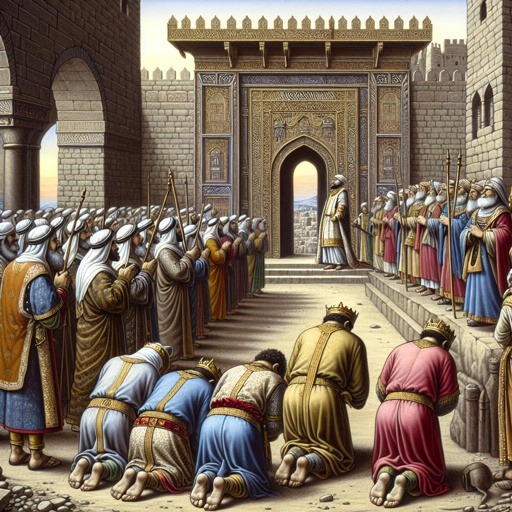
Est 3:2 ESV (2) And all the king's servants who were at the king's gate bowed down and paid homage to Haman, for the king had so commanded concerning him. But Mordecai did not bow down or pay homage.
"And all the king's servants, that were in the king's gate, bowed, and reverenced Haman: for the king had so commanded concerning him. But Mordecai bowed not, nor did him reverence." - Esther 3:2

Esther 2:22 - "And the thing was known to Mordecai, who told it unto Esther the queen; and Esther certified the king thereof in Mordecai's name."

Esther 5:3 - "Then said the king unto her, What wilt thou, queen Esther? and what is thy request? it shall be even given thee to the half of the kingdom."

Esther 5:2 - "And it was so, when the king saw Esther the queen standing in the court, that she obtained favour in his sight: and the king held out to Esther the golden sceptre that was in his hand. So Esther drew near, and touched the top of the sceptre."
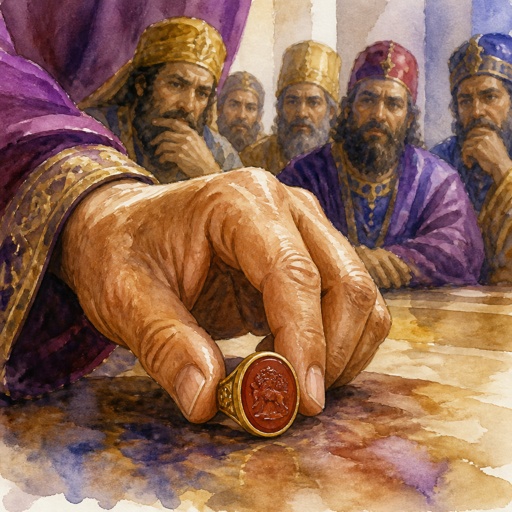
Esther 3:10 focus on ring

Esther 7:2 - "And the king said again unto Esther on the second day at the banquet of wine, What is thy petition, queen Esther? and it shall be granted thee: and what is thy request? and it shall be performed, even to the half of the kingdom."

Esther 2:20 - "Esther had not yet shewed her kindred nor her people; as Mordecai had charged her: for Esther did the commandment of Mordecai, like as when she was brought up with him."

Esther 5:2

Esther 5:2

Esther 5:2

Esther 2:11 - "And Mordecai walked every day before the court of the women's house, to know how Esther did, and what should become of her."

Esther 3:3 - "Then the king's servants, which were in the king's gate, said unto Mordecai, Why transgressest thou the king's commandment?"

Esther 2:10 - "Esther had not shewed her people nor her kindred: for Mordecai had charged her that she should not shew it."

Esther 8:3 - "¶ And Esther spake yet again before the king, and fell down at his feet, and besought him with tears to put away the mischief of Haman the Agagite, and his device that he had devised against the Jews."

Esther 5:2 - "And it was so, when the king saw Esther the queen standing in the court, that she obtained favour in his sight: and the king held out to Esther the golden sceptre that was in his hand. So Esther drew near, and touched the top of the sceptre."

"And the thing was known to Mordecai, who told it unto Esther the queen; and Esther certified the king thereof in Mordecai's name." - Esther 2:22

Esther 7:3 - "Then Esther the queen answered and said, If I have found favour in thy sight, O king, and if it please the king, let my life be given me at my petition, and my people at my request:"

Esther 2:16 - "So Esther was taken unto king Ahasuerus into his house royal in the tenth month, which is the month Tebeth, in the seventh year of his reign."

Esther 8:2 - "And the king took off his ring, which he had taken from Haman, and gave it unto Mordecai. And Esther set Mordecai over the house of Haman."
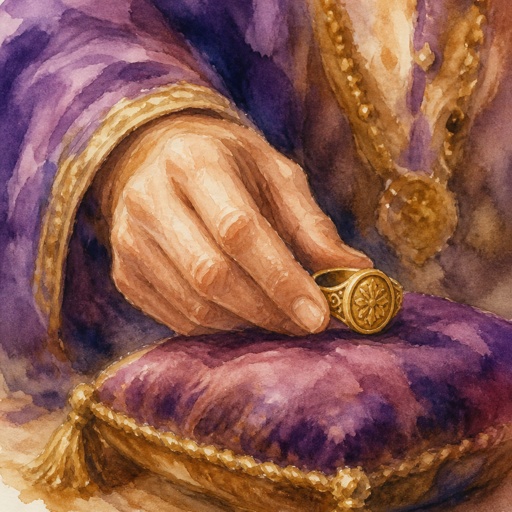
Esther 8:2 focus on the ring

Esther 3:5 - "And when Haman saw that Mordecai bowed not, nor did him reverence, then was Haman full of wrath."

Esther 2:15 - "¶ Now when the turn of Esther, the daughter of Abihail the uncle of Mordecai, who had taken her for his daughter, was come to go in unto the king, she required nothing but what Hegai the king's chamberlain, the keeper of the women, appointed. And Esther obtained favour in the sight of all them that looked upon her."

Esther 2:3 - "And let the king appoint officers in all the provinces of his kingdom, that they may gather together all the fair young virgins unto Shushan the palace, to the house of the women, unto the custody of Hege the king's chamberlain, keeper of the women; and let their things for purification be given them:"

Esther 2:2 - "Then said the king's servants that ministered unto him, Let there be fair young virgins sought for the king:"

Esther 9:3 - "And all the rulers of the provinces, and the lieutenants, and the deputies, and officers of the king, helped the Jews; because the fear of Mordecai fell upon them."

Esther 3:14 - "The copy of the writing for a commandment to be given in every province was published unto all people, that they should be ready against that day."

Esther 3:11 - "And the king said unto Haman, The silver is given to thee, the people also, to do with them as it seemeth good to thee."

Esther 3:10 - "And the king took his ring from his hand, and gave it unto Haman the son of Hammedatha the Agagite, the Jews' enemy."