What does Esther 3:5 mean?
“And when Haman saw that Mordecai bowed not, nor did him reverence, then was Haman full of wrath.” — Esther 3:5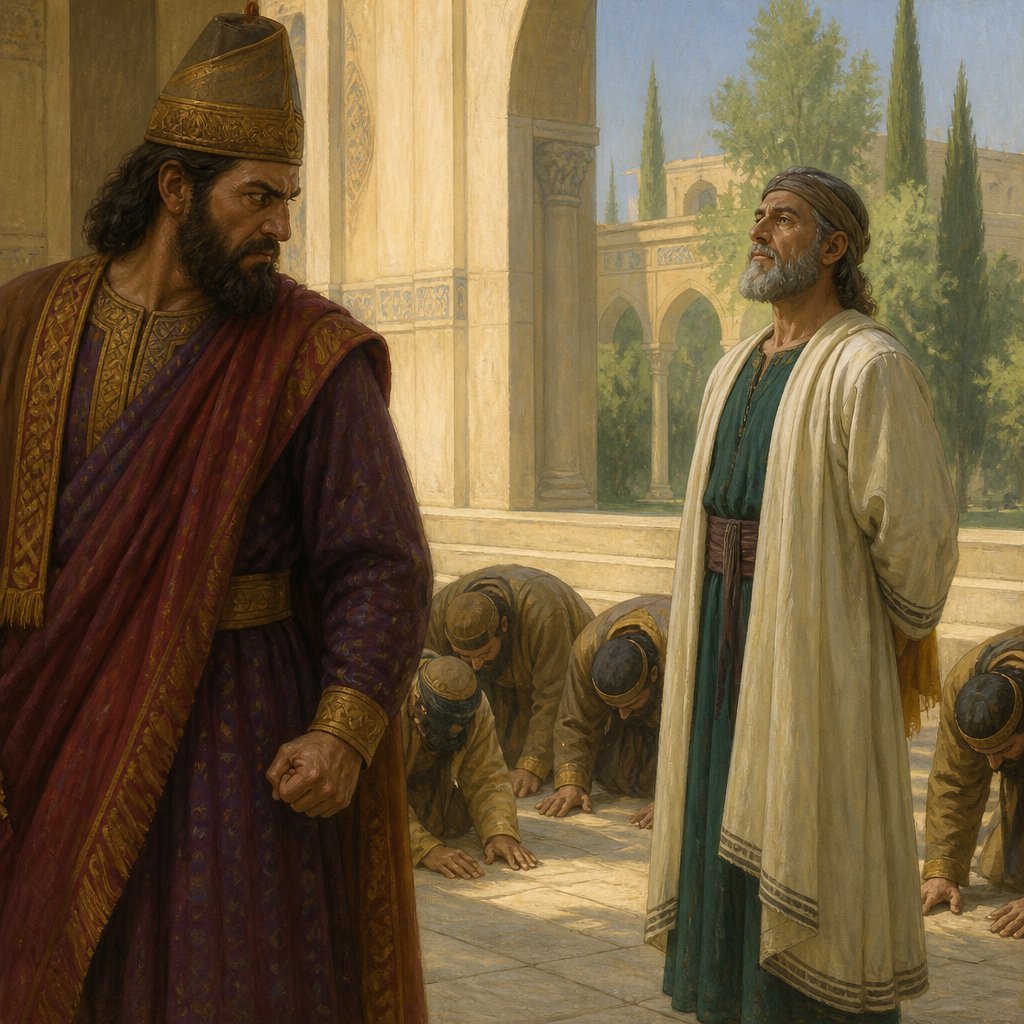
In the book of Esther, Chapter 3, Verse 5 in the King James Version (KJV) of the Bible, it states, "And when Haman saw that Mordecai bowed not, nor did him reverence, then was Haman full of wrath."
This verse comes from the Old Testament and provides a glimpse into the ongoing conflict between two key characters in the book of Esther. To truly understand the meaning and commentary behind this verse, it is important to explore the themes, context, and symbolism surrounding it.
The book of Esther is set during the Persian Empire and tells the story of a Jewish girl named Esther who becomes the queen of Persia. The antagonist in the story is Haman, who is an advisor to King Ahasuerus. Haman is depicted as a prideful and vengeful character who seeks to destroy the Jewish people, particularly Mordecai, Esther's cousin, who refuses to bow down to him. This refusal to bow down to Haman becomes a source of great distress and anger for him, as seen in Esther 3:5.
One of the central themes in this verse is the concept of pride and arrogance. Haman's reaction to Mordecai's refusal to bow down to him reveals his deep-seated pride and sense of entitlement. Instead of responding with humility or understanding, Haman's prideful nature leads him to become "full of wrath." This verse serves as a cautionary tale against the destructive nature of pride and the havoc it can wreak on relationships and society at large.
Another theme that can be derived from this verse is the conflict between good and evil. Mordecai's refusal to bow down to Haman represents a stand against injustice and oppression. In contrast, Haman's wrathful response reflects the evil and vengeful nature that seeks to harm others for personal gain. This conflict sets the stage for the larger plot of Esther, where good ultimately triumphs over evil through courage, faith, and divine intervention.
The context of this verse is also significant in understanding its deeper meaning. At this point in the story, Haman has already been promoted to a position of power and influence by King Ahasuerus. His pride and arrogance have grown as a result, leading him to demand reverence and submission from those around him. Mordecai's refusal to comply with this demand not only infuriates Haman but also sets the stage for the subsequent events that unfold in the book of Esther.
Symbolism can be found in the actions and emotions of the characters in Esther 3:5. The refusal of Mordecai to bow down to Haman symbolizes resistance against tyranny and oppression. It serves as a reminder that standing up for one's beliefs and principles, even in the face of great danger, is a powerful and honorable act. Meanwhile, Haman's wrath symbolizes the destructive force of pride and anger. His inability to control his emotions and his desire for revenge symbolize the consequences of allowing pride to rule one's heart and mind.
In conclusion, Esther 3:5 from the King James Version of the Bible encapsulates themes of pride, conflict, and the struggle between good and evil. The verse serves as a warning against the destructive nature of pride and the importance of standing up for justice and righteousness. The context and symbolism surrounding this verse further enrich its meaning, providing valuable insight into the complex dynamics between the characters in the story of Esther. It is a powerful reminder of the enduring lessons and timeless truths found within the pages of the Bible.
Get our apps


Artwork for Esther 3:5

Esther 3:5 - "And when Haman saw that Mordecai bowed not, nor did him reverence, then was Haman full of wrath."
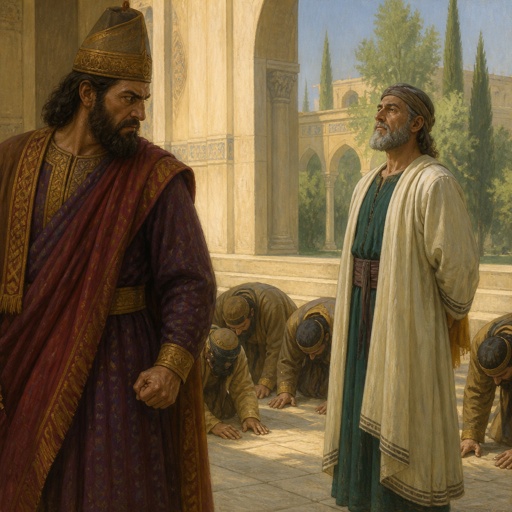
"And when Haman saw that Mordecai bowed not, nor did him reverence, then was Haman full of wrath." - Esther 3:5

Est 3:5 ESV (5) And when Haman saw that Mordecai did not bow down or pay homage to him, Haman was filled with fury.

Esther 5:3 - "Then said the king unto her, What wilt thou, queen Esther? and what is thy request? it shall be even given thee to the half of the kingdom."

Esther 5:5 - "Then the king said, Cause Haman to make haste, that he may do as Esther hath said. So the king and Haman came to the banquet that Esther had prepared."

Esther 5:7 - "Then answered Esther, and said, My petition and my request is;"

Esther 5:2

Esther 5:2 - "And it was so, when the king saw Esther the queen standing in the court, that she obtained favour in his sight: and the king held out to Esther the golden sceptre that was in his hand. So Esther drew near, and touched the top of the sceptre."

Esther 5:2

Esther 5:2
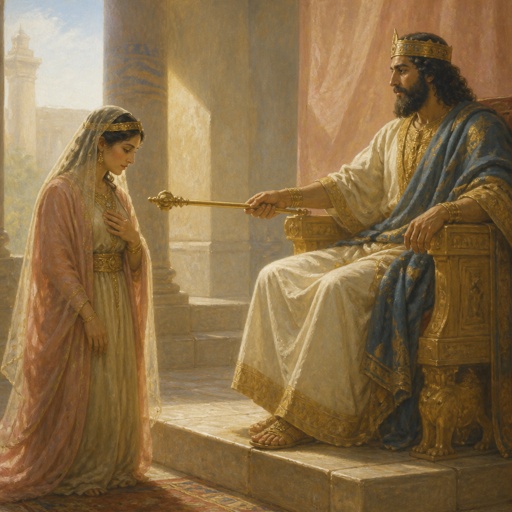
"Then said the king unto her, What wilt thou, queen Esther? and what is thy request? it shall be even given thee to the half of the kingdom." - Esther 5:3

Esther 5:4 - "And Esther answered, If it seem good unto the king, let the king and Haman come this day unto the banquet that I have prepared for him."
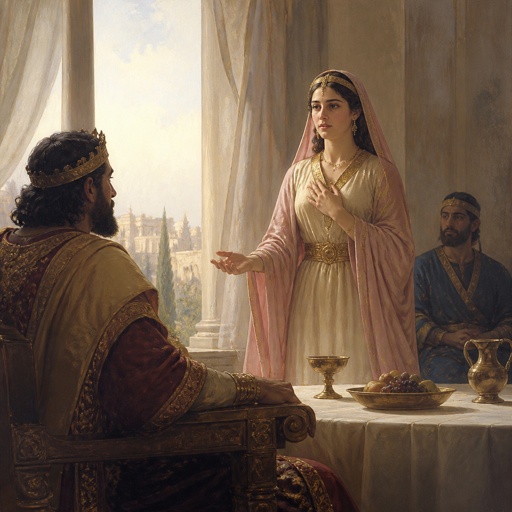
"Then answered Esther, and said, My petition and my request is;" - Esther 5:7

Esther 7:5 - "¶ Then the king Ahasuerus answered and said unto Esther the queen, Who is he, and where is he, that durst presume in his heart to do so?"

Esther 5:2 - "And it was so, when the king saw Esther the queen standing in the court, that she obtained favour in his sight: and the king held out to Esther the golden sceptre that was in his hand. So Esther drew near, and touched the top of the sceptre."
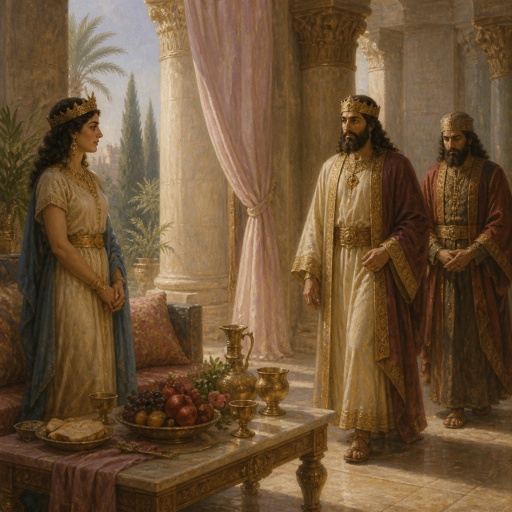
"Then the king said, Cause Haman to make haste, that he may do as Esther hath said. So the king and Haman came to the banquet that Esther had prepared." - Esther 5:5

Esther 4:5 - "Then called Esther for Hatach, one of the king's chamberlains, whom he had appointed to attend upon her, and gave him a commandment to Mordecai, to know what it was, and why it was."

Esther 5:6 - "¶ And the king said unto Esther at the banquet of wine, What is thy petition? and it shall be granted thee: and what is thy request? even to the half of the kingdom it shall be performed."
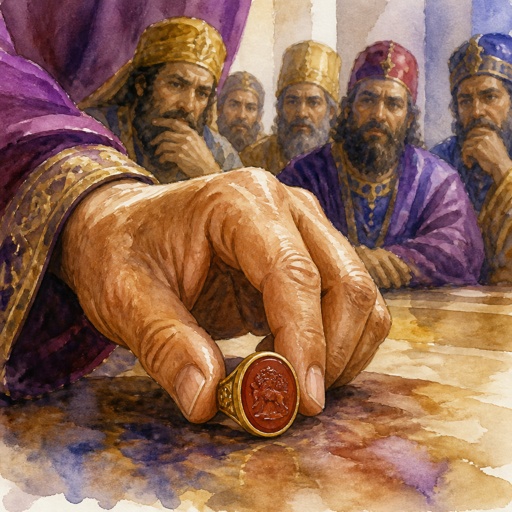
Esther 3:10 focus on ring

Esther 3:3 - "Then the king's servants, which were in the king's gate, said unto Mordecai, Why transgressest thou the king's commandment?"

Esther 5:12 - "Haman said moreover, Yea, Esther the queen did let no man come in with the king unto the banquet that she had prepared but myself; and to morrow am I invited unto her also with the king."

Esther 8:3 - "¶ And Esther spake yet again before the king, and fell down at his feet, and besought him with tears to put away the mischief of Haman the Agagite, and his device that he had devised against the Jews."

Esther 7:3 - "Then Esther the queen answered and said, If I have found favour in thy sight, O king, and if it please the king, let my life be given me at my petition, and my people at my request:"

Esther 5:1 - "Now it came to pass on the third day, that Esther put on her royal apparel, and stood in the inner court of the king's house, over against the king's house: and the king sat upon his royal throne in the royal house, over against the gate of the house."
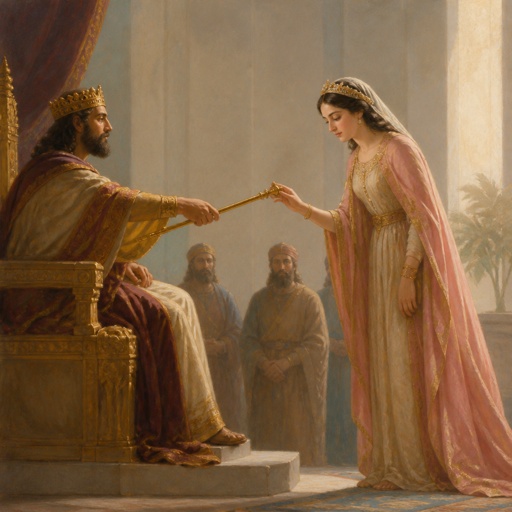
"And it was so, when the king saw Esther the queen standing in the court, that she obtained favour in his sight: and the king held out to Esther the golden sceptre that was in his hand. So Esther drew near, and touched the top of the sceptre." - Esther 5:2

Esther 6:5 - "And the king's servants said unto him, Behold, Haman standeth in the court. And the king said, Let him come in."

Esther 5:13 - "Yet all this availeth me nothing, so long as I see Mordecai the Jew sitting at the king's gate."

Esther 2:5 - "¶ Now in Shushan the palace there was a certain Jew, whose name was Mordecai, the son of Jair, the son of Shimei, the son of Kish, a Benjamite;"

Esther 5:10 - "Nevertheless Haman refrained himself: and when he came home, he sent and called for his friends, and Zeresh his wife."
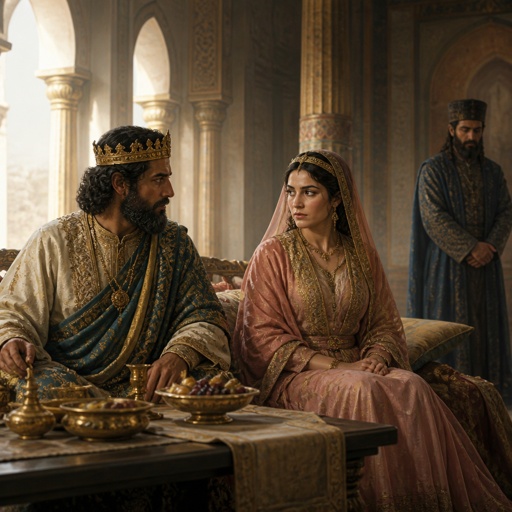
"¶ Then the king Ahasuerus answered and said unto Esther the queen, Who is he, and where is he, that durst presume in his heart to do so?" - Esther 7:5