What does Esther 4:1 mean?
“When Mordecai perceived all that was done, Mordecai rent his clothes, and put on sackcloth with ashes, and went out into the midst of the city, and cried with a loud and a bitter cry;” — Esther 4:1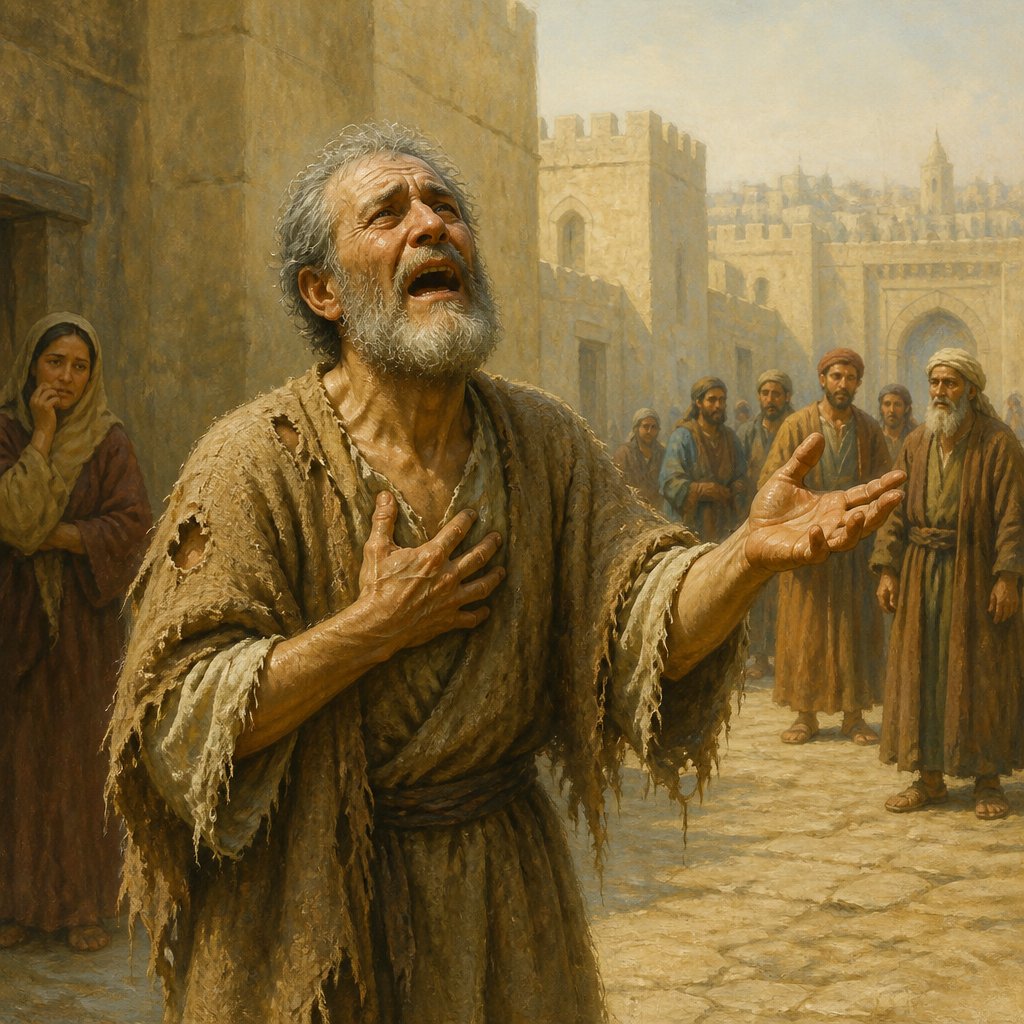
Esther 4:1 in the King James Version reads, "When Mordecai perceived all that was done, Mordecai rent his clothes, and put on sackcloth with ashes, and went out into the midst of the city, and cried with a loud and a bitter cry."
The book of Esther is set during the time of the Babylonian captivity and tells the story of a young Jewish woman named Esther who becomes the queen of Persia and uses her position to save her people from destruction. This particular verse occurs after Haman, a high-ranking official in the Persian court, plots to annihilate the Jewish people. Mordecai, Esther's cousin and guardian, hears of this plot and responds with deep grief and mourning at the impending danger facing his people.
The verse begins with Mordecai's reaction to hearing about Haman's decree to annihilate the Jews. The tearing of his clothes, putting on sackcloth and ashes, and crying out loud all signify his deep distress and mourning. In Jewish culture, tearing one's clothes was a common sign of grief and mourning, and wearing sackcloth and ashes was a deliberate display of repentance and sorrow. Mordecai's actions express his deep anguish and concern for the welfare of his people.
The use of sackcloth and ashes as a symbol of mourning and repentance is a recurring motif in the Bible. In the Old Testament, figures such as Job, David, and Jonah are described as wearing sackcloth and ashes as a sign of humility and mourning before God. This act symbolizes a turning away from worldly comforts and a sincere acknowledgement of one's own sinfulness and need for God's mercy. Mordecai's use of these symbols communicates the severity of the situation and his belief in the need for divine intervention to save the Jewish people.
Additionally, Mordecai's loud and bitter cry is an outward expression of his inner turmoil and despair. His cries are not just a personal lament but a public outcry, seeking support and solidarity from the community. This demonstrates Mordecai's desire for collective action and unity in the face of the impending threat to their existence.
The broader context of this verse reveals the themes of courage, faith, and providence. Despite the imminent danger facing the Jewish people, Mordecai's actions reflect his unwavering faith in God's providence and his determination to seek help and deliverance through prayer and public outcry. Furthermore, Mordecai’s reaction challenges the perception that one person cannot make a difference, as his actions ultimately play a pivotal role in the salvation of the Jews.
Overall, Esther 4:1 captures the emotional and spiritual response of Mordecai to the existential threat posed to his people. It underscores the themes of mourning, repentance, and the need for divine intervention in times of crisis. Mordecai's actions inspire reflection on the importance of courage, faith, and communal solidarity in the face of adversity. This verse serves as a poignant reminder of the strength and resilience found in the pursuit of justice and the protection of those in need.
Get our apps


Artwork for Esther 4:1

Esther 4:1 - "When Mordecai perceived all that was done, Mordecai rent his clothes, and put on sackcloth with ashes, and went out into the midst of the city, and cried with a loud and a bitter cry;"
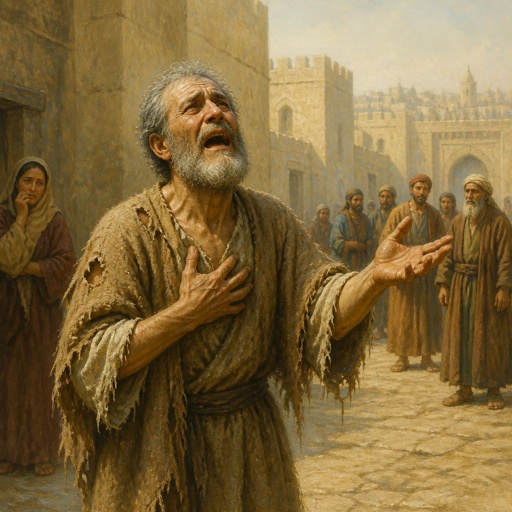
"When Mordecai perceived all that was done, Mordecai rent his clothes, and put on sackcloth with ashes, and went out into the midst of the city, and cried with a loud and a bitter cry;" - Esther 4:1

Esther 8:4 - "Then the king held out the golden sceptre toward Esther. So Esther arose, and stood before the king,"

Esther 4:15 - "¶ Then Esther bade them return Mordecai this answer,"

Esther 4:9 - "And Hatach came and told Esther the words of Mordecai."

Esther 4:10 - "¶ Again Esther spake unto Hatach, and gave him commandment unto Mordecai;"

Esther 4:17 - "So Mordecai went his way, and did according to all that Esther had commanded him."

Esther 8:4

Esther 4:12 - "And they told to Mordecai Esther's words."

Esther 1:4 - "When he shewed the riches of his glorious kingdom and the honour of his excellent majesty many days, even an hundred and fourscore days."

"And Hatach came and told Esther the words of Mordecai." - Esther 4:9

"¶ Then Esther bade them return Mordecai this answer," - Esther 4:15

Esther 4:13 - "Then Mordecai commanded to answer Esther, Think not with thyself that thou shalt escape in the king's house, more than all the Jews."

Esther 5:4 - "And Esther answered, If it seem good unto the king, let the king and Haman come this day unto the banquet that I have prepared for him."

Esther 7:1 - "So the king and Haman came to banquet with Esther the queen."

"Then the king held out the golden sceptre toward Esther. So Esther arose, and stood before the king," - Esther 8:4

Esther 4:5 - "Then called Esther for Hatach, one of the king's chamberlains, whom he had appointed to attend upon her, and gave him a commandment to Mordecai, to know what it was, and why it was."

Esther 1:17

Esther 8:1 - "On that day did the king Ahasuerus give the house of Haman the Jews' enemy unto Esther the queen. And Mordecai came before the king; for Esther had told what he was unto her."

"¶ Again Esther spake unto Hatach, and gave him commandment unto Mordecai;" - Esther 4:10
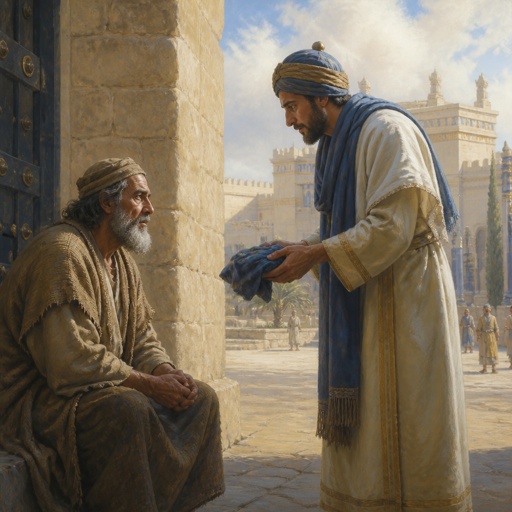
"And they told to Mordecai Esther's words." - Esther 4:12

Esther, the courageous queen

"So the king and Haman came to banquet with Esther the queen." - Esther 7:1

Esther 1:6

"So Mordecai went his way, and did according to all that Esther had commanded him." - Esther 4:17
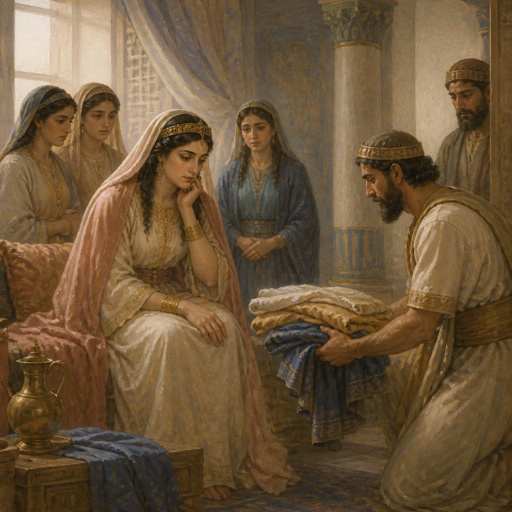
"¶ So Esther's maids and her chamberlains came and told it her. Then was the queen exceedingly grieved; and she sent raiment to clothe Mordecai, and to take away his sackcloth from him: but he received it not." - Esther 4:4

Esther 4:6 - "So Hatach went forth to Mordecai unto the street of the city, which was before the king's gate."

Esther 4:4 - "¶ So Esther's maids and her chamberlains came and told it her. Then was the queen exceedingly grieved; and she sent raiment to clothe Mordecai, and to take away his sackcloth from him: but he received it not."

Esther 4:2 - "And came even before the king's gate: for none might enter into the king's gate clothed with sackcloth."

Esther 4:8 - "Also he gave him the copy of the writing of the decree that was given at Shushan to destroy them, to shew it unto Esther, and to declare it unto her, and to charge her that she should go in unto the king, to make supplication unto him, and to make request before him for her people."