What does Esther 4:3 mean?
“And in every province, whithersoever the king’s commandment and his decree came, there was great mourning among the Jews, and fasting, and weeping, and wailing; and many lay in sackcloth and ashes.” — Esther 4:3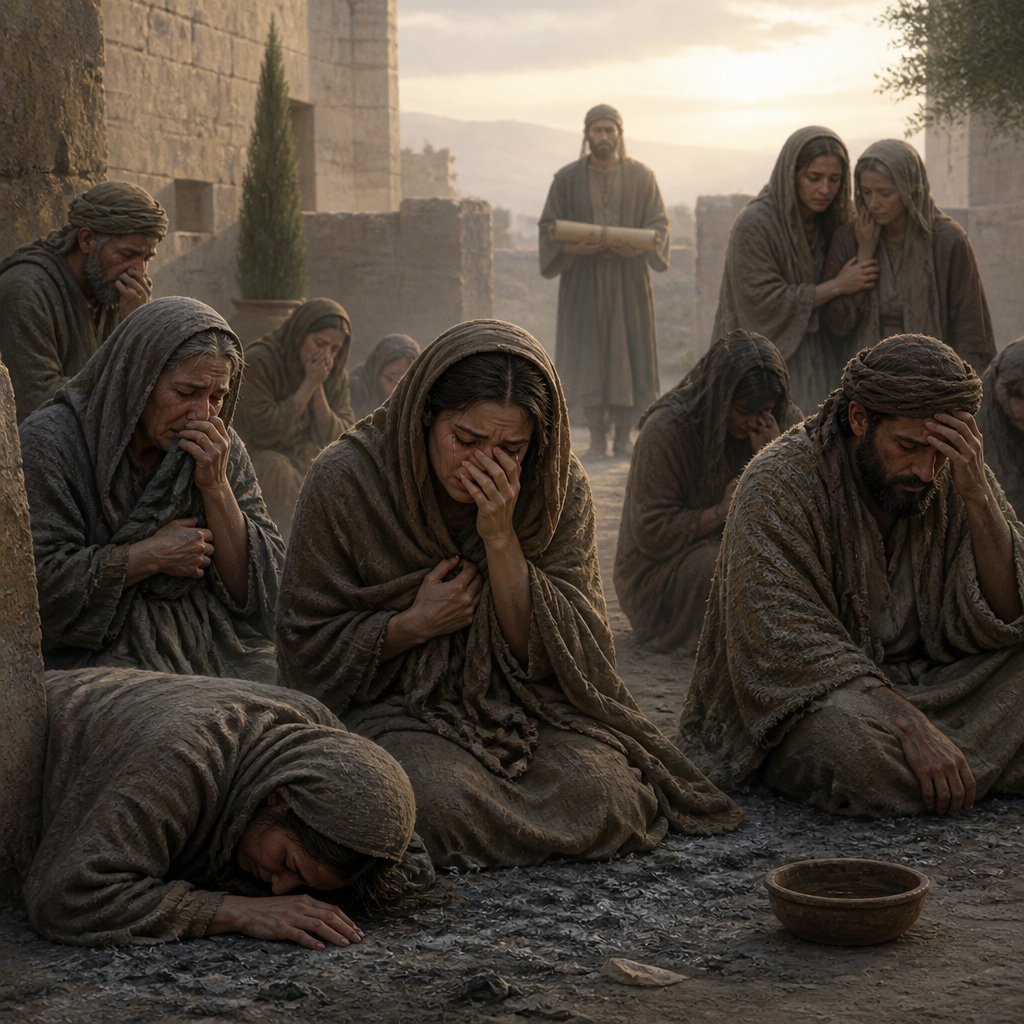
Esther-4:3 in the King James Version (KJV) states, "And in every province, whithersoever the king's commandment and his decree came, there was great mourning among the Jews, and fasting, and weeping, and wailing; and many lay in sackcloth and ashes."
The book of Esther is a historical account of the Jewish people during the time of the Persian Empire. It is set in the city of Susa and tells the story of a Jewish girl, Esther, who becomes the queen of Persia and uses her position to save her people from a plot to destroy them. This verse comes at a pivotal moment in the narrative, where the Jewish people are in distress and mourning because of an impending decree that threatens their lives.
The context of Esther-4:3 is one of fear, helplessness, and despair. The king's commandment and decree have caused great distress among the Jewish people, leading to mourning, fasting, weeping, and wailing. The mention of laying in sackcloth and ashes is a sign of deep mourning and repentance. It signifies the heavy burden of grief and sorrow that the Jewish people are carrying in response to the threat to their very existence.
One of the key themes in this verse is the power of prayer and fasting. The Jewish people, faced with a dire situation, turn to prayer and fasting as a means of seeking deliverance from their circumstances. This act of seeking divine intervention demonstrates their faith in God and their belief that He has the power to rescue them from impending doom. The verse serves as a powerful reminder of the importance of turning to God in times of trouble and relying on Him for strength and guidance.
Another theme that emerges from Esther-4:3 is the idea of collective suffering and communal response. The Jewish people, spread across different provinces, are united in their grief and desperation. They come together in mourning, fasting, and prayer, demonstrating a sense of solidarity and shared identity in the face of adversity. This collective response reflects the resilience and determination of the Jewish community to confront and overcome the challenges they are facing.
The symbolism in Esther-4:3 is profound and multi-layered. The act of mourning, fasting, weeping, and wailing represents the depth of the Jewish people's anguish and their sincere plea for divine intervention. The use of sackcloth and ashes as a symbol of mourning underscores the gravity of the situation and serves as a visual representation of the people's repentance and humility before God.
Furthermore, the verse highlights the importance of acknowledging and processing emotions in the face of hardship. The expression of grief and despair by the Jewish people is a testament to the depth of their suffering and the need to confront and work through their feelings in order to find strength and resilience.
Esther-4:3 also conveys a message of hope amidst despair. Despite the overwhelming sense of impending doom, the act of collective prayer and fasting signifies a belief in the possibility of deliverance and salvation. It is a testament to the enduring faith and unwavering trust in God's power to intervene and bring about a positive outcome, even in the darkest of times.
In conclusion, Esther-4:3 captures a pivotal moment in the narrative of Esther, conveying the depth of suffering and despair experienced by the Jewish people in the face of a grave threat to their existence. The verse underscores the themes of faith, collective response, and the power of prayer and fasting, while also offering a message of hope and resilience in the face of adversity. Its rich symbolism and powerful imagery make it a poignant and thought-provoking passage that resonates with readers across generations.
Get our apps


Artwork for Esther 4:3

Esther 4:3 - "And in every province, whithersoever the king's commandment and his decree came, there was great mourning among the Jews, and fasting, and weeping, and wailing; and many lay in sackcloth and ashes."
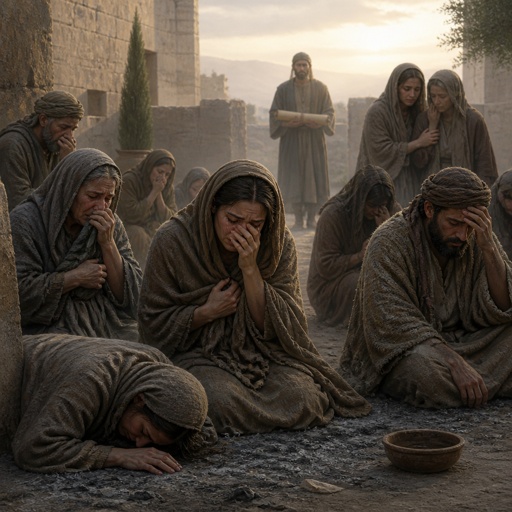
"And in every province, whithersoever the king's commandment and his decree came, there was great mourning among the Jews, and fasting, and weeping, and wailing; and many lay in sackcloth and ashes." - Esther 4:3

Esther 8:4 - "Then the king held out the golden sceptre toward Esther. So Esther arose, and stood before the king,"

Esther 4:15 - "¶ Then Esther bade them return Mordecai this answer,"

Esther 4:9 - "And Hatach came and told Esther the words of Mordecai."

Esther 4:10 - "¶ Again Esther spake unto Hatach, and gave him commandment unto Mordecai;"

Esther 4:17 - "So Mordecai went his way, and did according to all that Esther had commanded him."

Esther 8:4

Esther 4:12 - "And they told to Mordecai Esther's words."

"And Hatach came and told Esther the words of Mordecai." - Esther 4:9

"¶ Then Esther bade them return Mordecai this answer," - Esther 4:15

Esther 4:13 - "Then Mordecai commanded to answer Esther, Think not with thyself that thou shalt escape in the king's house, more than all the Jews."

Esther 5:4 - "And Esther answered, If it seem good unto the king, let the king and Haman come this day unto the banquet that I have prepared for him."

Esther 3:4 - "Now it came to pass, when they spake daily unto him, and he hearkened not unto them, that they told Haman, to see whether Mordecai's matters would stand: for he had told them that he was a Jew."

Esther 5:3 - "Then said the king unto her, What wilt thou, queen Esther? and what is thy request? it shall be even given thee to the half of the kingdom."

"Then the king held out the golden sceptre toward Esther. So Esther arose, and stood before the king," - Esther 8:4

Esther 4:5 - "Then called Esther for Hatach, one of the king's chamberlains, whom he had appointed to attend upon her, and gave him a commandment to Mordecai, to know what it was, and why it was."

Esther 3:10 focus on ring

"¶ Again Esther spake unto Hatach, and gave him commandment unto Mordecai;" - Esther 4:10
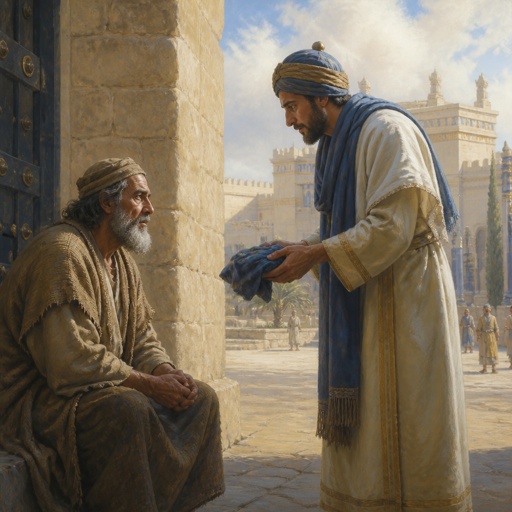
"And they told to Mordecai Esther's words." - Esther 4:12

Esther 3:3 - "Then the king's servants, which were in the king's gate, said unto Mordecai, Why transgressest thou the king's commandment?"

Esther 8:3 - "¶ And Esther spake yet again before the king, and fell down at his feet, and besought him with tears to put away the mischief of Haman the Agagite, and his device that he had devised against the Jews."

Esther 7:3 - "Then Esther the queen answered and said, If I have found favour in thy sight, O king, and if it please the king, let my life be given me at my petition, and my people at my request:"

"So Mordecai went his way, and did according to all that Esther had commanded him." - Esther 4:17
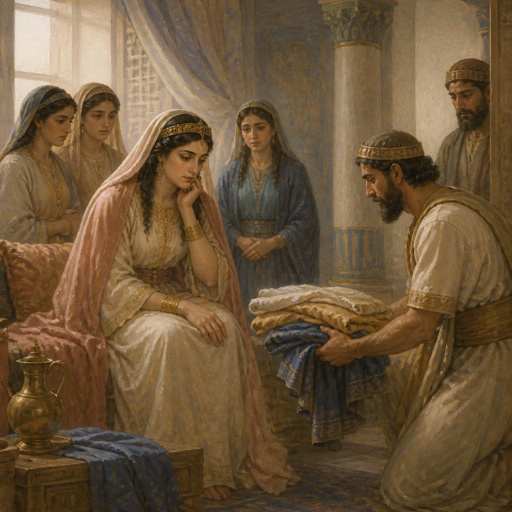
"¶ So Esther's maids and her chamberlains came and told it her. Then was the queen exceedingly grieved; and she sent raiment to clothe Mordecai, and to take away his sackcloth from him: but he received it not." - Esther 4:4

Esther 3:5 - "And when Haman saw that Mordecai bowed not, nor did him reverence, then was Haman full of wrath."

Esther 4:6 - "So Hatach went forth to Mordecai unto the street of the city, which was before the king's gate."

Esther 4:4 - "¶ So Esther's maids and her chamberlains came and told it her. Then was the queen exceedingly grieved; and she sent raiment to clothe Mordecai, and to take away his sackcloth from him: but he received it not."

Esther 4:2 - "And came even before the king's gate: for none might enter into the king's gate clothed with sackcloth."

Esther 4:8 - "Also he gave him the copy of the writing of the decree that was given at Shushan to destroy them, to shew it unto Esther, and to declare it unto her, and to charge her that she should go in unto the king, to make supplication unto him, and to make request before him for her people."