What does Esther 5:10 mean?
“Nevertheless Haman refrained himself: and when he came home, he sent and called for his friends, and Zeresh his wife.” — Esther 5:10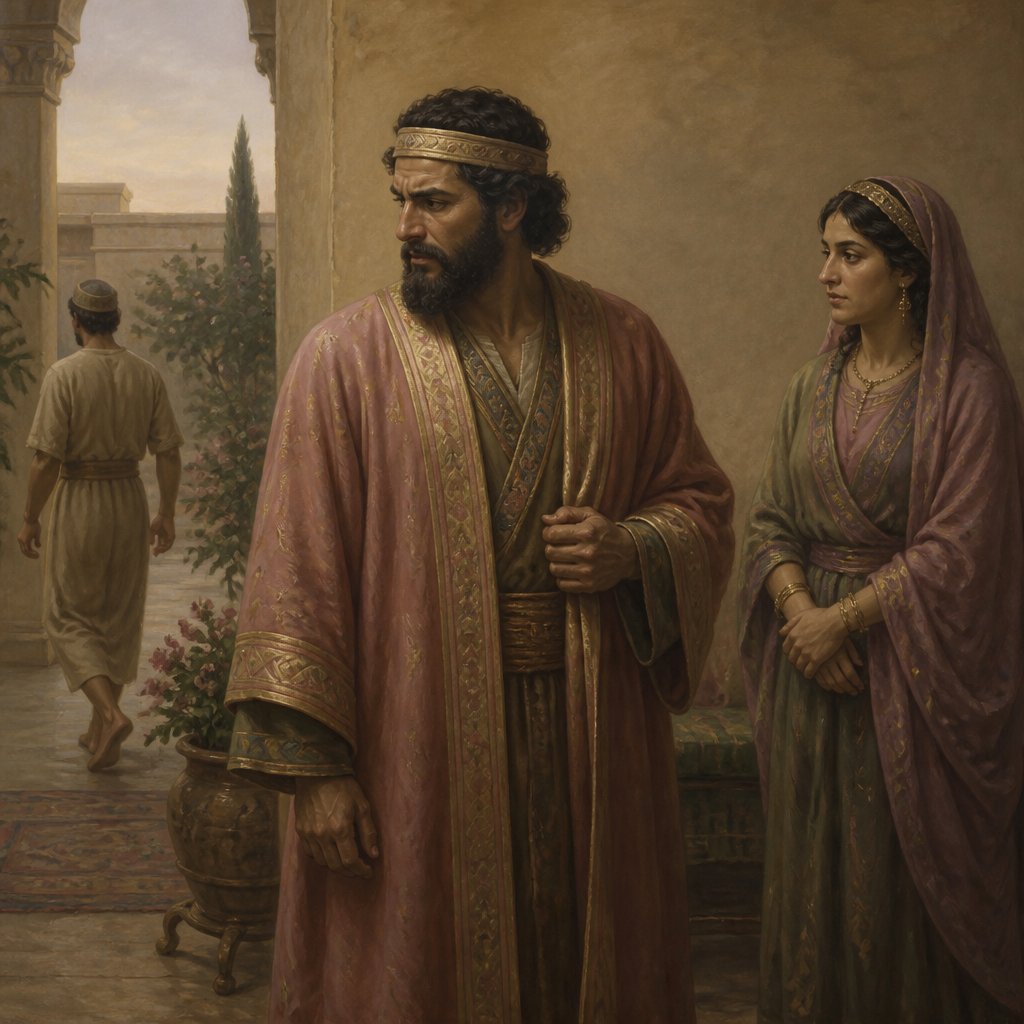
The book of Esther is an intriguing and powerful narrative that tells the story of a Jewish woman named Esther who becomes the queen of Persia and uses her position to save her people from destruction. The verse Esther 5:10 from the King James Version (KJV) reads: "Nevertheless Haman refrained himself: and when he came home, he sent and called for his friends, and Zeresh his wife."
At this point in the story, Haman is an influential official in the Persian court, and he has been plotting to exterminate the Jewish people in the kingdom. In the preceding verses, we learn that Haman becomes infuriated with Mordecai, Esther's cousin, who refuses to bow down to him. This verse depicts Haman's response to the interaction with Mordecai, as well as his decision to seek the counsel of his friends and his wife, Zeresh.
The book of Esther is rich with themes and symbolism that offer profound insights into human nature, power dynamics, and the providence of God. One of the primary themes in this verse is the concept of self-control, or lack thereof. The verse states that "Haman refrained himself," indicating that he managed to contain his emotions in the moment. However, it becomes clear that this restraint is only temporary, as he immediately seeks out his friends and wife to vent his frustration and seek advice on how to deal with Mordecai.
This demonstrates the destructive nature of unchecked emotions, as Haman's initial self-restraint gives way to a desire for revenge and violence. It serves as a cautionary tale about the importance of controlling one's impulses and seeking wise counsel before taking action. In a broader sense, it also highlights the recurring biblical theme of the consequences of unbridled anger and the importance of seeking God's guidance in handling conflicts.
The verse also sheds light on the theme of pride and hubris, which are prevalent throughout the book of Esther. Haman's refusal to tolerate Mordecai's defiance is a reflection of his own inflated sense of self-importance and entitlement. His need to seek validation and support from his friends and wife further underscores his insecurity and need for affirmation, despite his high status in the Persian court.
Additionally, the verse serves as a reminder of the complexity of human relationships and the influence of external counsel. Haman's decision to consult with his friends and wife reveals the value he places on their opinions and the role they play in shaping his decisions. This raises questions about the nature of friendship, loyalty, and the impact of negative influences in our lives. It emphasizes the importance of surrounding oneself with wise and discerning individuals who can offer sound guidance and support.
Moreover, the verse illustrates the contrast between Haman's actions and those of the righteous characters in the story, such as Esther and Mordecai. While Haman seeks to gratify his own desires and advance his agenda through manipulation and violence, Esther and Mordecai demonstrate courage, humility, and a reliance on God's providence. Their examples serve as a stark contrast to the destructive tendencies of pride and greed that permeate Haman's character.
Symbolically, the verse also represents the fragile nature of human ego and the deceptive allure of worldly power. Haman's momentary self-restraint is overshadowed by his subsequent actions, highlighting the fleeting nature of self-control in the face of unchecked desires. The narrative surrounding Haman's actions serves as a cautionary tale about the dangers of succumbing to pride and the potential consequences of covetousness and arrogance.
In conclusion, Esther 5:10 from the King James Version offers a profound glimpse into the intricate themes and symbolism woven throughout the book of Esther. It serves as a powerful commentary on the destructive nature of unchecked emotions, the influence of pride and hubris, the complexity of human relationships, and the contrasting examples of righteousness and moral depravity. This verse challenges readers to reflect on their own impulses and the importance of seeking wise counsel and relying on God's guidance in navigating the complexities of life. It stands as a timeless reminder of the enduring relevance and wisdom found within the pages of the Bible.
Get our apps


Artwork for Esther 5:10

Esther 5:10 - "Nevertheless Haman refrained himself: and when he came home, he sent and called for his friends, and Zeresh his wife."
"Nevertheless Haman refrained himself: and when he came home, he sent and called for his friends, and Zeresh his wife." - Esther 5:10

Esther 5:5 - "Then the king said, Cause Haman to make haste, that he may do as Esther hath said. So the king and Haman came to the banquet that Esther had prepared."

Esther 5:7 - "Then answered Esther, and said, My petition and my request is;"

Esther 4:10 - "¶ Again Esther spake unto Hatach, and gave him commandment unto Mordecai;"

Esther 5:2

Esther 5:2 - "And it was so, when the king saw Esther the queen standing in the court, that she obtained favour in his sight: and the king held out to Esther the golden sceptre that was in his hand. So Esther drew near, and touched the top of the sceptre."

Esther 5:2

Esther 5:2

Esther 2:10 - "Esther had not shewed her people nor her kindred: for Mordecai had charged her that she should not shew it."

Esther 5:4 - "And Esther answered, If it seem good unto the king, let the king and Haman come this day unto the banquet that I have prepared for him."
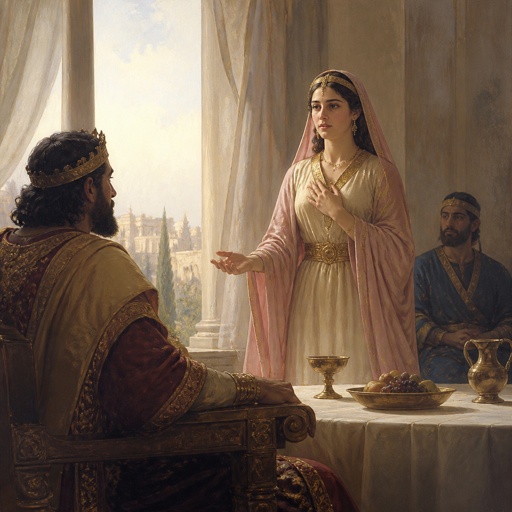
"Then answered Esther, and said, My petition and my request is;" - Esther 5:7

Esther 5:3 - "Then said the king unto her, What wilt thou, queen Esther? and what is thy request? it shall be even given thee to the half of the kingdom."

Esther 7:5 - "¶ Then the king Ahasuerus answered and said unto Esther the queen, Who is he, and where is he, that durst presume in his heart to do so?"

Esther 5:2 - "And it was so, when the king saw Esther the queen standing in the court, that she obtained favour in his sight: and the king held out to Esther the golden sceptre that was in his hand. So Esther drew near, and touched the top of the sceptre."
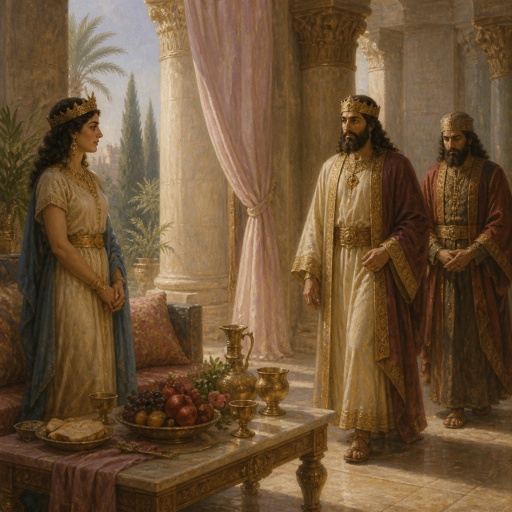
"Then the king said, Cause Haman to make haste, that he may do as Esther hath said. So the king and Haman came to the banquet that Esther had prepared." - Esther 5:5
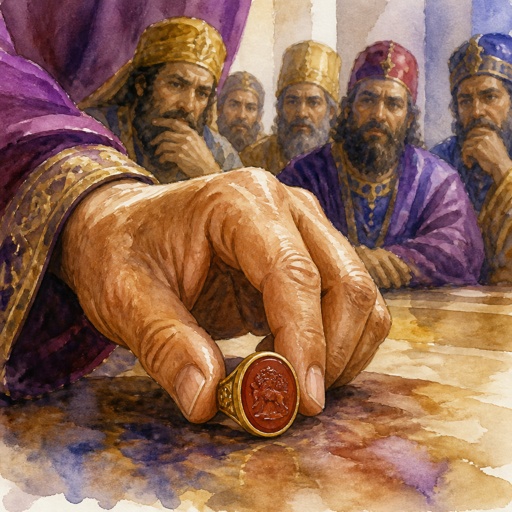
Esther 3:10 focus on ring

Esther 4:5 - "Then called Esther for Hatach, one of the king's chamberlains, whom he had appointed to attend upon her, and gave him a commandment to Mordecai, to know what it was, and why it was."

Esther 5:6 - "¶ And the king said unto Esther at the banquet of wine, What is thy petition? and it shall be granted thee: and what is thy request? even to the half of the kingdom it shall be performed."

"¶ Again Esther spake unto Hatach, and gave him commandment unto Mordecai;" - Esther 4:10

Esther 10:1 - "And the king Ahasuerus laid a tribute upon the land, and upon the isles of the sea."

Esther 5:12 - "Haman said moreover, Yea, Esther the queen did let no man come in with the king unto the banquet that she had prepared but myself; and to morrow am I invited unto her also with the king."

Esther 9:10 - "The ten sons of Haman the son of Hammedatha, the enemy of the Jews, slew they; but on the spoil laid they not their hand."

Esther 7:10 - "So they hanged Haman on the gallows that he had prepared for Mordecai. Then was the king's wrath pacified."

Esther 3:5 - "And when Haman saw that Mordecai bowed not, nor did him reverence, then was Haman full of wrath."

Esther 5:1 - "Now it came to pass on the third day, that Esther put on her royal apparel, and stood in the inner court of the king's house, over against the king's house: and the king sat upon his royal throne in the royal house, over against the gate of the house."
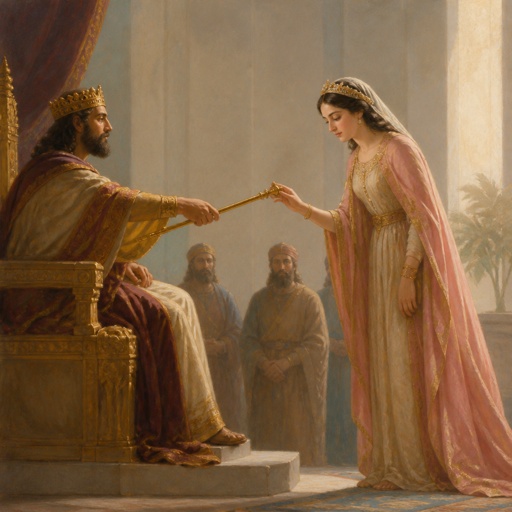
"And it was so, when the king saw Esther the queen standing in the court, that she obtained favour in his sight: and the king held out to Esther the golden sceptre that was in his hand. So Esther drew near, and touched the top of the sceptre." - Esther 5:2

Esther 6:5 - "And the king's servants said unto him, Behold, Haman standeth in the court. And the king said, Let him come in."

Esther 5:13 - "Yet all this availeth me nothing, so long as I see Mordecai the Jew sitting at the king's gate."

"Esther had not shewed her people nor her kindred: for Mordecai had charged her that she should not shew it." - Esther 2:10