What does Esther 5:11 mean?
“And Haman told them of the glory of his riches, and the multitude of his children, and all the things wherein the king had promoted him, and how he had advanced him above the princes and servants of the king.” — Esther 5:11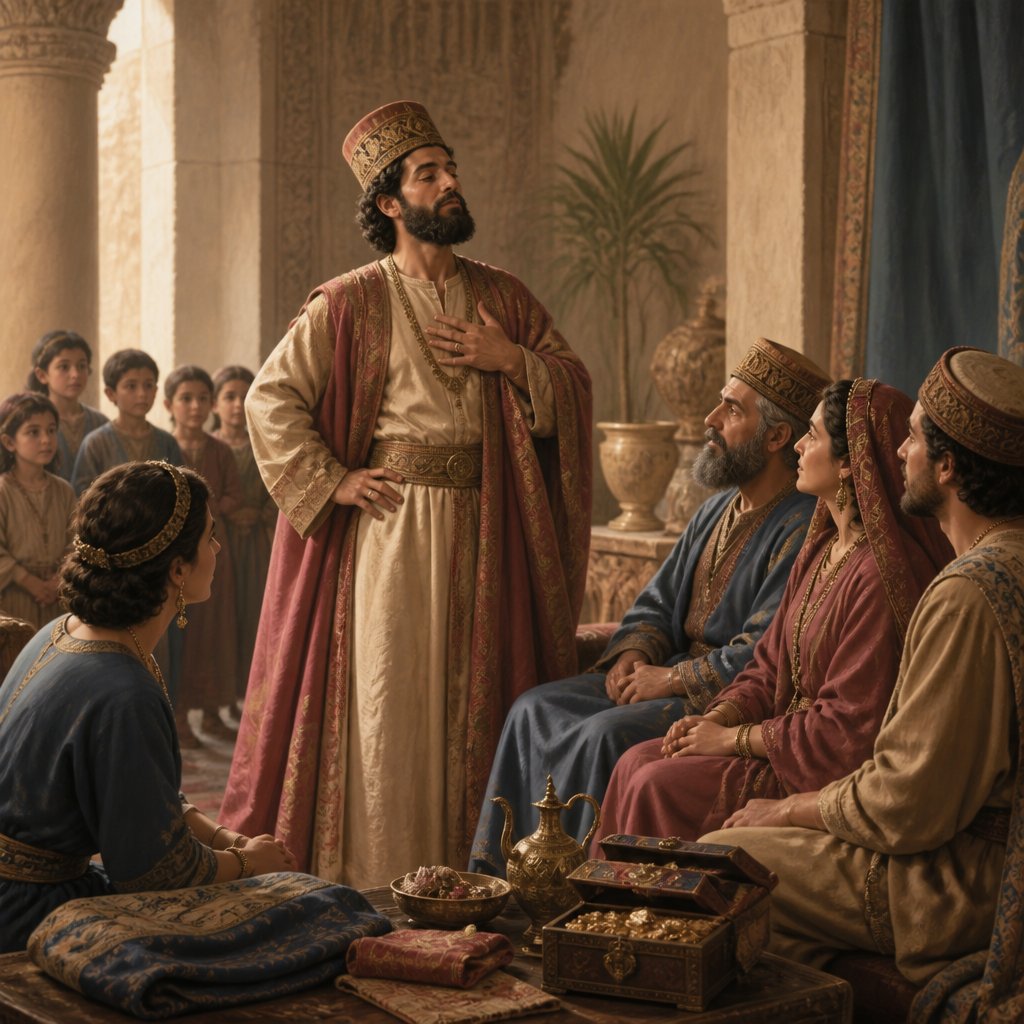
The verse Esther 5:11 from the King James Version of the Bible reads: "And Haman told them of the glory of his riches, and the multitude of his children, and all the things wherein the king had promoted him, and how he had advanced him above the princes and servants of the king." This verse occurs in the book of Esther, which is a part of the Old Testament. This verse is part of a larger narrative, which tells the story of Esther, a Jewish girl who becomes the Queen of Persia, and her uncle Mordecai, who together thwart a plot to exterminate the Jewish people.
In this particular verse, we see the character of Haman boasting about his wealth, power, and status to his friends and family. He is clearly filled with pride and self-importance, which are not admired qualities in the Bible. This verse sets the stage for the upcoming events in the story, where Haman's pride and arrogance lead to his downfall.
The book of Esther is unique in that it does not mention God explicitly, and yet it is still considered part of the biblical canon. This verse, and the story as a whole, presents several important themes and lessons. One of the key themes is the providence of God and how he works behind the scenes to protect and deliver his people. Even though God is not mentioned by name in the book of Esther, his presence and guiding hand are evident throughout the story.
The verse also speaks to the dangers of pride and the consequences of boastfulness. Haman's pride and arrogance ultimately lead to his destruction, as he becomes consumed with hatred and jealousy towards Mordecai, who refuses to bow down to him. This leads to Haman plotting to exterminate the Jewish people, which ultimately results in his own demise. The Bible warns against the dangers of pride, as it is considered one of the seven deadly sins and is seen as an obstacle to true humility and righteousness.
This verse also serves as a commentary on the fleeting nature of earthly wealth and power. Haman boasts about his riches and the favor he has found with the king, but ultimately these things do not bring him lasting happiness or security. This serves as a reminder to readers that true fulfillment and security can only be found in a relationship with God, rather than in the material possessions or power that we accumulate.
Symbolically, Haman's boasting reflects the larger theme of human pride and the vanity of seeking glory for oneself. In contrast, the story of Esther and Mordecai represents the triumph of humility, righteousness, and the providence of God. This serves as a reminder to readers that true greatness is found in serving others and seeking the will of God, rather than pursuing our own ambitions and desires.
In conclusion, the verse Esther 5:11 from the King James Version of the Bible presents several important themes and lessons. It serves as a cautionary tale about the dangers of pride and the fleeting nature of earthly wealth and power. It also highlights the providence of God and the importance of humility and righteousness. Ultimately, this verse and the story of Esther as a whole challenges readers to consider where they place their trust and to seek true greatness in serving others and seeking the will of God.
Get our apps


Artwork for Esther 5:11
Esther 5:11 - "And Haman told them of the glory of his riches, and the multitude of his children, and all the things wherein the king had promoted him, and how he had advanced him above the princes and servants of the king."
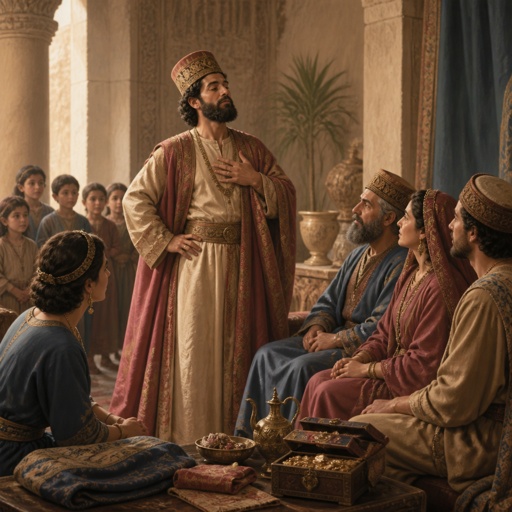
"And Haman told them of the glory of his riches, and the multitude of his children, and all the things wherein the king had promoted him, and how he had advanced him above the princes and servants of the king." - Esther 5:11

Esther 5:5 - "Then the king said, Cause Haman to make haste, that he may do as Esther hath said. So the king and Haman came to the banquet that Esther had prepared."

Esther 5:7 - "Then answered Esther, and said, My petition and my request is;"

Esther 5:2

Esther 5:2 - "And it was so, when the king saw Esther the queen standing in the court, that she obtained favour in his sight: and the king held out to Esther the golden sceptre that was in his hand. So Esther drew near, and touched the top of the sceptre."

Esther 5:2

Esther 5:2

Esther 2:11 - "And Mordecai walked every day before the court of the women's house, to know how Esther did, and what should become of her."

Esther 5:4 - "And Esther answered, If it seem good unto the king, let the king and Haman come this day unto the banquet that I have prepared for him."
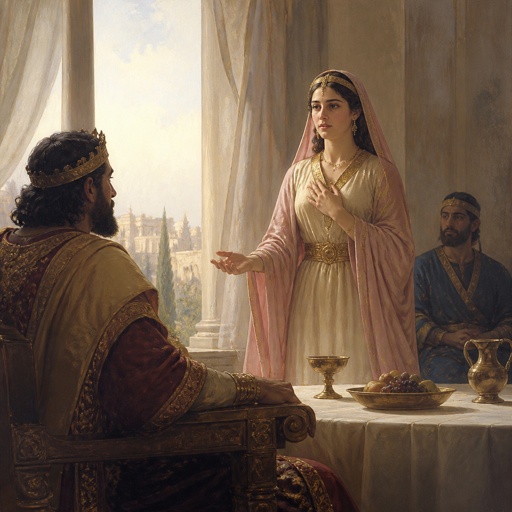
"Then answered Esther, and said, My petition and my request is;" - Esther 5:7

Esther 5:3 - "Then said the king unto her, What wilt thou, queen Esther? and what is thy request? it shall be even given thee to the half of the kingdom."

Esther 7:5 - "¶ Then the king Ahasuerus answered and said unto Esther the queen, Who is he, and where is he, that durst presume in his heart to do so?"

Esther 5:2 - "And it was so, when the king saw Esther the queen standing in the court, that she obtained favour in his sight: and the king held out to Esther the golden sceptre that was in his hand. So Esther drew near, and touched the top of the sceptre."
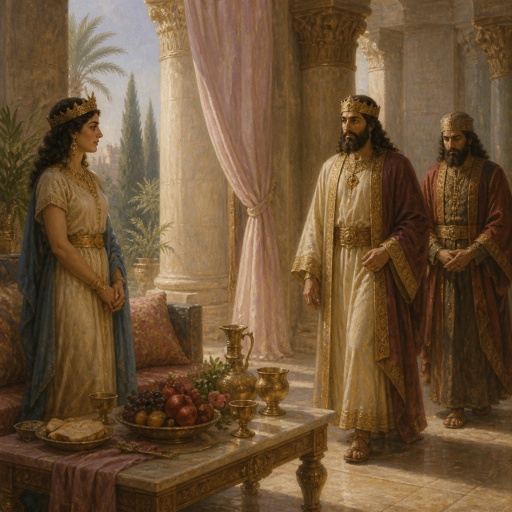
"Then the king said, Cause Haman to make haste, that he may do as Esther hath said. So the king and Haman came to the banquet that Esther had prepared." - Esther 5:5

Esther 4:5 - "Then called Esther for Hatach, one of the king's chamberlains, whom he had appointed to attend upon her, and gave him a commandment to Mordecai, to know what it was, and why it was."

Esther 5:6 - "¶ And the king said unto Esther at the banquet of wine, What is thy petition? and it shall be granted thee: and what is thy request? even to the half of the kingdom it shall be performed."

Esther 5:12 - "Haman said moreover, Yea, Esther the queen did let no man come in with the king unto the banquet that she had prepared but myself; and to morrow am I invited unto her also with the king."

Esther 9:11 - "On that day the number of those that were slain in Shushan the palace was brought before the king."

Esther 3:5 - "And when Haman saw that Mordecai bowed not, nor did him reverence, then was Haman full of wrath."

Esther 5:1 - "Now it came to pass on the third day, that Esther put on her royal apparel, and stood in the inner court of the king's house, over against the king's house: and the king sat upon his royal throne in the royal house, over against the gate of the house."

Song of Solomon 5:11

Esther 1:11 - "To bring Vashti the queen before the king with the crown royal, to shew the people and the princes her beauty: for she was fair to look on."
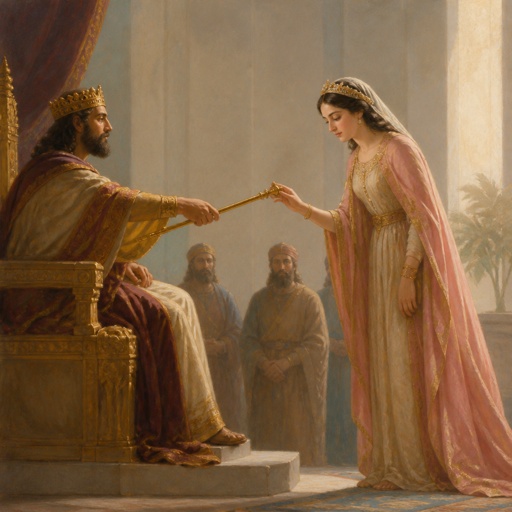
"And it was so, when the king saw Esther the queen standing in the court, that she obtained favour in his sight: and the king held out to Esther the golden sceptre that was in his hand. So Esther drew near, and touched the top of the sceptre." - Esther 5:2

Esther 3:11 - "And the king said unto Haman, The silver is given to thee, the people also, to do with them as it seemeth good to thee."

Esther 6:5 - "And the king's servants said unto him, Behold, Haman standeth in the court. And the king said, Let him come in."

Esther 5:13 - "Yet all this availeth me nothing, so long as I see Mordecai the Jew sitting at the king's gate."

Philippians 2:5-11
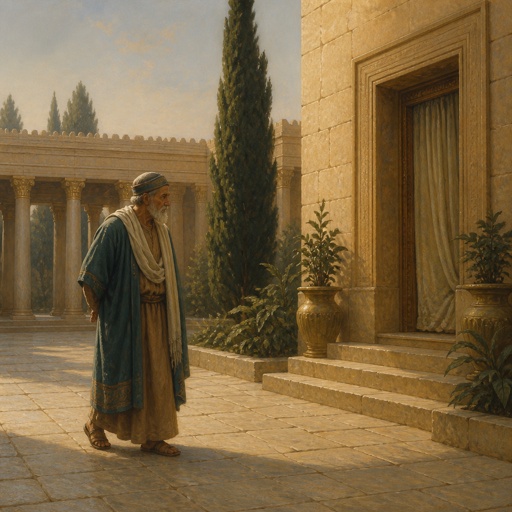
"And Mordecai walked every day before the court of the women's house, to know how Esther did, and what should become of her." - Esther 2:11

Esther 2:5 - "¶ Now in Shushan the palace there was a certain Jew, whose name was Mordecai, the son of Jair, the son of Shimei, the son of Kish, a Benjamite;"