What does Esther 7:4 mean?
“For we are sold, I and my people, to be destroyed, to be slain, and to perish. But if we had been sold for bondmen and bondwomen, I had held my tongue, although the enemy could not countervail the king’s damage.” — Esther 7:4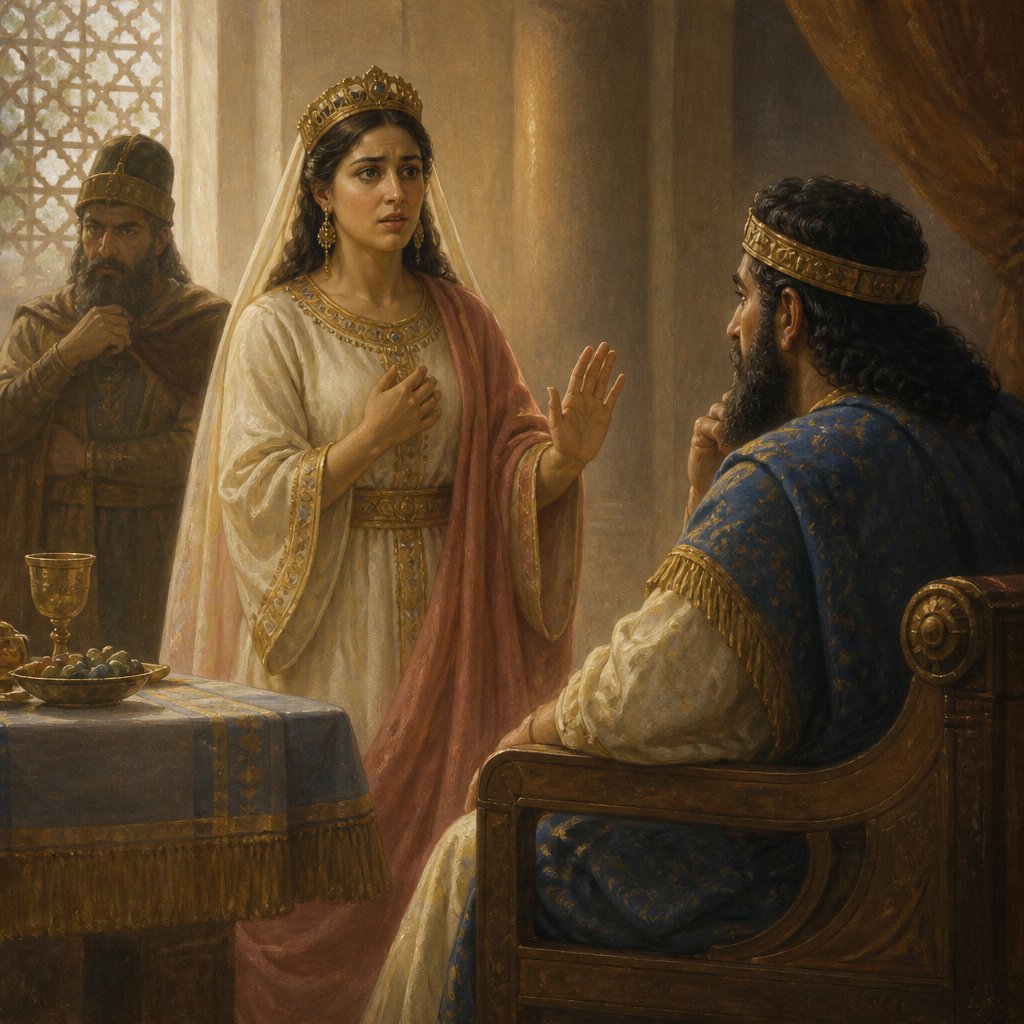
The book of Esther, is a book in the Hebrew Bible and the Christian Old Testament, that tells the story of Esther, a Jewish woman who becomes queen of Persia and who, with the support of her cousin Mordecai, thwarted a plot to exterminate the Jewish people. The book is set in the Persian empire during the reign of King Xerxes, also known as Ahasuerus. The verse Esther 7:4 in the King James Version (KJV) reads:
"For we are sold, I and my people, to be destroyed, to be slain, and to perish. But if we had been sold for bondmen and bondwomen, I had held my tongue, although the enemy could not countervail the king's damage."
This verse is spoken by Queen Esther as she reveals to King Xerxes the plot of the evil Haman to destroy the Jewish people. The verse reflects an air of desperation, and Esther's plea for the lives of her people.
The book of Esther is a story of deliverance and God's providence. It is a tale of a young Jewish girl who becomes queen and uses her position to save her people. The central themes in this book include courage, faith, and the providence of God. The verse in question captures the moment when Esther reveals the plot to kill the Jews to King Xerxes, and symbolizes her willingness to take a stand for her people, despite the personal risk involved. It shows her courage and determination as she risks her own life to save her people.
In the context of the verse, Queen Esther is faced with a difficult decision. She knows that she must reveal the evil plot of Haman, even though it means confessing her own Jewish identity and risking her life. This verse represents the turning point in the story, where Esther bravely speaks out and reveals the truth to the king.
The verse also highlights the moral and ethical dilemma faced by Esther. She acknowledges that she and her people have been sold to be destroyed, but expresses her willingness to accept this fate if it meant only being sold as slaves. However, she implores the king to reconsider the grave decision to annihilate her people, emphasizing the irreplaceable loss that such an action would bring to the king and his kingdom.
Symbolically, this verse represents the power of speaking truth to power, even in the face of extreme danger. Esther's courage to stand up for her people and appeal to the king carries a deeper significance. It serves as a reminder that sometimes, one must take a stand for what is right, even at great personal risk.
Furthermore, the verse underscores the theme of God's providence and intervention. Esther's willingness to risk her life to save her people demonstrates her faith in God's protection and deliverance. It portrays her trust in God's sovereignty and her belief in his ability to bring about a favorable outcome despite the seemingly insurmountable circumstances.
In conclusion, Esther 7:4 in the King James Version is a pivotal verse in the book of Esther, capturing the crucial moment when Queen Esther bravely confronts the king and reveals the plot to destroy her people. The verse exemplifies the themes of courage, faith, and God's providence, and serves as a symbol of the power of speaking truth to power. It is a reminder of the importance of taking a stand for what is right, even in the face of great personal risk, and trusting in God's sovereignty and deliverance.
Get our apps


Artwork for Esther 7:4

Esther 7:4 - "For we are sold, I and my people, to be destroyed, to be slain, and to perish. But if we had been sold for bondmen and bondwomen, I had held my tongue, although the enemy could not countervail the king's damage."
"For we are sold, I and my people, to be destroyed, to be slain, and to perish. But if we had been sold for bondmen and bondwomen, I had held my tongue, although the enemy could not countervail the king's damage." - Esther 7:4

Esther 8:4 - "Then the king held out the golden sceptre toward Esther. So Esther arose, and stood before the king,"

Esther 5:7 - "Then answered Esther, and said, My petition and my request is;"

Esther 7:1 - "So the king and Haman came to banquet with Esther the queen."

Esther 4:15 - "¶ Then Esther bade them return Mordecai this answer,"

Esther 4:9 - "And Hatach came and told Esther the words of Mordecai."

Esther 4:7 - "And Mordecai told him of all that had happened unto him, and of the sum of the money that Haman had promised to pay to the king's treasuries for the Jews, to destroy them."

Esther 4:10 - "¶ Again Esther spake unto Hatach, and gave him commandment unto Mordecai;"

Esther 7:6 - "And Esther said, The adversary and enemy is this wicked Haman. Then Haman was afraid before the king and the queen."

Esther 4:17 - "So Mordecai went his way, and did according to all that Esther had commanded him."

Esther 7:2 - "And the king said again unto Esther on the second day at the banquet of wine, What is thy petition, queen Esther? and it shall be granted thee: and what is thy request? and it shall be performed, even to the half of the kingdom."
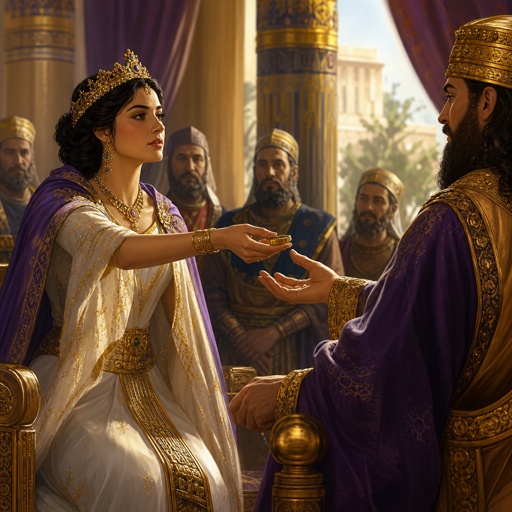
Esther 8:4

Esther 7:7 - "¶ And the king arising from the banquet of wine in his wrath went into the palace garden: and Haman stood up to make request for his life to Esther the queen; for he saw that there was evil determined against him by the king."

Esther 9:7 - "And Parshandatha, and Dalphon, and Aspatha,"

"So the king and Haman came to banquet with Esther the queen." - Esther 7:1

Esther 4:12 - "And they told to Mordecai Esther's words."

Esther 8:7 - "¶ Then the king Ahasuerus said unto Esther the queen and to Mordecai the Jew, Behold, I have given Esther the house of Haman, and him they have hanged upon the gallows, because he laid his hand upon the Jews."

"And Hatach came and told Esther the words of Mordecai." - Esther 4:9

"¶ Then Esther bade them return Mordecai this answer," - Esther 4:15
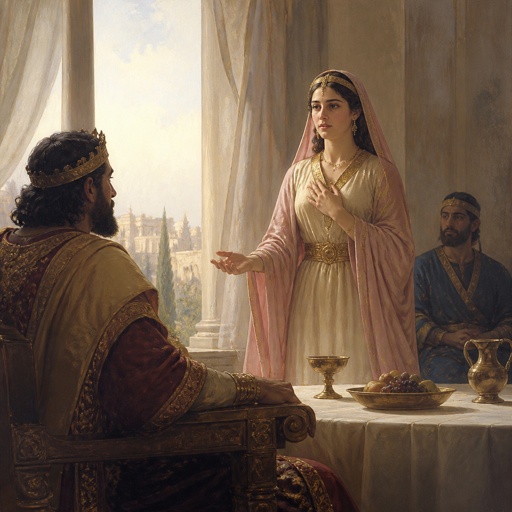
"Then answered Esther, and said, My petition and my request is;" - Esther 5:7

Esther 4:13 - "Then Mordecai commanded to answer Esther, Think not with thyself that thou shalt escape in the king's house, more than all the Jews."

Esther 7:5 - "¶ Then the king Ahasuerus answered and said unto Esther the queen, Who is he, and where is he, that durst presume in his heart to do so?"

Esther 5:4 - "And Esther answered, If it seem good unto the king, let the king and Haman come this day unto the banquet that I have prepared for him."

"Then the king held out the golden sceptre toward Esther. So Esther arose, and stood before the king," - Esther 8:4

Esther 4:5 - "Then called Esther for Hatach, one of the king's chamberlains, whom he had appointed to attend upon her, and gave him a commandment to Mordecai, to know what it was, and why it was."

"And Parshandatha, and Dalphon, and Aspatha," - Esther 9:7
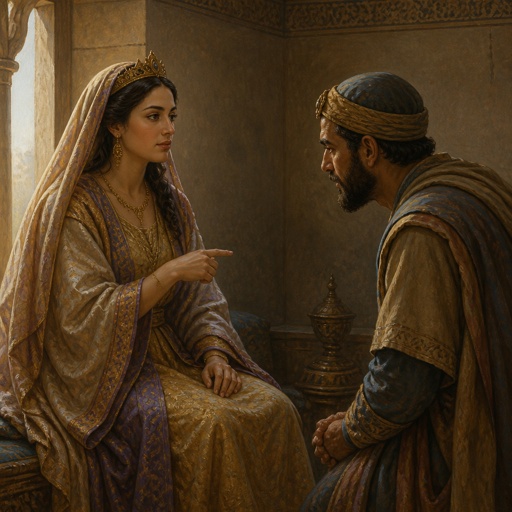
"¶ Again Esther spake unto Hatach, and gave him commandment unto Mordecai;" - Esther 4:10
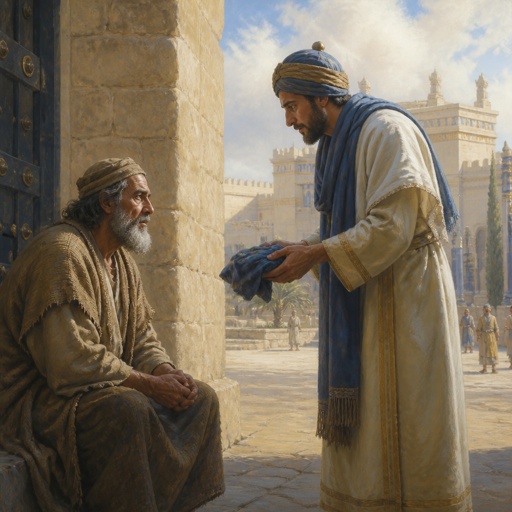
"And they told to Mordecai Esther's words." - Esther 4:12

Esther 6:7 - "And Haman answered the king, For the man whom the king delighteth to honour,"