What does Esther 7:5 mean?
“Then the king Ahasuerus answered and said unto Esther the queen, Who is he, and where is he, that durst presume in his heart to do so?” — Esther 7:5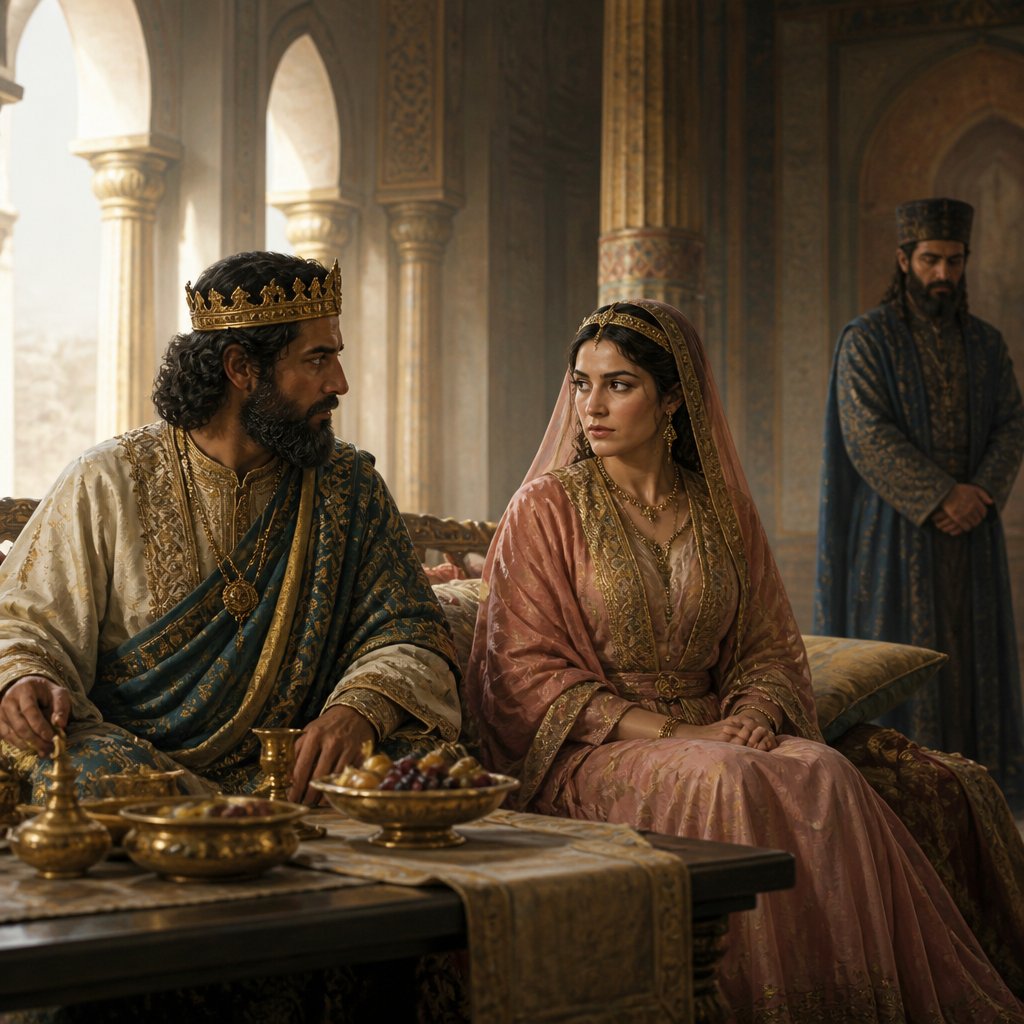
The book of Esther is a part of the Old Testament and tells the story of a Jewish girl named Esther who becomes the queen of Persia. The verse Esther 7:5 from the King James Version (KJV) reads, "Then the king Ahasuerus answered and said unto Esther the queen, Who is he, and where is he, that durst presume in his heart to do so?"
This verse occurs at a critical moment in the narrative where Esther has revealed to the king that there is a plot to destroy her and her people, the Jews. The verse is significant because it marks the turning point in the story and reveals the king's shock and anger at the revelation.
One of the key themes present in this verse is the theme of courage and bravery. Esther, as a Jewish woman in a position of power, risks her life to save her people by revealing the plot to the king. She shows great bravery by approaching the king unsummoned, as it was against the law to enter his presence without being invited. This act of courage illustrates Esther's faith in God and her willingness to do whatever it takes to save her people.
Another important theme in this verse is the theme of providence. The story of Esther is a powerful example of how God works behind the scenes to accomplish his purposes. Even though the name of God is not mentioned in the book of Esther, his providence is evident throughout the narrative. Esther's position as queen and her bravery in approaching the king at the risk of her own life are all part of God's plan to save the Jewish people from destruction.
The context of this verse is also noteworthy. The book of Esther takes place during the time when the Jewish people were in exile in Persia. Haman, the king's advisor, plots to have all the Jews in the kingdom killed. Esther, who hides her Jewish identity, is in a unique position to intervene and save her people. The verse occurs at the climax of the story when Esther reveals the plot to the king and exposes Haman's evil intentions.
Symbolism is also present in this verse. The king's question to Esther signifies his shock and disbelief at the news she has just revealed. It also underscores the severity of the situation and the urgency to take action. The question also serves as a turning point in the narrative, as it marks the beginning of Haman's downfall and the eventual salvation of the Jewish people.
In the larger context of the Bible, the story of Esther serves as a reminder of God's faithfulness to his people and his ability to use ordinary individuals to accomplish extraordinary things. Esther's courage and willingness to put her own life at risk for the sake of others is a powerful example of selflessness and devotion. The verse Esther 7:5, in particular, highlights the importance of speaking out against injustice and standing up for what is right, even in the face of danger.
In conclusion, Esther 7:5 from the King James Version of the Bible is a pivotal verse in the book of Esther that captures the shock and anger of the king upon learning of the plot to destroy the Jewish people. The verse conveys important themes of courage, providence, and the ability of God to work through individuals to bring about his purposes. The story of Esther continues to inspire and encourage believers to stand up for justice and trust in God's faithfulness.
Get our apps


Artwork for Esther 7:5

Esther 7:5 - "¶ Then the king Ahasuerus answered and said unto Esther the queen, Who is he, and where is he, that durst presume in his heart to do so?"
"¶ Then the king Ahasuerus answered and said unto Esther the queen, Who is he, and where is he, that durst presume in his heart to do so?" - Esther 7:5

Esther 5:7 - "Then answered Esther, and said, My petition and my request is;"
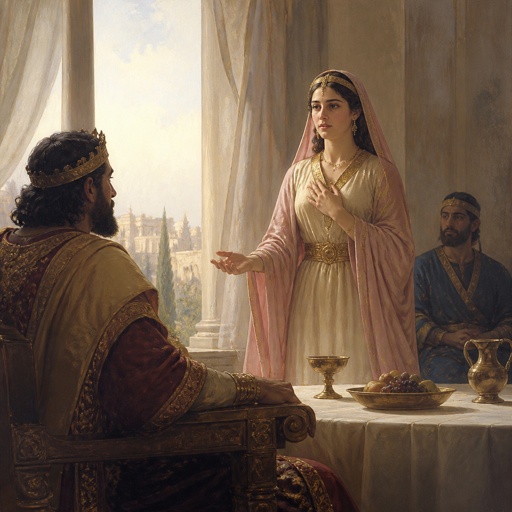
"Then answered Esther, and said, My petition and my request is;" - Esther 5:7

Esther 5:5 - "Then the king said, Cause Haman to make haste, that he may do as Esther hath said. So the king and Haman came to the banquet that Esther had prepared."

Esther 7:1 - "So the king and Haman came to banquet with Esther the queen."

Esther 7:6 - "And Esther said, The adversary and enemy is this wicked Haman. Then Haman was afraid before the king and the queen."

Esther 5:2

Esther 5:2 - "And it was so, when the king saw Esther the queen standing in the court, that she obtained favour in his sight: and the king held out to Esther the golden sceptre that was in his hand. So Esther drew near, and touched the top of the sceptre."

Esther 5:2

Esther 5:2

Esther 7:2 - "And the king said again unto Esther on the second day at the banquet of wine, What is thy petition, queen Esther? and it shall be granted thee: and what is thy request? and it shall be performed, even to the half of the kingdom."

Esther 7:7 - "¶ And the king arising from the banquet of wine in his wrath went into the palace garden: and Haman stood up to make request for his life to Esther the queen; for he saw that there was evil determined against him by the king."

Esther 9:7 - "And Parshandatha, and Dalphon, and Aspatha,"

"So the king and Haman came to banquet with Esther the queen." - Esther 7:1

Esther 8:7 - "¶ Then the king Ahasuerus said unto Esther the queen and to Mordecai the Jew, Behold, I have given Esther the house of Haman, and him they have hanged upon the gallows, because he laid his hand upon the Jews."

Esther 5:4 - "And Esther answered, If it seem good unto the king, let the king and Haman come this day unto the banquet that I have prepared for him."

Esther 5:3 - "Then said the king unto her, What wilt thou, queen Esther? and what is thy request? it shall be even given thee to the half of the kingdom."

Esther 5:2 - "And it was so, when the king saw Esther the queen standing in the court, that she obtained favour in his sight: and the king held out to Esther the golden sceptre that was in his hand. So Esther drew near, and touched the top of the sceptre."
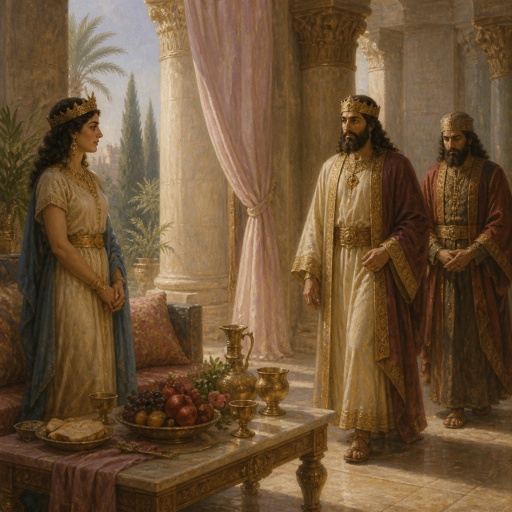
"Then the king said, Cause Haman to make haste, that he may do as Esther hath said. So the king and Haman came to the banquet that Esther had prepared." - Esther 5:5

Esther 4:5 - "Then called Esther for Hatach, one of the king's chamberlains, whom he had appointed to attend upon her, and gave him a commandment to Mordecai, to know what it was, and why it was."

Esther 5:6 - "¶ And the king said unto Esther at the banquet of wine, What is thy petition? and it shall be granted thee: and what is thy request? even to the half of the kingdom it shall be performed."
"And Parshandatha, and Dalphon, and Aspatha," - Esther 9:7

Esther 6:7 - "And Haman answered the king, For the man whom the king delighteth to honour,"

"And Esther said, The adversary and enemy is this wicked Haman. Then Haman was afraid before the king and the queen." - Esther 7:6

Esther 5:12 - "Haman said moreover, Yea, Esther the queen did let no man come in with the king unto the banquet that she had prepared but myself; and to morrow am I invited unto her also with the king."

Esther 7:3 - "Then Esther the queen answered and said, If I have found favour in thy sight, O king, and if it please the king, let my life be given me at my petition, and my people at my request:"

Esther 7:10 - "So they hanged Haman on the gallows that he had prepared for Mordecai. Then was the king's wrath pacified."

Esther 3:5 - "And when Haman saw that Mordecai bowed not, nor did him reverence, then was Haman full of wrath."

Esther 2:7 - "And he brought up Hadassah, that is, Esther, his uncle's daughter: for she had neither father nor mother, and the maid was fair and beautiful; whom Mordecai, when her father and mother were dead, took for his own daughter."