What does Esther 8:15 mean?
“And Mordecai went out from the presence of the king in royal apparel of blue and white, and with a great crown of gold, and with a garment of fine linen and purple: and the city of Shushan rejoiced and was glad.” — Esther 8:15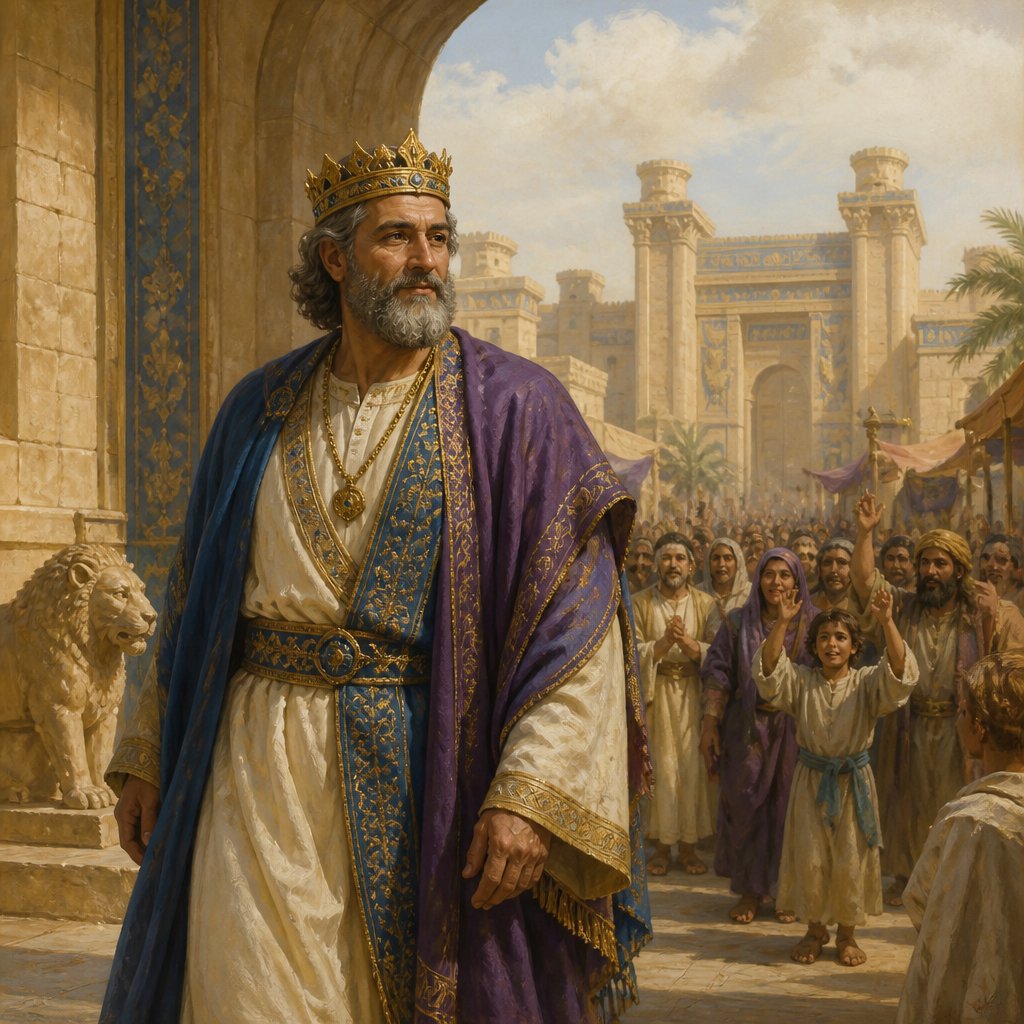
The book of Esther is a captivating and thrilling tale of deliverance and triumph, and Esther 8:15 is a key verse that underscores the central themes of the book. This verse comes at a crucial point in the story, as it describes the reaction of the Jews to Queen Esther's courageous intervention on their behalf. To truly understand the depth and significance of Esther 8:15, we must first delve into the context of the book of Esther as a whole, and then examine the specific themes, symbolism, and implications of this verse.
The book of Esther is set in the Persian Empire during the reign of King Xerxes, also known as Ahasuerus. The story revolves around Esther, a Jewish woman who becomes queen through a series of providential events. The main antagonist of the story is Haman, a high-ranking official who seeks to annihilate the Jewish people. Unbeknownst to the king, Esther is herself Jewish, and when she learns of Haman's plot, she risks her life by revealing her true identity and pleading for the salvation of her people. Through her bravery and the divine intervention of God, the tables are turned, and the Jews are delivered from destruction.
Esther 8:15 states, "And Mordecai went out from the presence of the king in royal apparel of blue and white, and with a great crown of gold, and with a garment of fine linen and purple: and the city of Shushan rejoiced and was glad." This verse marks a turning point in the narrative, as it depicts the aftermath of the dramatic events that transpired. Mordecai, who is Esther's cousin and guardian, is elevated to a position of great honor and authority, symbolized by the royal apparel and the golden crown. This imagery is significant as it represents the restoration and exaltation of the Jewish people, who had previously faced imminent destruction.
One of the central themes of Esther 8:15 is the theme of reversal and divine justice. Throughout the book of Esther, we see a pattern of unexpected and dramatic reversals of fortune. What was intended for evil by Haman is turned around for the good of the Jewish people. Mordecai, who had previously been humiliated and targeted for destruction by Haman, is now paraded through the city in royal splendor, signifying the reversal of his fortunes and the triumph of the Jewish people. This theme of reversal is a recurring motif in the book of Esther and serves as a powerful reminder of the providential care and deliverance of God.
The symbolism in Esther 8:15 is also rich and multi-layered. The royal apparel of blue and white, the great crown of gold, and the garment of fine linen and purple all serve as symbols of honor, authority, and victory. The colors blue and white are often associated with purity and righteousness, while gold and purple are symbols of royalty and prestige. These symbols not only reflect the exaltation of Mordecai but also serve as a foreshadowing of the ultimate triumph of the Jewish people over their enemies.
Furthermore, the rejoicing and gladness of the city of Shushan in Esther 8:15 underscores the broader theme of celebration and deliverance. The salvation of the Jews brought about great joy and relief to the entire city, symbolizing the impact of God's deliverance on a community level. This communal rejoicing also emphasizes the unity and solidarity of the Jewish people in the face of adversity, as they come together to celebrate their deliverance.
In conclusion, Esther 8:15 is a verse that encapsulates the central themes and messages of the book of Esther. Through its vivid imagery, symbolism, and themes of reversal, divine justice, and communal rejoicing, this verse serves as a powerful testament to the providential care and deliverance of God. It also stands as a reminder of the triumph of good over evil and the ultimate vindication of those who trust in the Lord. As we reflect on Esther 8:15, may we be inspired by the example of Esther, Mordecai, and the Jewish people, and may we take courage in the knowledge that God is always at work, bringing about deliverance and redemption in unexpected and miraculous ways.
Get our apps


Artwork for Esther 8:15

Esther 8:15 - "¶ And Mordecai went out from the presence of the king in royal apparel of blue and white, and with a great crown of gold, and with a garment of fine linen and purple: and the city of Shushan rejoiced and was glad."
"¶ And Mordecai went out from the presence of the king in royal apparel of blue and white, and with a great crown of gold, and with a garment of fine linen and purple: and the city of Shushan rejoiced and was glad." - Esther 8:15

Esther 4:15 - "¶ Then Esther bade them return Mordecai this answer,"

Esther 8:4 - "Then the king held out the golden sceptre toward Esther. So Esther arose, and stood before the king,"

"¶ Then Esther bade them return Mordecai this answer," - Esther 4:15

Esther 8:1 - "On that day did the king Ahasuerus give the house of Haman the Jews' enemy unto Esther the queen. And Mordecai came before the king; for Esther had told what he was unto her."
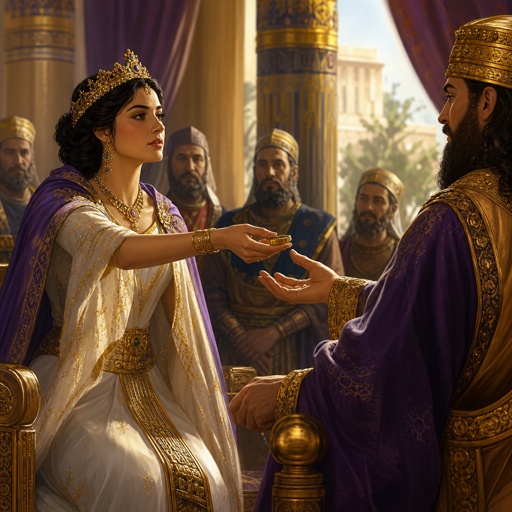
Esther 8:4

Esther 9:8 - "And Poratha, and Adalia, and Aridatha,"

Esther 8:7 - "¶ Then the king Ahasuerus said unto Esther the queen and to Mordecai the Jew, Behold, I have given Esther the house of Haman, and him they have hanged upon the gallows, because he laid his hand upon the Jews."

Esther 8:16 - "The Jews had light, and gladness, and joy, and honour."
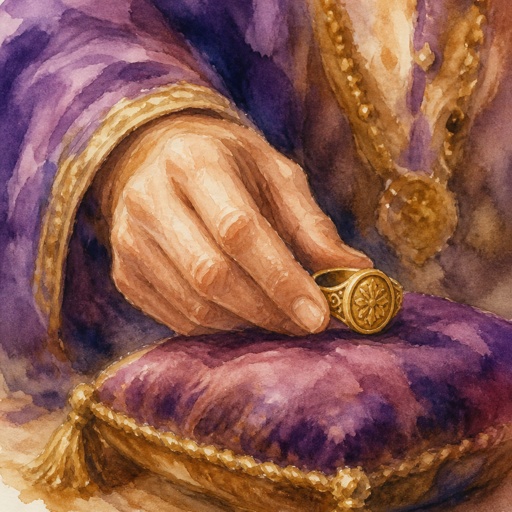
Esther 8:2 focus on the ring

"Then the king held out the golden sceptre toward Esther. So Esther arose, and stood before the king," - Esther 8:4

Esther 8:2 - "And the king took off his ring, which he had taken from Haman, and gave it unto Mordecai. And Esther set Mordecai over the house of Haman."

Esther 2:15 - "¶ Now when the turn of Esther, the daughter of Abihail the uncle of Mordecai, who had taken her for his daughter, was come to go in unto the king, she required nothing but what Hegai the king's chamberlain, the keeper of the women, appointed. And Esther obtained favour in the sight of all them that looked upon her."
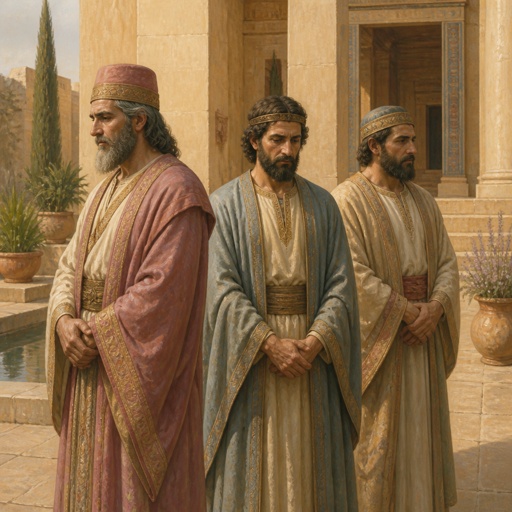
"And Poratha, and Adalia, and Aridatha," - Esther 9:8

Esther 8:3 - "¶ And Esther spake yet again before the king, and fell down at his feet, and besought him with tears to put away the mischief of Haman the Agagite, and his device that he had devised against the Jews."

Esther 2:8 - "¶ So it came to pass, when the king's commandment and his decree was heard, and when many maidens were gathered together unto Shushan the palace, to the custody of Hegai, that Esther was brought also unto the king's house, to the custody of Hegai, keeper of the women."

"On that day did the king Ahasuerus give the house of Haman the Jews' enemy unto Esther the queen. And Mordecai came before the king; for Esther had told what he was unto her." - Esther 8:1

Esther 8:8 - "Write ye also for the Jews, as it liketh you, in the king's name, and seal it with the king's ring: for the writing which is written in the king's name, and sealed with the king's ring, may no man reverse."

Esther 7:8 - "Then the king returned out of the palace garden into the place of the banquet of wine; and Haman was fallen upon the bed whereon Esther was. Then said the king, Will he force the queen also before me in the house? As the word went out of the king's mouth, they covered Haman's face."

Esther 4:8 - "Also he gave him the copy of the writing of the decree that was given at Shushan to destroy them, to shew it unto Esther, and to declare it unto her, and to charge her that she should go in unto the king, to make supplication unto him, and to make request before him for her people."
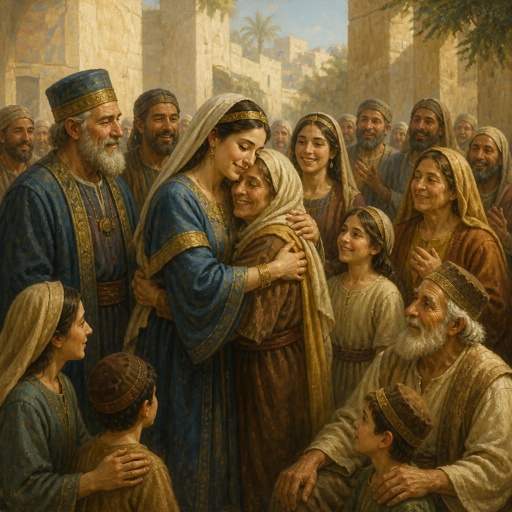
"The Jews had light, and gladness, and joy, and honour." - Esther 8:16

Esther 1:15 - "What shall we do unto the queen Vashti according to law, because she hath not performed the commandment of the king Ahasuerus by the chamberlains?"

Esther 3:15 - "The posts went out, being hastened by the king's commandment, and the decree was given in Shushan the palace. And the king and Haman sat down to drink; but the city Shushan was perplexed."

Esther 8:14 - "So the posts that rode upon mules and camels went out, being hastened and pressed on by the king's commandment. And the decree was given at Shushan the palace."

Esther 8:10 - "And he wrote in the king Ahasuerus' name, and sealed it with the king's ring, and sent letters by posts on horseback, and riders on mules, camels, and young dromedaries:"

Esther 8:12 - "Upon one day in all the provinces of king Ahasuerus, namely, upon the thirteenth day of the twelfth month, which is the month Adar."

Esther 8:13 - "The copy of the writing for a commandment to be given in every province was published unto all people, and that the Jews should be ready against that day to avenge themselves on their enemies."

Esther 9:15 - "For the Jews that were in Shushan gathered themselves together on the fourteenth day also of the month Adar, and slew three hundred men at Shushan; but on the prey they laid not their hand."

Esther 8:6 - "For how can I endure to see the evil that shall come unto my people? or how can I endure to see the destruction of my kindred?"