What does Esther 8:6 mean?
“For how can I endure to see the evil that shall come unto my people? or how can I endure to see the destruction of my kindred?” — Esther 8:6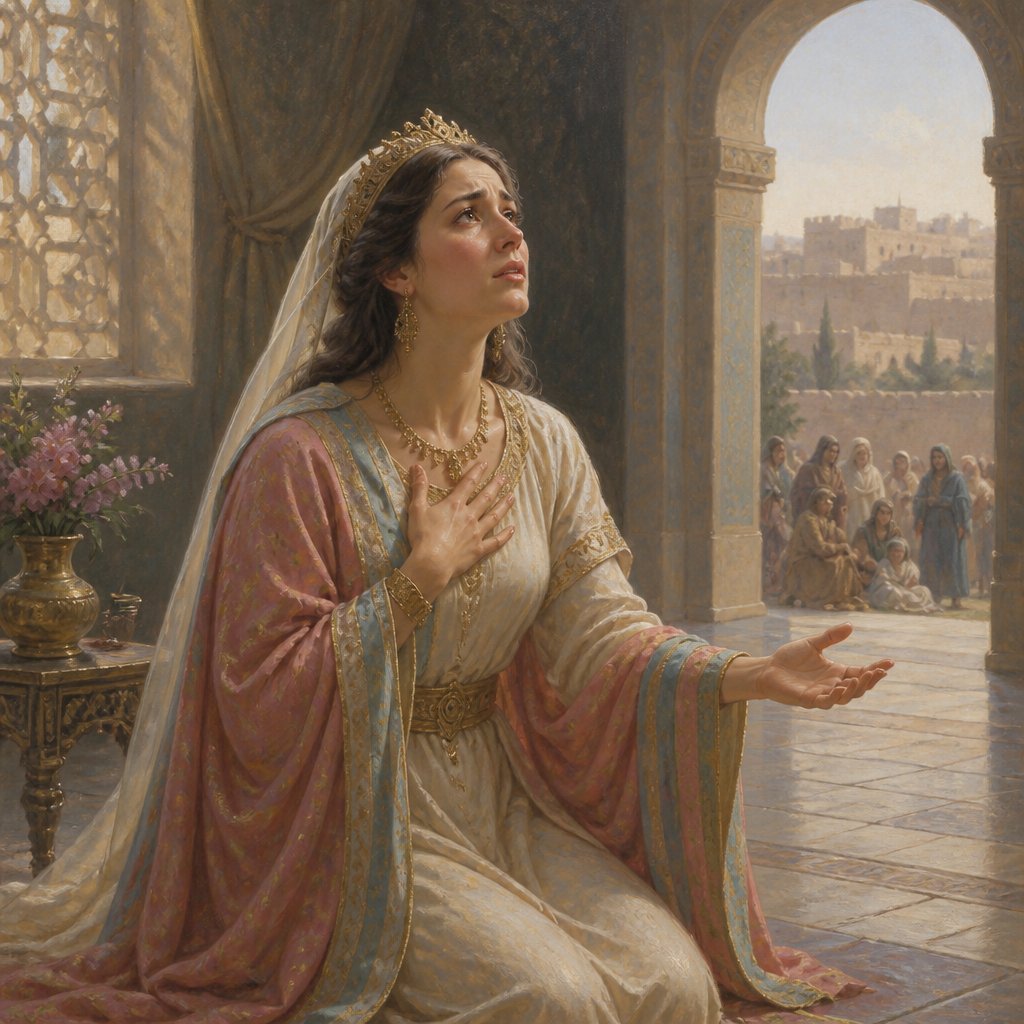
The book of Esther in the Old Testament is a captivating tale of faith, courage, and the providence of God. It tells the story of a young Jewish woman named Esther who becomes the queen of Persia and uses her position to save her people from annihilation. The verse Esther 8:6 in the King James Version reads, "For how can I endure to see the evil that shall come unto my people? or how can I endure to see the destruction of my kindred?"
This verse is spoken by Esther as she pleads with King Ahasuerus to revoke the decree issued by his wicked advisor, Haman, which called for the extermination of all the Jews in the Persian Empire. Esther's passionate plea reflects her deep sense of loyalty to her people and a willingness to sacrifice herself for their well-being. Her words reveal her inner turmoil and anguish at the thought of witnessing the destruction of her fellow Jews.
One of the central themes of the book of Esther is the providence of God. Despite the fact that the name of God is not mentioned in the book, His sovereignty and providential care for His people are evident throughout the story. The events that unfold, including Esther's rise to queen and her intervention to save the Jews, are orchestrated by God to fulfill His purposes and to protect His chosen people. Esther's courageous actions are a testament to her faith in God and her willingness to be used by Him to bring about deliverance for her people.
The verse also highlights the theme of self-sacrifice and the willingness to stand up for what is right, even at great personal cost. Esther puts her own life at risk by approaching the king without being summoned, as such an act was punishable by death. However, her love for her people and her willingness to intercede on their behalf outweigh her fear of the consequences. This selfless act of bravery and her willingness to take a stand against injustice serve as an example of the kind of courage and conviction that all believers should aspire to.
The context of this verse is important in understanding its significance. The Jewish people were in a precarious situation, facing the threat of annihilation due to the cunning and malicious schemes of Haman. Esther, who had concealed her Jewish identity, found herself in a position to intercede on behalf of her people. Despite the risks involved, she boldly approached the king and requested that he reverse the decree that had been issued. Her plea was not only for the preservation of her own life and the lives of her people, but also for justice to prevail.
The symbolism in Esther 8:6 is profound. Esther's willingness to stand in the gap for her people and risk her own life foreshadows the ultimate act of self-sacrifice demonstrated by Jesus Christ on the cross. Esther's actions also symbolize the role of the believer as an intercessor, advocating for the needs of others and standing against injustice. Her courage and determination serve as a reminder of the importance of speaking up for those who are oppressed and marginalized.
In conclusion, Esther 8:6 is a powerful reminder of the responsibility that believers have to stand up for justice and righteousness, even in the face of adversity. Esther's unwavering commitment to her people and her willingness to put her own life at risk serve as an inspiring example of faith and courage. This verse is a testament to the providence of God and the triumph of good over evil. It challenges us to examine our own convictions and our willingness to advocate for those in need, just as Esther did for the Jewish people.
Get our apps


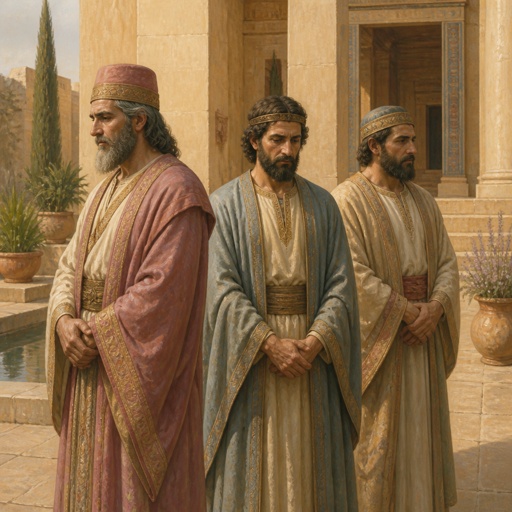
Artwork for Esther 8:6

Esther 8:6 - "For how can I endure to see the evil that shall come unto my people? or how can I endure to see the destruction of my kindred?"
"For how can I endure to see the evil that shall come unto my people? or how can I endure to see the destruction of my kindred?" - Esther 8:6

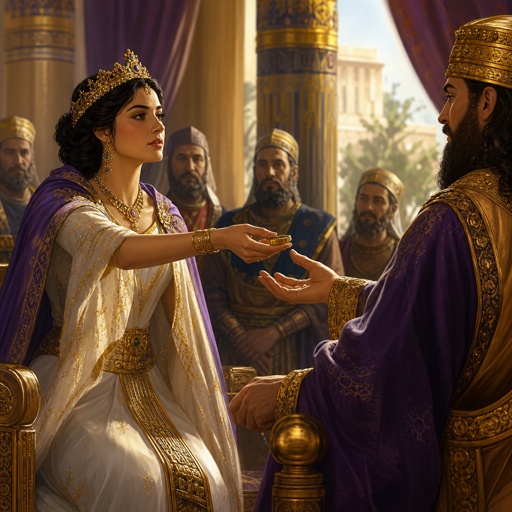
Esther 8:4 - "Then the king held out the golden sceptre toward Esther. So Esther arose, and stood before the king,"

Esther 6:8 - "Let the royal apparel be brought which the king useth to wear, and the horse that the king rideth upon, and the crown royal which is set upon his head:"

Esther 7:6 - "And Esther said, The adversary and enemy is this wicked Haman. Then Haman was afraid before the king and the queen."

Esther 8:1 - "On that day did the king Ahasuerus give the house of Haman the Jews' enemy unto Esther the queen. And Mordecai came before the king; for Esther had told what he was unto her."
Esther 8:4

Esther 1:6

Esther 9:8 - "And Poratha, and Adalia, and Aridatha,"

Esther 8:7 - "¶ Then the king Ahasuerus said unto Esther the queen and to Mordecai the Jew, Behold, I have given Esther the house of Haman, and him they have hanged upon the gallows, because he laid his hand upon the Jews."

Esther 6:14 - "And while they were yet talking with him, came the king's chamberlains, and hasted to bring Haman unto the banquet that Esther had prepared."

Esther 8:16 - "The Jews had light, and gladness, and joy, and honour."
Esther 8:2 focus on the ring

"Then the king held out the golden sceptre toward Esther. So Esther arose, and stood before the king," - Esther 8:4

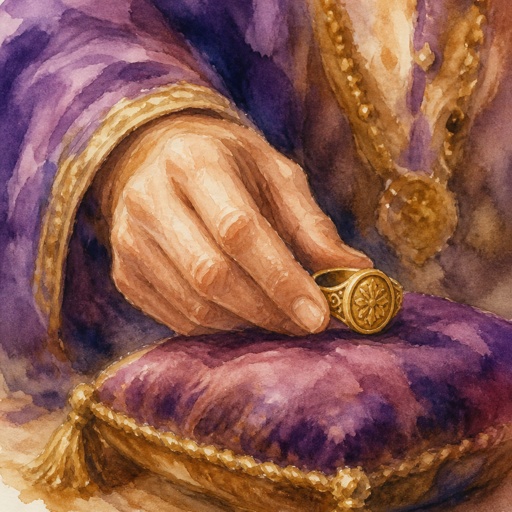
Esther 8:2 - "And the king took off his ring, which he had taken from Haman, and gave it unto Mordecai. And Esther set Mordecai over the house of Haman."

Esther 5:6 - "¶ And the king said unto Esther at the banquet of wine, What is thy petition? and it shall be granted thee: and what is thy request? even to the half of the kingdom it shall be performed."
"And Poratha, and Adalia, and Aridatha," - Esther 9:8

Esther 8:3 - "¶ And Esther spake yet again before the king, and fell down at his feet, and besought him with tears to put away the mischief of Haman the Agagite, and his device that he had devised against the Jews."

Esther 6:7 - "And Haman answered the king, For the man whom the king delighteth to honour,"

Esther 9:6 - "And in Shushan the palace the Jews slew and destroyed five hundred men."

"And Esther said, The adversary and enemy is this wicked Haman. Then Haman was afraid before the king and the queen." - Esther 7:6

Esther 4:6 - "So Hatach went forth to Mordecai unto the street of the city, which was before the king's gate."

Esther 2:8 - "¶ So it came to pass, when the king's commandment and his decree was heard, and when many maidens were gathered together unto Shushan the palace, to the custody of Hegai, that Esther was brought also unto the king's house, to the custody of Hegai, keeper of the women."

"On that day did the king Ahasuerus give the house of Haman the Jews' enemy unto Esther the queen. And Mordecai came before the king; for Esther had told what he was unto her." - Esther 8:1

Esther 8:8 - "Write ye also for the Jews, as it liketh you, in the king's name, and seal it with the king's ring: for the writing which is written in the king's name, and sealed with the king's ring, may no man reverse."

Esther 7:8 - "Then the king returned out of the palace garden into the place of the banquet of wine; and Haman was fallen upon the bed whereon Esther was. Then said the king, Will he force the queen also before me in the house? As the word went out of the king's mouth, they covered Haman's face."

Esther 4:8 - "Also he gave him the copy of the writing of the decree that was given at Shushan to destroy them, to shew it unto Esther, and to declare it unto her, and to charge her that she should go in unto the king, to make supplication unto him, and to make request before him for her people."

Esther 6:5 - "And the king's servants said unto him, Behold, Haman standeth in the court. And the king said, Let him come in."

Esther 6:1 - "On that night could not the king sleep, and he commanded to bring the book of records of the chronicles; and they were read before the king."

Esther 6:12 - "¶ And Mordecai came again to the king's gate. But Haman hasted to his house mourning, and having his head covered."