What does Esther 8:8 mean?
“Write ye also for the Jews, as it liketh you, in the king’s name, and seal it with the king’s ring: for the writing which is written in the king’s name, and sealed with the king’s ring, may no man reverse.” — Esther 8:8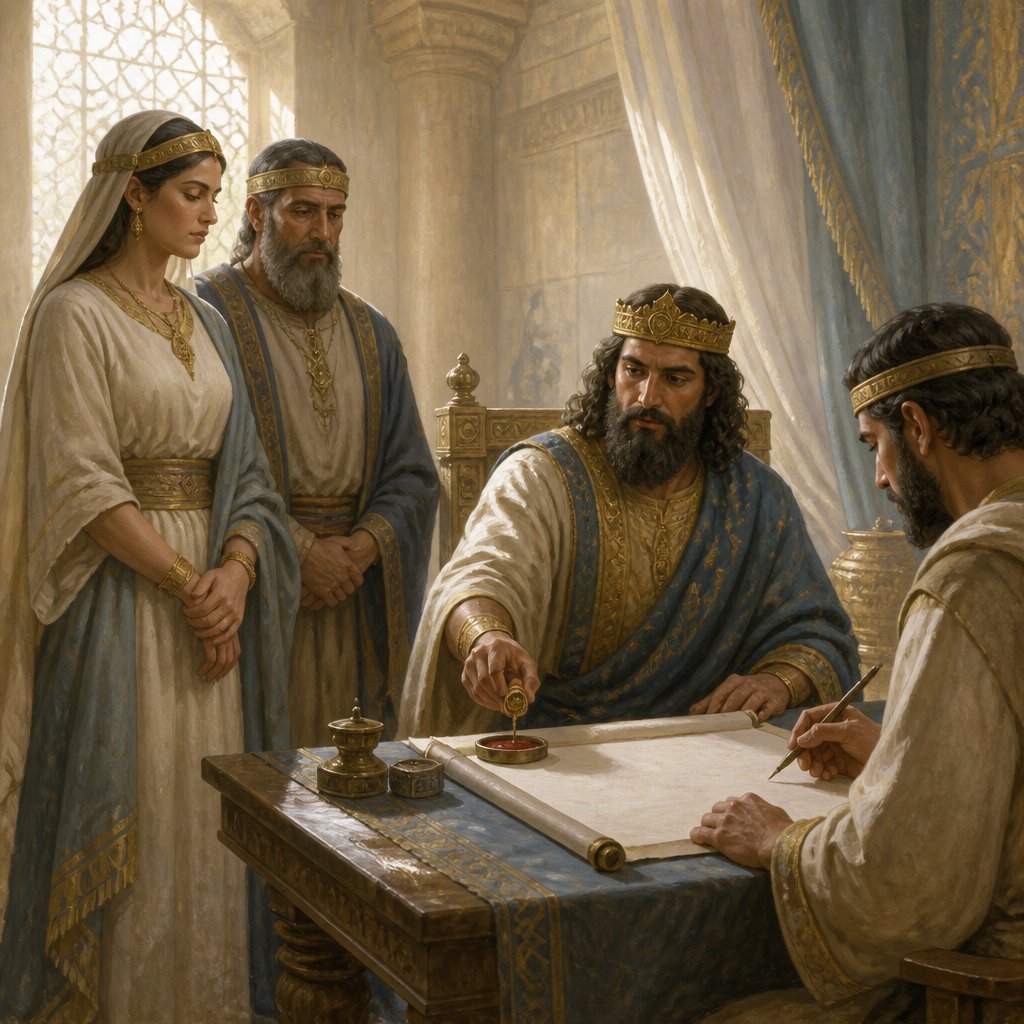
The book of Esther is one of the historical books in the Old Testament which recounts the story of a Jewish girl who became queen of Persia and saved her people from destruction. The verse Esther 8:8 in the King James Version (KJV) states:
"Write ye also for the Jews, as it liketh you, in the king's name, and seal it with the king's ring: for the writing which is written in the king's name, and sealed with the king's ring, may no man reverse."
This verse comes in the context of a critical moment in the plot, where Queen Esther has successfully intervened with the Persian king to counteract a royal decree that threatened the lives of all the Jews in the empire. The verse is part of the king's decree, allowing the Jews to defend themselves against those who seek to harm them.
The overarching theme of Esther 8:8 is the sovereignty and providence of God. Throughout the book of Esther, we see God's hand at work, subtly guiding events and placing people in certain positions to fulfill his purposes. Although the name of God is not explicitly mentioned in the book, his presence and influence are felt in every verse. In Esther 8:8, we see God's sovereignty in action as the king's decree, once sealed with his ring, cannot be reversed by any man. This highlights the ultimate authority and control of God over all human affairs.
Another important theme in this verse is the concept of divine protection and deliverance. The context of the verse is the imminent threat of annihilation faced by the Jewish people in the Persian Empire. The decree issued by the king in Esther 8:8 allows the Jews to defend themselves against their enemies, ensuring their survival. This can be viewed as a reflection of God's faithfulness in delivering his people from harm and preserving their lives. It also carries the message that God stands as a defender of his people and provides them with the means to protect themselves.
The symbolism in Esther 8:8 is profound and layered. The king's seal and his ring are symbols of authority and power. The act of sealing the decree signifies its irrevocability and permanence. This can be seen as a parallel to the seal of God upon his chosen people, signifying their special status and protection. The sealing with the king's ring also represents the king's trust and favor towards the Jewish people, which mirrors God's favor and protection towards his own chosen people.
The verse also holds significant relevance in its historical and cultural context. During the time of Esther, the Persian Empire was vast and powerful, and its decrees were considered unchangeable and absolute. The fact that the king's decree in Esther 8:8 cannot be reversed highlights the remarkable turnaround of the Jewish people's situation, from being condemned to being empowered to defend themselves. This context emphasizes the theme of divine intervention and the unexpected ways in which God can work to bring about salvation.
In summary, Esther 8:8 in the King James Version encapsulates powerful themes of divine sovereignty, protection, deliverance, and the unchanging nature of God's decrees. It serves as a reminder of God's faithfulness to his people and his ability to turn the tide of seemingly hopeless situations. The verse also carries profound symbolism and historical significance, making it a crucial and impactful part of the biblical narrative.
Get our apps


Artwork for Esther 8:8

Esther 8:8 - "Write ye also for the Jews, as it liketh you, in the king's name, and seal it with the king's ring: for the writing which is written in the king's name, and sealed with the king's ring, may no man reverse."
"Write ye also for the Jews, as it liketh you, in the king's name, and seal it with the king's ring: for the writing which is written in the king's name, and sealed with the king's ring, may no man reverse." - Esther 8:8

Esther 8:4 - "Then the king held out the golden sceptre toward Esther. So Esther arose, and stood before the king,"

Esther 8:4

Esther 9:8 - "And Poratha, and Adalia, and Aridatha,"

Esther 8:16 - "The Jews had light, and gladness, and joy, and honour."
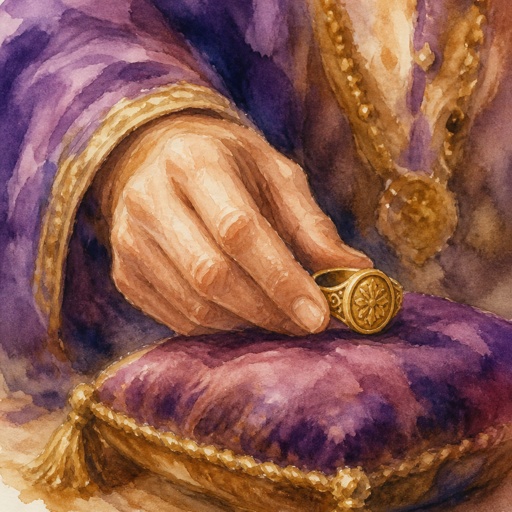
Esther 8:2 focus on the ring

Esther 8:1 - "On that day did the king Ahasuerus give the house of Haman the Jews' enemy unto Esther the queen. And Mordecai came before the king; for Esther had told what he was unto her."

Esther 8:7 - "¶ Then the king Ahasuerus said unto Esther the queen and to Mordecai the Jew, Behold, I have given Esther the house of Haman, and him they have hanged upon the gallows, because he laid his hand upon the Jews."
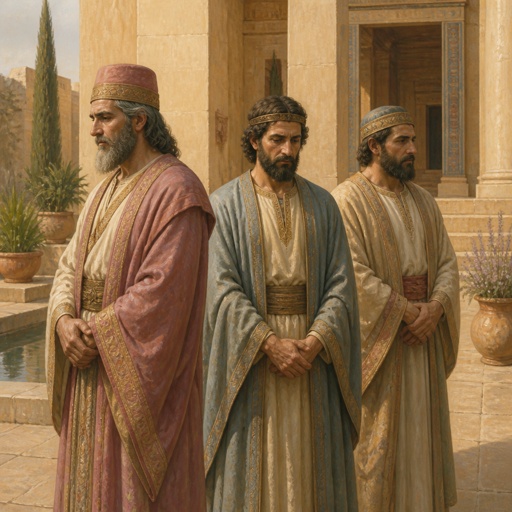
"And Poratha, and Adalia, and Aridatha," - Esther 9:8

Esther 8:2 - "And the king took off his ring, which he had taken from Haman, and gave it unto Mordecai. And Esther set Mordecai over the house of Haman."

"Then the king held out the golden sceptre toward Esther. So Esther arose, and stood before the king," - Esther 8:4

Esther 8:3 - "¶ And Esther spake yet again before the king, and fell down at his feet, and besought him with tears to put away the mischief of Haman the Agagite, and his device that he had devised against the Jews."
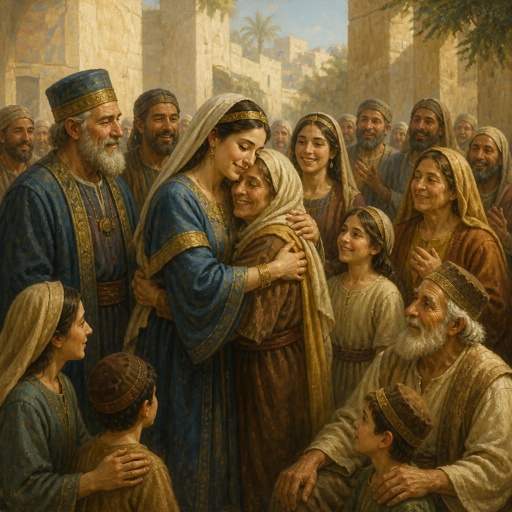
"The Jews had light, and gladness, and joy, and honour." - Esther 8:16

Esther 2:8 - "¶ So it came to pass, when the king's commandment and his decree was heard, and when many maidens were gathered together unto Shushan the palace, to the custody of Hegai, that Esther was brought also unto the king's house, to the custody of Hegai, keeper of the women."

Esther 8:14 - "So the posts that rode upon mules and camels went out, being hastened and pressed on by the king's commandment. And the decree was given at Shushan the palace."

Esther 8:10 - "And he wrote in the king Ahasuerus' name, and sealed it with the king's ring, and sent letters by posts on horseback, and riders on mules, camels, and young dromedaries:"

Esther 8:12 - "Upon one day in all the provinces of king Ahasuerus, namely, upon the thirteenth day of the twelfth month, which is the month Adar."

Esther 7:8 - "Then the king returned out of the palace garden into the place of the banquet of wine; and Haman was fallen upon the bed whereon Esther was. Then said the king, Will he force the queen also before me in the house? As the word went out of the king's mouth, they covered Haman's face."

Esther 8:13 - "The copy of the writing for a commandment to be given in every province was published unto all people, and that the Jews should be ready against that day to avenge themselves on their enemies."

Esther 4:8 - "Also he gave him the copy of the writing of the decree that was given at Shushan to destroy them, to shew it unto Esther, and to declare it unto her, and to charge her that she should go in unto the king, to make supplication unto him, and to make request before him for her people."

Esther 8:6 - "For how can I endure to see the evil that shall come unto my people? or how can I endure to see the destruction of my kindred?"

Esther 6:8 - "Let the royal apparel be brought which the king useth to wear, and the horse that the king rideth upon, and the crown royal which is set upon his head:"

Esther 1:8 - "And the drinking was according to the law; none did compel: for so the king had appointed to all the officers of his house, that they should do according to every man's pleasure."

"On that day did the king Ahasuerus give the house of Haman the Jews' enemy unto Esther the queen. And Mordecai came before the king; for Esther had told what he was unto her." - Esther 8:1

Esther 8:15 - "¶ And Mordecai went out from the presence of the king in royal apparel of blue and white, and with a great crown of gold, and with a garment of fine linen and purple: and the city of Shushan rejoiced and was glad."
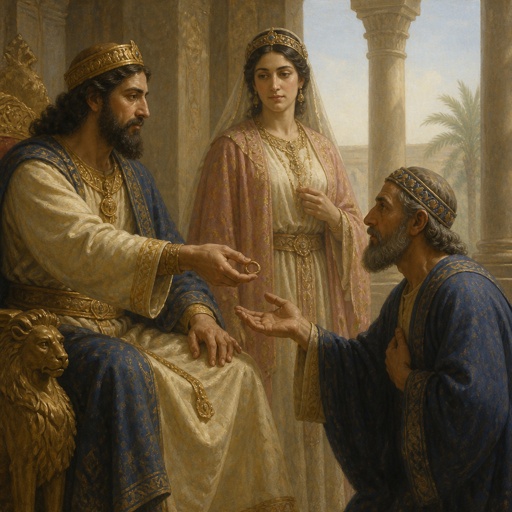
"And the king took off his ring, which he had taken from Haman, and gave it unto Mordecai. And Esther set Mordecai over the house of Haman." - Esther 8:2
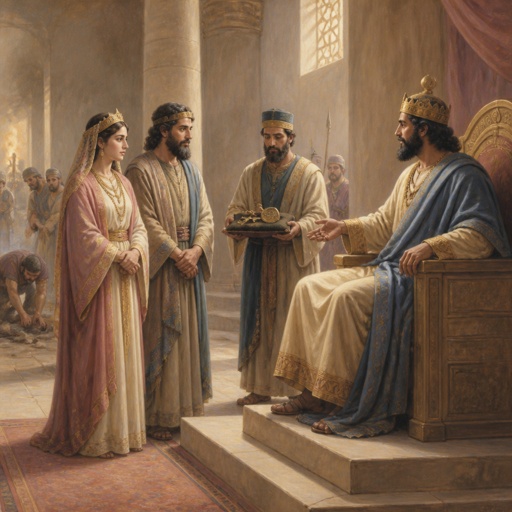
"¶ Then the king Ahasuerus said unto Esther the queen and to Mordecai the Jew, Behold, I have given Esther the house of Haman, and him they have hanged upon the gallows, because he laid his hand upon the Jews." - Esther 8:7

Esther 8:17 - "And in every province, and in every city, whithersoever the king's commandment and his decree came, the Jews had joy and gladness, a feast and a good day. And many of the people of the land became Jews; for the fear of the Jews fell upon them."
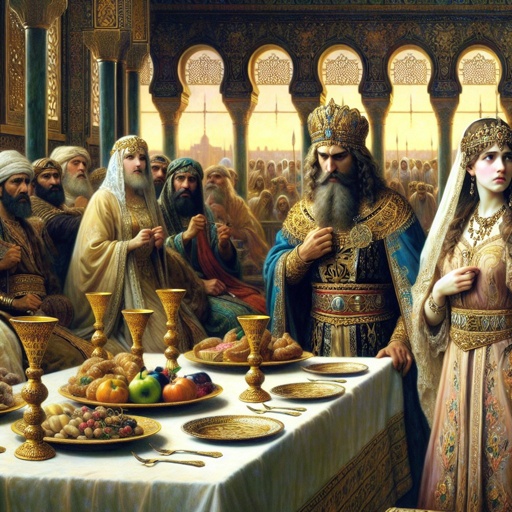
Esther 5:8 - "If I have found favour in the sight of the king, and if it please the king to grant my petition, and to perform my request, let the king and Haman come to the banquet that I shall prepare for them, and I will do to morrow as the king hath said."