What does Exodus 10:6 mean?
“And they shall fill thy houses, and the houses of all thy servants, and the houses of all the Egyptians; which neither thy fathers, nor thy fathers’ fathers have seen, since the day that they were upon the earth unto this day. And he turned himself, and went out from Pharaoh.” — Exodus 10:6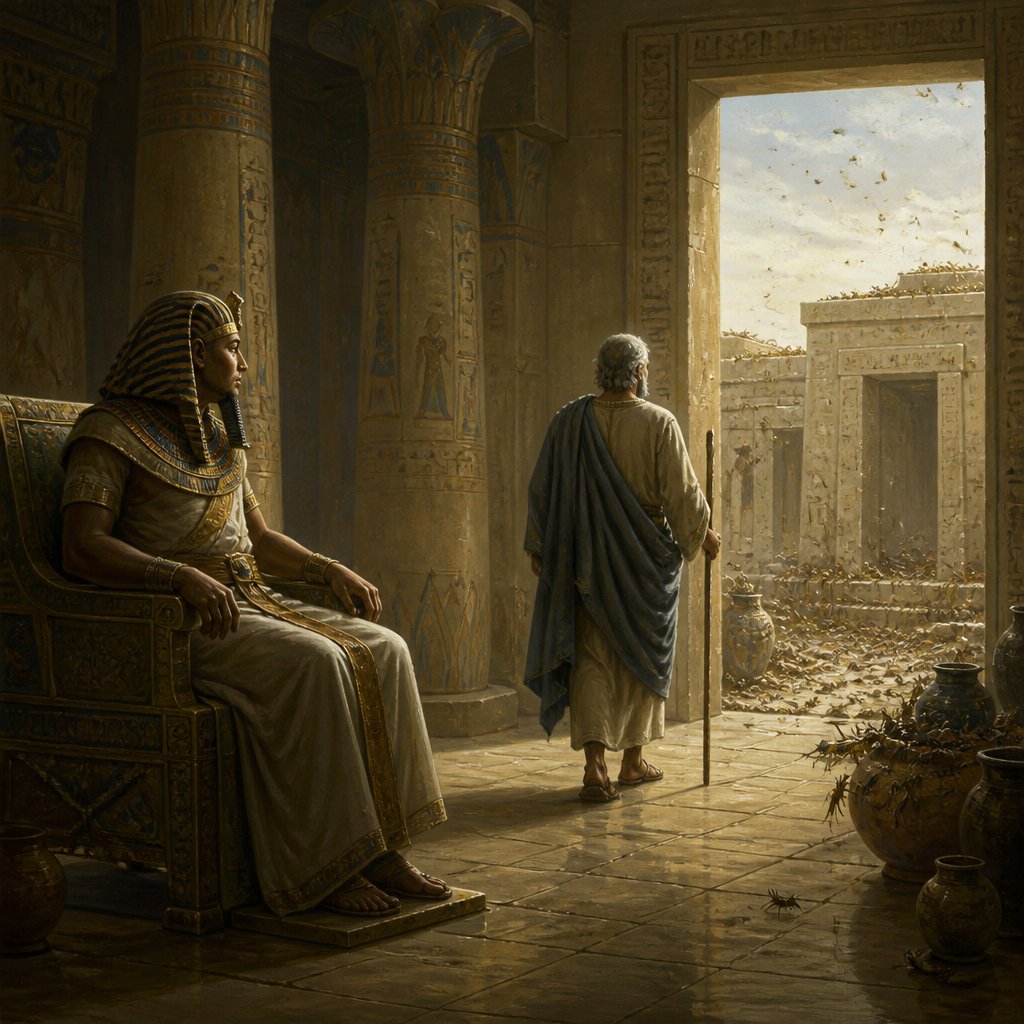
Exodus 10:6 in the King James Version of the Bible states, "And they shall fill thy houses, and the houses of all thy servants, and the houses of all the Egyptians; which neither thy fathers, nor thy fathers' fathers have seen, since the day that they were upon the earth unto this day. And he turned himself, and went out from Pharaoh." This verse comes from the story of the ten plagues in the book of Exodus, where the Israelites are held in bondage by the Egyptians and Moses, with the help of God, is trying to secure their release.
In this particular verse, God is warning Pharaoh of the impending locust plague that will devastate the land of Egypt, including the houses of Pharaoh and his servants. The verse ends with Pharaoh's reaction, as he turns himself and goes out, presumably frustrated and unwilling to listen to the warning that God is giving him.
The themes present in this verse include power and obedience. Pharaoh is portrayed as a powerful leader who is resistant to the word of God, and this resistance ultimately leads to the destruction of his kingdom. On the other hand, the Israelites are called to be obedient to God's commands and are eventually liberated from their bondage. The contrast between the stubbornness of Pharaoh and the obedience of the Israelites serves as a lesson about the consequences of pride and the importance of humility before God.
The context of this verse is important for understanding its significance within the larger narrative of the book of Exodus. The ten plagues were a series of divine interventions that were meant to demonstrate God's power and compel Pharaoh to release the Israelites from slavery. Each plague was a demonstration of God's sovereignty over the natural world and the impotence of the Egyptian gods. The locust plague, in particular, was a devastating event that destroyed the crops and brought famine to the land, causing the Egyptians to suffer greatly.
Symbolism is also present in this verse, as the locusts are a symbol of destruction and devastation. In the Bible, locusts are often used as a symbol of judgment and are associated with the consequences of disobedience. This plague serves as a warning to Pharaoh and the Egyptians about the repercussions of their refusal to heed the word of God.
Furthermore, the mention of the houses being filled with locusts symbolizes the invasion and desolation of the private sphere. The Egyptians' homes, which are supposed to be places of security and comfort, will instead be filled with pests, representing the chaos and disorder that disobedience brings.
In conclusion, Exodus 10:6 is a verse that carries weighty theological and moral implications. It serves as a reminder of the power of God, the importance of obedience, and the consequences of pride and disobedience. It also highlights the symbolism of the locust plague as a sign of judgment and the devastation that comes from turning away from God. This verse holds relevance not only within the specific historical context of the Exodus narrative but also as a timeless lesson about faith and humility before the divine.
Get our apps


Artwork for Exodus 10:6

Exodus 10:6 - "And they shall fill thy houses, and the houses of all thy servants, and the houses of all the Egyptians; which neither thy fathers, nor thy fathers' fathers have seen, since the day that they were upon the earth unto this day. And he turned himself, and went out from Pharaoh."
"And they shall fill thy houses, and the houses of all thy servants, and the houses of all the Egyptians; which neither thy fathers, nor thy fathers' fathers have seen, since the day that they were upon the earth unto this day. And he turned himself, and went out from Pharaoh." - Exodus 10:6

Exodus 6:10 - "And the LORD spake unto Moses, saying,"

Exodus 6:10 - "And the LORD spake unto Moses, saying,"

"And the LORD spake unto Moses, saying," - Exodus 6:10

Exodus 7:10

Exodus 7:10

Exodus 10:12
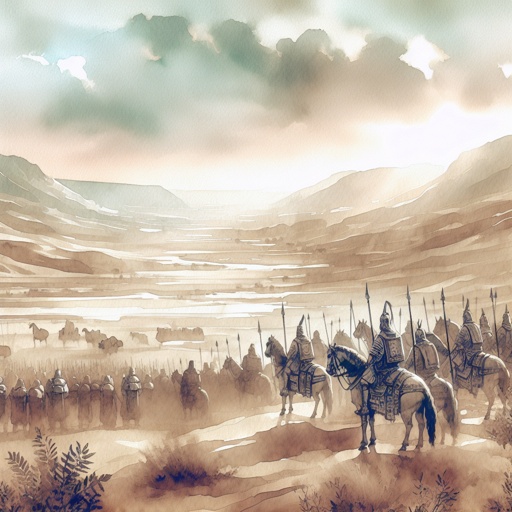
Exodus 17:10

Exodus 10:12

Exodus 10:12
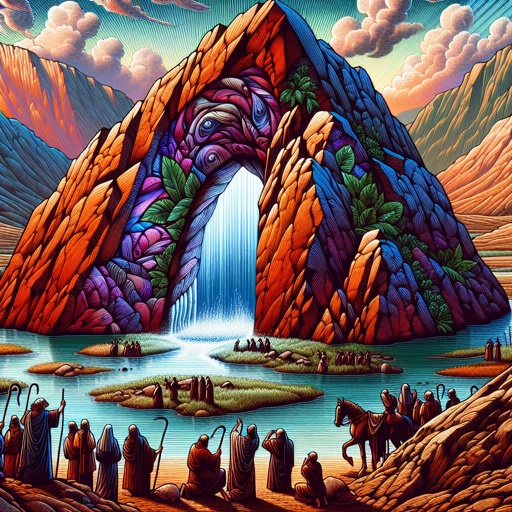
Exodus 17:6

Exodus 17:6

Exodus 17:6

Exodus 17:6

Exodus 25:10-22

Exodus 6:21 - "¶ And the sons of Izhar; Korah, and Nepheg, and Zichri."

Exodus 6:22 - "And the sons of Uzziel; Mishael, and Elzaphan, and Zithri."

Exodus 6:17 - "The sons of Gershon; Libni, and Shimi, according to their families."

Exodus 10:18 - "And he went out from Pharaoh, and intreated the LORD."

The Plague of Locusts - Exodus 10:1-20

The Plague of Darkness - Exodus 10:21-29

The Plague of Locusts - Exodus 10:1-20

The Plague of Darkness - Exodus 10:21-29

The Plague of Darkness - Exodus 10:21-29

The Plague of Darkness - Exodus 10:21-29

The Plague of Darkness - Exodus 10:21-29

The Plague of Darkness - Exodus 10:21-29

The Plague of Locusts - Exodus 10:1-20

The Plague of Darkness - Exodus 10:21-29