What does Exodus 12:10 mean?
“And ye shall let nothing of it remain until the morning; and that which remaineth of it until the morning ye shall burn with fire.” — Exodus 12:10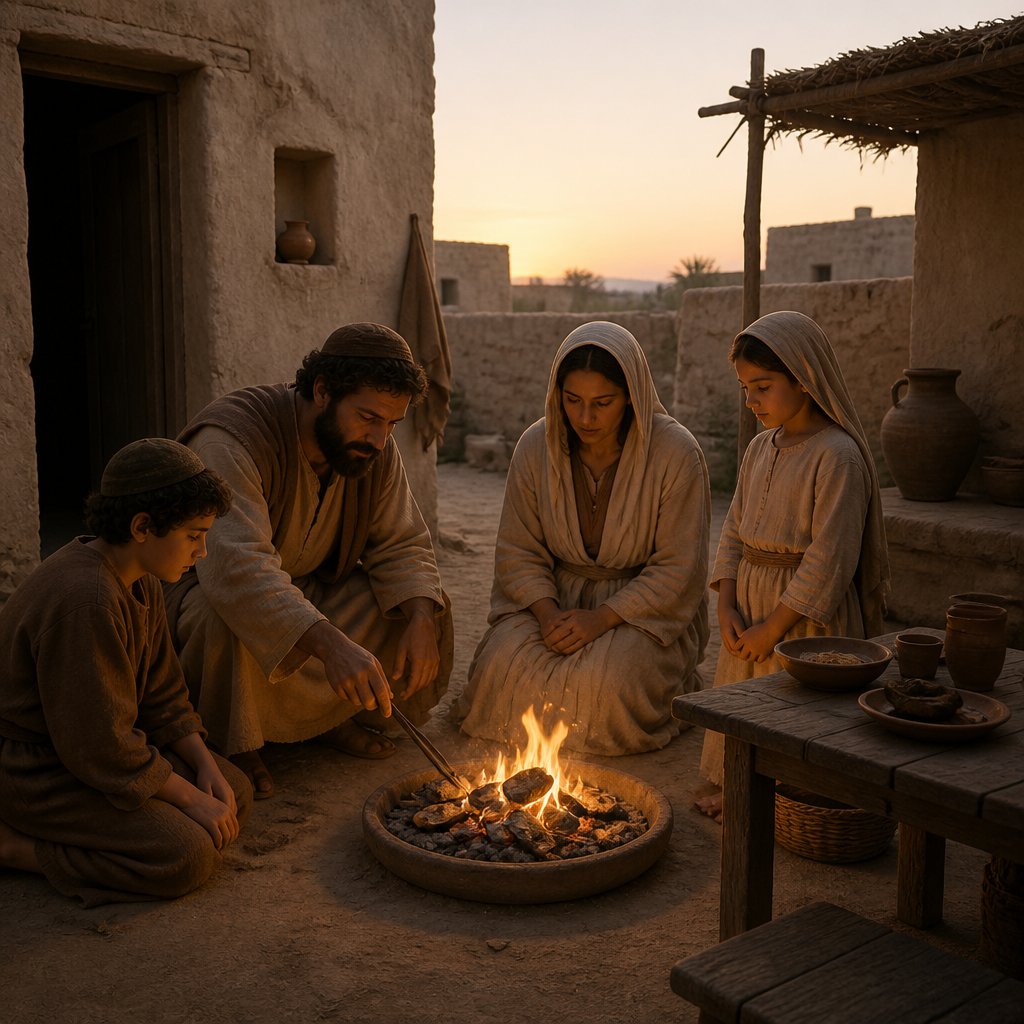
Exodus 12:10 in the King James Version of the Bible reads, "And ye shall let nothing of it remain until the morning; and that which remaineth of it until the morning ye shall burn with fire." This verse is part of the instructions given to the Israelites for the observance of the Passover, the festival that commemorates their deliverance from slavery in Egypt.
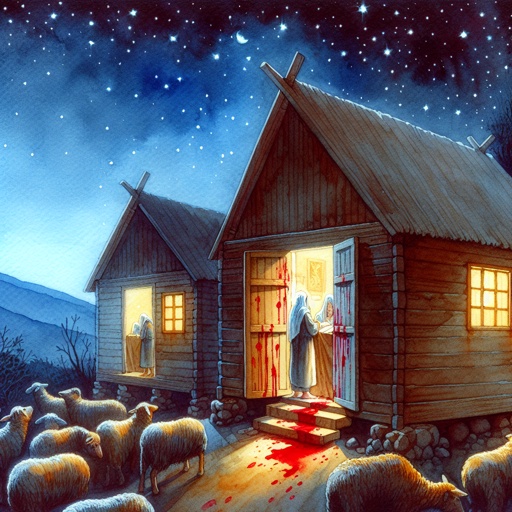
The context of this verse is a crucial moment in the history of the Israelites. God had sent ten plagues upon Egypt because Pharaoh refused to release the Israelites from bondage. The tenth and final plague was the most devastating; the angel of death visited every Egyptian home, killing the firstborn son. However, the Israelites were spared from this plague by following God's instructions. They were told to take a male lamb, without blemish, and slaughter it. They were then to take some of the blood and put it on the doorposts and the lintel of their houses. When the angel of death passed through the land, he would see the blood and pass over that house, sparing the firstborn. This event marked the beginning of the Exodus and the end of the Israelites' slavery in Egypt.
In Exodus 12:10, God tells the Israelites not to let any of the Passover lamb remain until the morning, and whatever was left over should be burned with fire. This instruction serves as a symbolic representation of the urgency and importance of the Passover observance. It signifies that the meal is to be wholly consumed, leaving no leftovers. This requirement may also be a reminder of the haste with which the Israelites had to leave Egypt. They were not to take time to let the meat spoil or to pack leftovers for the journey ahead. They had to eat quickly, fully, and then move on, closely following God's commands.
The concept of burning the leftovers with fire also carries symbolic significance. Fire is often associated with purification and renewal in the Bible. The burning of the remaining portions of the lamb may symbolize the removal of all impurities and the complete dedication of the sacrifice to God. It underscores the sacredness and significance of the Passover meal, reinforcing the idea that it is not to be treated casually or carelessly.
Furthermore, the instructions regarding the Passover highlight the themes of obedience, faith, and God's faithfulness. The Israelites were required to follow God's specific instructions without deviation. This act of obedience demonstrated their faith in God's protection and deliverance. It also showcased God's faithfulness in keeping His promises. The Passover event became a crucial part of Israelite identity, serving as a yearly reminder of God's faithfulness in delivering them from bondage and as a picture of the ultimate deliverance that would be achieved through Jesus Christ.
In a broader sense, this verse also holds spiritual significance for Christians. The Passover lamb has been seen as a foreshadowing of Jesus Christ, the Lamb of God who takes away the sins of the world. Just as the blood of the Passover lamb protected the Israelites, the blood of Jesus cleanses believers from sin and offers salvation. In the New Testament, the apostle Paul referred to Christ as the Passover lamb who has been sacrificed for us (1 Corinthians 5:7).
In conclusion, Exodus 12:10 is a verse that carries rich symbolism and meaning within the biblical narrative. It serves as a reminder of the importance of obedience, faith, and God's faithfulness, as well as pointing forward to the ultimate deliverance made possible through Jesus Christ. The urgency and significance of the Passover observance and the symbolism of burning the remaining portions of the lamb underscore the sacredness of the event and the obedience required of God's people. This verse continues to hold spiritual significance and relevance for believers today, pointing to the redemptive work of Christ and the hope of salvation.
Get our apps


Artwork for Exodus 12:10

Exodus 12:10 - "And ye shall let nothing of it remain until the morning; and that which remaineth of it until the morning ye shall burn with fire."
"And ye shall let nothing of it remain until the morning; and that which remaineth of it until the morning ye shall burn with fire." - Exodus 12:10

Exodus 10:12

Exodus 10:12

Exodus 10:12

Exodus 12:12

Exodus 10:12 - "¶ And the LORD said unto Moses, Stretch out thine hand over the land of Egypt for the locusts, that they may come up upon the land of Egypt, and eat every herb of the land, even all that the hail hath left."

Exodus 3:12

Exodus 3:12

Exodus 3:12

Exodus 3:12

Exodus 3:12

Exodus 12:33

Exodus 12:7
Exodus 12:13

Exodus 3:12

Exodus 3:12

Exodus 12:7

Exodus 7:10

Exodus 7:10
Exodus 17:10

Exodus 7:10-12 KJV (10) And Moses and Aaron went in unto Pharaoh, and they did so as the LORD had commanded: and Aaron cast down his rod before Pharaoh, and before his servants, and it became a serpent. (11) Then Pharaoh also called the wise men and the sorcerers: now the magicians of Egypt, they also did in like manner with their enchantments. (12) For they cast down every man his rod, and they became serpents: but Aaron's rod swallowed up their rods.

Exodus 12:1-19

Exodus 25:10-22

Ezra 10:10-12

Exodus 39:12 - "And the third row, a ligure, an agate, and an amethyst."

Exodus 31:12 - "¶ And the LORD spake unto Moses, saying,"

Exodus 12:47 - "All the congregation of Israel shall keep it."

Exodus 6:10 - "And the LORD spake unto Moses, saying,"

Exodus 12:45 - "A foreigner and an hired servant shall not eat thereof."