What does Exodus 12:6 mean?
“And ye shall keep it up until the fourteenth day of the same month: and the whole assembly of the congregation of Israel shall kill it in the evening.” — Exodus 12:6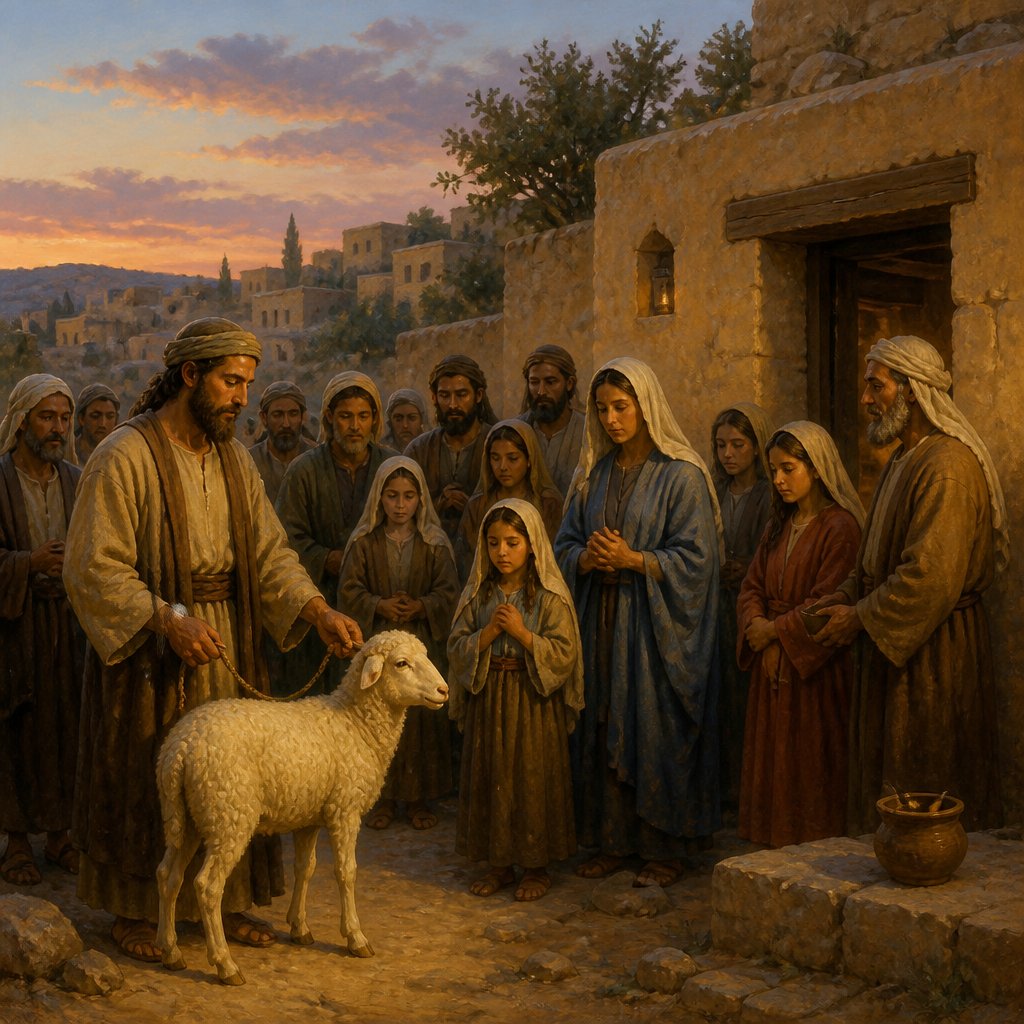
Exodus 12:6 in the King James Version of the Bible reads, "And ye shall keep it up until the fourteenth day of the same month: and the whole assembly of the congregation of Israel shall kill it in the evening."
This verse comes from the book of Exodus, which tells the story of the Israelites' liberation from slavery in Egypt. The book of Exodus is a central text in the Jewish and Christian traditions and is often seen as a foundational narrative of faith and liberation. This particular verse is part of the instructions given to the Israelites for the observance of the Passover, a sacred and symbolic ritual that marks the beginning of their liberation from Egypt.
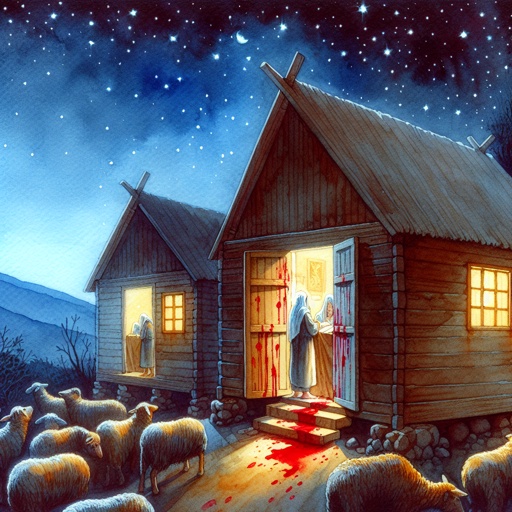
In order to fully understand the significance of this verse, it is important to consider the context in which it appears. The Israelites have been enslaved in Egypt for generations, and the time has finally come for them to be freed. God has sent plagues upon Egypt to persuade Pharaoh to release the Israelites, and the final and most devastating plague is about to occur: the death of the firstborn. In order to protect themselves from this plague, God instructs the Israelites to sacrifice a lamb and mark their doorposts with its blood. This act of sacrifice and faith would serve as a sign for the Lord to pass over their homes and spare their firstborn children.
The verse in question, Exodus 12:6, provides specific instructions for the timing and execution of the Passover sacrifice. The lamb is to be kept until the fourteenth day of the month, and then the entire congregation of Israel is to participate in its slaughter. The fact that the entire congregation is involved in the sacrifice underscores the communal nature of the ritual and emphasizes the unity and solidarity of the Israelites as they prepare to embark on their journey to freedom.
The emphasis on the evening as the time for the sacrifice carries symbolic significance as well. The evening is a liminal time, a period of transition between day and night, light and darkness. In the biblical narrative, it is often a time of transformation, revelation, and encounter with the divine. By performing the sacrifice in the evening, the Israelites are marking the transition from bondage to liberation, from despair to hope, and from oppression to freedom.
The symbolism of the Passover sacrifice is rich and multilayered. The lamb itself is a powerful symbol of innocence, purity, and atonement. Its blood serves as a protective mark, shielding the Israelites from the destructive power of the plague. In Christian tradition, the sacrificial lamb is often seen as a foreshadowing of the ultimate sacrifice of Jesus Christ, whose death atones for the sins of humanity and offers the promise of salvation.
Furthermore, the act of sacrifice itself carries profound spiritual meaning. By offering the lamb to God, the Israelites are expressing their gratitude, obedience, and dependence on the divine. The sacrifice serves as a tangible demonstration of their trust in God's protection and deliverance.
The themes of faith, obedience, and community are central to the meaning of Exodus 12:6. The verse underscores the importance of collective ritual and worship in the life of the Israelites, as well as the necessity of following God's commands in order to secure their liberation. It also highlights the profound connection between ritual practice and spiritual transformation, as the act of sacrifice becomes a powerful means of affirming and enacting the Israelites' faith and identity.
In conclusion, Exodus 12:6 from the King James Version of the Bible is a verse that holds deep significance within the larger narrative of the Exodus. It conveys essential instructions for the observance of the Passover sacrifice, a pivotal moment in the Israelites' journey from slavery to freedom. Through its emphasis on communal worship, symbolic ritual, and profound faith, this verse invites believers to reflect on the enduring themes of liberation, sacrifice, and divine protection that resonate throughout the biblical narrative and continue to inspire faith and devotion.
Get our apps


Artwork for Exodus 12:6

Exodus 12:6 - "And ye shall keep it up until the fourteenth day of the same month: and the whole assembly of the congregation of Israel shall kill it in the evening."

"And ye shall keep it up until the fourteenth day of the same month: and the whole assembly of the congregation of Israel shall kill it in the evening." - Exodus 12:6

Exodus 6:12 - "And Moses spake before the LORD, saying, Behold, the children of Israel have not hearkened unto me; how then shall Pharaoh hear me, who am of uncircumcised lips?"

Exodus 12:12

Deuteronomy 6:12 - "Then beware lest thou forget the LORD, which brought thee forth out of the land of Egypt, from the house of bondage."
![Exodus 6:12 KJVAAE
[12] And Moses spake before the Lord, saying, Behold, the children of Israel have not hearkened unto me; how then shall Pharaoh hear me,](https://media.bible.art/ba659b6c-b89d-4b46-974b-8bddd98fe898-thumbnail.jpg)
Exodus 6:12 KJVAAE [12] And Moses spake before the Lord, saying, Behold, the children of Israel have not hearkened unto me; how then shall Pharaoh hear me,

Exodus 3:12

Exodus 3:12

Exodus 3:12

Exodus 3:12

Exodus 3:12

Exodus 12:33

Exodus 10:12

Exodus 12:7
Exodus 12:13

Exodus 10:12

Exodus 10:12

Exodus 3:12

Exodus 3:12

Exodus 12:7

Exodus 17:6

Exodus 17:6

Exodus 17:6

Exodus 17:6

Exodus 12:1-19

Exodus 39:12 - "And the third row, a ligure, an agate, and an amethyst."

Exodus 31:12 - "¶ And the LORD spake unto Moses, saying,"

Exodus 12:47 - "All the congregation of Israel shall keep it."

Exodus 12:45 - "A foreigner and an hired servant shall not eat thereof."

Exodus 6:21 - "¶ And the sons of Izhar; Korah, and Nepheg, and Zichri."